
Loading, please wait...
LOT 0513
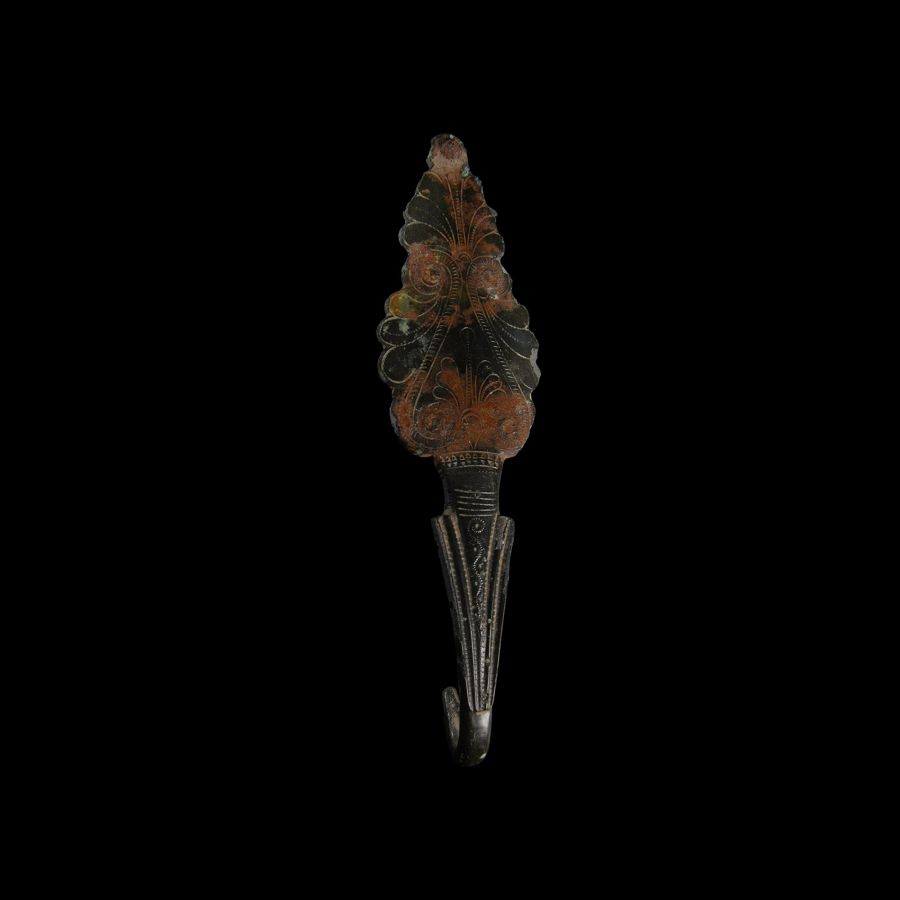
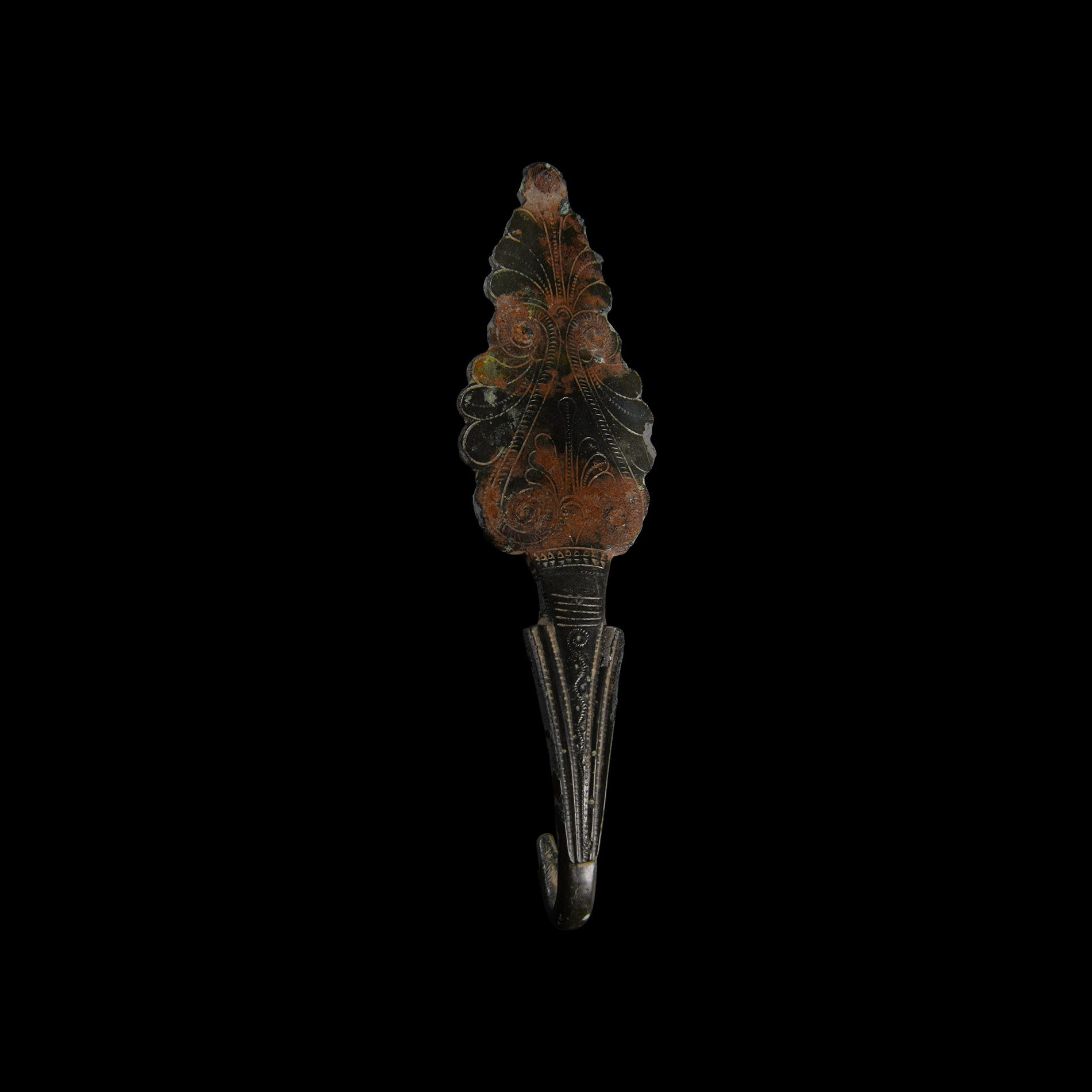
Etruscan Tinned Bronze Armoured Belt Hook
6TH-5TH CENTURY B.C.
4 5/8 in. (26 grams, 11.7 cm).
Composed of a scalloped foliate plate and tapering neck, displaying geometric and foliate detailing. [No Reserve]
ProvenanceAcquired in the 1970s.
Private collection of a London antiquarian.
TimeLine Auctions follows a vetting process to ensure the authenticity and legality of all items, reinforcing our commitment to integrity and responsible trading. Each antiquity, antique, and coin lot undergoes thorough examination by a vetting committee of at least ten external specialists, professional trade association members, scientists, and archaeologists: Our Vetting Process
AUCTIONS:
TimeLine is a leading auction house specialising in antiquities, ancient art, collectables, natural history, coins, medals, and books. Our auctions offer museums, collectors, historians, and enthusiasts the opportunity to acquire unique and historically significant pieces.
-
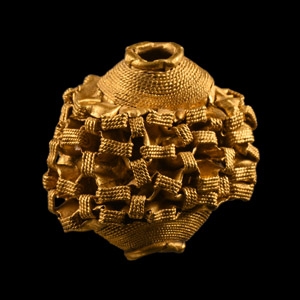
Greek Gold Filigree Bead
5th-3rd century B.C.Sold for (Inc. bp): £364
Of bulbous form adorned with circular cells bridged by filigree straps; squashed. 4.13 grams, 20 mm
From the collection of a North American gentleman, formed in the 1990s. -
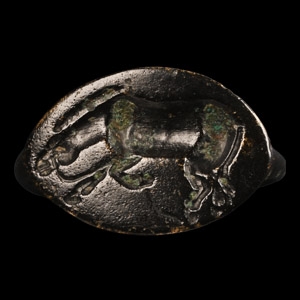
Greek Bronze Seal Ring with Horse
Circa 5th century B.C.Sold for (Inc. bp): £156
With a slender hoop and elliptical bezel engraved with a horse. 4.02 grams, 22.50 mm overall, 18.90 mm internal diameter (approximate size British P, USA 7 1/2, Europe 16.23, Japan 15)
Acquired before 2000. From the collection of a European gentleman living in the UK. -
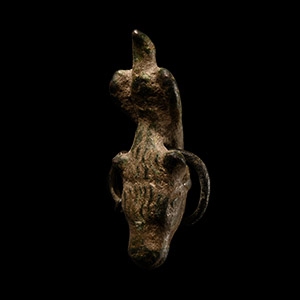
Greek Bronze Eagle Standing on Bull's Head
1st century B.C.Sold for (Inc. bp): £156
Formed in the round as an eagle standing on the head of a bull, each animal showing semi-naturalistic detailing; socket and loop through the centre. 5.64 grams, 28 mm
Ex private collection, 1980s. Acquired on the UK art market in the 1990s.
