
Loading, please wait...
LOT 0552
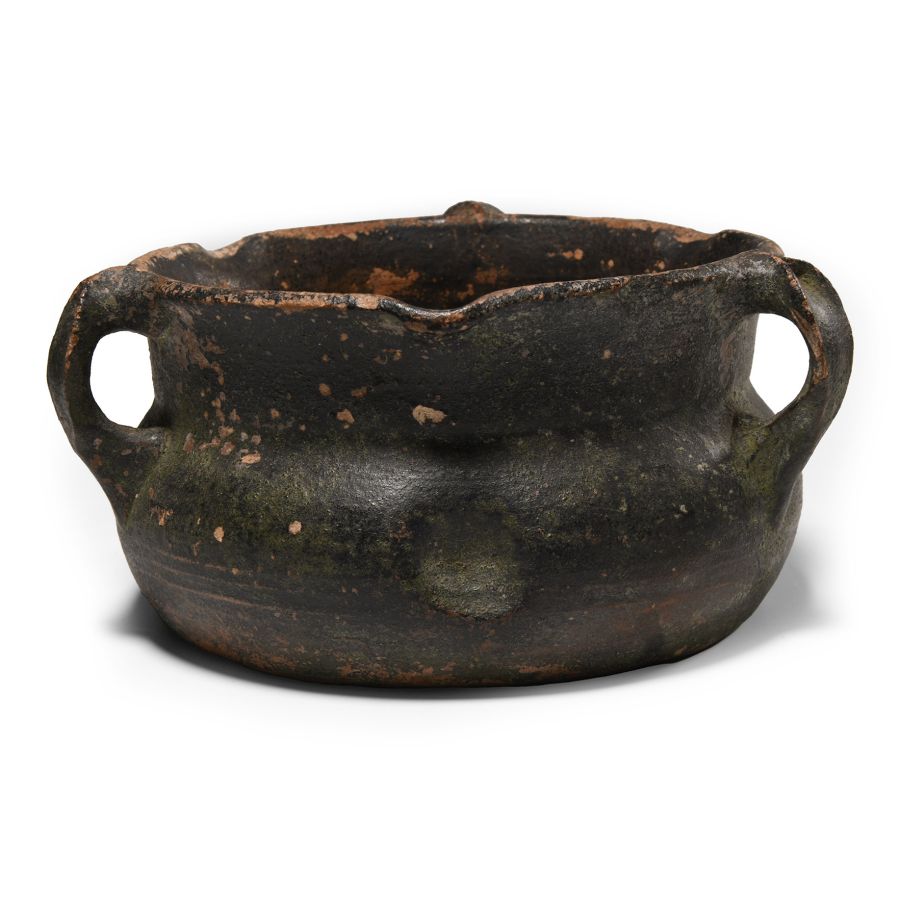
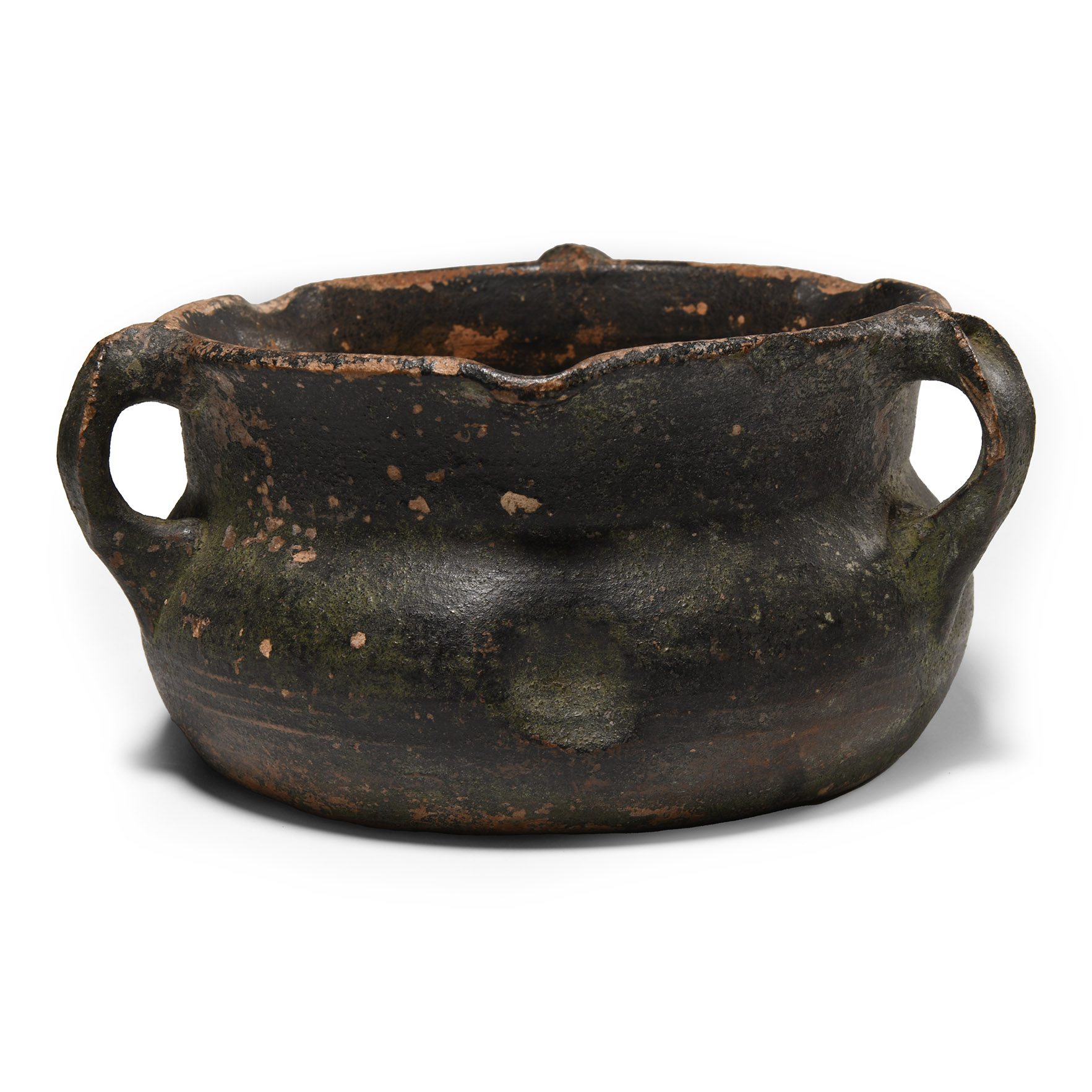
Etruscan Three-Handled Bowl
CIRCA 6TH CENTURY B.C.
5 7/8 in. (504 grams, 15 cm wide).
Squat in profile with three equidistant dimples to the shoulder, everted rim with three radiating pinched strap handles, pouring lip. [No Reserve]
ProvenanceFrom a collection acquired on the UK art market from various auction houses and collections mostly before 2000.
From an important Cambridgeshire estate; thence by descent.
TimeLine Auctions follows a vetting process to ensure the authenticity and legality of all items, reinforcing our commitment to integrity and responsible trading. Each antiquity, antique, and coin lot undergoes thorough examination by a vetting committee of at least ten external specialists, professional trade association members, scientists, and archaeologists: Our Vetting Process
AUCTIONS:
TimeLine is a leading auction house specialising in antiquities, ancient art, collectables, natural history, coins, medals, and books. Our auctions offer museums, collectors, historians, and enthusiasts the opportunity to acquire unique and historically significant pieces.
-
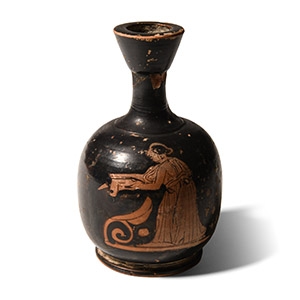
Greek Red-Figure Lekythos
5th century B.C.Estimate: £1,000 - 1,400 (‡+bp*)
Opening Bid: £540
Of ovoid form with trumpet-shaped spout and strap handle, reserved image of a lady wearing a large himation, on a baseline with scrolled foliage. 106 grams, 11 cm
Ex German collection, 1970. with Galerie Chenel, Paris, 22 July 2008.
The word lekythos had a wide meaning in ancient Greece, probably generally meaning all oil jugs, including the athletes' oil bottle (now called aryballos) as well as the types now given this name by archaeologists. Certain lekythoi resemble certain oenochoe superficially, at a first glance. Oenochoes, however, were wine-pitchers and in most cases were larger than the lekythoi, which were small jugs for oil, perfumes, etc. -
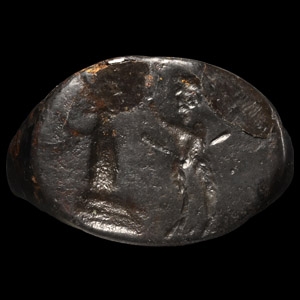
Greek Bronze Ring with Satyr
4th-2nd century B.C.Sold for (Inc. bp): £130
With ellipsoid bezel, incuse profile image of a satyr before a pillar (possibly a herm). 7.41 grams, 22.72 mm overall, 18.55 mm internal diameter (approximate size British L, USA 5 3/4, Europe 11.24, Japan 10)
Ex German art market, 2000s. Acquired from an EU collector living in London. From the collection of Surrey, UK, gentleman. -
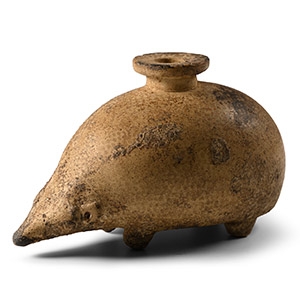
Corinthian Hedgehog Aryballos
6th century B.C.Estimate: £1,800 - 2,400 (‡+bp*)
Opening Bid: £833
Hollow-formed with textured body and four stub legs, conical nose and lateral flanges with impressed point eyes; discoid flange rim to the neck with incised petal detailing. 55 grams, 98 mm
Ex Mrs IM, nr 18 (Widow of Leo Mildenberg), formed in Zurich, gift from her husband between 1975-2000. Acquired by the present owner from the above. This lot has been checked against the Interpol Database of stolen works of art and is accompanied by search certificate number no.12208-222174.
