
Loading, please wait...
LOT 0573
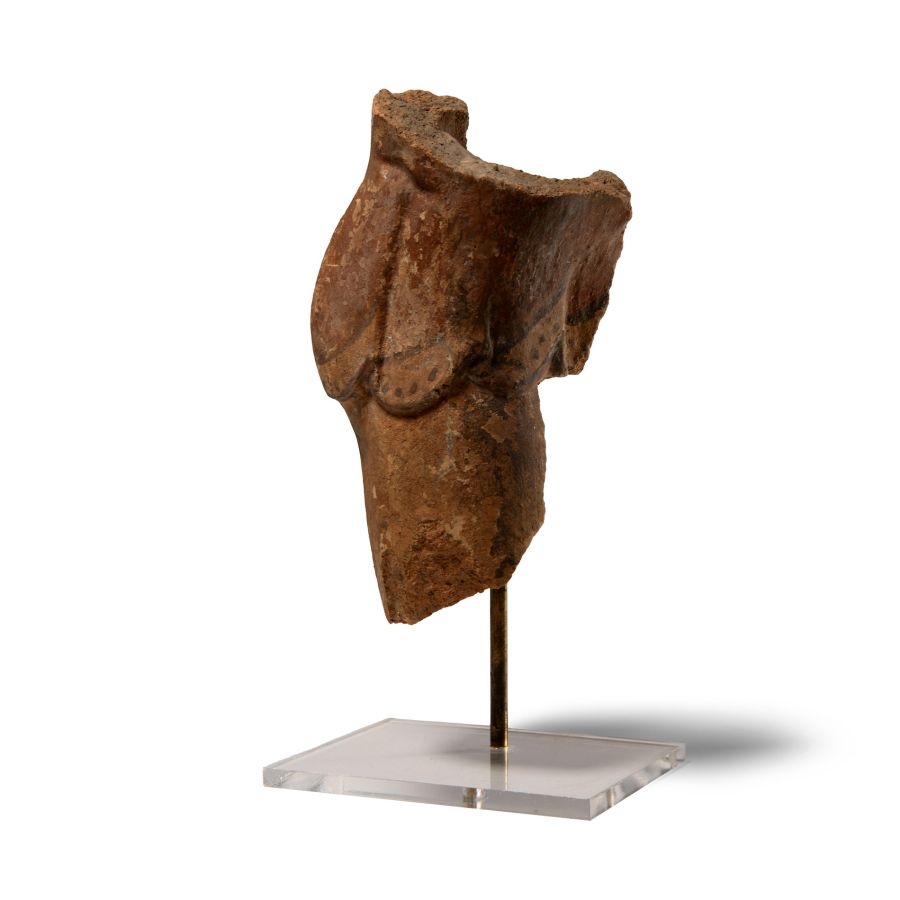
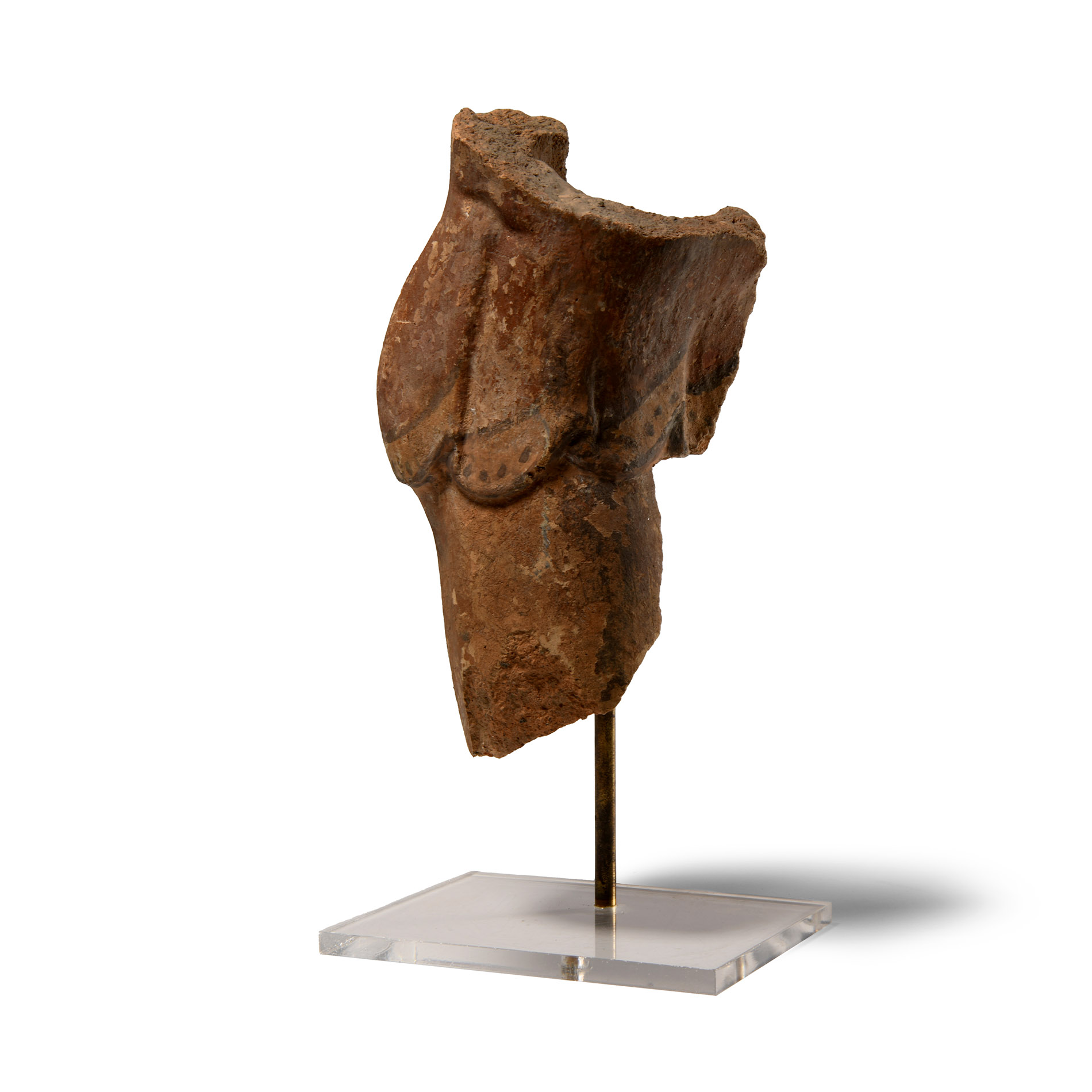
Etruscan Terracotta Warrior Statue Leg Fragment
CIRCA 6TH CENTURY B.C.
6 1/4 in. (8 in.) (535 grams total, 16 cm high (20.5 cm high including stand)).
Fragment of a hollow-formed statue of a warrior, the thigh and hip area with painted armour detailing; mounted on a custom-made stand.
ProvenanceEx private collection L.G., The Netherlands.
Acquired from Treasuregate Art of the Ancients, Brussels, Belgium, in 2015.
Property of a South Australian private collector, with collection reference 15.10.
Accompanied by a copy of a Treasuregate Art of the Ancients certificate of authenticity with ref no.2015-11-22-03.
Accompanied by detailed collector's catalogue pages including description and photographs.
Cf. Christiansen & Winter, Etruria I: Architectural Terracotta and Painted wall Plaques, Pinakes 625-200 BC, no.74, p.158.
FootnotesThe armour on the figure is the short-sleeved chitoniskos which was worn under the cuirass and protected the flexing areas around the groin and buttocks. The figure probably formed part of a frieze on a temple.
CONDITIONTimeLine Auctions follows a vetting process to ensure the authenticity and legality of all items, reinforcing our commitment to integrity and responsible trading. Each antiquity, antique, and coin lot undergoes thorough examination by a vetting committee of at least ten external specialists, professional trade association members, scientists, and archaeologists: Our Vetting Process
AUCTIONS:
TimeLine is a leading auction house specialising in antiquities, ancient art, collectables, natural history, coins, medals, and books. Our auctions offer museums, collectors, historians, and enthusiasts the opportunity to acquire unique and historically significant pieces.
-
.jpg)
Etruscan Gold Filigree Leech Brooch
7th century B.C.Sold for (Inc. bp): £1,950
Hollow-formed bow with applied floral detailing, filigree and granules, double-coiled spring and pin; tongue-shaped foot with dense granule detailing, globe finial with rosette above. 13.86 grams, 69 mm
Acquired in the 1970s. Property of a London lady, part of her family's collection. This lot has been checked against the Interpol Database of stolen works of art and is accompanied by search certificate no.12112-213116. -
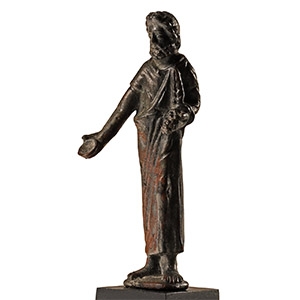
Etruscan Bronze Statuette of a Priest Offering
4th-2nd century B.C.Sold for (Inc. bp): £1,430
Modelled standing barefoot on an irregular base, wearing an ankle-length chlamys over a short-sleeved tunic; the left arm supporting a bunch of grapes, the right hand with a patera; the hair and beard neatly dressed; mounted on a custom-made stand. 279 grams total, 14 cm including stand
From a collection acquired on the UK art market from various auction houses and collections mostly before 2000. From an important Cambridgeshire estate; thence by descent. This lot has been checked against the Interpol Database of stolen works of art and is accompanied by search certificate no.12317-214667.
Lares were supernatural guardians revered in ancient Roman, the cult probably adapted from an Etruscan predecessor; the word lar derives from Etruscan larth - a leader or overlord. They were believed to guard the family's wealth and look after their health and wellbeing. An offering-plate is usually modelled in one of the figure's hands, onto which small libations could be made. They were usually worshipped in groups, but offerings to individuals are also known. -
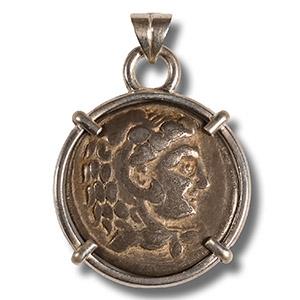
Greek Silver Alexander the Great Tetradrachm Coin Pendant
3rd century B.C. and laterSold for (Inc. bp): £286
Silver tetradrachm with profile bust to obverse, seated figure with bird to reverse; clasp-mounted in a modern silver frame with ring and baile. 21.1 grams, 41 mm
Ex German art market, 2000s. Acquired from an EU collector living in London. From the collection of Surrey, UK, gentleman.
