
Loading, please wait...
LOT 0608
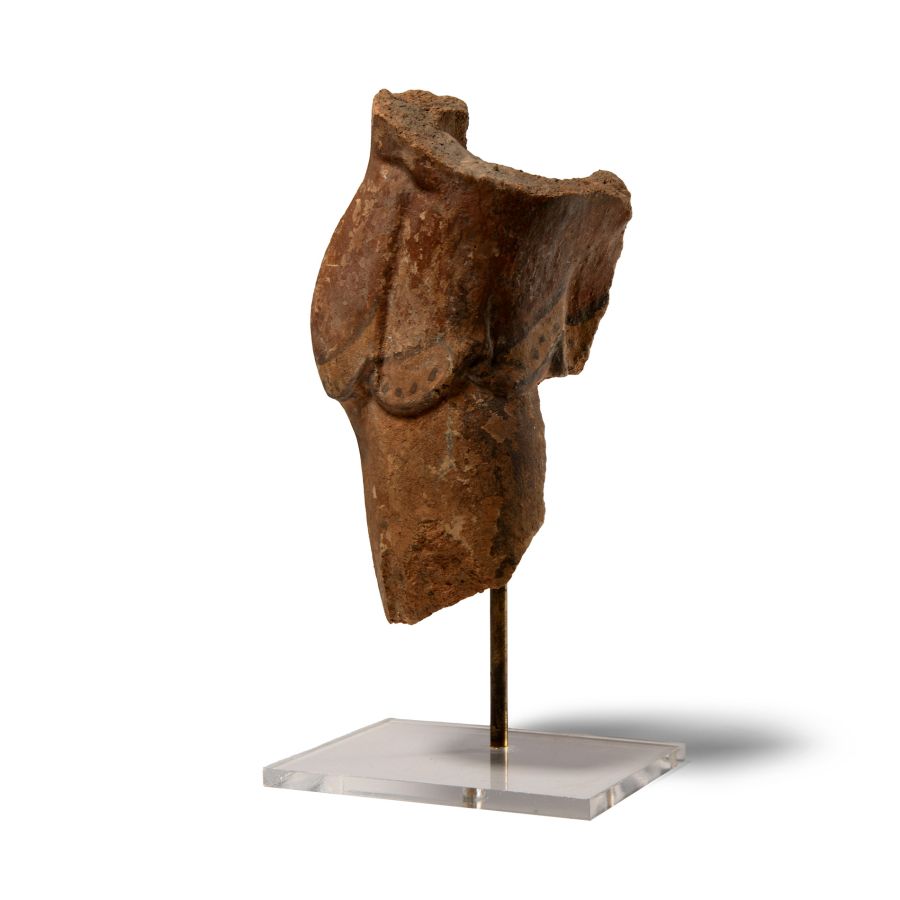
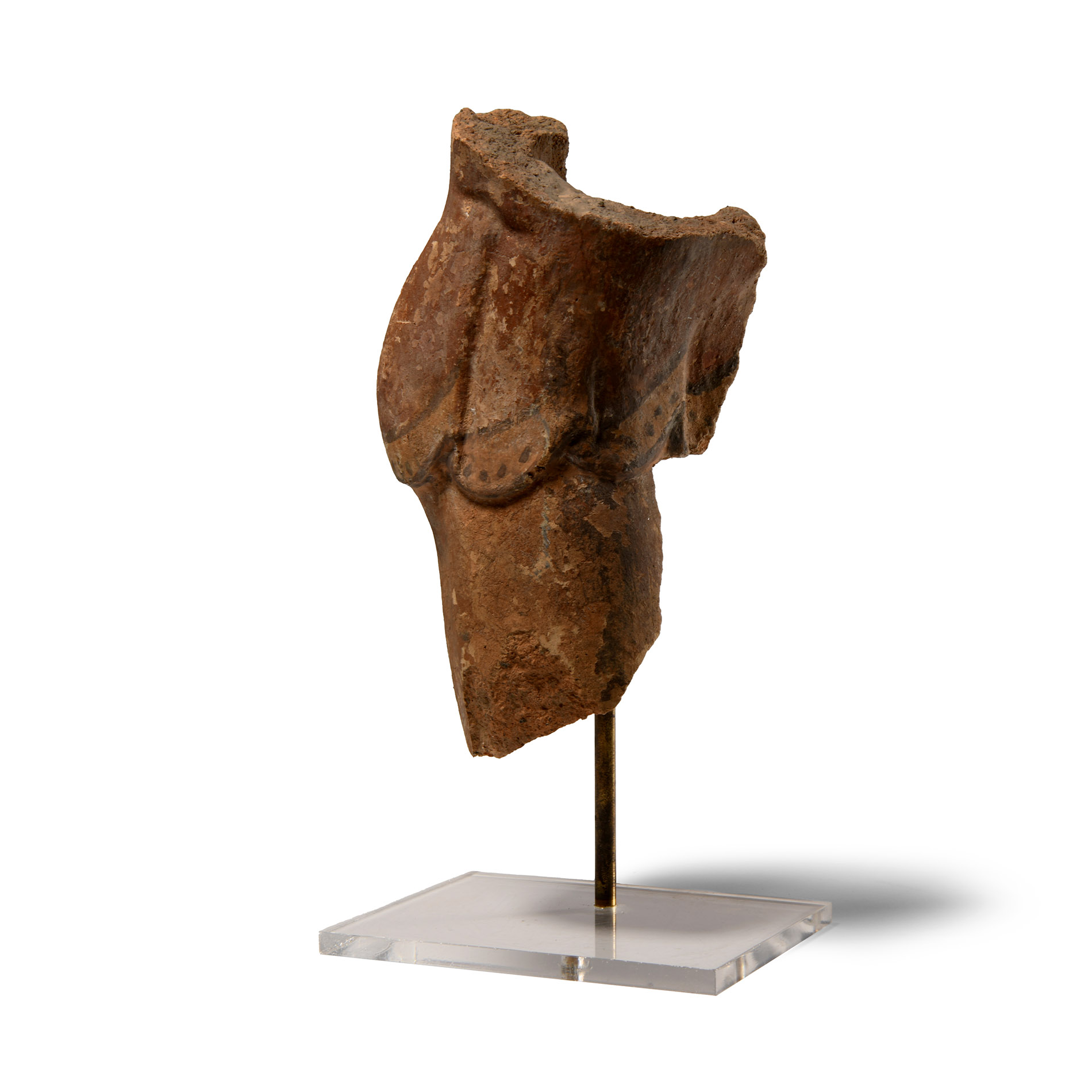
Etruscan Terracotta Warrior Statue Leg Fragment
CIRCA 6TH CENTURY B.C.
6 1/4 in. (8 in.) (535 grams total, 16 cm high (20.5 cm high including stand)).
Fragment of a hollow-formed statue of a warrior, the thigh and hip area with painted armour detailing; mounted on a custom-made stand.
ProvenanceEx private collection L.G., The Netherlands.
Acquired from Treasuregate Art of the Ancients, Brussels, Belgium, in 2015.
Property of a South Australian private collector, with collection reference 15.10.
Accompanied by a copy of a Treasuregate Art of the Ancients certificate of authenticity with ref no.2015-11-22-03.
Accompanied by detailed collector's catalogue pages including description and photographs.
Cf. Christiansen & Winter, Etruria I: Architectural Terracotta and Painted wall Plaques, Pinakes 625-200 BC, no.74, p.158.
FootnotesThe armour on the figure is the short-sleeved chitoniskos which was worn under the cuirass and protected the flexing areas around the groin and buttocks. The figure probably formed part of a frieze on a temple.
CONDITIONTimeLine Auctions follows a vetting process to ensure the authenticity and legality of all items, reinforcing our commitment to integrity and responsible trading. Each antiquity, antique, and coin lot undergoes thorough examination by a vetting committee of at least ten external specialists, professional trade association members, scientists, and archaeologists: Our Vetting Process
AUCTIONS:
TimeLine is a leading auction house specialising in antiquities, ancient art, collectables, natural history, coins, medals, and books. Our auctions offer museums, collectors, historians, and enthusiasts the opportunity to acquire unique and historically significant pieces.
LOT 0608
Etruscan Terracotta Warrior Statue Leg Fragment
Estimate £300 - 400€350 - 460 (for guidance only)$410 - 540 (for guidance only)
-

Minoan Bronze Double Axehead
Circa 2000 B.C.Sold for (Inc. bp): £975
Substantial labrys with flared and curved edges, elliptoid socket to the centre. 973 grams, 17.5 cm
Gifted to the previous owner's husband by his grandfather prior to 1919 while in Crete. Taken to Paris and brought to the UK before 1985. Acquired from Bonhams, London, 20 October 2005, no.124. From an important Cambridgeshire estate; thence by descent. Accompanied by copies of the relevant Bonhams catalogue pages.
The double axe was both a tool, weapon and one of the main religious symbol in Minoan Crete. It was as significant and as important in Minoan religious practice as the ritual horn and the pillar. -
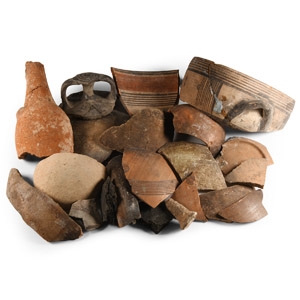
Greek and Other Pottery Sherd Group
Circa 1st millennium B.C.Sold for (Inc. bp): £91
Including fragments of amphora, lekythos, kylix and other types. 1 kg total, 3.6-15.5 cm
From a collection acquired on the UK art market from various auction houses and collections mostly before 2000. From an important Cambridgeshire estate; thence by descent. -
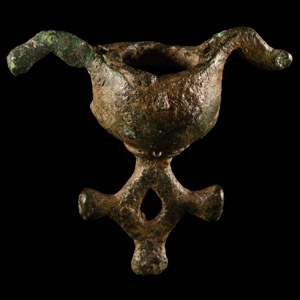
Greek Geometric Miniature Bronze Vessel with Cross
8th-7th century B.C.Sold for (Inc. bp): £26
Hemispherical bowl with lateral cranked arms to the rim, pierced lozenge beneath with stub arms. 16.3 grams, 42 mm
From a collection acquired on the UK art market from various auction houses and collections mostly before 2000. From an important Cambridgeshire estate; thence by descent.
