
Loading, please wait...
LOT 0546
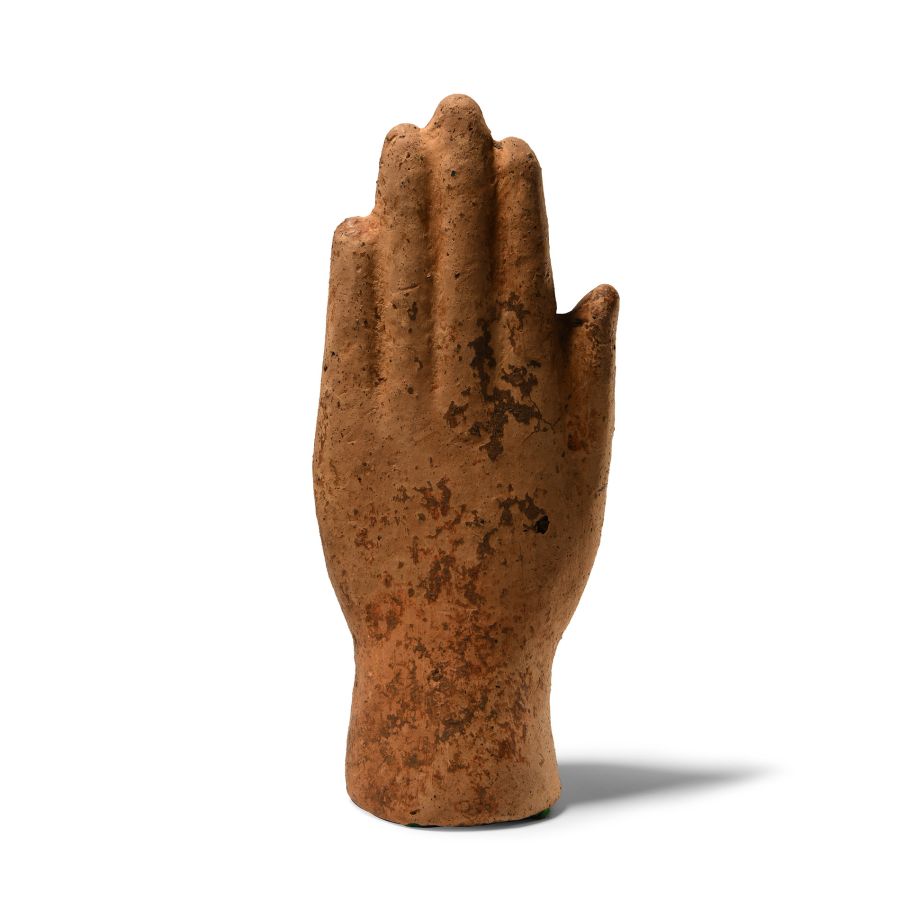
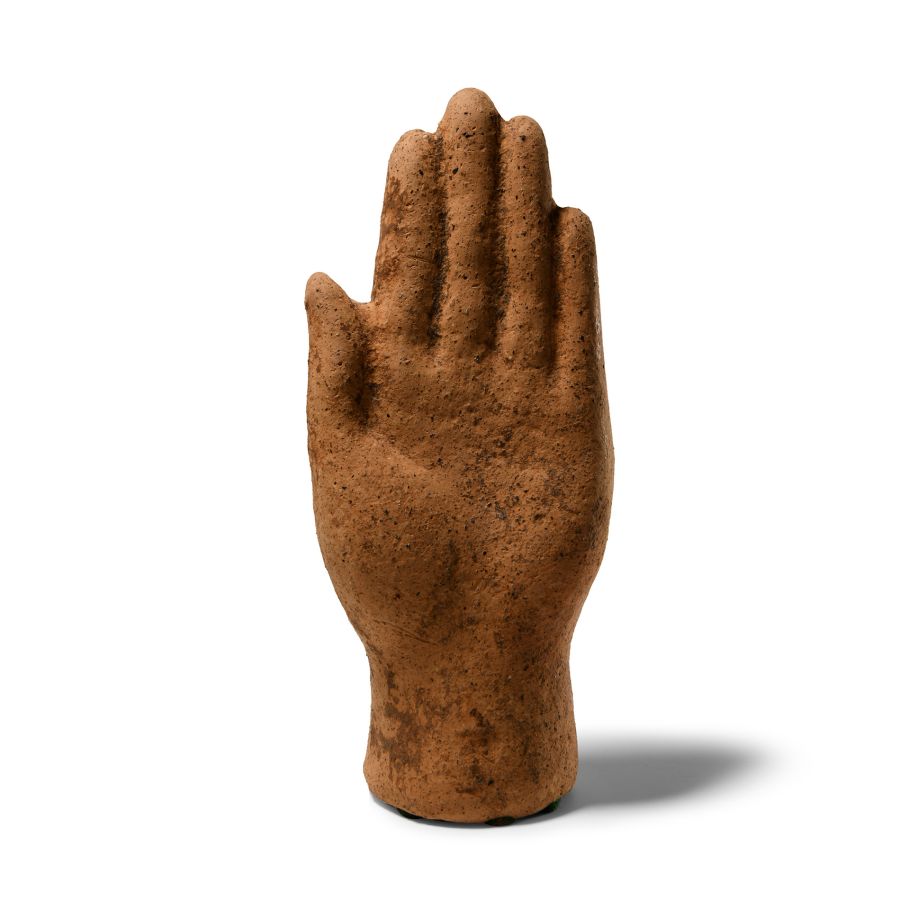
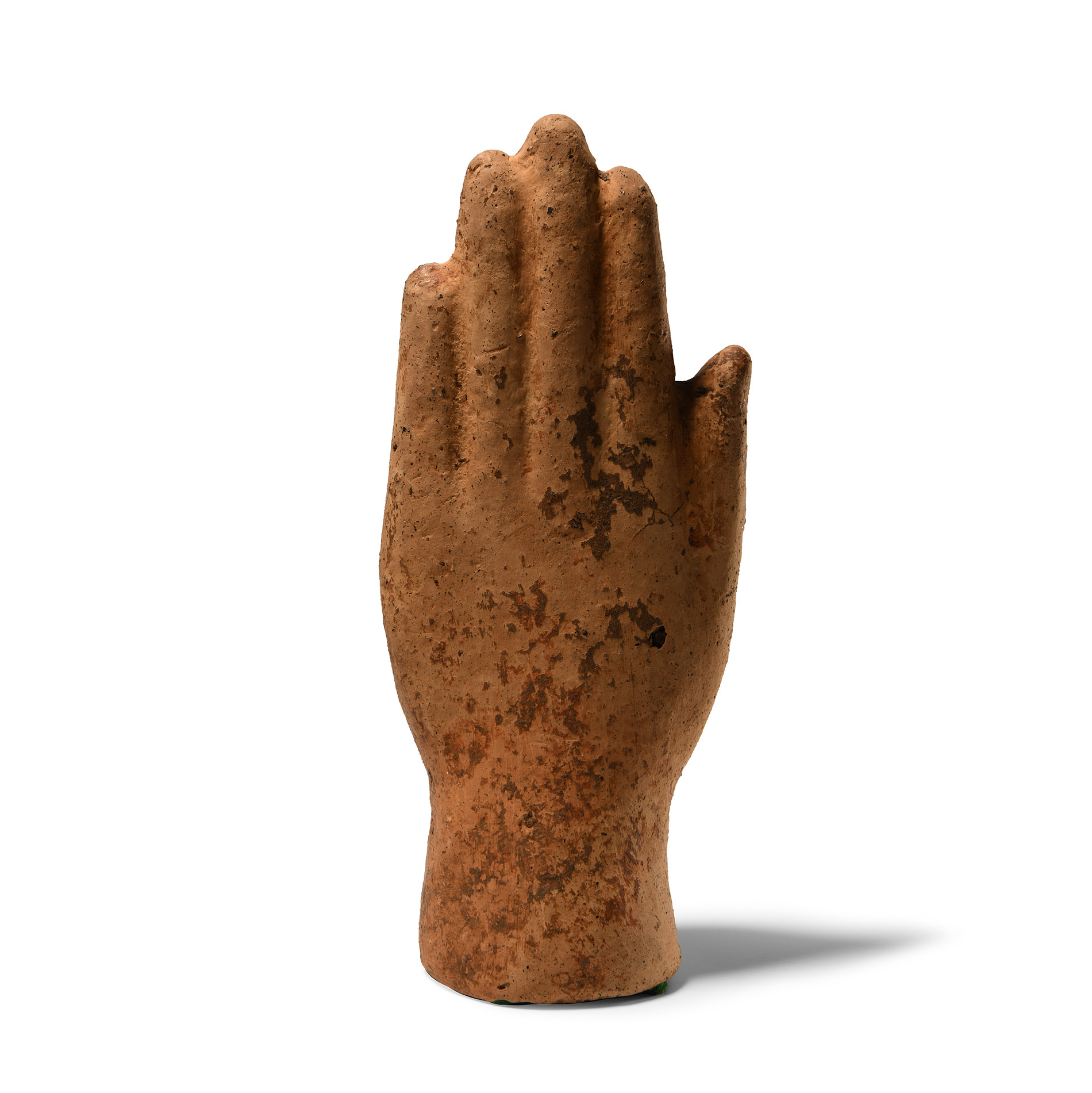
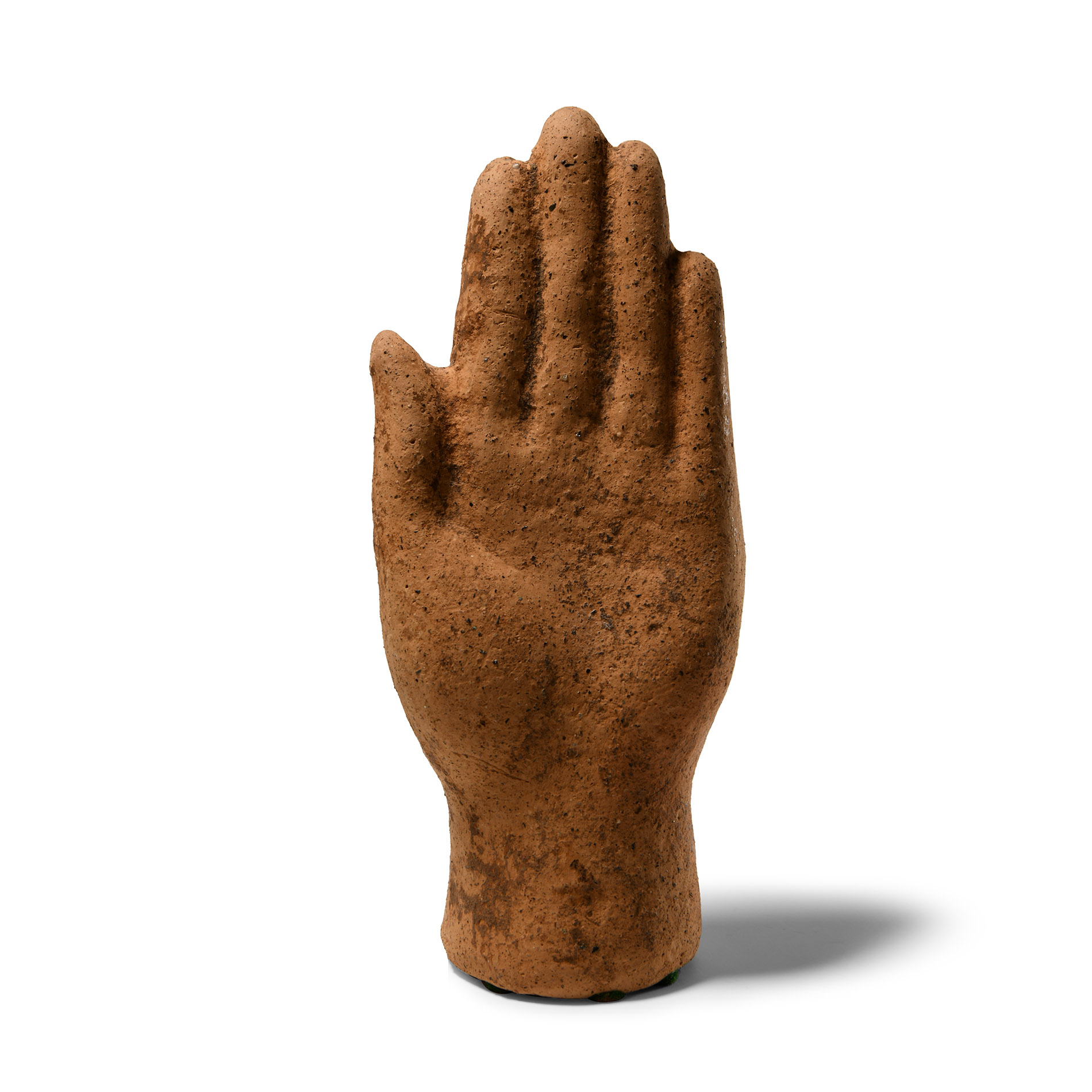
Etruscan Terracotta Votive Hand
CIRCA 4TH CENTURY B.C.
8 in. (430 grams, 20.5 cm).
Hollow-formed model hand with fingers held straight together.
ProvenanceOld private collection, Jacksonville, Florida, USA.
Acquired from Agora Auctions, Auction 60, no.417.
Property of a South Australian private collector, with collection reference 16.03.
Accompanied by detailed collector's catalogue pages including description and images.
See de Grummond, Religion of the Etruscans, for discussion.
FootnotesVotives of an anatomical nature began in the Hellenistic or late Classical period, where they were associated with healing and with fertility.The red pigment on the votive suggests that it was provided by a male; female hands were white or pink. The votives were provided to visitors at the temple, and were disposed of over time.
CONDITIONTimeLine Auctions follows a vetting process to ensure the authenticity and legality of all items, reinforcing our commitment to integrity and responsible trading. Each antiquity, antique, and coin lot undergoes thorough examination by a vetting committee of at least ten external specialists, professional trade association members, scientists, and archaeologists: Our Vetting Process
AUCTIONS:
TimeLine is a leading auction house specialising in antiquities, ancient art, collectables, natural history, coins, medals, and books. Our auctions offer museums, collectors, historians, and enthusiasts the opportunity to acquire unique and historically significant pieces.
-
Greek Black-Glazed Plate
5th-4th century B.C.Estimate: £300 - 400 (‡+bp*)
Opening Bid: £150
Shallow-bodied with broad foot; incised fluting around the exterior body and rim. 192 grams, 12.7 cm wide
Acquired in the 1960s-1970s. Ex European private collection. -
Indo-Greek Terracotta Forger's Mould Group
Circa 2nd-1st century B.C.Sold for (Inc. bp): £442
Group of discoid clay moulds for casting contemporary counterfeit coins. 43 grams total, 25-32 mm
Private collection formed in the 1990s. Acquired from a central London gallery. Property of an Essex gentleman. -
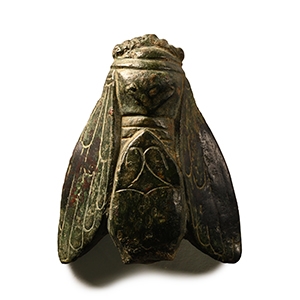
Greek Bronze Snake Biting a Cicada Mount Fragment
Circa 5th century B.C.Sold for (Inc. bp): £520
D-section insect body with lateral splayed wings, merging with the head of a serpent with scale detailing. 46.15 grams, 43 mm
From the collection of an London antiquarian, 1980s.
