
Loading, please wait...
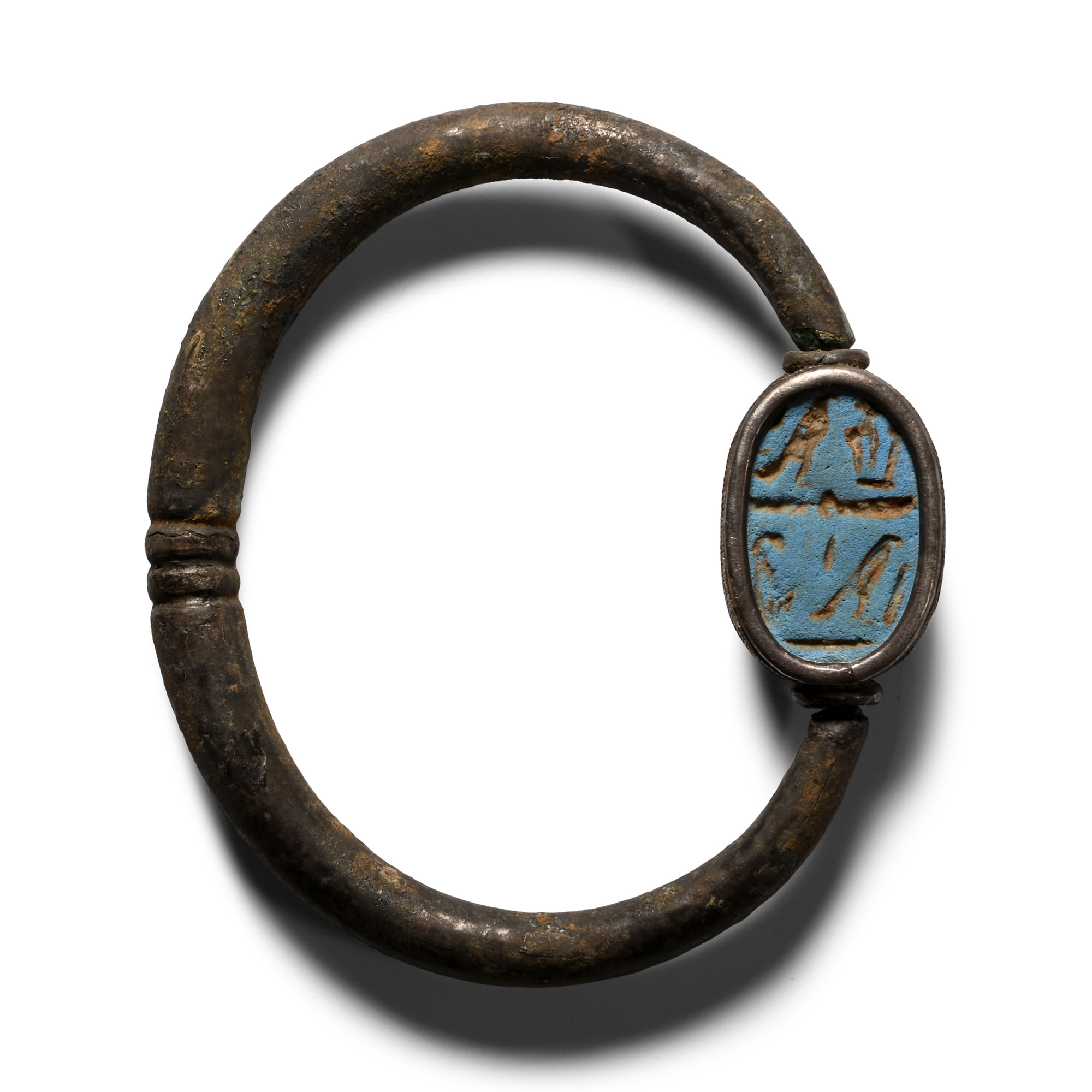
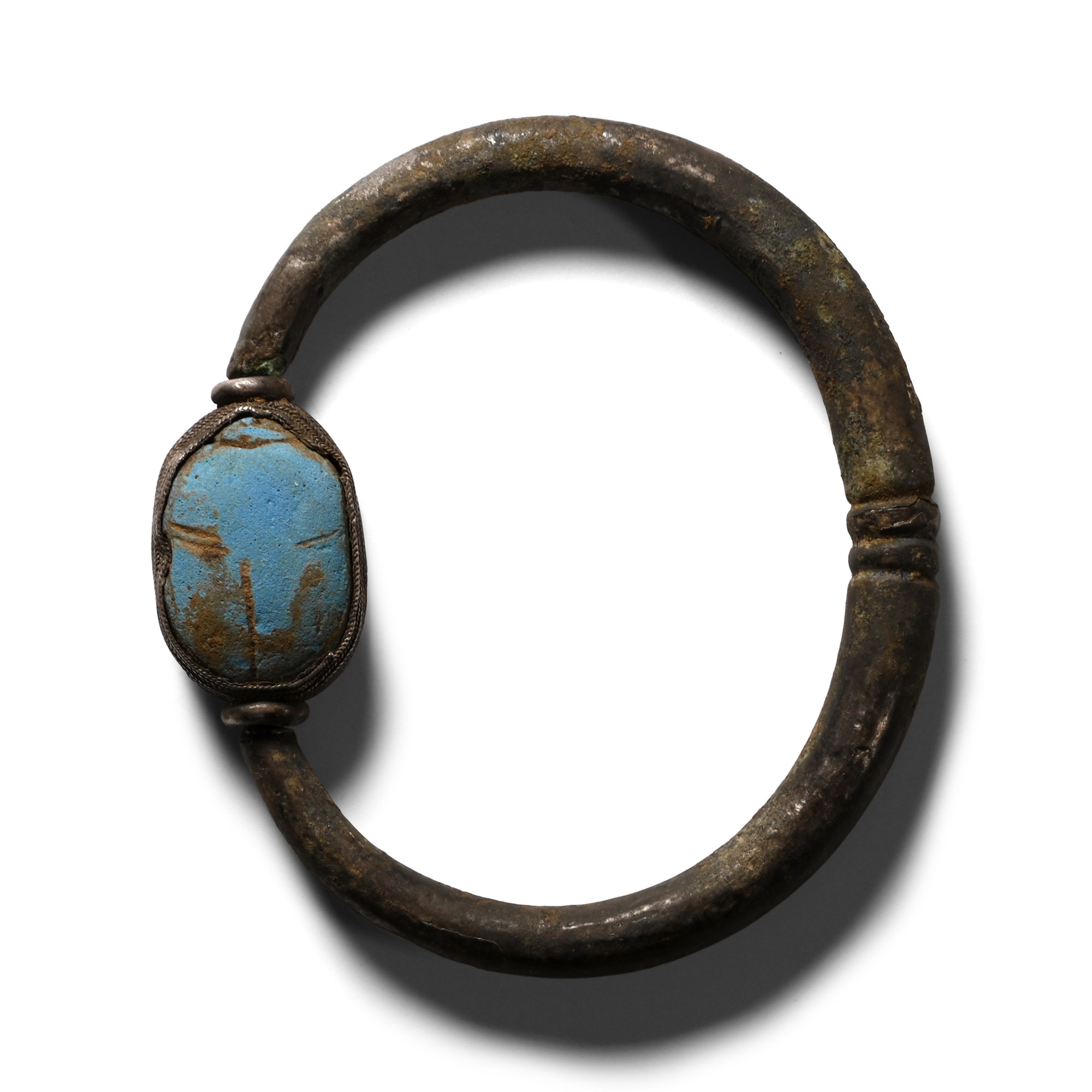
LOT 0094
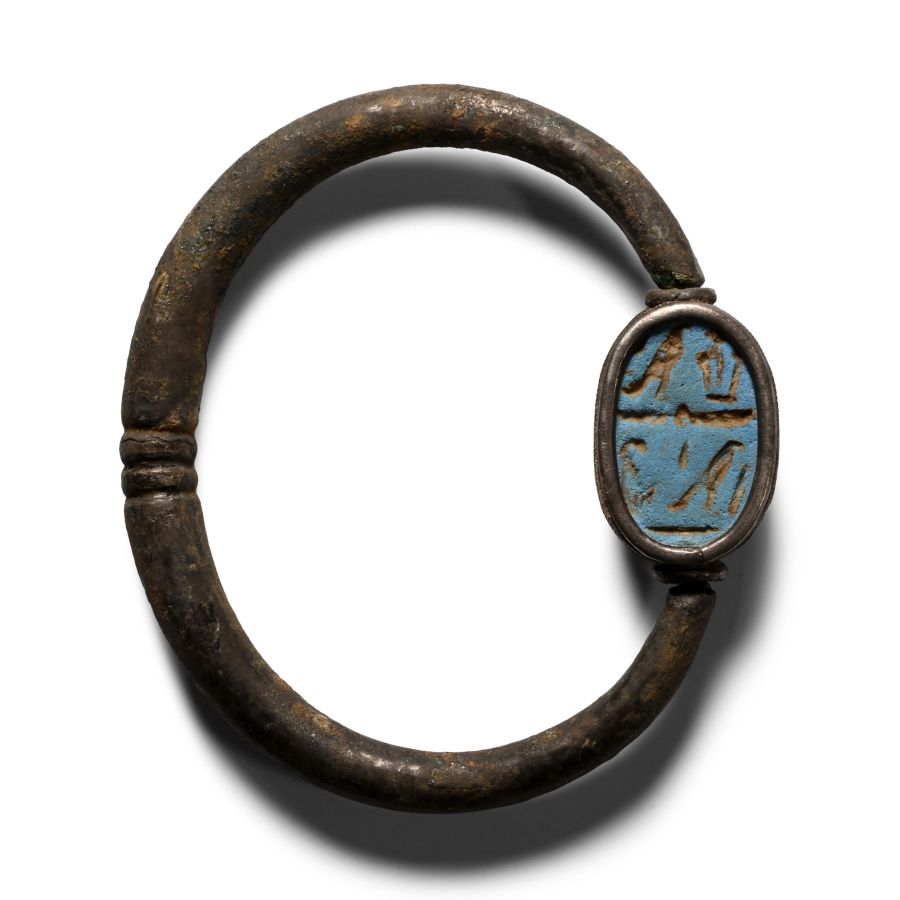
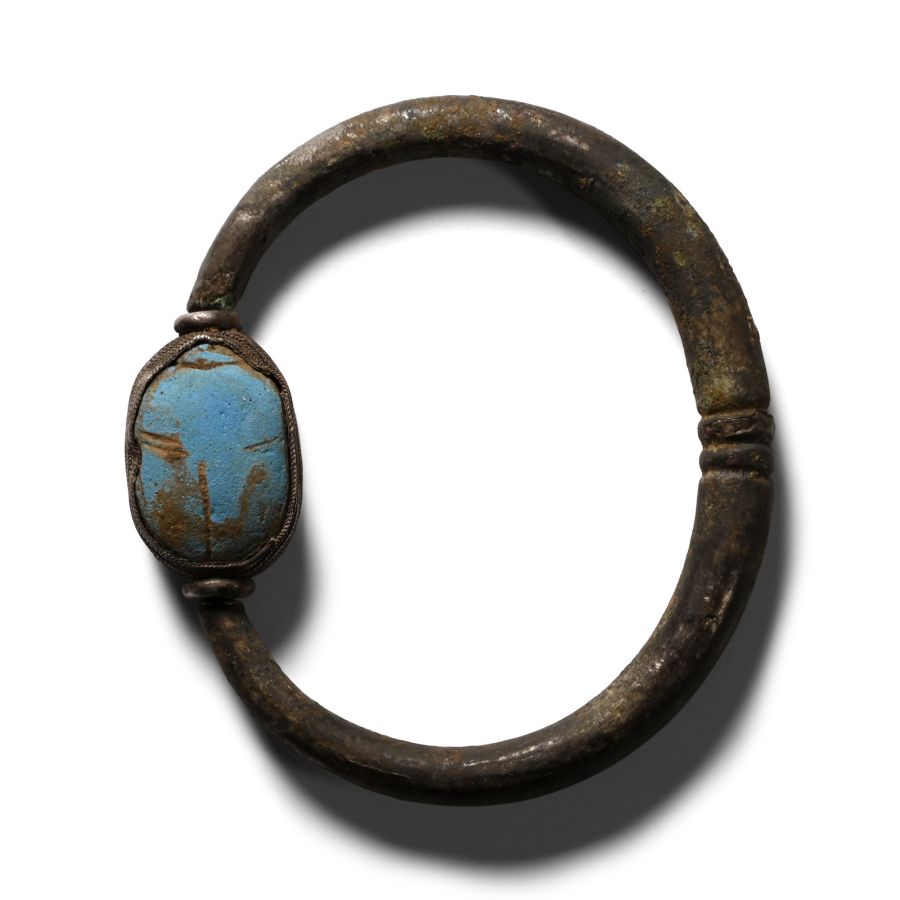
Etruscan Silver Bracelet with Mounted Scarab
6TH CENTURY B.C.
2 1/4 in. (24.8 grams, 57.6 mm).
Hollow-formed tapering shank with rotating cell containing a scarab with hieroglyphs to the underside.
ProvenanceAcquired in the mid 1980s-1990s.
Private collection, Switzerland, thence by descent.
Private collection, since the late 1990s.
This lot has been checked against the Interpol Database of stolen works of art and is accompanied by a search certificate number no.12660-234644.
This lot has been cleared against the Art Loss Register database, and is accompanied by an illustrated lot declaration signed by the Head of the Antiquities Department, Dr Raffaele D'Amato.
TimeLine Auctions follows a vetting process to ensure the authenticity and legality of all items, reinforcing our commitment to integrity and responsible trading. Each antiquity, antique, and coin lot undergoes thorough examination by a vetting committee of at least ten external specialists, professional trade association members, scientists, and archaeologists: Our Vetting Process
AUCTIONS:
TimeLine is a leading auction house specialising in antiquities, ancient art, collectables, natural history, coins, medals, and books. Our auctions offer museums, collectors, historians, and enthusiasts the opportunity to acquire unique and historically significant pieces.
-
Greek Attic Red-Figure Squat Lekythos Attributed to the Meidias Painter
Circa 420-400 B.C.Estimate: £2,000 - 3,000 (‡+bp*)
Opening Bid: £1,000
Comprising a bulbous body with narrow neck and handle to the rear; radiating petals on the neck with a band of volute scrolls below, the body showing a female in a dynamic pose, dressed in an elaborate long dress and holding a plate of fruit with her left hand, a seated female before her; attributed to the Meidias Painter; some restoration. 95 grams, 10.9 cm
Ex Prof. Dr Hans (1918-1984) and Dr Ines (1922-2013) Jucker, classical archaeologists, Bern, Switzerland. with Galerie Rhéa, Zurich, Switzerland. This lot has been checked against the Interpol Database of stolen works of art and is accompanied by a search certificate number no.12645-236462. This lot has been cleared against the Art Loss Register database, and is accompanied by an illustrated lot declaration signed by the Head of the Antiquities Department, Dr Raffaele D'Amato. -
.jpg)
Iberian Bronze Statuette
6th-4th century B.C.Estimate: £4,000 - 6,000 (‡+bp*)
Opening Bid: £1,800
Youthful male standing wearing a belted tunic with apron, arms spread wide, barefoot, bare-headed with short textured hair; mounted on a custom-made base. 215 grams total, 11.8 cm high including stand
Private collection, Paris, France, assembled in the 1950s-1960s. with Tessier-Sarrou & Associés, Paris, 2015. European private collection. Accompanied by a copy of an Art Loss Register certificate, no.S00107108. Accompanied by a copy of French cultural export passport no.167803. This lot has been checked against the Interpol Database of stolen works of art and is accompanied by a search certificate number no.12650-264612. This lot has been cleared against the Art Loss Register database, and is accompanied by an illustrated lot declaration signed by the Head of the Antiquities Department, Dr Raffaele D'Amato. -
.jpg)
Greek Archaic Black-Figure Kylix with Inscriptions
550-530 B.C.Sold for (Inc. bp): £10,530
With broad flat foot and short stem, broad bowl with carination at the shoulder and two strap shoulders; a palmette on each side of the handle; Side A) a standing siren with its wings spread, Greek inscription below 'XAIPE KAI ΠIEI EY' (Rejoice and drink well); Side B) a grazing stag with large antlers, Greek inscription below 'XAIPE KAI ΠIEI EY' (Rejoice and drink well). 178 grams, 21 cm wide
Acquired in the mid 1980s-1990s. Private collection, Switzerland, thence by descent. Private collection, since the late 1990s. This lot has been checked against the Interpol Database of stolen works of art and is accompanied by a search certificate number no.12640-236638. This lot has been cleared against the Art Loss Register database, and is accompanied by an illustrated lot declaration signed by the Head of the Antiquities Department, Dr Raffaele D'Amato.
