
Loading, please wait...
LOT 0620
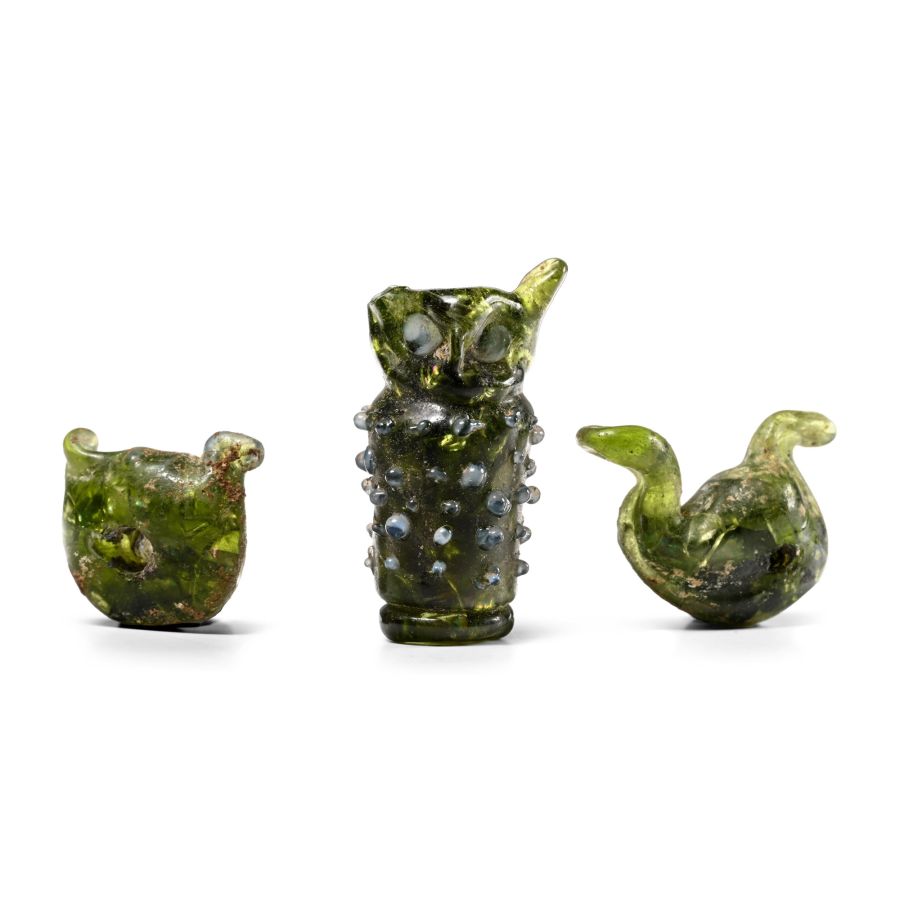
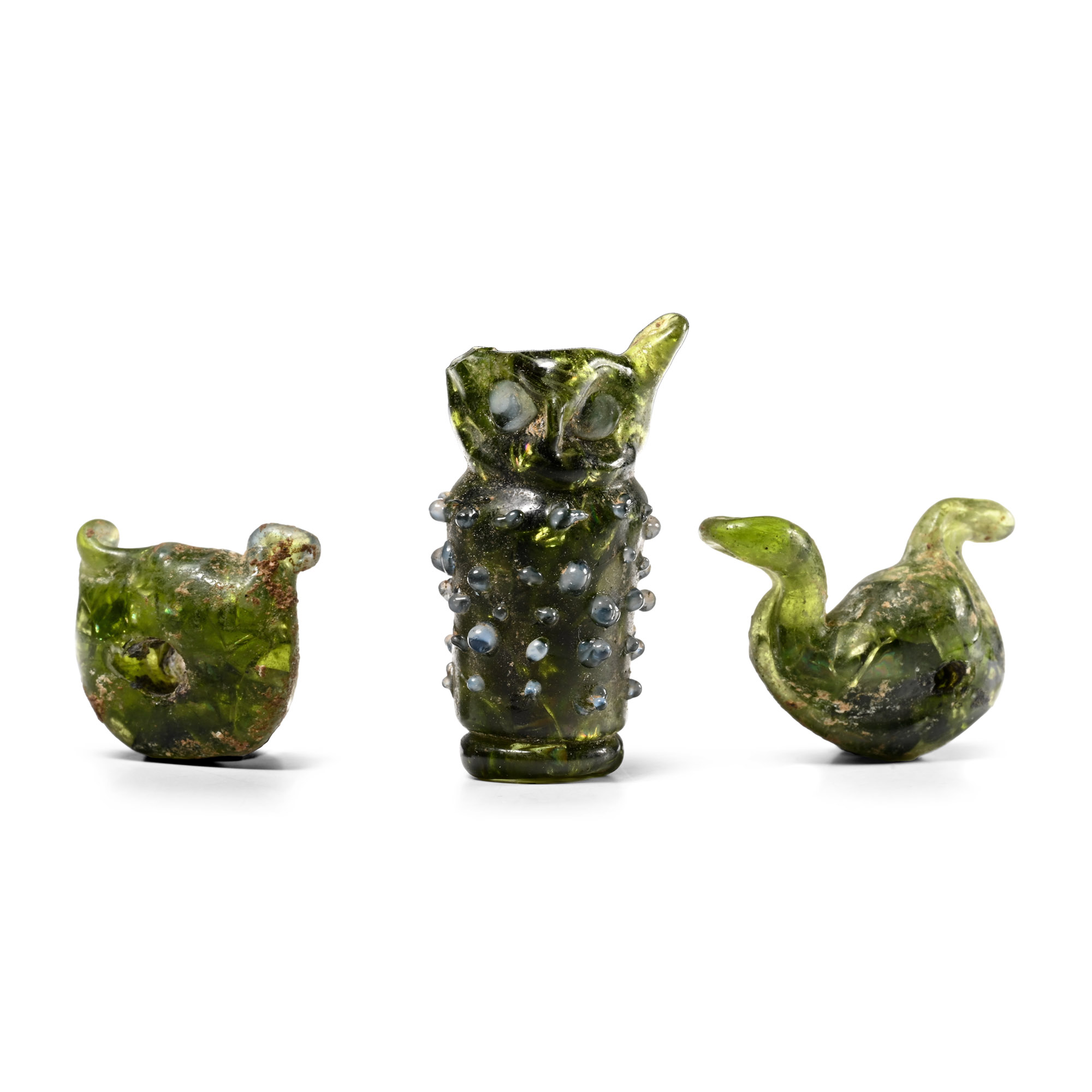
Etruscan Miniature Glass Amulet Collection
4TH-3RD CENTURY B.C.
3/4 - 1 1/8 in. (11.4 grams total, 17-29 mm).
Comprising: a tubular green glass fitting with applied white-glass spines, pinched beak and broad eyes with spurs at the ears, probably an owl; a D-shaped oblate with central piercing and spurs to the angles, perhaps a bird; similar with longer curved spurs, probably a duck. [3]
ProvenanceAcquired in the mid 1980s-1990s.
Private collection, Switzerland, thence by descent.
Private collection, since the late 1990s.
This lot has been checked against the Interpol Database of stolen works of art and is accompanied by a search certificate number no.12310-222342.
TimeLine Auctions follows a vetting process to ensure the authenticity and legality of all items, reinforcing our commitment to integrity and responsible trading. Each antiquity, antique, and coin lot undergoes thorough examination by a vetting committee of at least ten external specialists, professional trade association members, scientists, and archaeologists: Our Vetting Process
AUCTIONS:
TimeLine is a leading auction house specialising in antiquities, ancient art, collectables, natural history, coins, medals, and books. Our auctions offer museums, collectors, historians, and enthusiasts the opportunity to acquire unique and historically significant pieces.
LOT 0620
Etruscan Miniature Glass Amulet Collection
Estimate £1,800 - 2,400€2,090 - 2,780 (for guidance only)$2,430 - 3,240 (for guidance only)
-
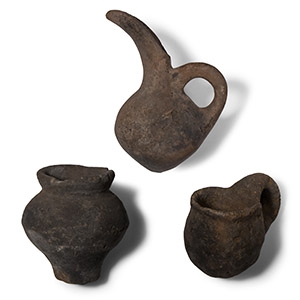
Cypriot Grey Ware Vessel Group
Middle Bronze Age, circa 2000-1650 B.C.Sold for (Inc. bp): £91
Comprising: dipper cup with loop handle; juglet with scooped spout; biconvex jar with carinated profile. 386 grams total, 7.3-10.9 cm
From a collection acquired on the UK art market from various auction houses and collections mostly before 2000. From an important Cambridgeshire estate; thence by descent. -
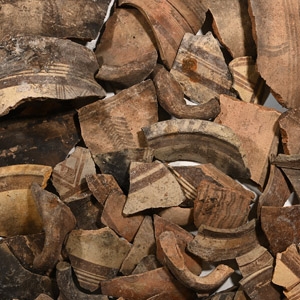
Large Cypriot Terracotta Vessel Fragments
Iron Age, Cypro-Geometric, 950-850 B.C.Sold for (Inc. bp): £247
Including rim and sidewall fragments, handles and painted band detailing. 10 kg total, 1.9-30 cm
From a collection acquired on the UK art market from various auction houses and collections mostly before 2000. From an important Cambridgeshire estate; thence by descent. -
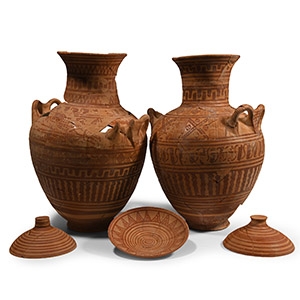
Large Greek Geometric Amphora Pair
8th century B.C.Sold for (Inc. bp): £2,340
Group of two fragmentary terracotta amphorae, one with much of the reverse absent, each with basal ring, broad shoulder and trumpet-shape mouth, two double-loop handles to the shoulder; painted horizontal bands of geometric ornamental motifs including meander, hatched lozenge, saltire, vesica and other designs; each with a domed lid. 4.3 kg total, 13 - 38.5 cm
Acquired it on the European art market since the 1970s. with Herakles Numismatik & Antiquitäten GmbH, München, Germany. Kept in the UK since the early 2000s. This lot has been checked against the Interpol Database of stolen works of art and is accompanied by a search certificate number no.12311-218585.
