
Loading, please wait...
LOT 0061
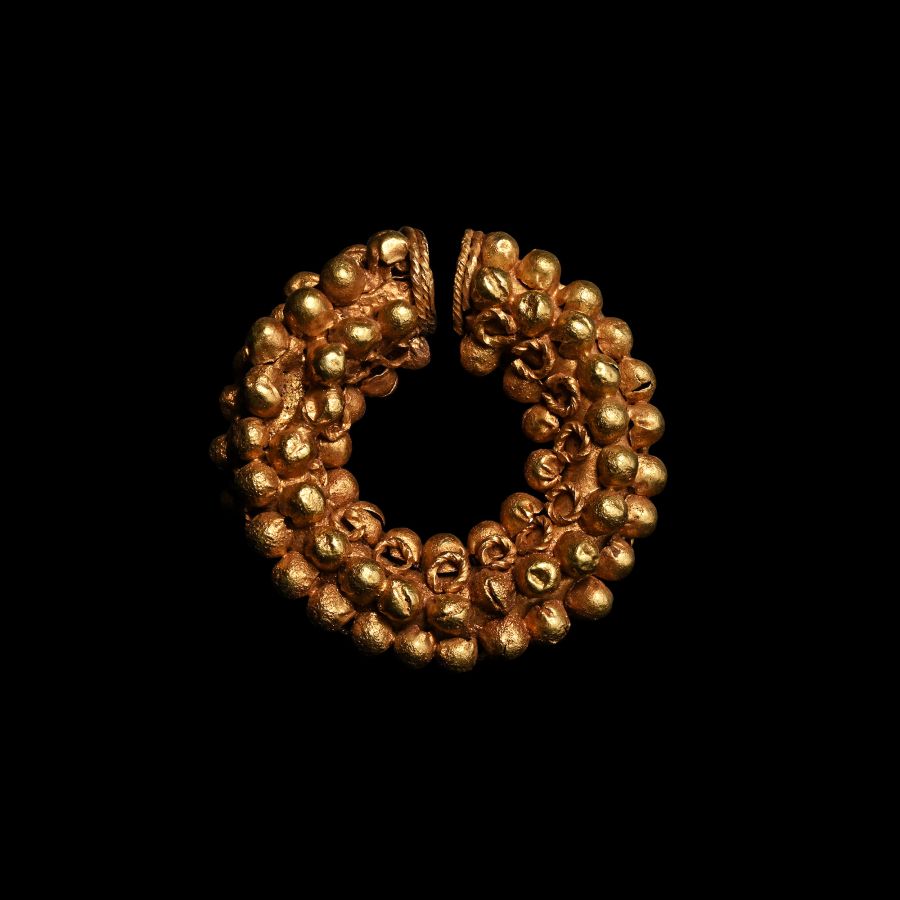
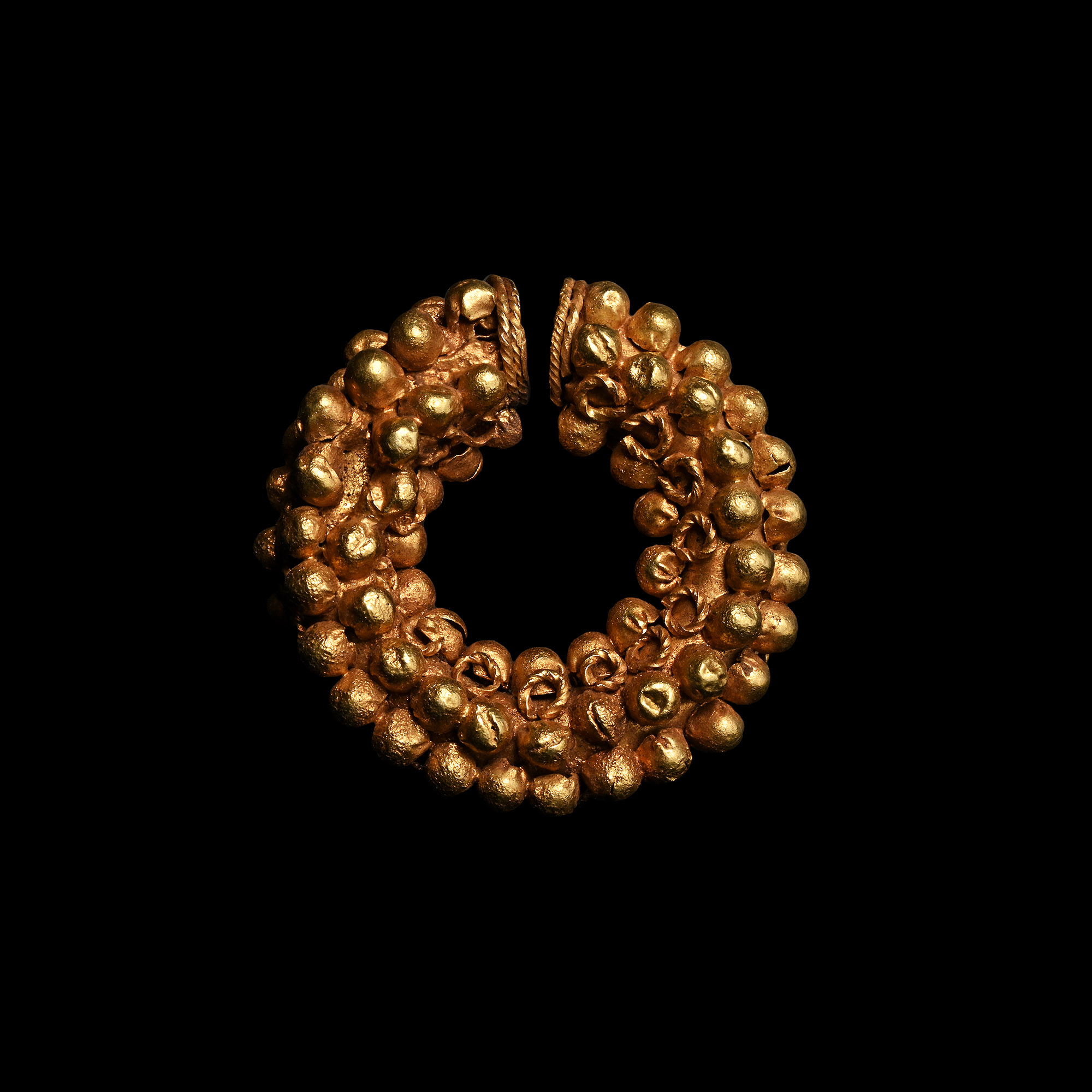
Etruscan Gold Leech Earring
3RD CENTURY B.C.
1 1/8 in. (7.61 grams, 30 mm).
Formed with a hollow c-shaped body adorned with five rows of hollow spheres and a double filigree ropework band, two rows of filigree hoops to the inner face.
ProvenanceFrom the collection of a North American gentleman, formed in the 1990s.
LiteratureCf. Marshall, F.H., Catalogue of the Jewellery Greek, Etruscan & Roman in the Departments of Antiquities, British Museum, item 2265, for construction.
CONDITIONTimeLine Auctions follows a vetting process to ensure the authenticity and legality of all items, reinforcing our commitment to integrity and responsible trading. Each antiquity, antique, and coin lot undergoes thorough examination by a vetting committee of at least ten external specialists, professional trade association members, scientists, and archaeologists: Our Vetting Process
AUCTIONS:
TimeLine is a leading auction house specialising in antiquities, ancient art, collectables, natural history, coins, medals, and books. Our auctions offer museums, collectors, historians, and enthusiasts the opportunity to acquire unique and historically significant pieces.
-
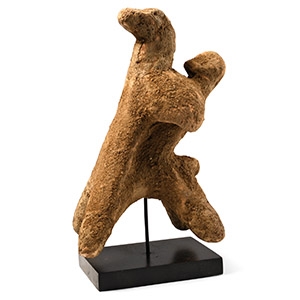
Archaic Greek Terracotta Figure of Mounted Warrior with Shield
7th-5th century B.C.Sold for (Inc. bp): £91
The figure comprising a stylised horse with elongated neck, mounted by a bearded rider figure holding a shield; mounted on a custom-made display stand. 275 grams total, 14.5 cm high including stand
Acquired before 1990. From an old German collection. From the private collection of John Meredith, acquired since the 1990s; thence by descent.
Terracotta figurines of horse and rider were common grave offerings in Boeotia, northwest of Attica, particularly during the 6th century B.C. Representations of warriors on horseback were already widespread in the Geometric Period, and widely used in Cyprus during this period. The rider, although influenced by Cypriot designs, does not show typical Cypriot characteristics. -
.jpg)
Monumental Early Etruscan Impasto Kyathos
7th century B.C.Estimate: £3,500 - 4,500 (‡+bp*)
Opening Bid: £1,750
Fluted body tapering to a narrow foot, the shoulders decorated with tiered bosses, short neck with flared mouth; wide handle perforated with a triangle. 1.18 kg, 25 cm wide
Estate of Mr Bruno Fellinger (1926-2016), Küsnacht, Switzerland. with Galerie Rhéa, Zurich, Switzerland. This lot has been checked against the Interpol Database of stolen works of art and is accompanied by a search certificate number no.12648-236390.
Buccheroid impasto is the name attributed by modern archaeologists to wheel thrown pottery. The clay in these specimens is less refined, and the firing techniques less precise than in the later bucchero ware. -
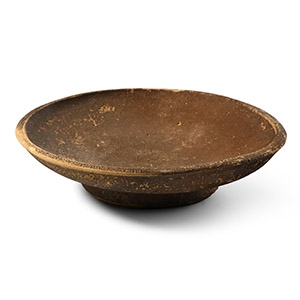
Greek Terracotta Pedestal Dish
Apulian, 4th century B.C.Sold for (Inc. bp): £20
Broad and shallow with low foot, chamfered rim. 75 grams, 98 mm
From an old German collection. From the property of a late Lincolnshire, UK, gentleman.
