
Loading, please wait...
LOT 0111
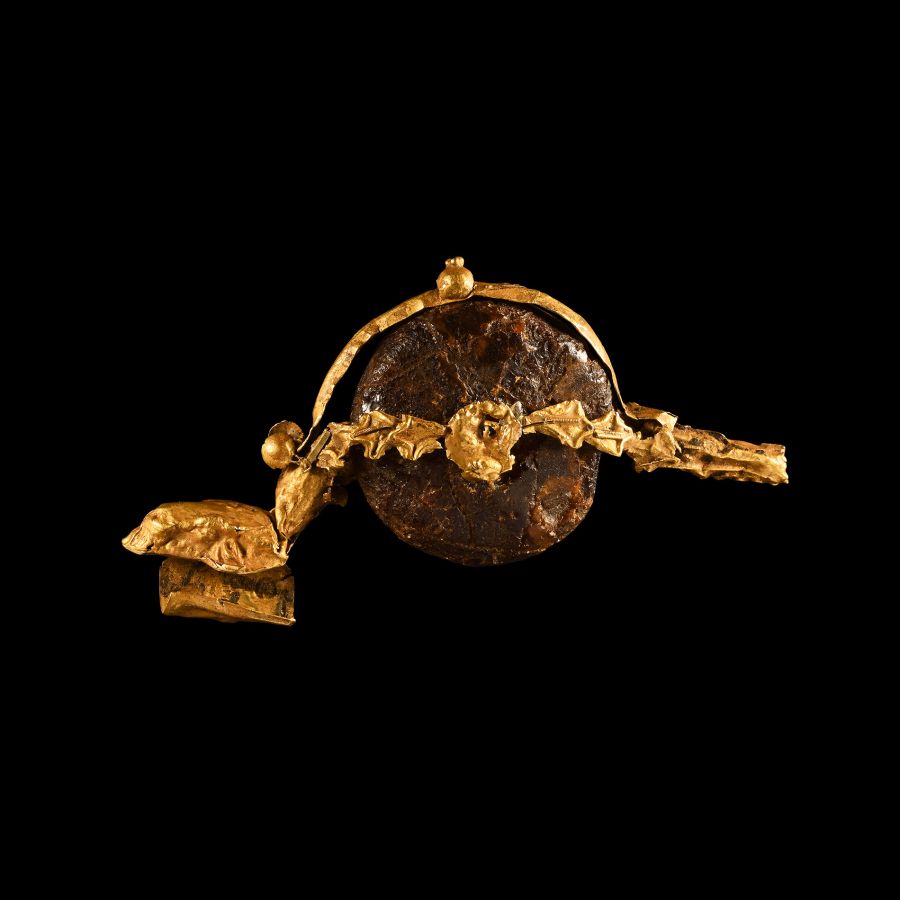
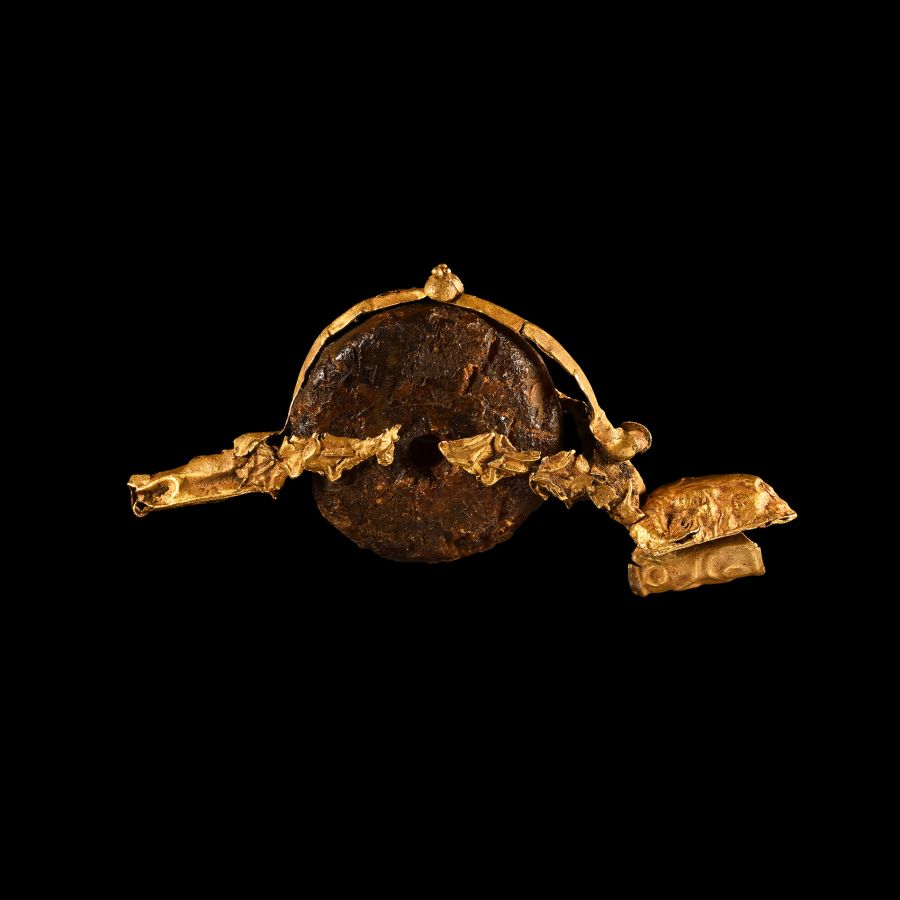
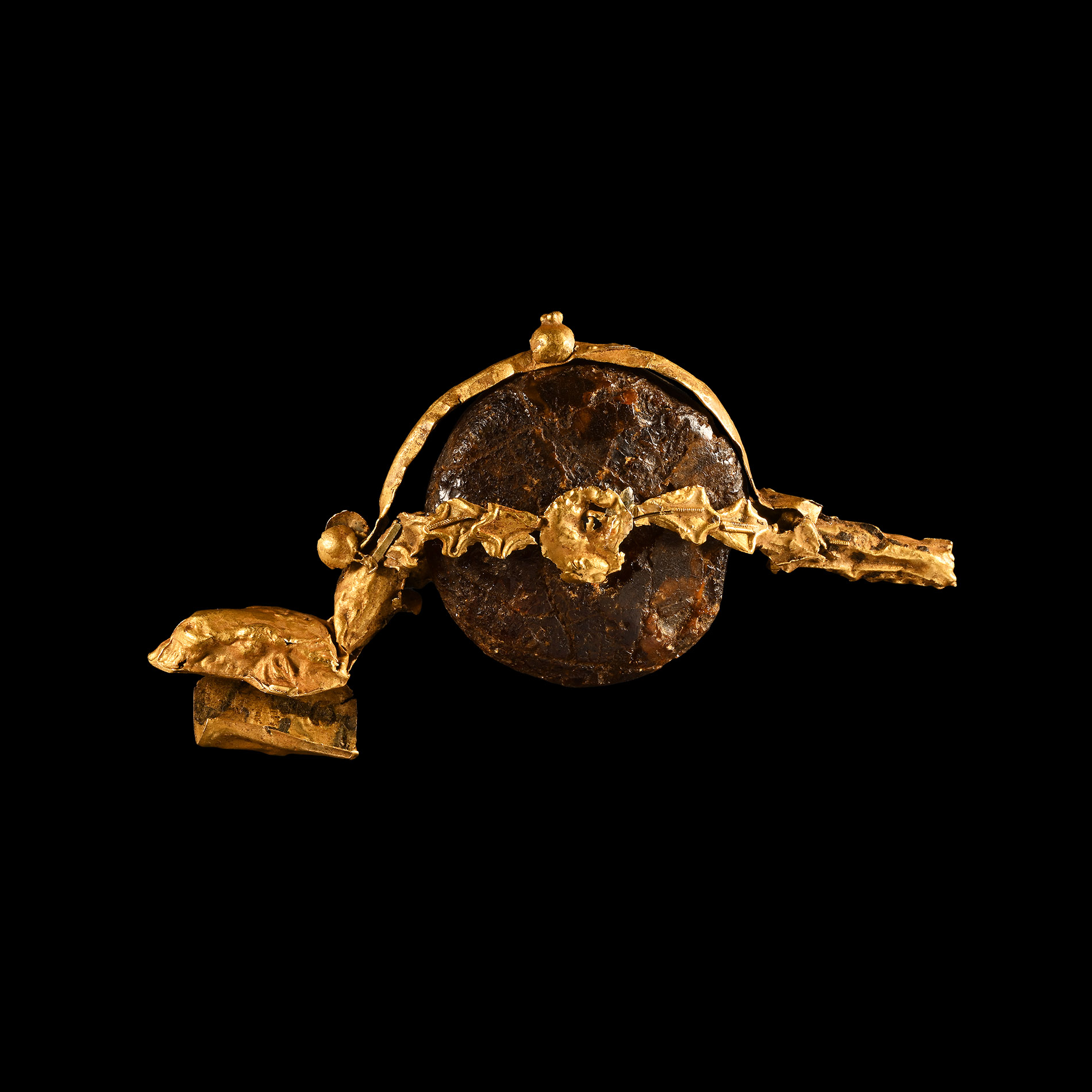
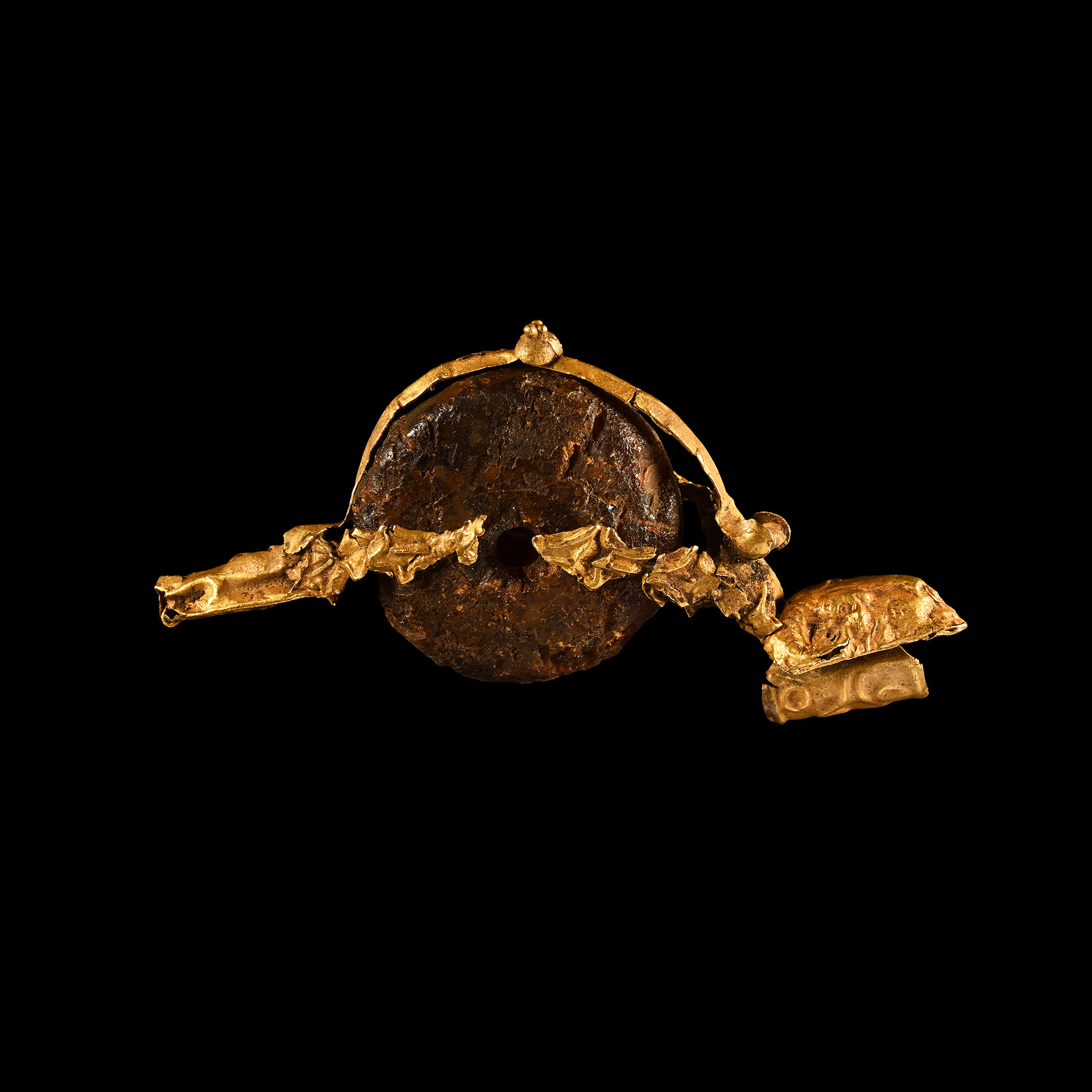
Etruscan Gold Fibula with Amber Disc
CIRCA 4TH-3RD CENTURY B.C.
3 in. (12.42 grams, 75 mm).
Bow brooch with hollow-formed head, foot and bow; the head formed as the head of a goat; bow enclosing an annular amber panel.
ProvenancePrivate collection of Mr S.A., Switzerland, 1990s, thence by descent.
CONDITIONTimeLine Auctions follows a vetting process to ensure the authenticity and legality of all items, reinforcing our commitment to integrity and responsible trading. Each antiquity, antique, and coin lot undergoes thorough examination by a vetting committee of at least ten external specialists, professional trade association members, scientists, and archaeologists: Our Vetting Process
AUCTIONS:
TimeLine is a leading auction house specialising in antiquities, ancient art, collectables, natural history, coins, medals, and books. Our auctions offer museums, collectors, historians, and enthusiasts the opportunity to acquire unique and historically significant pieces.
-
Roman Bronze Hound Statuette
1st-2nd century A.D.Sold for (Inc. bp): £72
Modelled in the round in advancing pose with head lowered and mouth open, low-relief collar to the neck; mounted on a custom-made stand. 80 grams total, 52 mm including stand
From a collection acquired on the UK art market from various auction houses and collections mostly before 2000. From an important Cambridgeshire estate; thence by descent. -

Roman and Other Lead Weights
1st-18th century A.D.Sold for (Inc. bp): £20
Including discoid, melon, plano-convex and other types. 880 grams total, 19-37 mm
Acquired since the 1970s. From the private collection of a Surrey, UK, gentleman. -
Large Roman Silver Bow Brooch
Circa 2nd-3rd century A.D.Sold for (Inc. bp): £130
With incised foliage detail to the high arched bow and flat head plate with human face and radiating floral pattern engraved on both sides; catchplate and pin-loop to the reverse. 36.5 grams, 10.5 cm
Ex European collection, 1990s. Ex Den of Antiquity, Cambridgeshire, UK. Accompanied by a dealer's catalogue information card.
The fibula seems to be provincial type, of Romano-Germanic inspiration. This particularly characteristic fibula shape of the Romano-Germanic army, worn probably by the Germanic mercenaries of the Roman army, appeared in the later 2nd and partly at the beginning of the 3rd century A.D., under a form of large bow brooches with various types of head plates or spiral sleeves.
