
Loading, please wait...
LOT 0563
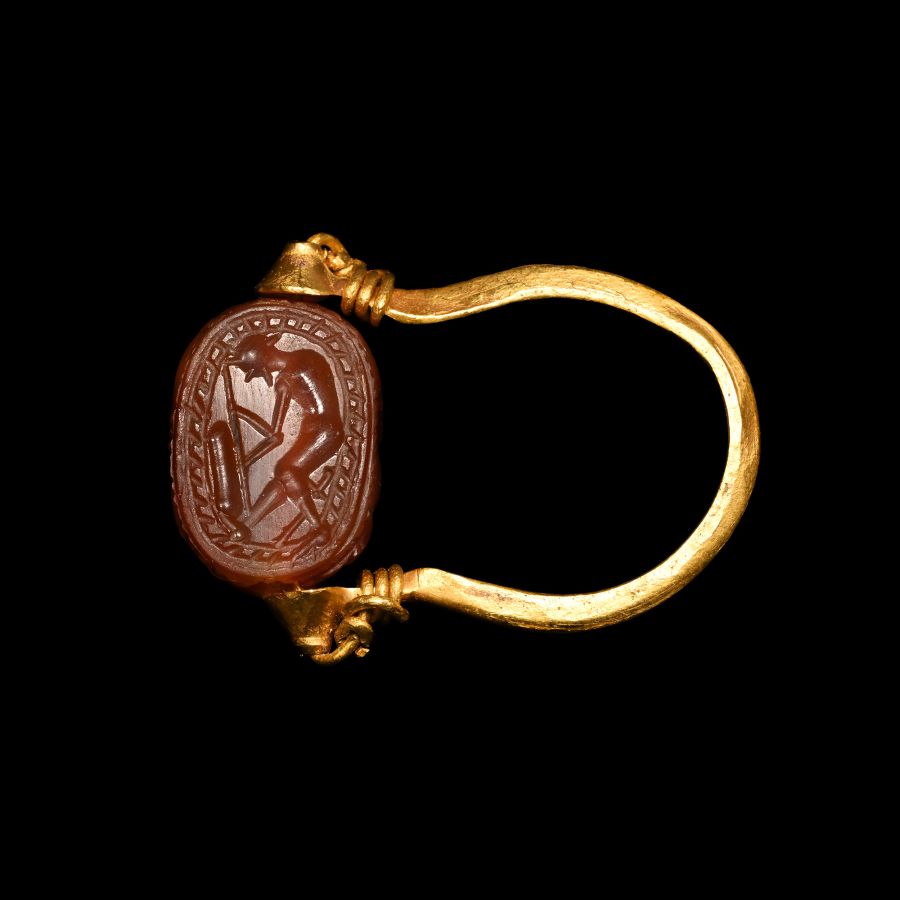
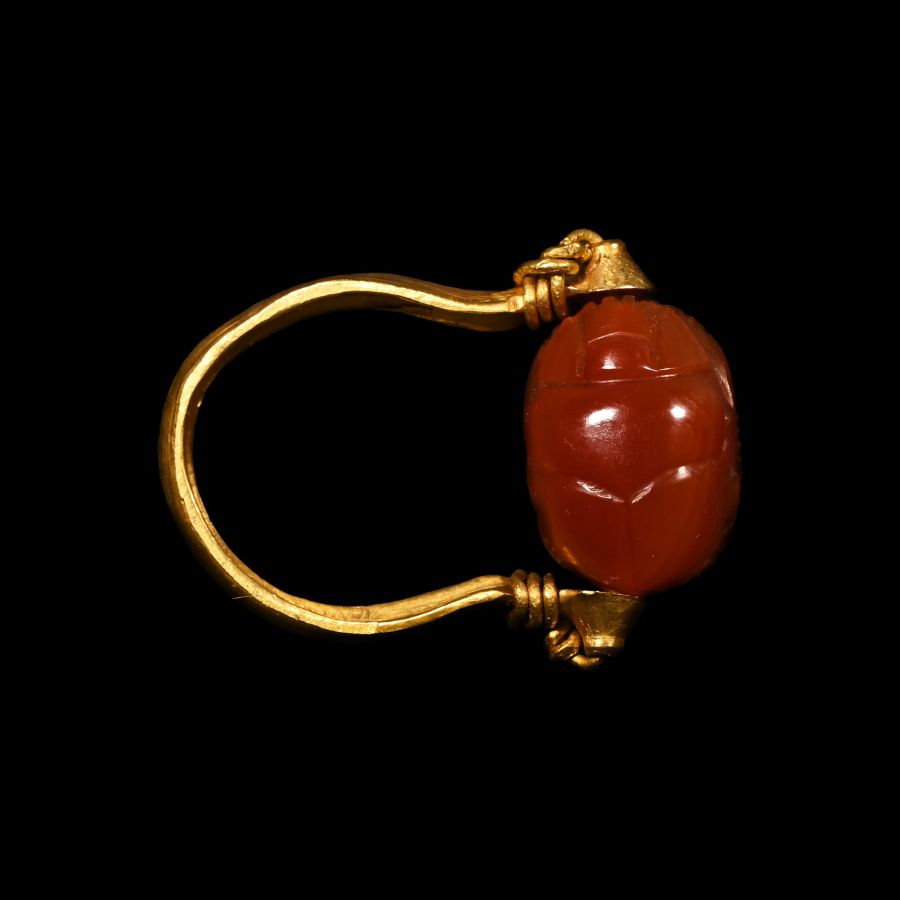
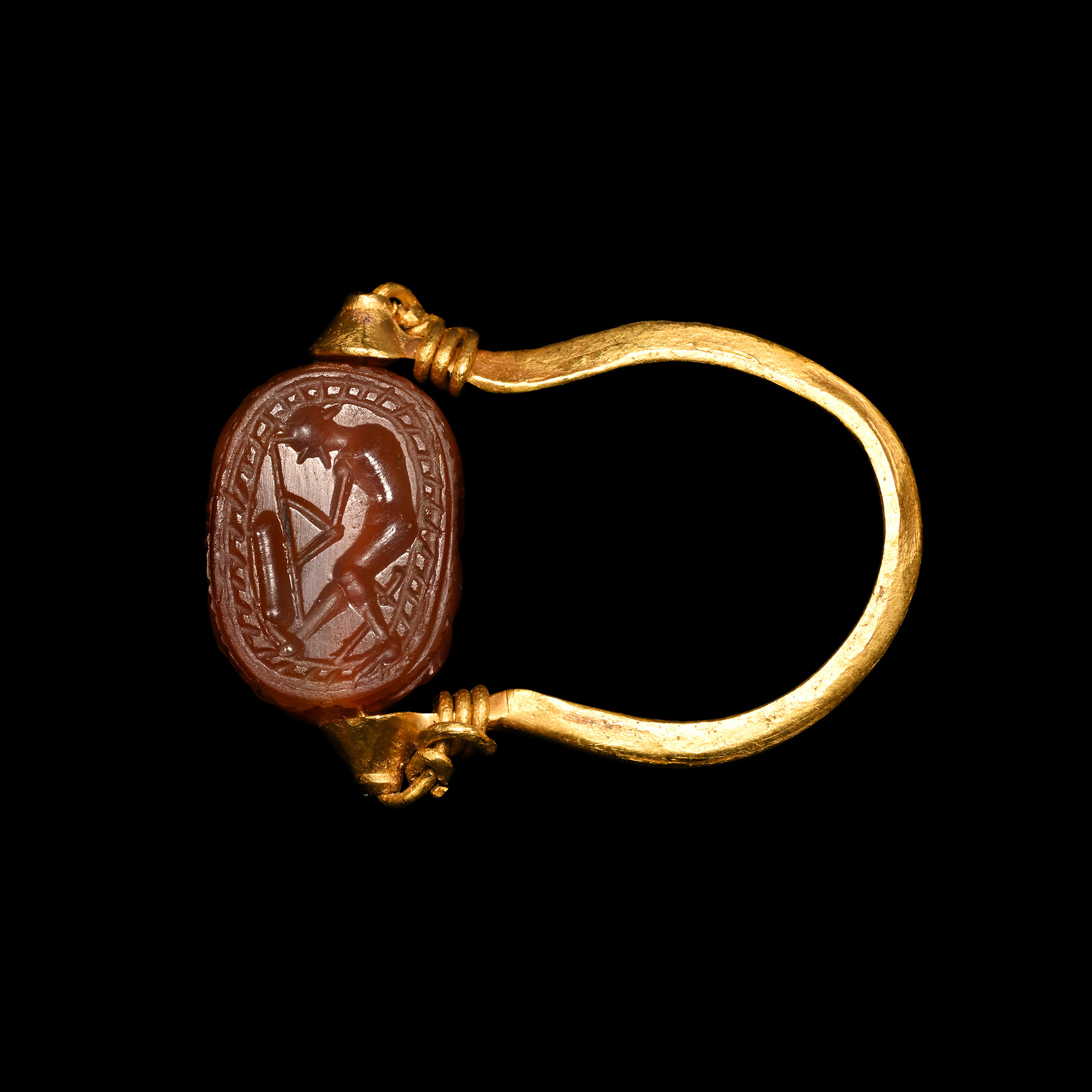
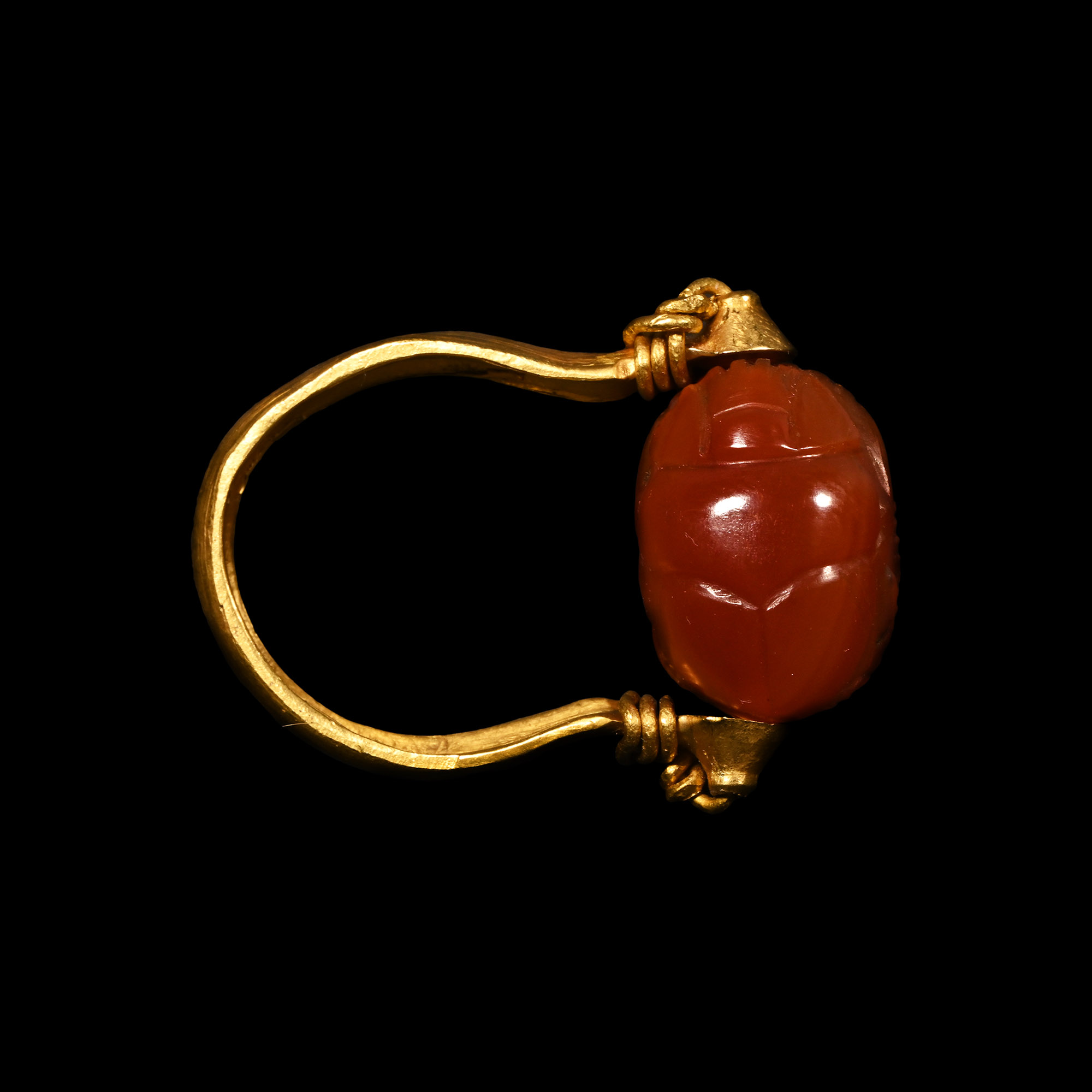
Etruscan Engraved Scarab in Gold Swivel Ring
CIRCA 3RD CENTURY B.C. AND LATER
1 3/8 in. (10.23 grams, 35.18 mm overall, 17.75 x 23.05 mm internal diameter (approximate size British P 1/2, USA 7 3/4, Europe 16.86, Japan 16)).
Carnelian scarab with flat underside, segmented border around a figure bent over his tools, set into a later swivel-mount with carinated hoop, wires wound round the shank at each shoulder. [No Reserve]
ProvenanceAcquired from a London dealer in the 1980s.
From the collection of a London antiquarian, formed since the 1980s.
This lot has been checked against the Interpol Database of stolen works of art and is accompanied by a search certificate number no.12745-234210.
This lot has been cleared against the Art Loss Register database, and is accompanied by an illustrated lot declaration signed by the Head of the Antiquities Department, Dr Raffaele D'Amato.
Cf. Chadour, A.B., Rings. The Alice and Louis Koch Collection, volume I, Leeds, 1994, item 43, for type.
CONDITIONTimeLine Auctions follows a vetting process to ensure the authenticity and legality of all items, reinforcing our commitment to integrity and responsible trading. Each antiquity, antique, and coin lot undergoes thorough examination by a vetting committee of at least ten external specialists, professional trade association members, scientists, and archaeologists: Our Vetting Process
AUCTIONS:
TimeLine is a leading auction house specialising in antiquities, ancient art, collectables, natural history, coins, medals, and books. Our auctions offer museums, collectors, historians, and enthusiasts the opportunity to acquire unique and historically significant pieces.
-
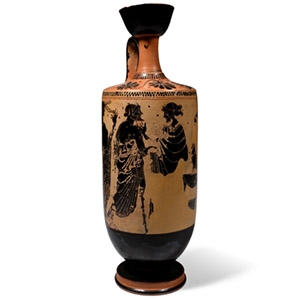
Greek Terracotta White-Ground Painted Lekythos Attributed to the Athena Painter
Circa 510-500 B.C.Estimate: £6,000 - 8,000 (‡+bp*)
Opening Bid: £3,000
Cylindrical with stepped foot, five palmettes above the shoulder, dynamic frieze of two men visiting two hetairai, each of the figures dressed in long pleated garments, at the centre of the scene, a hetaira on the right reaching towards the bearded male and gently touching his chin with her open hand, a tall draped table behind her with an amphora underneath and a standing bird on the top. 459 grams, 26.4 cm
H.A.C. (Herbert A. Cahn), 19 October 1979. Private collection, Bern, Switzerland. This lot has been checked against the Interpol Database of stolen works of art and is accompanied by a search certificate number no.12644-236376. This lot has been cleared against the Art Loss Register database, and is accompanied by an illustrated lot declaration signed by the Head of the Antiquities Department, Dr Raffaele D'Amato. -
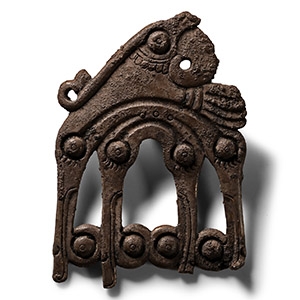
Thracian Silver Pendant
6th-3rd century B.C.Sold for (Inc. bp): £338
Openwork plaque depicting a stylised horse with curved body, bosses to the hips and shoulders, head turned backwards along the spine with looped reins; ribbed loop to the reverse. 41.5 grams, 75 mm
Acquired in the mid 1980s-1990s. From the family collection of Mr S.A., Switzerland, thence by descent. Private collection since the late 1990s. This lot is accompanied by an illustrated lot declaration signed by the Head of the Antiquities Department, Dr Raffaele D'Amato. -
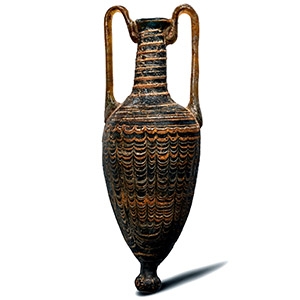
Greek Core-Formed Glass Amphoriskos
5th-3rd century B.C.Estimate: £3,000 - 4,000 (+bp*)
Opening Bid: £1,350
Elongated piriform amphora shape, tubular neck and everted rim, decorated with polychrome festooning and trails, applied amber-green handles and knop foot. 152 grams, 18 cm high
Acquired early 1990s. Ex private American collection; thence by descent. Private collection since 1998. This lot has been checked against the Interpol Database of stolen works of art and is accompanied by search certificate number no.12206-222129. This lot has been cleared against the Art Loss Register database, and is accompanied by an illustrated lot declaration signed by the Head of the Antiquities Department, Dr Raffaele D'Amato.
