
Loading, please wait...
LOT 0095
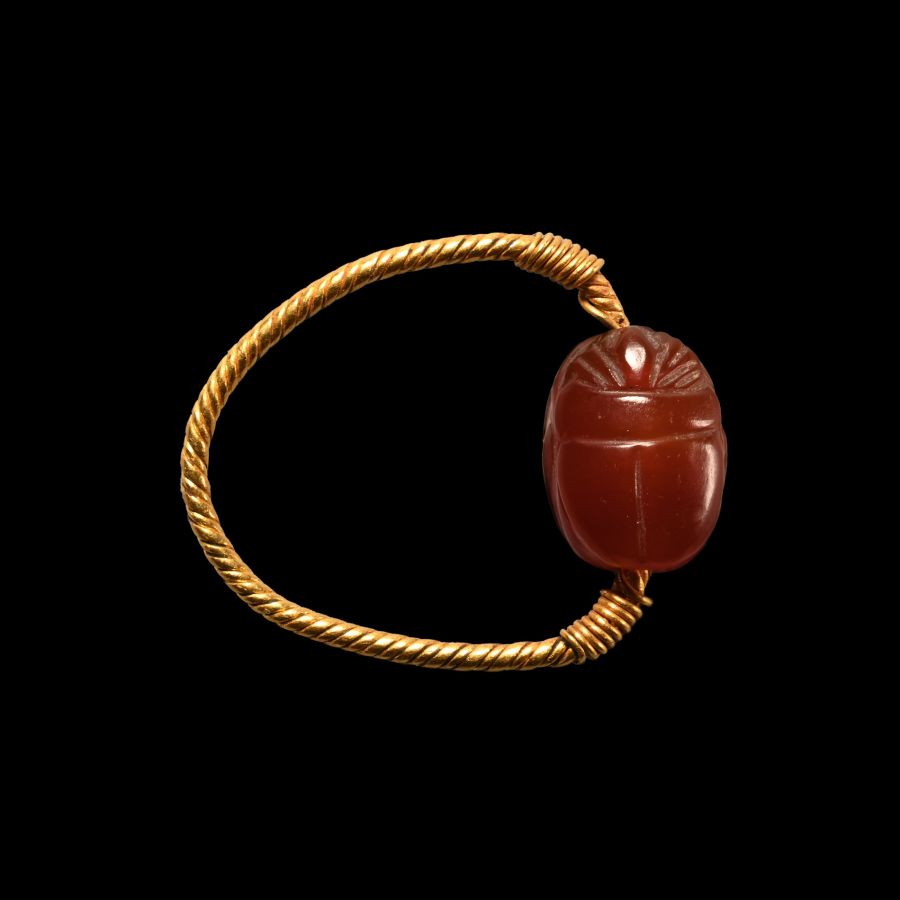
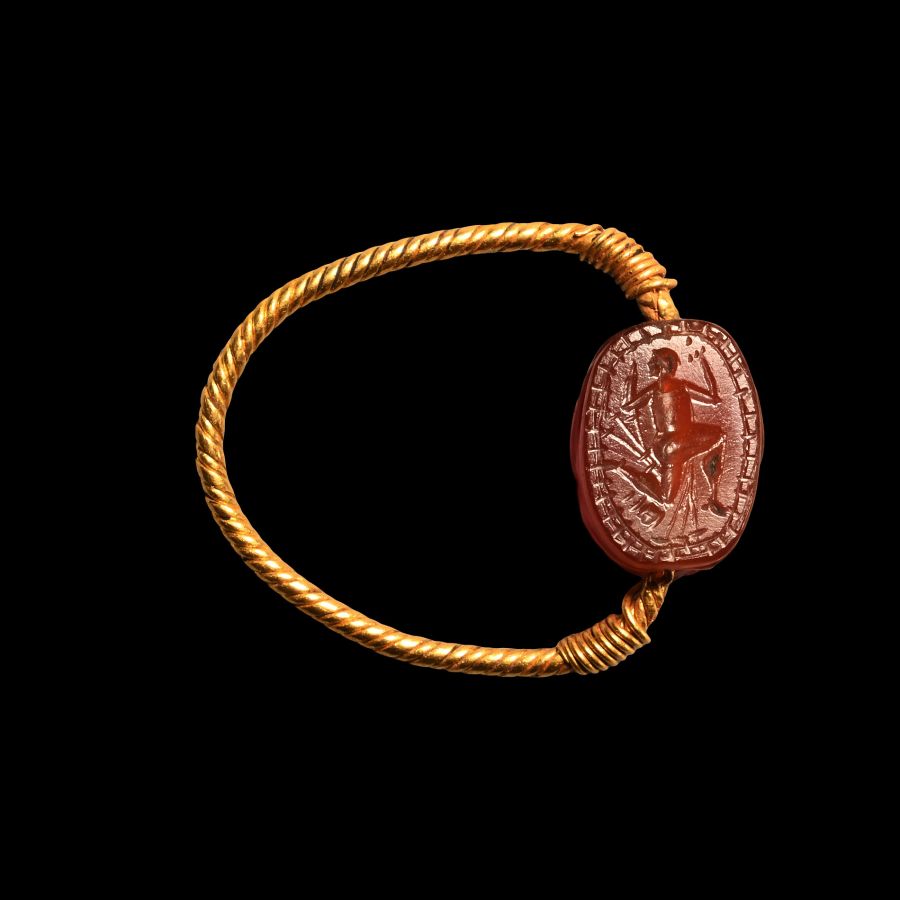
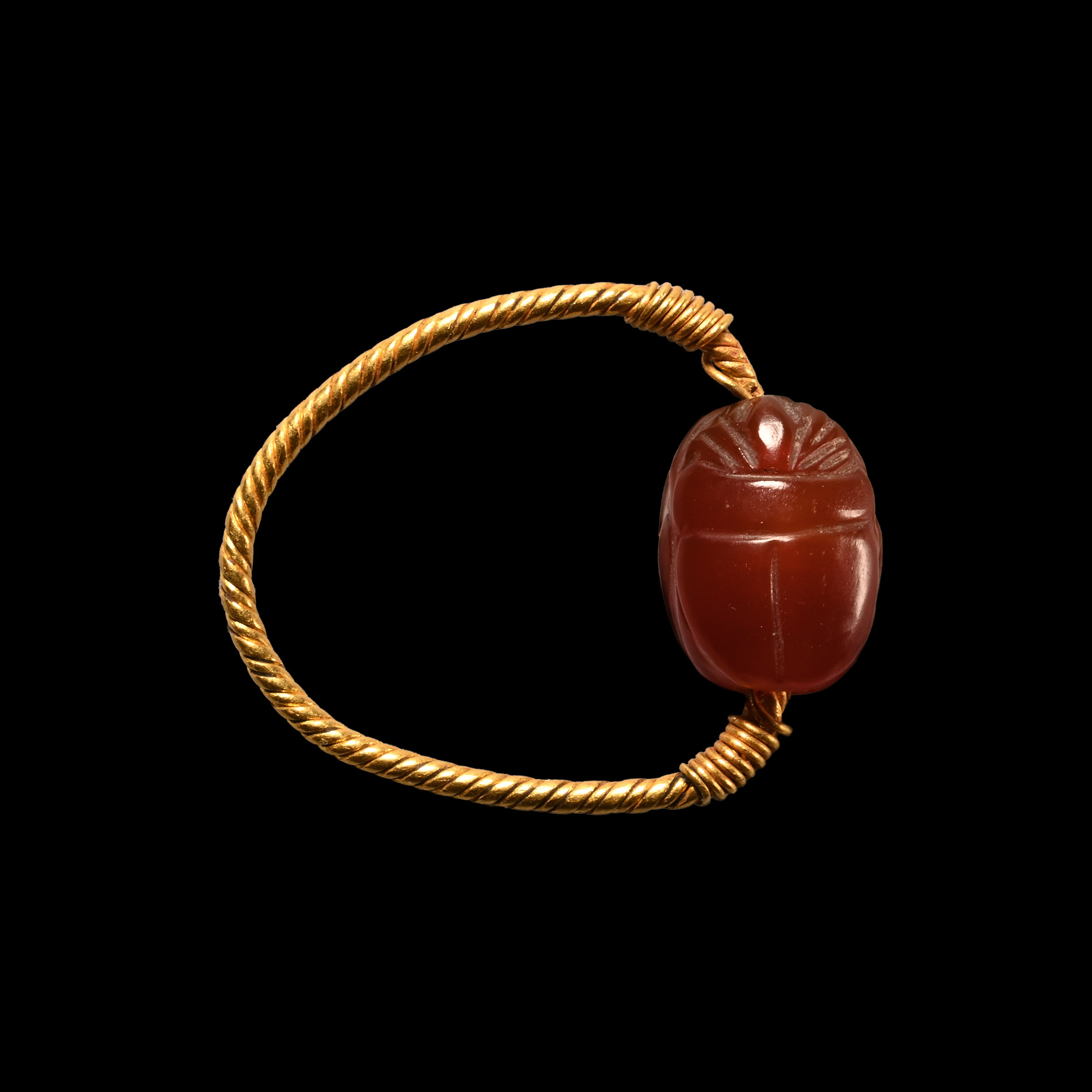
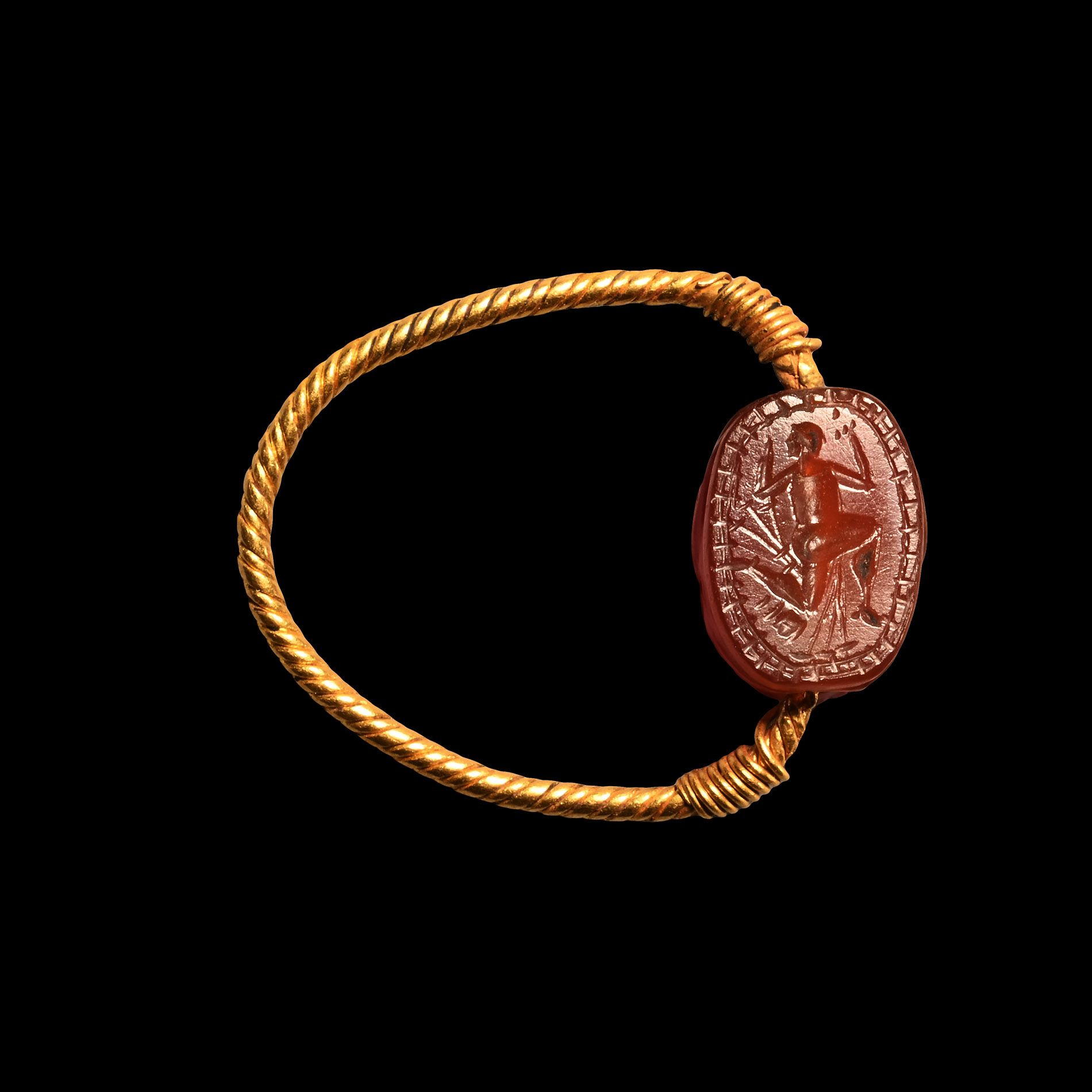
Etruscan Carnelian Scarab Gold Ring
5TH-4TH CENTURY B.C.
1 1/4 in. (4.62 grams, 31.50 mm overall, 21.60 mm internal diameter (approximate size British W, USA 11, Europe 25, Japan 24)).
Hoop made from twisted wire with coils to the shoulders, carnelian scarab bezel with carapace detailing and intaglio kneeling figure to the reverse.
ProvenanceAcquired from the collection of Mr K.A., a Parisian gentleman.
European private collection.
Cf. Chadour, A.B., Rings. The Alice and Louis Koch Collection, volume I, Leeds, 1994, items 41, 43, for type.
CONDITIONTimeLine Auctions follows a vetting process to ensure the authenticity and legality of all items, reinforcing our commitment to integrity and responsible trading. Each antiquity, antique, and coin lot undergoes thorough examination by a vetting committee of at least ten external specialists, professional trade association members, scientists, and archaeologists: Our Vetting Process
AUCTIONS:
TimeLine is a leading auction house specialising in antiquities, ancient art, collectables, natural history, coins, medals, and books. Our auctions offer museums, collectors, historians, and enthusiasts the opportunity to acquire unique and historically significant pieces.
-
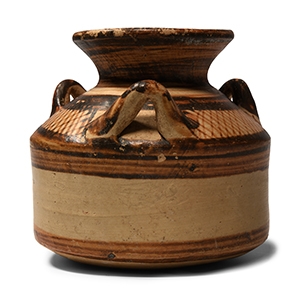
Mycenaean Painted Pottery Alabastron
13th-11th century B.C.Estimate: £1,500 - 2,000 (‡+bp*)
Opening Bid: £750
Drum-shaped with a sloping shoulder, short neck, trumpet-style neck and mouth and a gently rounded base; three loop handles at regular intervals around the shoulder; reddish-brown painted geometric bands and cross-hatching against a cream slip. 190 grams, 93 mm wide
Ex private collection, Holland. Acquired from Royal Athena Gallery, 2003. This lot has been checked against the Interpol Database of stolen works of art and is accompanied by search certificate number no.11852-206835. -
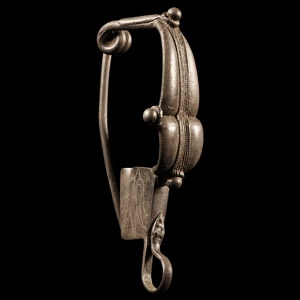
Greek Italic Silver Fibula
5th-4th century B.C.Estimate: £500 - 700 (‡+bp*)
Opening Bid: £250
Segmented body with central filigree wiring, collared knops to three corners, integral coiled pin and trapezoidal catchplate with lotus flower engraved to the outer face, loop with stylised serpentine head to base. 13.5 grams, 63 mm
Acquired in Europe before 1994. European collection. -
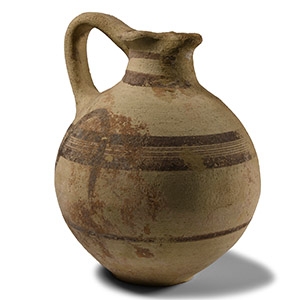
Cypriot Snake-Type Bichrome Terracotta Vessel
Iron Age, circa 11th-8th century B.C.Sold for (Inc. bp): £195
Globular in form with pinched trefoil mouth and tall strap handle; painted band of linear ornament to the shoulder and neck. 695 grams, 21.2 cm high
Property of a deceased estate. Acquired from Bonhams, London, 26 October 2007, no.375 (part). From an important Cambridgeshire estate; thence by descent. Accompanied by copies of the relevant Bonhams catalogue pages and original lot tag.
