
Loading, please wait...
_900x900.jpg "Etruscan Bucchero Ware Pottery Handle Depicting a Warrior")
_200x200.jpg "Etruscan Bucchero Ware Pottery Handle Depicting a Warrior")
_900x900.jpg "Etruscan Bucchero Ware Pottery Handle Depicting a Warrior")
_200x200.jpg "Etruscan Bucchero Ware Pottery Handle Depicting a Warrior")

.jpg "Etruscan Bucchero Ware Pottery Handle Depicting a Warrior")
.jpg "Etruscan Bucchero Ware Pottery Handle Depicting a Warrior")
LOT 0048
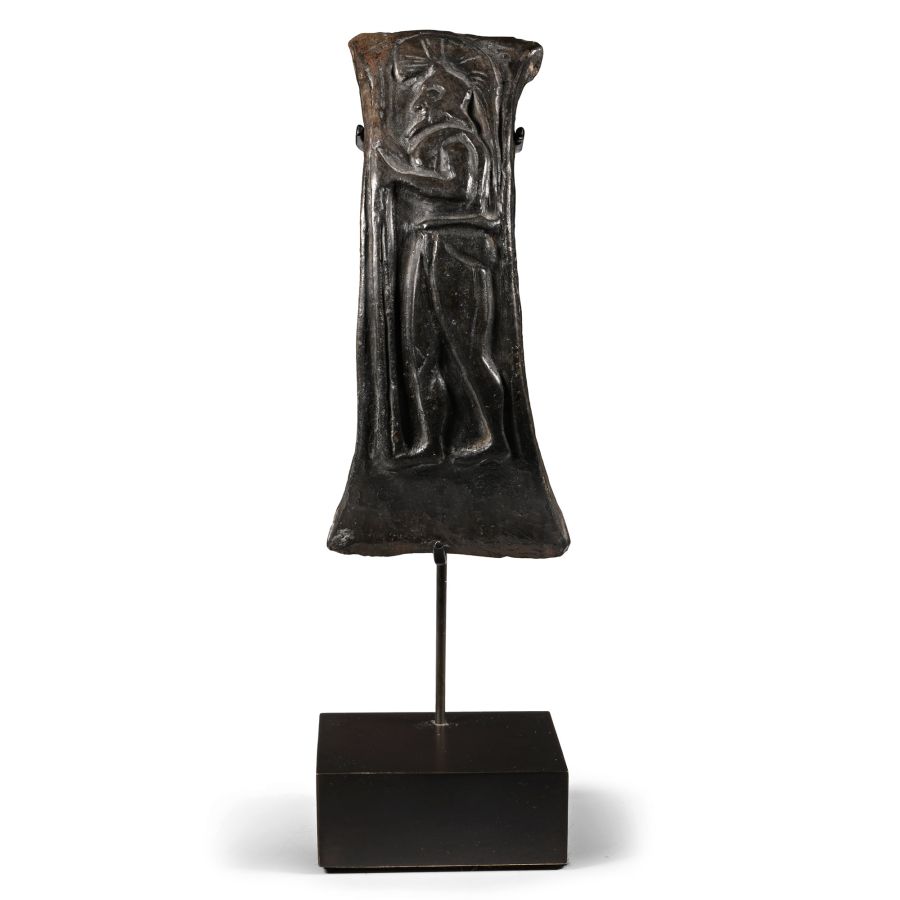
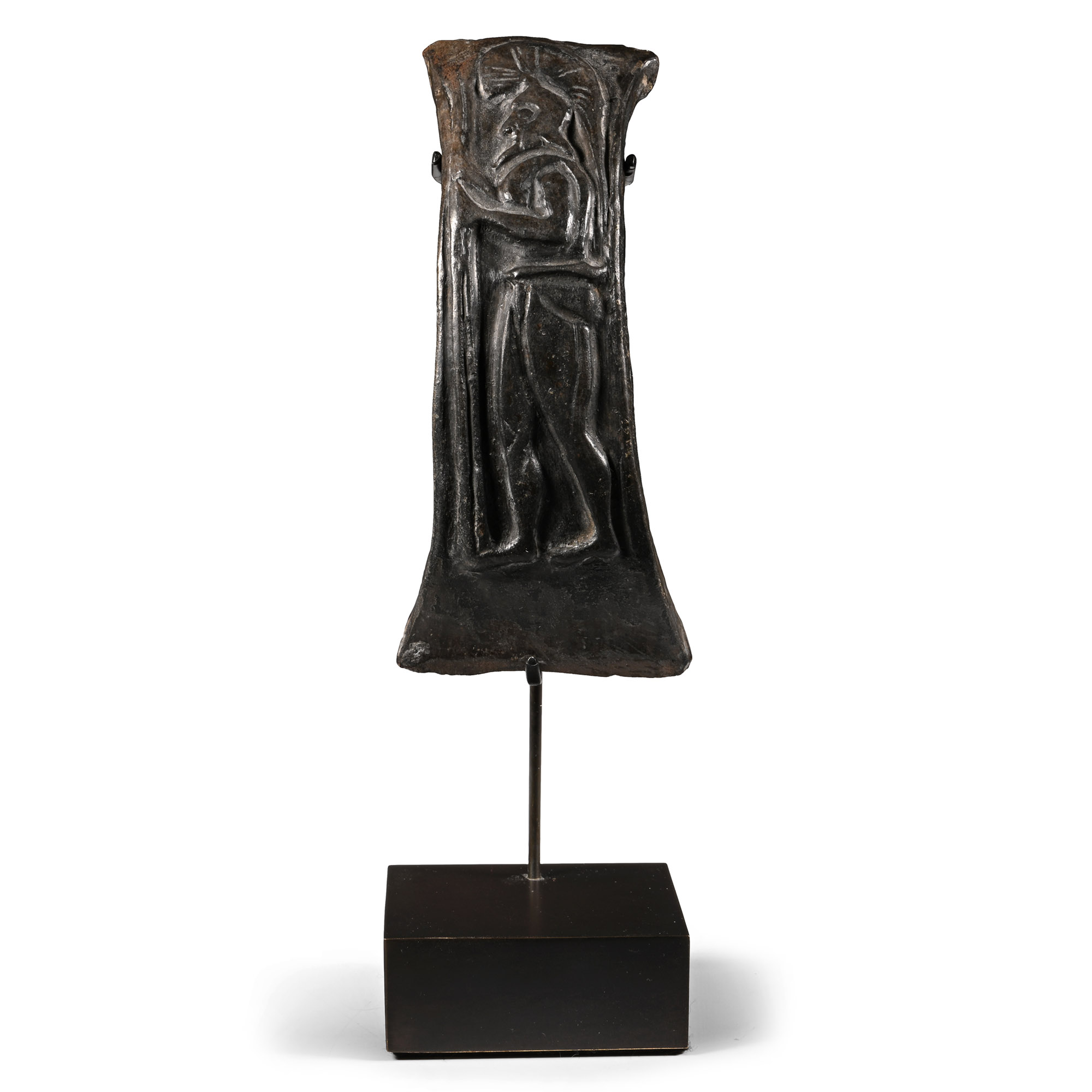
Etruscan Bucchero Ware Pottery Handle Depicting a Warrior
ARCHAIC PERIOD, 6TH CENTURY B.C.
9 3/8 in. (333 grams total, 23.7 cm including stand).
Broad, gently curved strap handle with raised lateral borders, low-relief image of a hoplite wearing a crested Corinthian helmet and gripping a tall spear, belt with kopis; mounted on a custom-made stand.
ProvenancePrivate collection, New York, thence by descent.
with Antiquarium Limited, New York, 1981.
Cf. similar handles on a krater in the Metropolitan Museum of Art under accession no.16.174.8.
CONDITIONTimeLine Auctions follows a vetting process to ensure the authenticity and legality of all items, reinforcing our commitment to integrity and responsible trading. Each antiquity, antique, and coin lot undergoes thorough examination by a vetting committee of at least ten external specialists, professional trade association members, scientists, and archaeologists: Our Vetting Process
AUCTIONS:
TimeLine is a leading auction house specialising in antiquities, ancient art, collectables, natural history, coins, medals, and books. Our auctions offer museums, collectors, historians, and enthusiasts the opportunity to acquire unique and historically significant pieces.
LOT 0048
Etruscan Bucchero Ware Pottery Handle Depicting a Warrior
Estimate £1,000 - 1,400€1,160 - 1,620 (for guidance only)$1,350 - 1,890 (for guidance only)
-
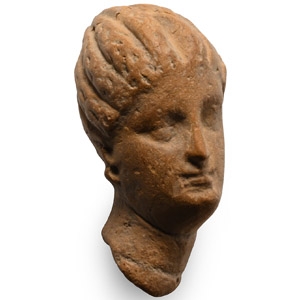
Greek Terracotta Head
Tarentine, 3rd-1st century B.C.Estimate: £180 - 240 (‡+bp*)
Opening Bid: £100
Female head moulded with a segmented conical cap, pierced ears visible beneath; the head slightly turned and tilted downwards on a slender neck. 22 grams, 49 mm
Acquired in the mid 1980s-1990s. Private collection, Switzerland, thence by descent. Private collection, since the late 1990s. -
.jpg)
Etruscan Bronze Figure of Warring Mars
6th century B.C.Estimate: £5,000 - 7,000 (‡+bp*)
Opening Bid: £2,700
The Etrusco-Italic warrior Laran (Roman Mars) modelled in the round, representing a young muscular hero with long torso and rounded shoulders, wearing a high-crested Illyrian helmet with grooved perimeter, a hole above each ear for attaching an ornament; mounted on a custom-made display stand. 326 grams total, 16.2 cm high including stand
Ex Koutoulakis collection. Ex Gorny & Mosch, Munich, 17 June 1999, no.2051. with Sotheby's, New York, 12 June 2001, no.16. with Christie's, London, 2 April 2014, no.125. Accompanied by an academic report by Dr Raffaele D'Amato. This lot has been checked against the Interpol Database of stolen works of art and is accompanied by search certificate number no.11803-206793.
The statuette assumes the position of the 'warring Mars', which characterises the numerous Etruscan and Italic statues of the god produced as votive offerings to the temples or for private lararia. The god is depicted as taking part in a military march with his left leg advancing, his raised right would have held a spear and the left hand a shield. -
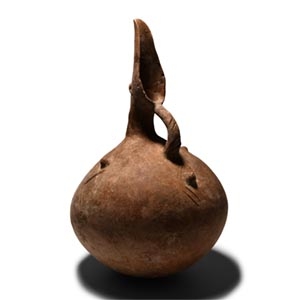
Cypriot Round-Bottomed Spouted Terracotta Jug
Middle Bronze Age, circa 2000-1800 B.C.Sold for (Inc. bp): £592
Of globular profile with strap handle and tall scooped spout; applied lugs to the shoulder, incised zigzag ornament; spout with pierced lug to the underside and band of impressed pellets. 935 grams, 32 cm
From a collection acquired on the UK art market from various auction houses and collections mostly before 2000. From an important Cambridgeshire estate; thence by descent.
