
Loading, please wait...

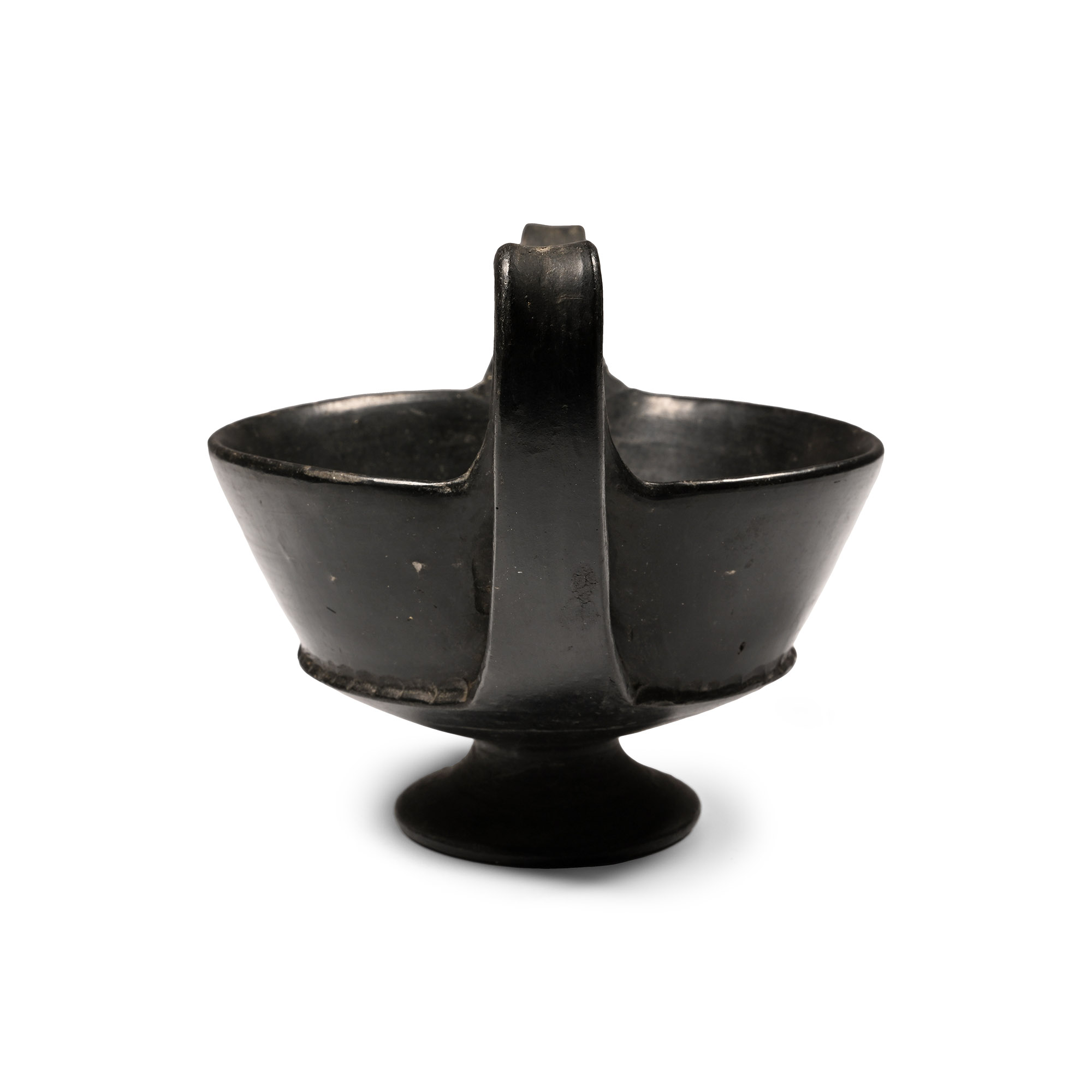
LOT 0527
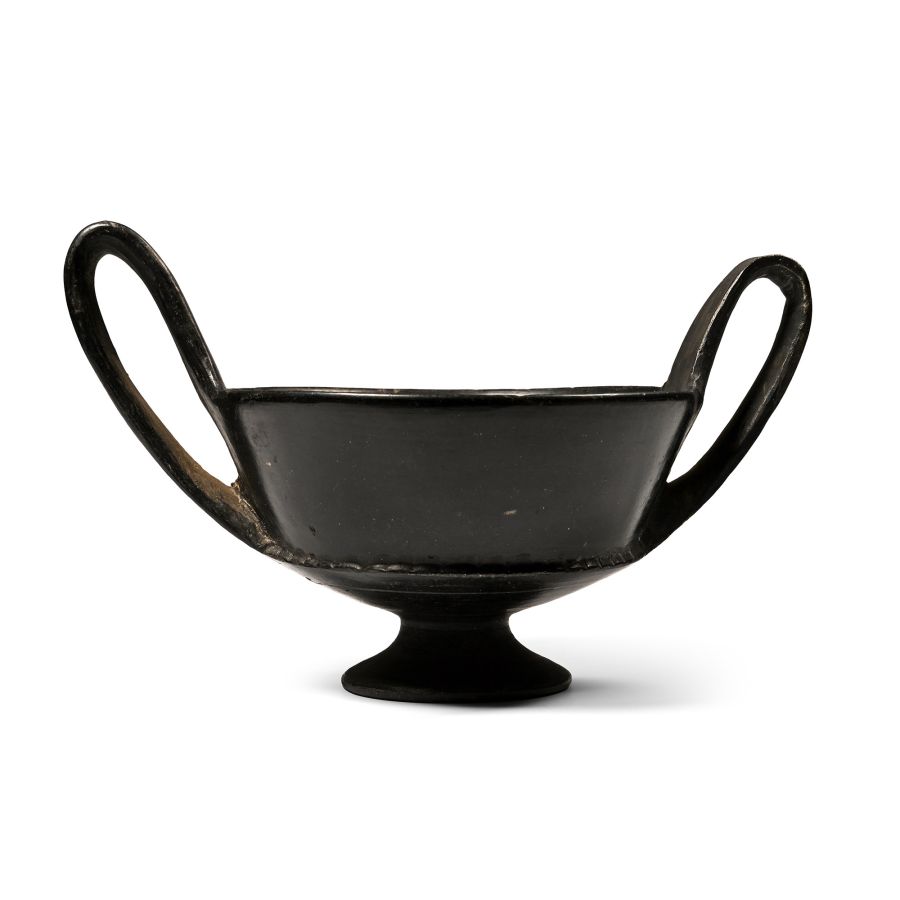
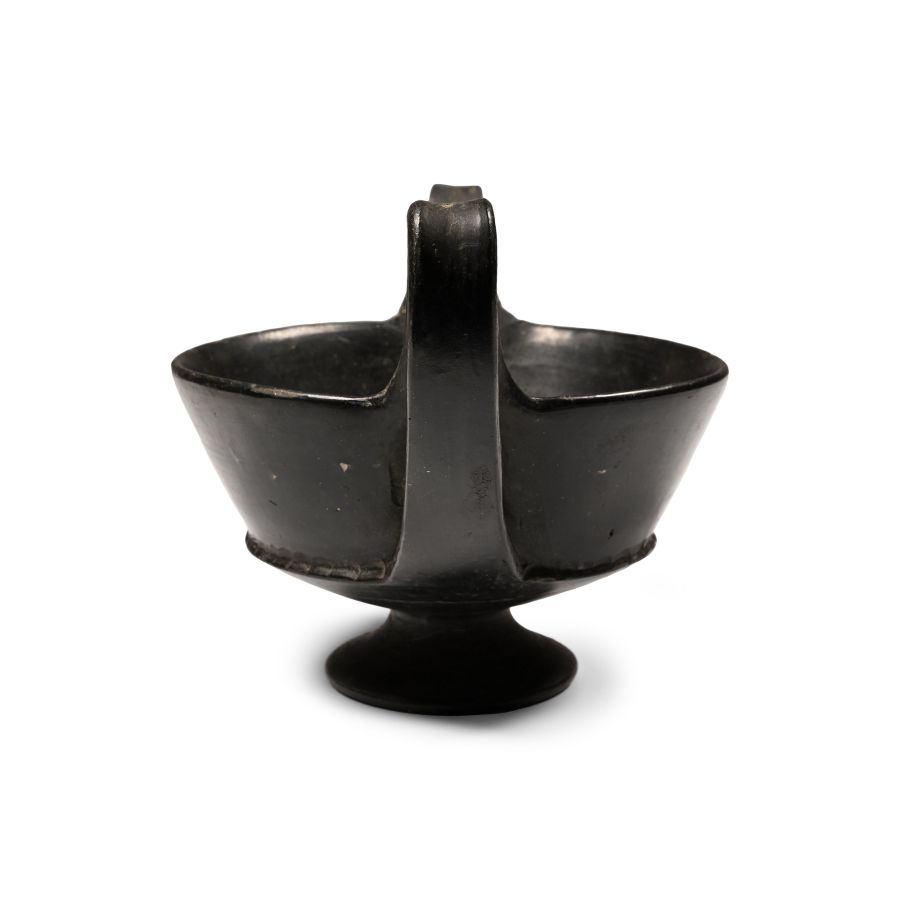
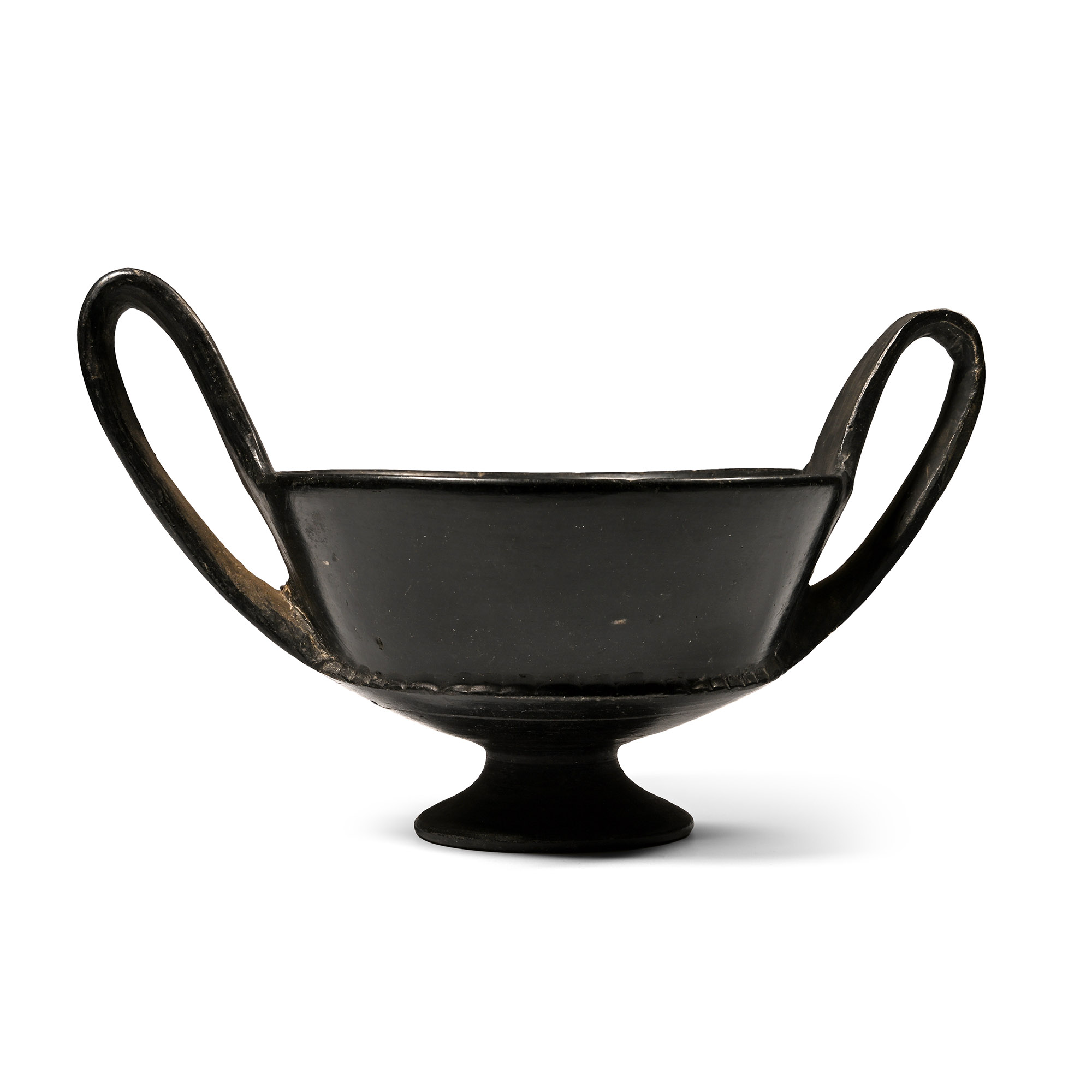
Etruscan Bucchero Kantharos
CIRCA 625-550 B.C.
7 1/2 in. (270 grams, 19 cm).
With a carinated bowl and high arching strap handles either side extending above the lip of the cup; flanged border between the body and the foot, decorated with a toothed ridge around the base.
ProvenanceAcquired on the German art market in the early 1980s.
From a North German private family collection.
Accompanied by an old yellowed inventory card.
This lot is accompanied by an illustrated lot declaration signed by the Head of the Antiquities Department, Dr Raffaele D'Amato.
Cf. Rasmussen, T.B., Bucchero Pottery from Southern Etruria Cambridge, 1979, p.101-110, pls.30-33; Hayes, J.W., Etruscan and Italic Pottery in the Royal Ontario Museum: a Catalogue Toronto, 1985 p.75, 77 (nos. C22-23); Perkins, P., Etruscan Bucchero in the British Museum London, 2007, p.45-50, 114-118 (nos.161-191).
CONDITIONTimeLine Auctions follows a vetting process to ensure the authenticity and legality of all items, reinforcing our commitment to integrity and responsible trading. Each antiquity, antique, and coin lot undergoes thorough examination by a vetting committee of at least ten external specialists, professional trade association members, scientists, and archaeologists: Our Vetting Process
AUCTIONS:
TimeLine is a leading auction house specialising in antiquities, ancient art, collectables, natural history, coins, medals, and books. Our auctions offer museums, collectors, historians, and enthusiasts the opportunity to acquire unique and historically significant pieces.
-
.jpg)
Large Attic Greek Terracotta Statue of Kore with Sea Encrustations
5th century B.C.Sold for (Inc. bp): £3,510
Hollow-form and standing on a pedestal with her right knee slightly bent, both hands holding the edges of her flowing peplos, wearing a polos crown, naturalistic detailing to face; traces of pigment remaining, a rectangular cut-out on her back. 604 grams, 31.5 cm
From the collection of Pierre and Claude Vérité, Paris, France, acquired between 1930 and 1960. with Christie's, Paris, Collection Pierre et Claude Vérité, 20 December 2011, no.121 (part). Ex Galerie Günter Puhze GmbH, Germany, 2012. Private collection, Bern, Switzerland. Accompanied by copies of the relevant Christie's catalogue pages. This lot has been checked against the Interpol Database of stolen works of art and is accompanied by a search certificate number no.12664-236370. This lot has been cleared against the Art Loss Register database, and is accompanied by an illustrated lot declaration signed by the Head of the Antiquities Department, Dr Raffaele D'Amato. -
.jpg)
Hellenistic Garnet Gemstone with Hercules Club and Lionskin
2nd century B.C.Sold for (Inc. bp): £1,300
Plano-convex with incuse image of spiked club and lionskin mantle, repaired. 1.8 grams, 17 mm
Acquired in the 1970s. Ex London, UK, collection. This lot has been checked against the Interpol Database of stolen works of art and is accompanied by a search certificate number no.12386-226380. This lot has been cleared against the Art Loss Register database, and is accompanied by an illustrated lot declaration signed by the Head of the Antiquities Department, Dr Raffaele D’Amato. This lot has been cleared against the Art Loss Register database, and is accompanied by an illustrated lot declaration signed by the Head of the Antiquities Department, Dr Raffaele D'Amato. -
.jpg)
Greek Attic Black-Figure Lekythos with Fighting Warriors
6th century B.C.Sold for (Inc. bp): £4,160
With flared foot, broad shoulder and trumpet-shaped mouth, strap handle to the rear; painted frieze with scene of two warriors fighting on foot with spears, watched by two silhouetted companions; ivy leaves to shoulder. 154 grams, 13.9 cm
Ex Gübelin, Switzerland, before 1970. with Fischer Luzern, 2006. Acquired by the previous owner from the above, 9 June 2006. Private collection, Europe. Accompanied by a copy of an Art Loss register certificate, no.S00066703. This lot has been checked against the Interpol Database of stolen works of art and is accompanied by a search certificate number no.12638-264603. This lot has been cleared against the Art Loss Register database, and is accompanied by an illustrated lot declaration signed by the Head of the Antiquities Department, Dr Raffaele D'Amato.
