
Loading, please wait...
LOT 0041
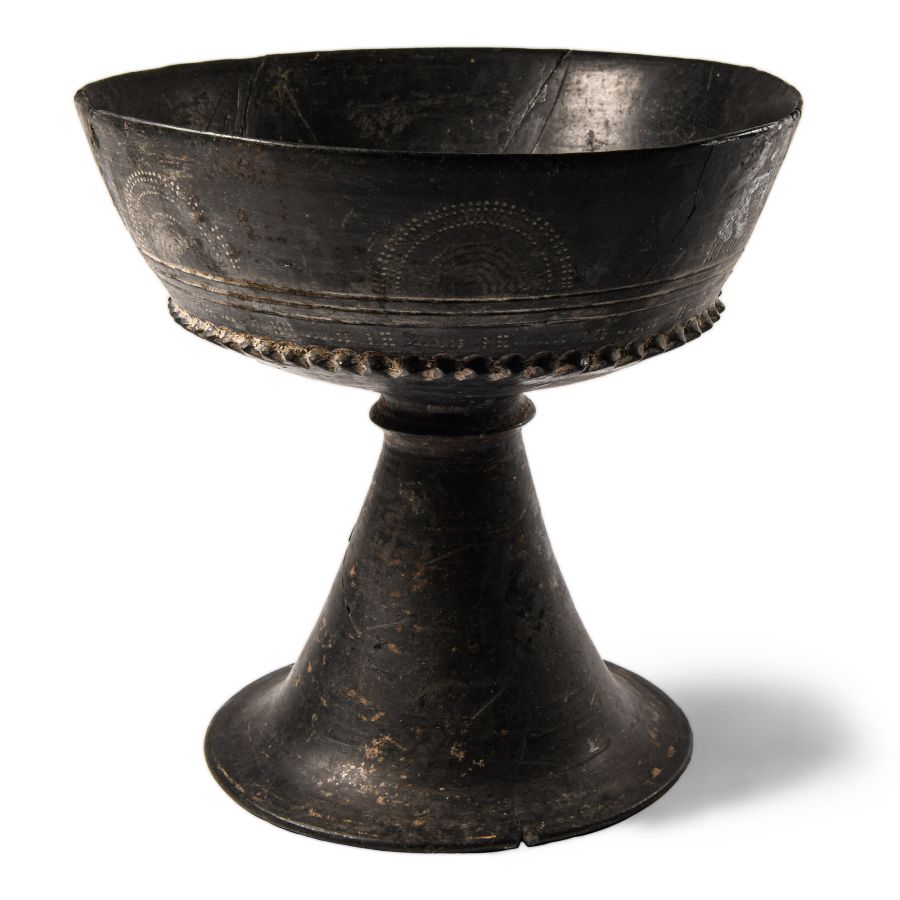
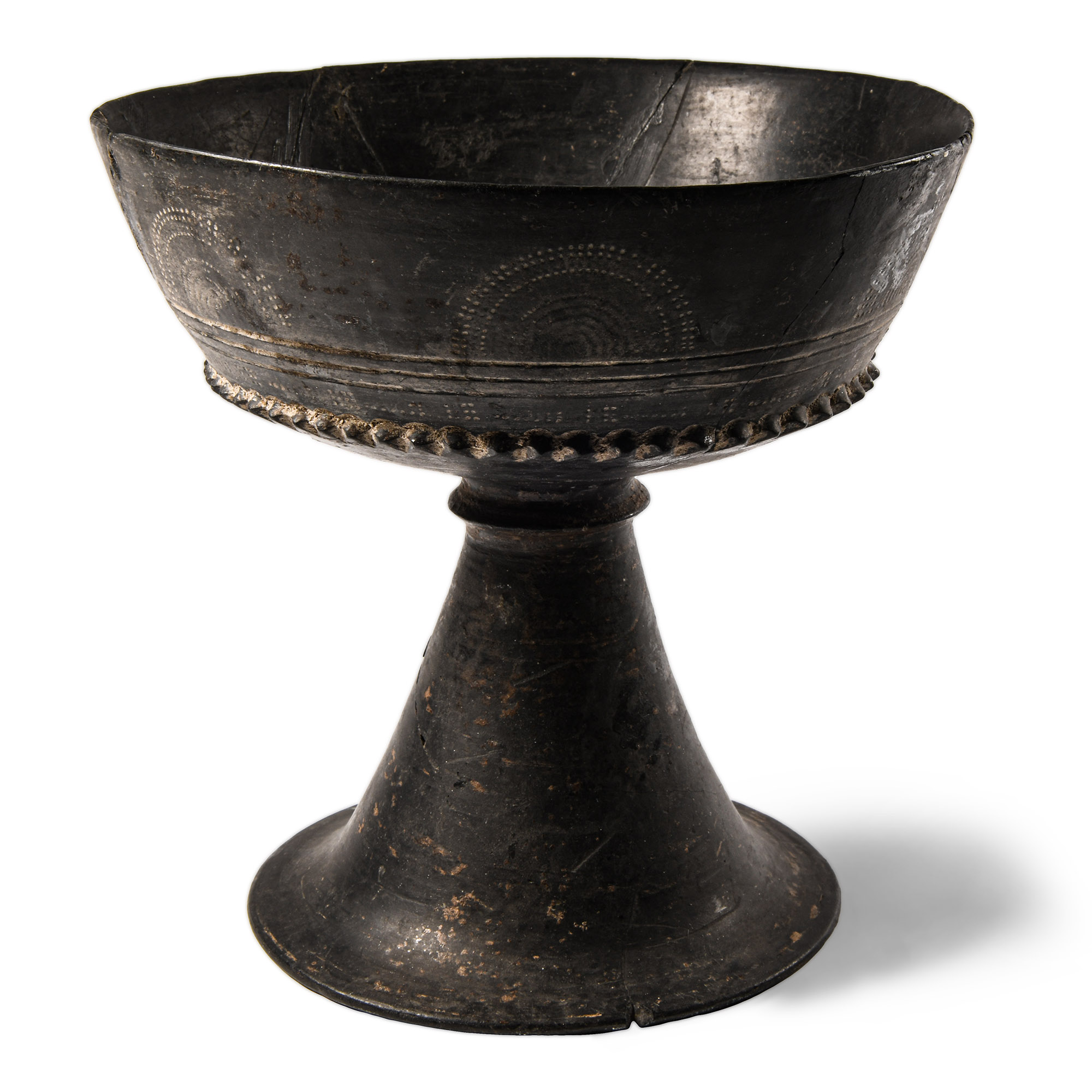
Etruscan Bucchero Chalice with Decoration
CIRCA 7TH CENTURY B.C.
6 1/4 in. (460 grams, 16 cm wide).
The carinated bowl displaying a decorative frieze of pricked semi-circles or fans over a cluster of incised bands, the bowl emerging from a stepped ribbed base, tapering stem and splayed foot; likely Rasmussen Type 2c, repaired.
ProvenanceAcquired in the 1960s.
Ex J. Bowman collection, Massachusetts, USA.
with Aphrodite Gallery, New York, 24 September 2018, lot 17.
Accompanied by detailed collector's catalogue pages including description and photograph.
Cf. The British Museum, museum number 1836,0224.400, for very similar.
CONDITIONTimeLine Auctions follows a vetting process to ensure the authenticity and legality of all items, reinforcing our commitment to integrity and responsible trading. Each antiquity, antique, and coin lot undergoes thorough examination by a vetting committee of at least ten external specialists, professional trade association members, scientists, and archaeologists: Our Vetting Process
AUCTIONS:
TimeLine is a leading auction house specialising in antiquities, ancient art, collectables, natural history, coins, medals, and books. Our auctions offer museums, collectors, historians, and enthusiasts the opportunity to acquire unique and historically significant pieces.
-
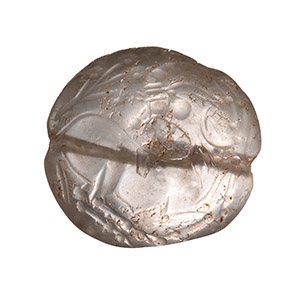
Minoan Lentoid Rock Crystal Seal
Circa 1450-1375 B.C.Sold for (Inc. bp): £2,470
Displaying an incuse bull or other horned quadruped looking backwards; drilled for suspension. 3.63 grams, 18 mm
Acquired in 1970. with Coins and Antiquities, formerly known as D.J. Crowther Ltd, Mayfair, London, UK. Private collection of a London antiquarian.
The style of the lentoid seal has similarities with an agate lentoid seal from Fourni, Archanes, dated to the last period of the Cretan Palace in Knossos, before the island was occupied by the Achaeans. On the Cretan lentoid seals, single animals or a group of animals are plentiful. One of the most common motifs is that of a reclining or standing animal. Single animals are sometimes depicted with contorted bodies. -
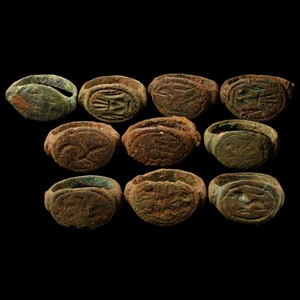
Graeco-Persian Bronze Ring Group
2nd century B.C. and laterSold for (Inc. bp): £312
Mainly featuring convex hops, stepped shoulders and oval or elliptical bezel, most displaying an incuse animal, figural or other motif. 54 grams total, 24-26 mm
Ex private collection, 1980s. Acquired on the UK art market in the 1990s. -
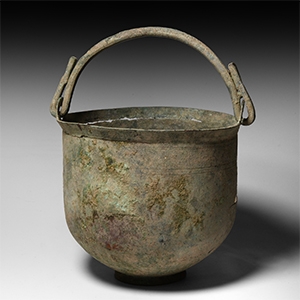
Greek Bronze Handled Vessel
3rd-2nd century B.C.Sold for (Inc. bp): £260
The U-shaped body with foot and shallow incised bands around the shoulder; split. 434 grams, 22 cm high
Acquired 1990s-early 2000s. East Anglian private collection.
