
Loading, please wait...
LOT 0845
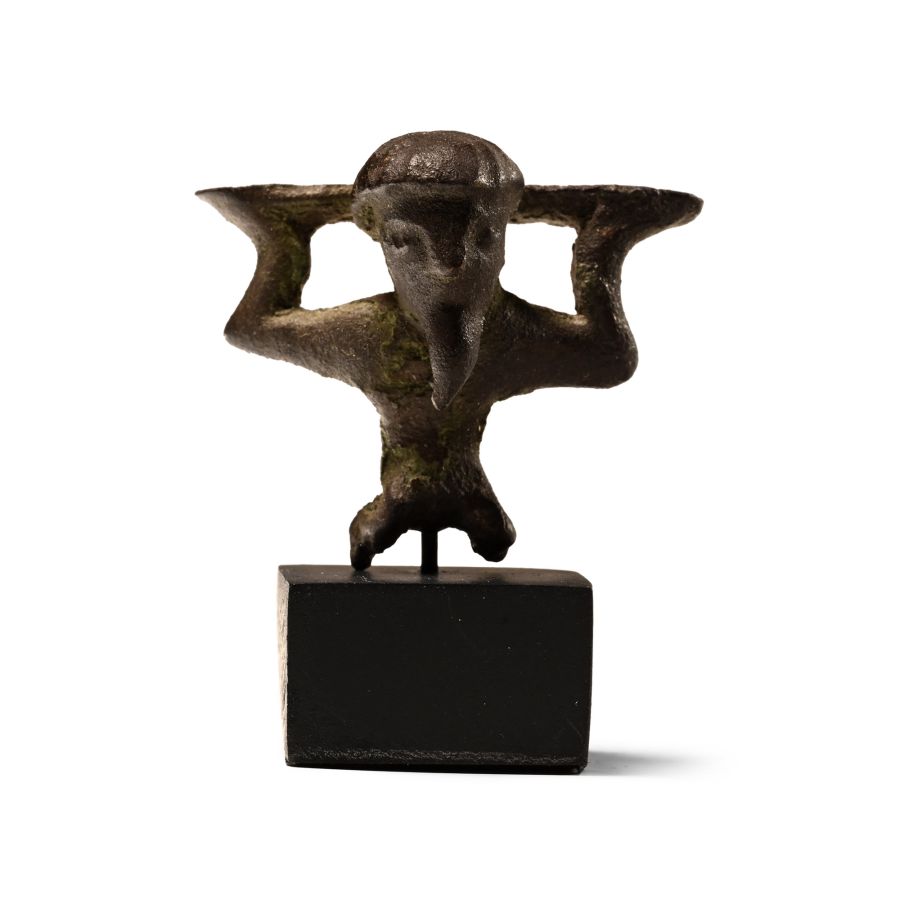
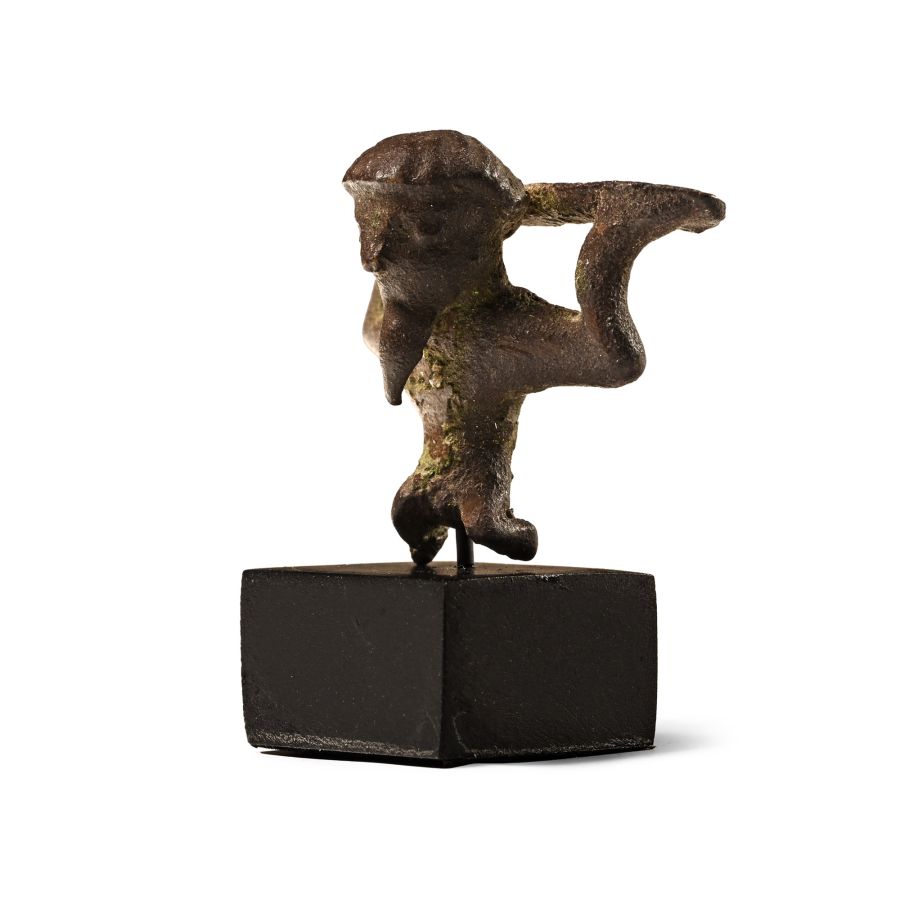
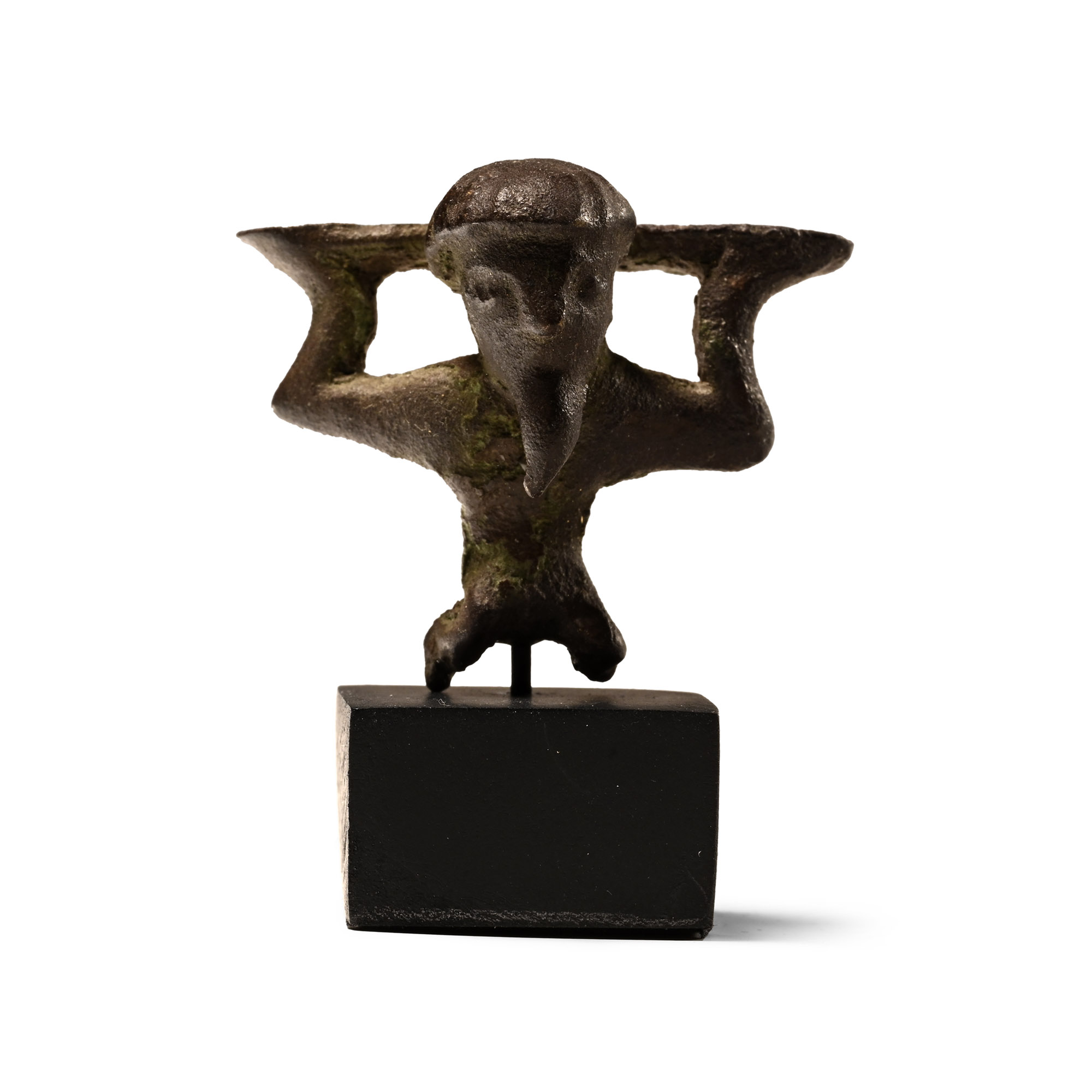
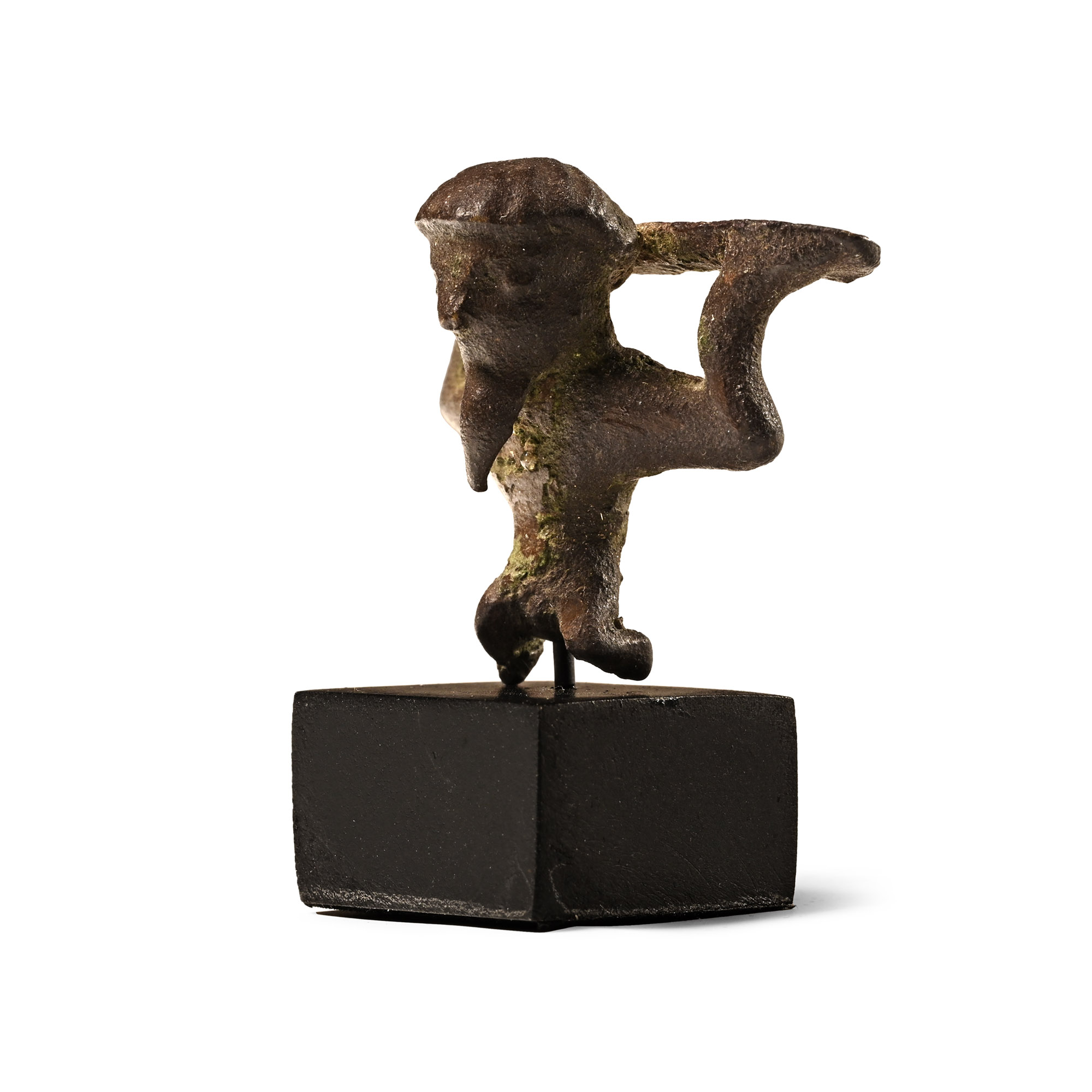
Etruscan Bronze Telamon Statuette
CIRCA 4TH CENTURY B.C.
2 in. (44 grams total, 51 mm including stand).
Appliqué formed as a kneeling male with arms bent supporting a shelf above the shoulders; the hair cut short but thick above the ears, the nose and beard modelled with pointed profile; mounted on a custom-made stand. [No Reserve]
ProvenanceFrom a collection acquired on the UK art market from various auction houses and collections mostly before 2000.
From an important Cambridgeshire estate; thence by descent.
The figure is strangely proportioned with oversized head and small legs; possibly an atlant or support from a vessel.
CONDITIONTimeLine Auctions follows a vetting process to ensure the authenticity and legality of all items, reinforcing our commitment to integrity and responsible trading. Each antiquity, antique, and coin lot undergoes thorough examination by a vetting committee of at least ten external specialists, professional trade association members, scientists, and archaeologists: Our Vetting Process
AUCTIONS:
TimeLine is a leading auction house specialising in antiquities, ancient art, collectables, natural history, coins, medals, and books. Our auctions offer museums, collectors, historians, and enthusiasts the opportunity to acquire unique and historically significant pieces.
-
Roman Glass Grape Flask
3rd century A.D.Sold for (Inc. bp): £598
Narrow mouth with squared rim, short cylindrical neck extending to a wide shoulder with applied strap handles, the ovoid body moulded with ten rows of stylised grapes; some iridescence; old collector''s label to underside '4187 TD'. 50 grams, 97 mm
From the private collection of a French Count in the 19th century. Ex Thierry de Maigret, April 2010.
The neck has the appearance of having been reduced in height and ground off flat at the rim, while the applied handles are an unusual feature on this type of vessel. The examples in the Corning Museum have a much taller neck and flared rim to the mouth. -
Roman Bronze Statuette of a Warrior-Hero
2nd-1st century B.C.Estimate: £18,000 - 24,000 (‡+bp*)
Opening Bid: £10,000
Modelled in the round standing erect with right hand on his hip and left arm extending from the elbow resting on the left hip and with fingers curled to hold a staff or handle, wearing a loosely draped cloth over the left shoulder and drawn around the body to hang over the arms; ribbed cuffs to the boots; youthful face with tousled hair and slightly exaggerated lentoid eyes; C-shaped staple beneath the feet for attachment; supplied with a custom-made display stand. 506 grams total, 18.7 cm including stand
with Sotheby’s, Antiquities, London, 6 July 1995, no.130. Acquired by the present owner at the above sale. Accompanied by an academic report by Dr Raffaele D'Amato. This lot has been checked against the Interpol Database of stolen works of art and is accompanied by search certificate number no.12194-222321.
The statue was probably a cult offering and presents an archaic Etruscan hairstyle, being part of the Italic statuettes produced as votive offering to the temples or for private lararia. His warrior status can be confirmed by his boots, typical of Etruscan and Latin warriors of archaic times. -
.jpg)
Roman Mixed Artefact Group
1st-3rd century A.D.Sold for (Inc. bp): £104
Comprising a lunar pendant with incised linear ornament and suspension loop; votive foot; coin of Claudius; coin of Maximian, London mint; tweezers with simple linear ornament; remains of an equal-arm brooch; lid from a seal box; discoid stud; remains of an implement; bezel and shoulders from a finger ring; stamped lead bar, possibly reading 'IOVIA' 'MARIN'(?). 60 grams total, 18-50 mm
Acquired on the UK market, 1990s. Property of a retired academic.
