
Loading, please wait...
LOT 0081
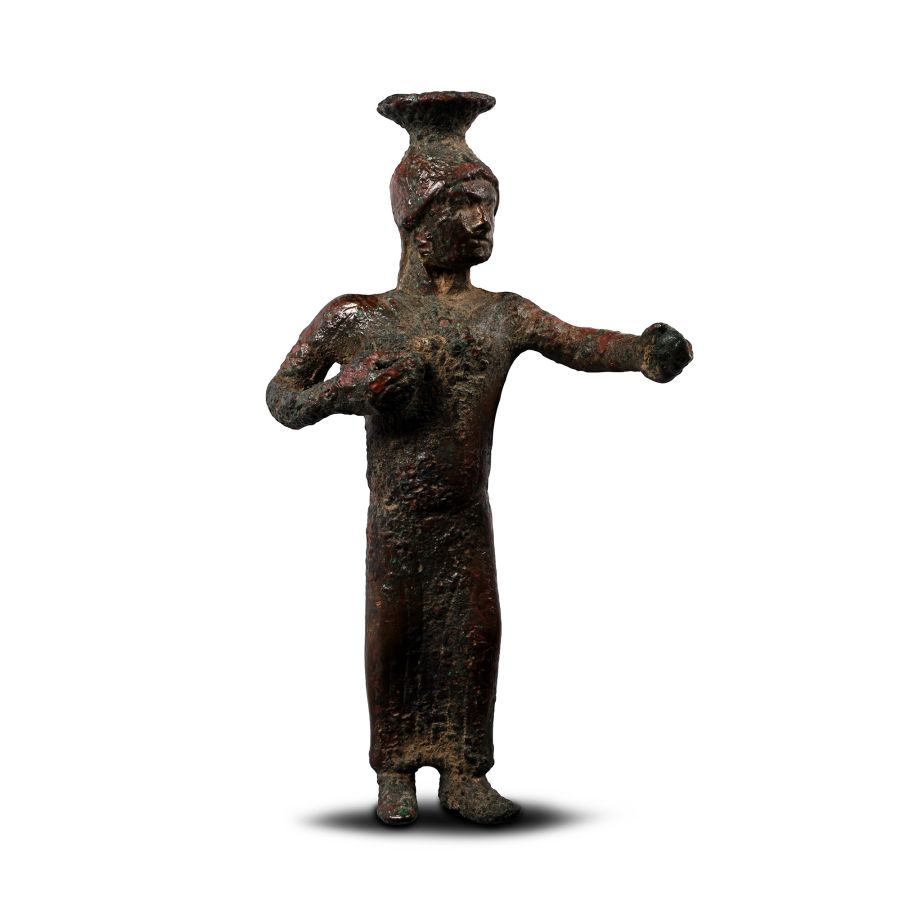
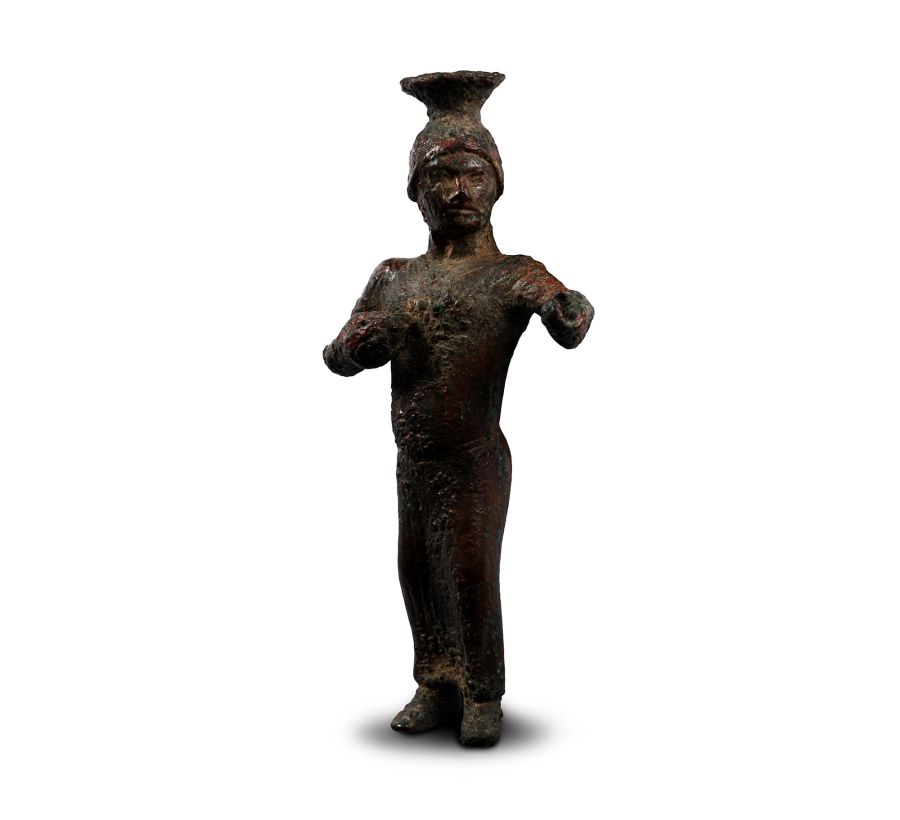
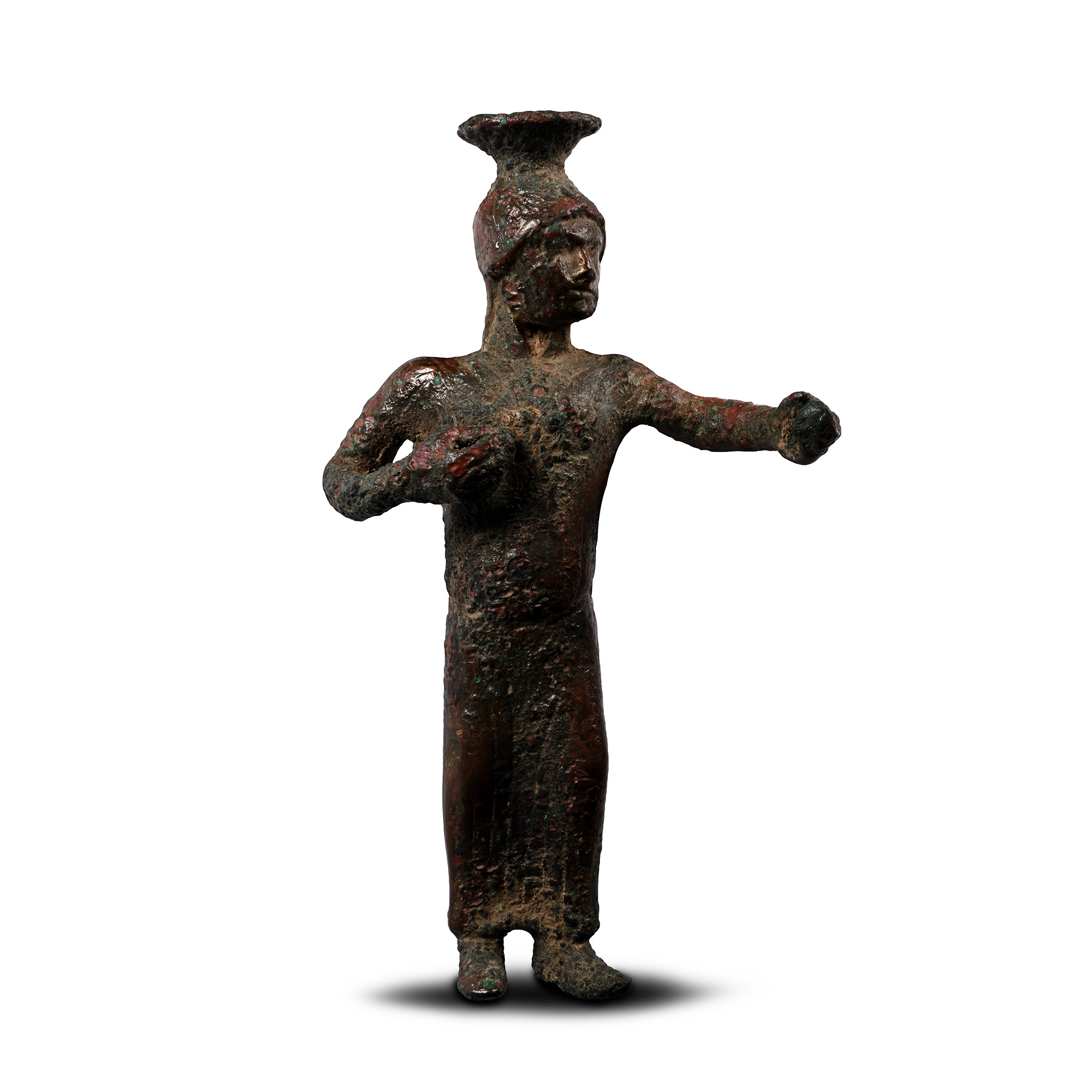
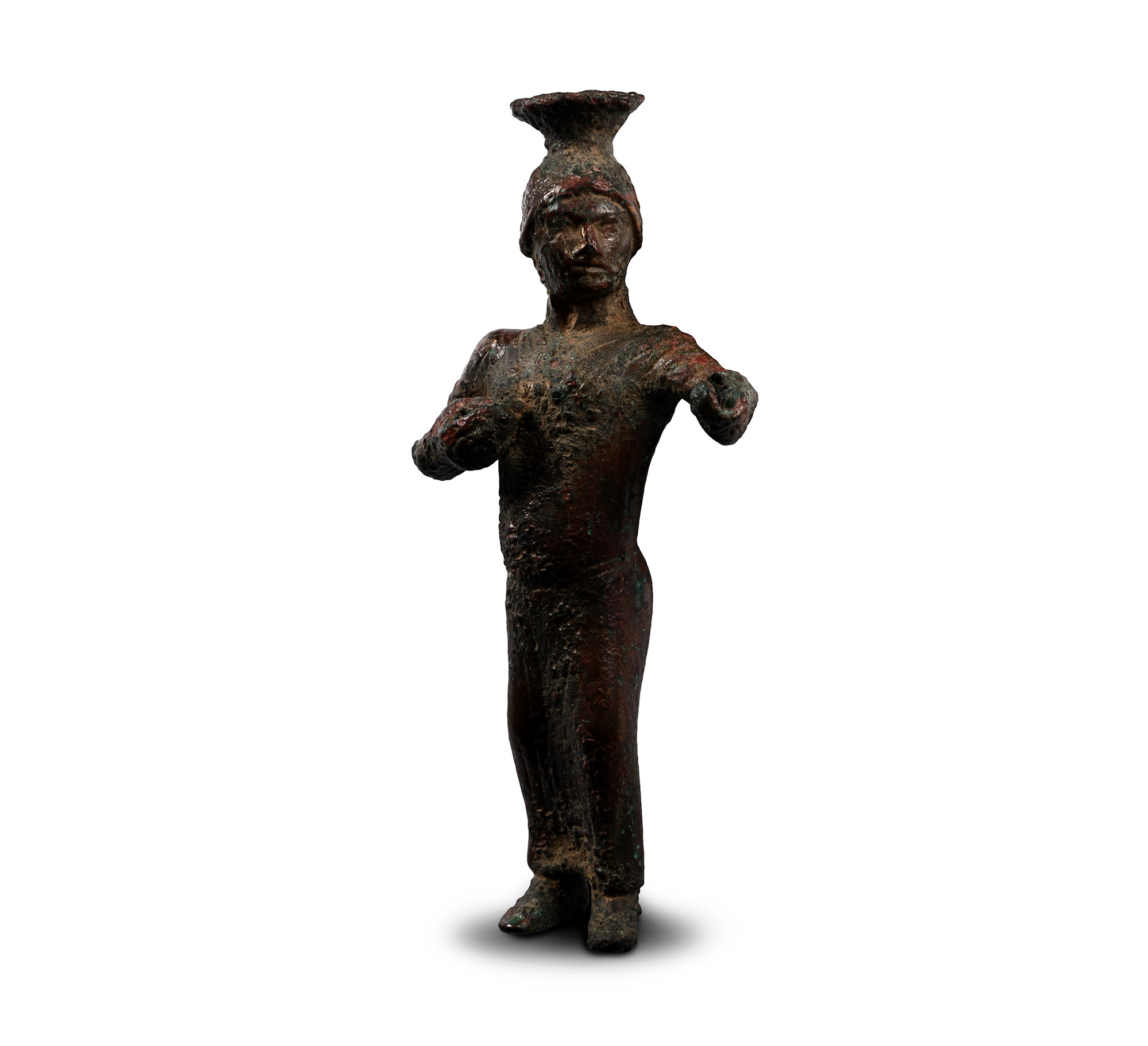
Etruscan Bronze Statue of a War God
6TH-3RD CENTURY B.C.
5 1/2 in. (425 grams, 14.2 cm).
Modelled in the round standing and wearing ankle-length robe, helmet with flared crest; left arm extended and right arm bent as if shooting a bow; possibly Laran, the war-god.
ProvenanceUK private collection before 2000.
Acquired on the UK art market.
Private collection, London.
This lot has been checked against the Interpol Database of stolen works of art and is accompanied by a search certificate number no.12652-236228.
This lot has been cleared against the Art Loss Register database, and is accompanied by an illustrated lot declaration signed by the Head of the Antiquities Department, Dr Raffaele D'Amato.
TimeLine Auctions follows a vetting process to ensure the authenticity and legality of all items, reinforcing our commitment to integrity and responsible trading. Each antiquity, antique, and coin lot undergoes thorough examination by a vetting committee of at least ten external specialists, professional trade association members, scientists, and archaeologists: Our Vetting Process
AUCTIONS:
TimeLine is a leading auction house specialising in antiquities, ancient art, collectables, natural history, coins, medals, and books. Our auctions offer museums, collectors, historians, and enthusiasts the opportunity to acquire unique and historically significant pieces.
LOT 0081
Etruscan Bronze Statue of a War God
Estimate £1,800 - 2,400€2,090 - 2,780 (for guidance only)$2,430 - 3,240 (for guidance only)
-
Greek Glass Cameo with Dolphin
Late 1st millennium B.C.Sold for (Inc. bp): £455
Ellipsoid in plan and plano-convex in section with low-relief dolphin modelled in the half-round. 2.75 grams, 26 mm
Acquired on the German art market, 1989-1995. with The Museum Gallery, 19 Bury Place, London, WC1, UK, 1998-2003. Property of a London based academic, 2003 to present. This lot is accompanied by an illustrated lot declaration signed by the Head of the Antiquities Department, Dr Raffaele D'Amato. -
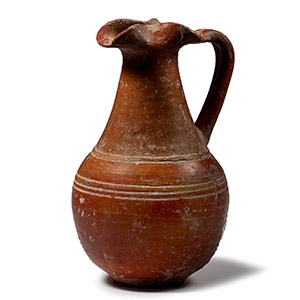
Phoenician Terracotta Jug with Handle
8th-7th century B.C.Estimate: £700 - 900 (‡+bp*)
Opening Bid: £350
Globular body decorated with circumferential banding, low foot, conical neck with pinched spout, strap handle to the rear. 395 grams, 18.5 cm
Acquired in the mid 1980s-1990s. Private collection, Switzerland, thence by descent. Private collection, since the late 1990s. This lot is accompanied by an illustrated lot declaration signed by the Head of the Antiquities Department, Dr Raffaele D'Amato. -
.jpg)
Greek Terracotta Head Collection
1st millennium B.C.Sold for (Inc. bp): £390
Comprising: a head of a kore wearing a tall polos crown; head of Eros; a head of a lady with almond-shaped eyes and Archaic smile; a rectangular plaque with low-relief nude figure; all mounted on custom-made display stands. 118 grams total, 4-10.5 cm including stand
Private collection, before 1970. with Galerie Rhéa, Zurich, Switzerland. This lot is accompanied by an illustrated lot declaration signed by the Head of the Antiquities Department, Dr Raffaele D'Amato.
