
Loading, please wait...
LOT 0053
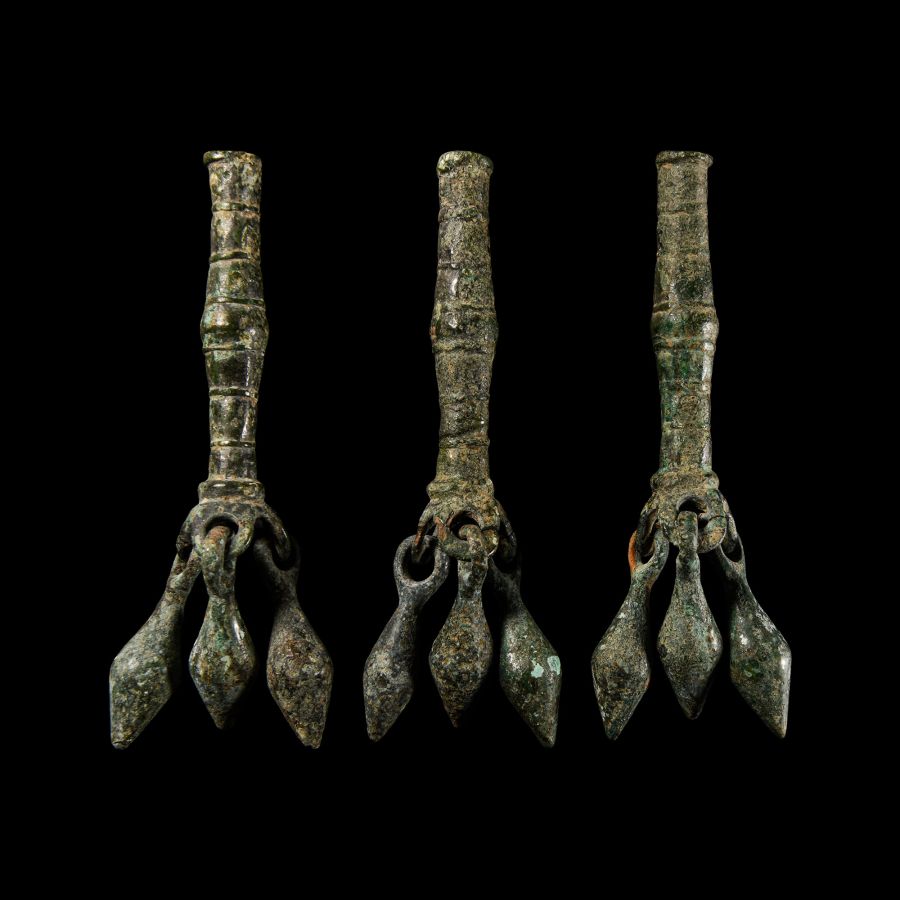
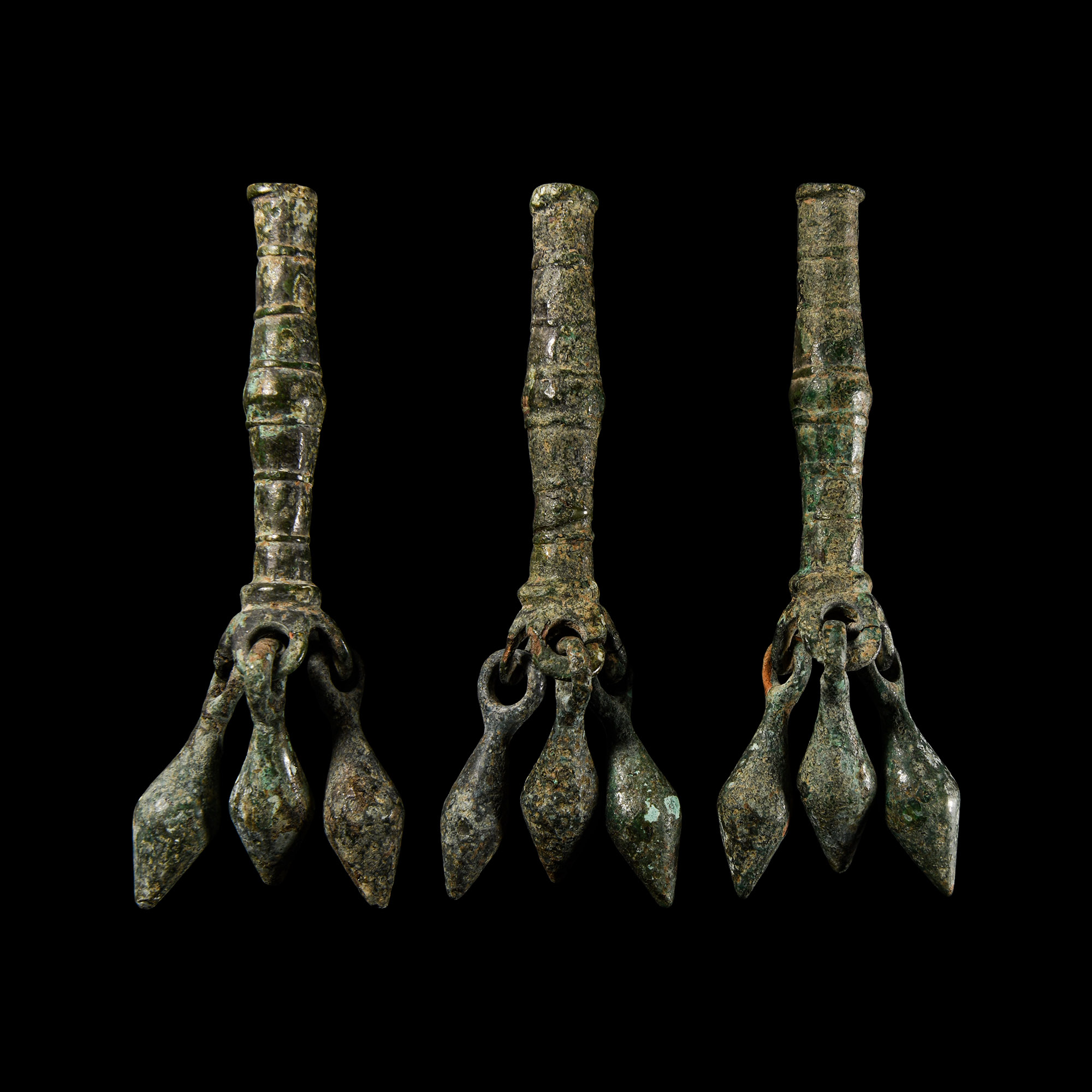
Etruscan Bronze Pendant Group
CIRCA 8TH CENTURY B.C.
3 in. (90 grams total, 78 mm each).
Comprising three pendant clusters, each a tube with balustered middle section and ribs, radiating loops at the lower end with suspended biconvex dangles. [3]
ProvenanceAcquired in the late 1970s.
Ex Herr Bernhard Muller collection.
with Galerie Ostracon, circa 2015.
Accompanied by detailed collector's catalogue pages including description and photograph.
Cf. Turfa, J.M., Catalogue of the Etruscan Gallery of the University of Pennsylvania Museum of Archaeology and Anthropology, Philadelphia, 2005, p.126, no.70.
CONDITIONTimeLine Auctions follows a vetting process to ensure the authenticity and legality of all items, reinforcing our commitment to integrity and responsible trading. Each antiquity, antique, and coin lot undergoes thorough examination by a vetting committee of at least ten external specialists, professional trade association members, scientists, and archaeologists: Our Vetting Process
AUCTIONS:
TimeLine is a leading auction house specialising in antiquities, ancient art, collectables, natural history, coins, medals, and books. Our auctions offer museums, collectors, historians, and enthusiasts the opportunity to acquire unique and historically significant pieces.
LOT 0053
Etruscan Bronze Pendant Group
Estimate £500 - 700€580 - 810 (for guidance only)$680 - 950 (for guidance only)
-
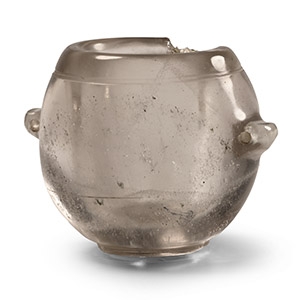
Hellenistic Rock Crystal Vessel
4th-1st century B.C.Sold for (Inc. bp): £715
Formed with a globular body, shallow foot and two tubular handles, each pierced for suspension; chipped. 59.4 grams, 46 mm
Ambassador Carlo Perrone-Capano, Grantham, South Kesteven, Lincolnshire, 1960s. -
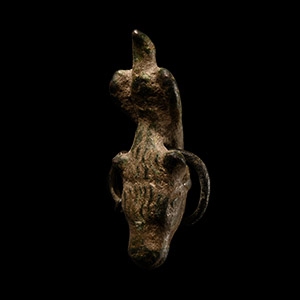
Greek Bronze Eagle Standing on Bull's Head
1st century B.C.Sold for (Inc. bp): £156
Formed in the round as an eagle standing on the head of a bull, each animal showing semi-naturalistic detailing; socket and loop through the centre. 5.64 grams, 28 mm
Ex private collection, 1980s. Acquired on the UK art market in the 1990s. -
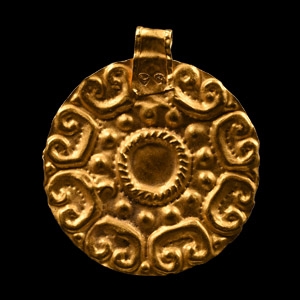
Mycenaean Gold Roundel Pendant
1350-1200 B.C.Sold for (Inc. bp): £1,170
Produced using repoussé technique, circular in shape with a design of scroll motifs to the outer edge; to the centre a roundel with ropework outline within a roundel of raised dots; applied gold loop for suspension. 1.04 grams, 30 mm
Acquired in the 1990's; cat.1704. From an important Mayfair, London, UK collection.
