
Loading, please wait...
LOT 0647
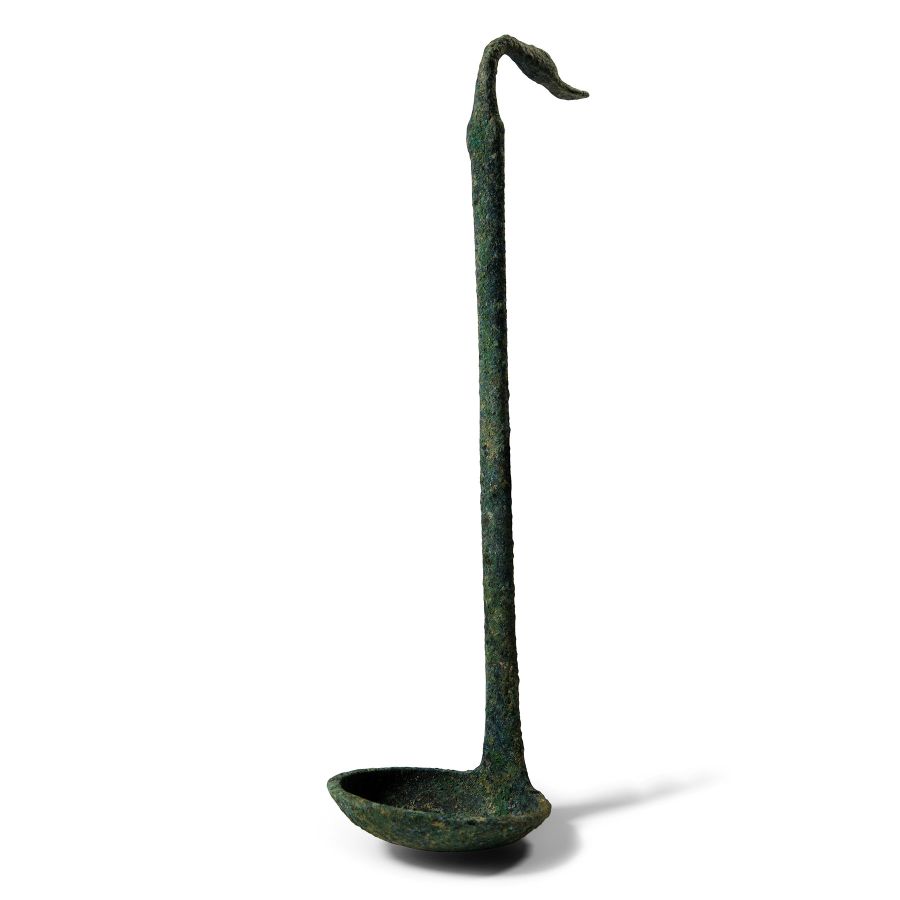
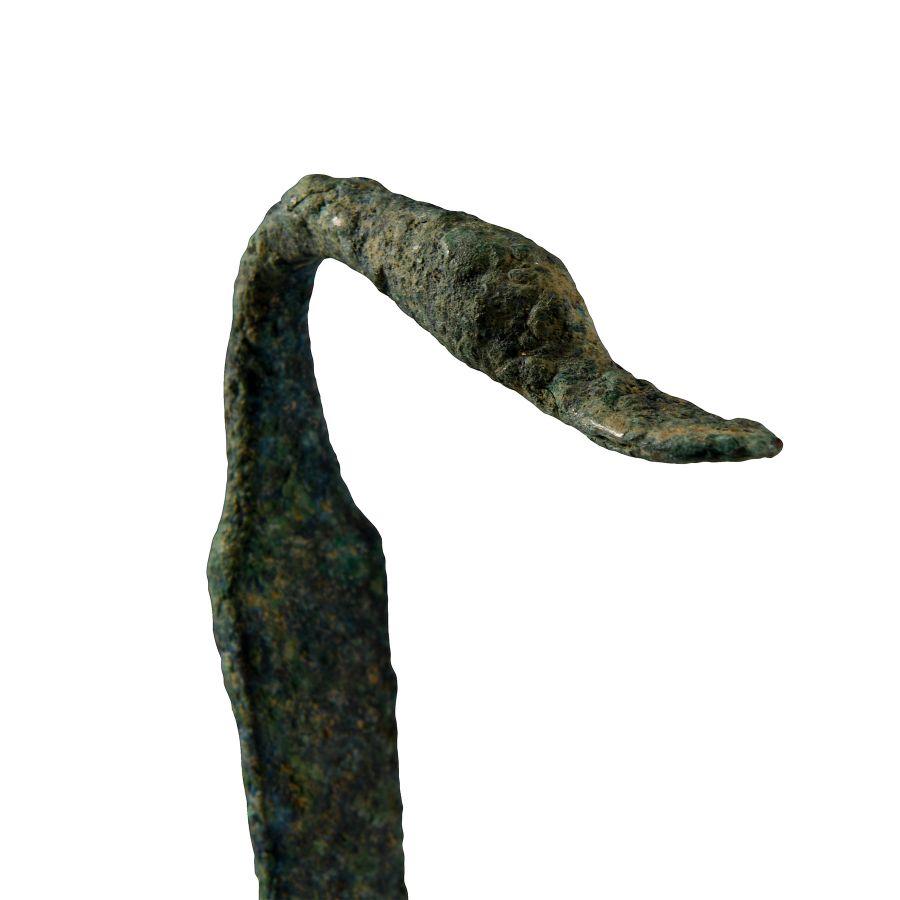
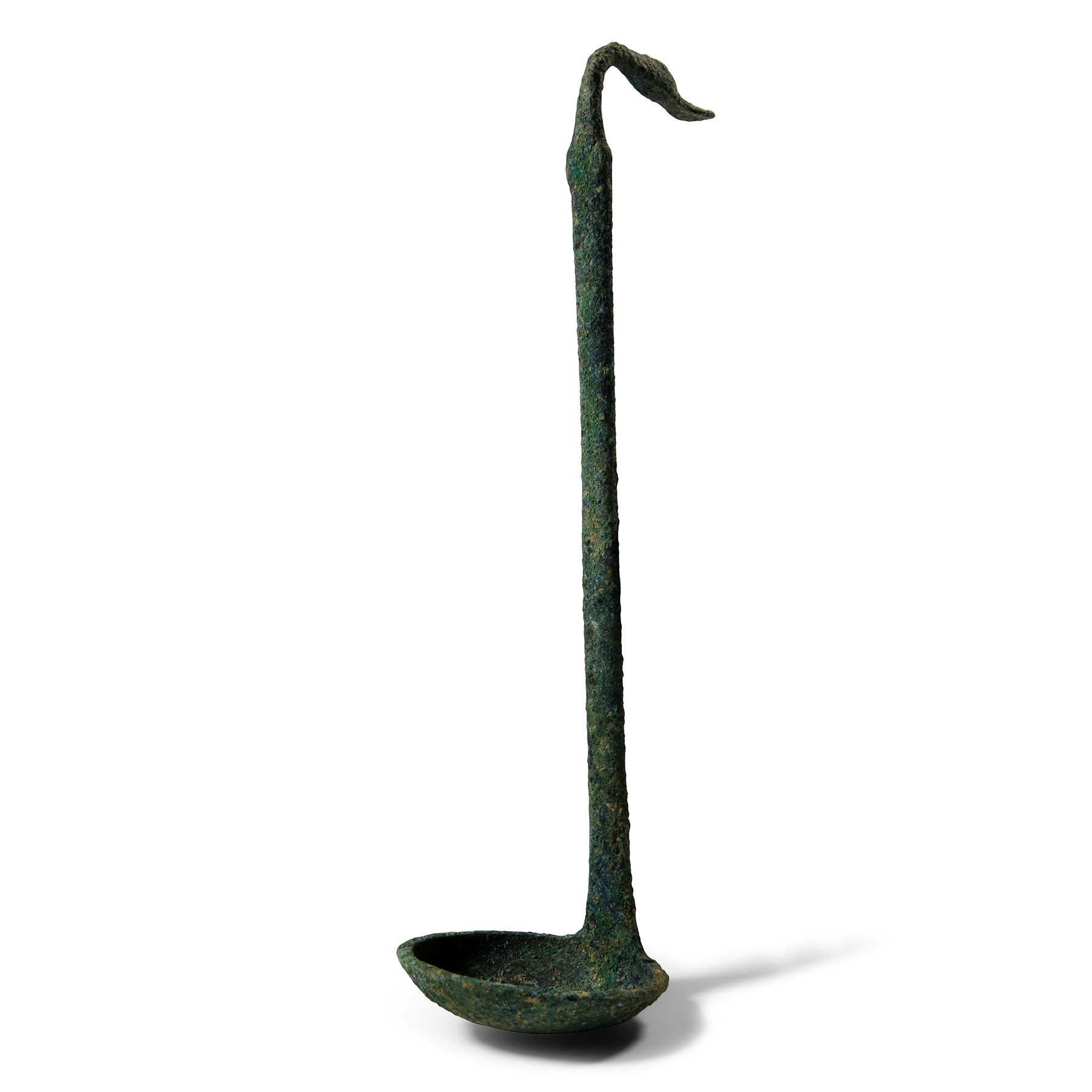
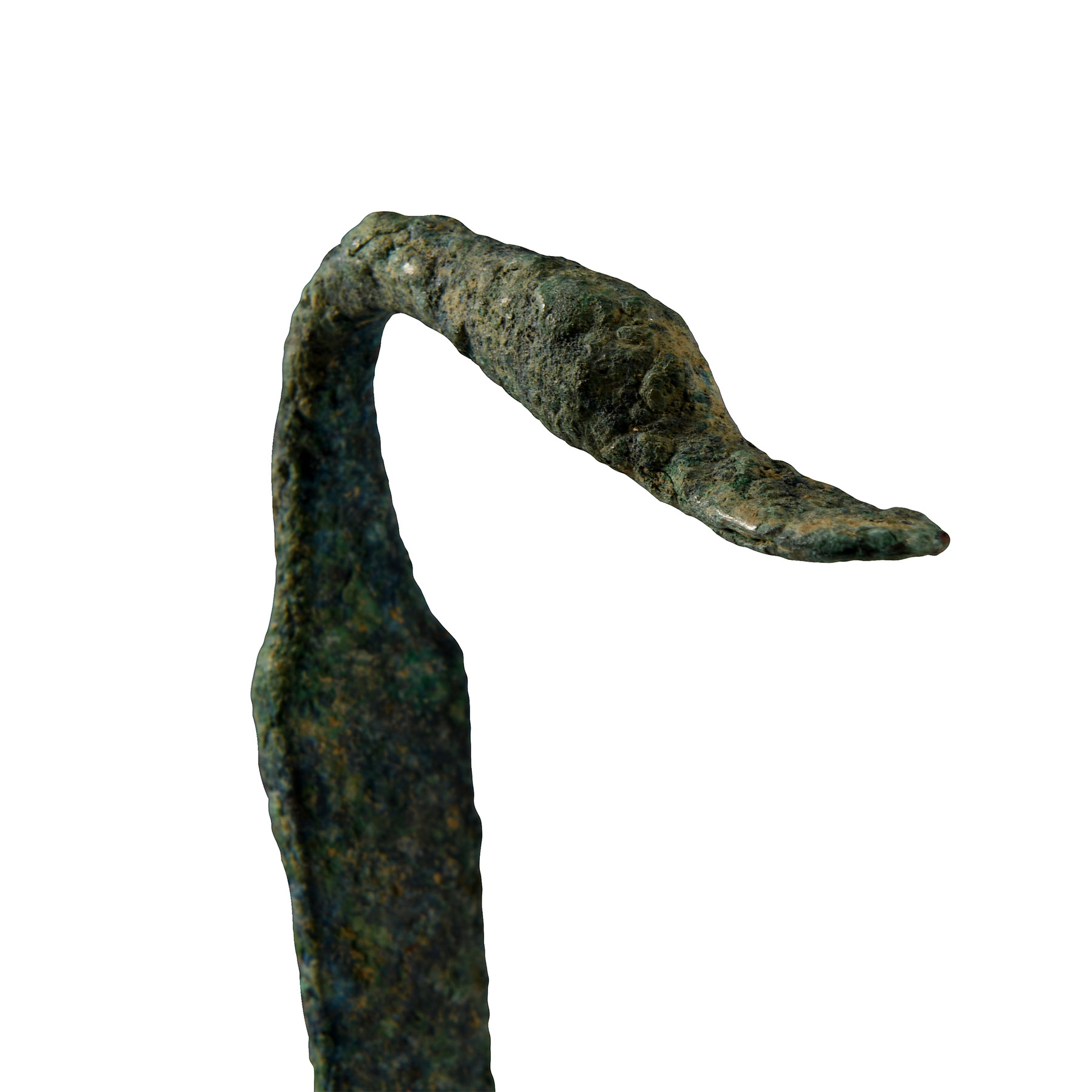
Etruscan Bronze Ladle with Duck's Head Handle
5TH-4TH CENTURY B.C.
93/4 in. (179 grams, 24.7 cm).
With shallow circular bowl and broad rim, stem with slightly domed front face, terminal formed as a duck's head.
ProvenanceAcquired in 1998.
Ex Swiss private collection.
Cf. The Metropolitan Museum, New York, accession number 21.88.130, for similar.
CONDITIONTimeLine Auctions follows a vetting process to ensure the authenticity and legality of all items, reinforcing our commitment to integrity and responsible trading. Each antiquity, antique, and coin lot undergoes thorough examination by a vetting committee of at least ten external specialists, professional trade association members, scientists, and archaeologists: Our Vetting Process
AUCTIONS:
TimeLine is a leading auction house specialising in antiquities, ancient art, collectables, natural history, coins, medals, and books. Our auctions offer museums, collectors, historians, and enthusiasts the opportunity to acquire unique and historically significant pieces.
LOT 0647
Etruscan Bronze Ladle with Duck's Head Handle
Estimate £600 - 800€700 - 930 (for guidance only)$810 - 1,080 (for guidance only)
-
.jpg)
Apulian Red-Figure Askos with Panthers
4th century B.C.Estimate: £3,000 - 4,000 (‡+bp*)
Opening Bid: £833
With an arching strap handle and a wide spout; either side of the body painted with a crouching panther, one playing with a ball and the other depicted facing; repaired. 149 grams, 12 cm
Fine condition, some surface rubbing on the black glaze, with metallic gloss, some calcareous deposits on underside of lip and vase, glaze slightly chipped in a few places, repaired.
Acquired from Gallery Gryphos, Munich, 1992. European private collection. Accompanied by an academic report by Dr Raffaele D’Amato. This lot has been checked against the Interpol Database of stolen works of art and is accompanied by a search certificate number no.12001-211879.
Painted askoi in different forms have been produced and been in use in Athens since the middle and second quarter of the 5th century B.C., but they were also made in southern Italy. The askoi painted with a pair of animal figures were realised in Magna Graecia after the Attic continental production of similar models, with the representation of griffins, sphinxes and laconic hounds. The function of the askos as a vessel was clearly linked to wine, and therefore it is not anomalous to see it decorated with panther motifs, an animal connected with Dionysus, the god of wine and drinking. -
Cypriot Bichrome Ware Openwork Dish
Iron Age, circa 1200-600 B.C.Sold for (Inc. bp): £780
Broad dish with band of openwork triangles to the lower sidewall, flat base; painted with black concentric rings, black rim, red band to the openwork. 190 grams, 15 cm
Peter Cran collection, Scotland, who worked as an engineer for the Cypriot public works department 1931-1946; thence by descent. Acquired from Bonhams, London, 23 May 2012, no.6 (part). From an important Cambridgeshire estate; thence by descent. Accompanied by copies of the relevant Christie's catalogue pages. Accompanied by copies of the relevant Bonhams catalogue pages and original lot tag. -
Greek Gold Funerary Diadem
Circa 323-31 B.C.Sold for (Inc. bp): £585
Hammered from a thin gold leaf, a repoussé border of small pellets to the outer edge; mounted in custom-made perspex case with fabric backing. 72 grams total, 12.3 cm wide (18.2 cm wide including perspex mount)
Ex European collection, 1960s. Accompanied by a previous catalogue information slip.
