
Loading, please wait...
_900x900.jpg "Etruscan Bronze Hydria Handle with Siren")
_200x200.jpg "Etruscan Bronze Hydria Handle with Siren")
_900x900.jpg "Etruscan Bronze Hydria Handle with Siren")
_200x200.jpg "Etruscan Bronze Hydria Handle with Siren")
.jpg "Etruscan Bronze Hydria Handle with Siren")
.jpg "Etruscan Bronze Hydria Handle with Siren")
LOT 0073
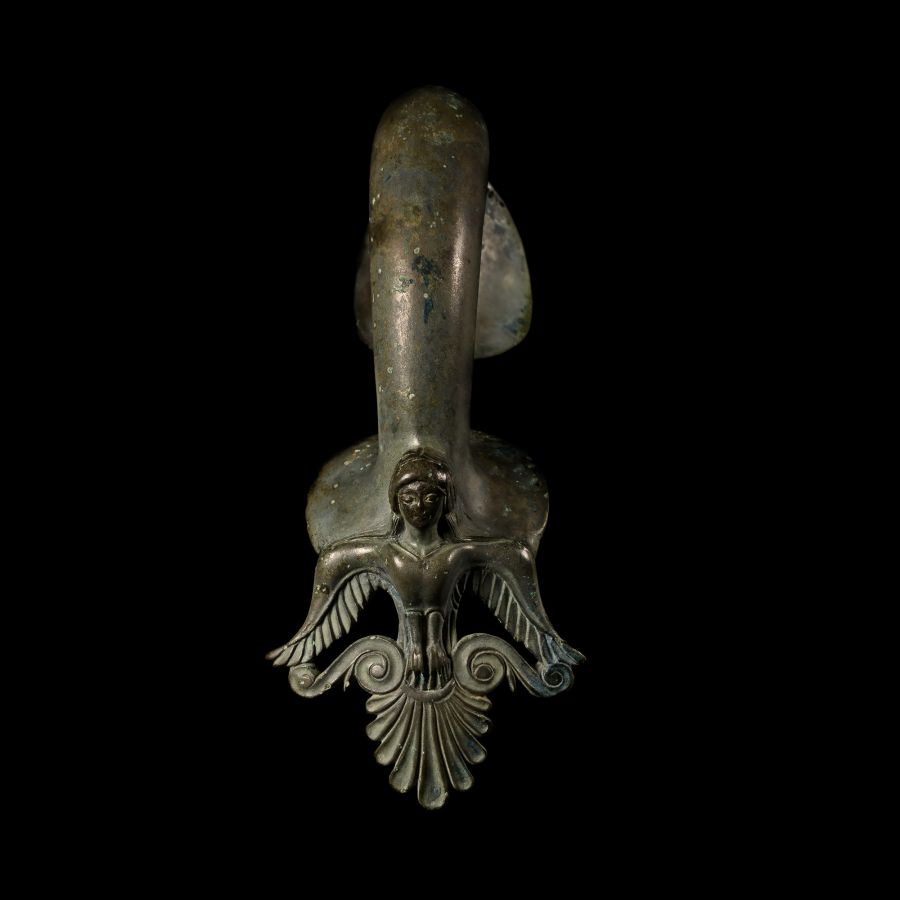
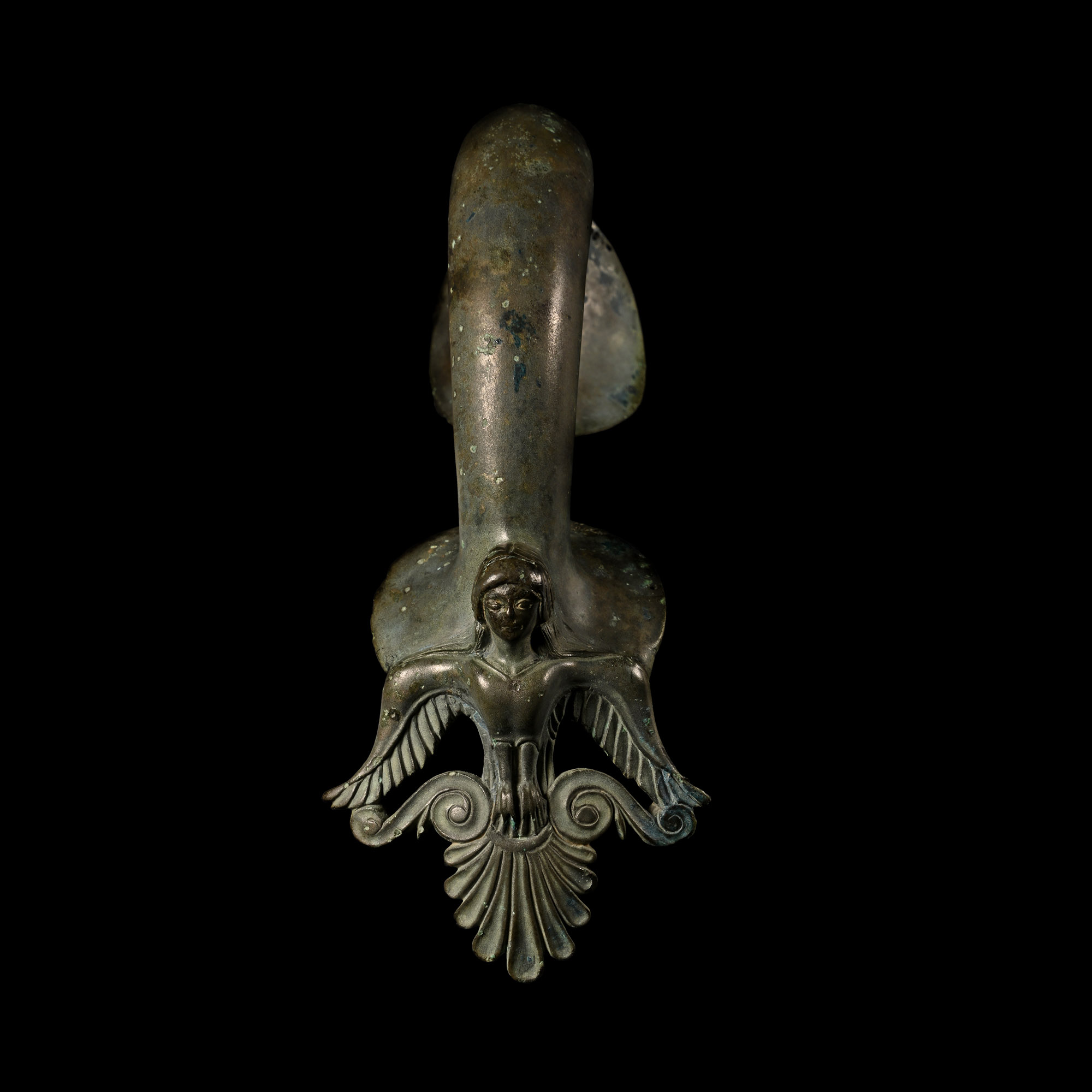
Etruscan Bronze Hydria Handle with Siren
4TH CENTURY B.C.
5 3/4 in. (6 3/4 in.) (376 grams, 14.5 cm (499 grams total, 17 cm high including stand)).
Sturdy round-section shank with image of a siren developing from a palmette finial; mounted on a custom-made stand.
ProvenanceFrom the USA art market.
Ex Gorny & Mosch, 16 December 2008, no.24.
Ex Keane collection, Kent, UK.
Accompanied by a copy of the relevant Gorny & Mosch catalogue pages.
This lot has been checked against the Interpol Database of stolen works of art and is accompanied by a search certificate number no.12649-235138.
This lot has been cleared against the Art Loss Register database, and is accompanied by an illustrated lot declaration signed by the Head of the Antiquities Department, Dr Raffaele D'Amato.
TimeLine Auctions follows a vetting process to ensure the authenticity and legality of all items, reinforcing our commitment to integrity and responsible trading. Each antiquity, antique, and coin lot undergoes thorough examination by a vetting committee of at least ten external specialists, professional trade association members, scientists, and archaeologists: Our Vetting Process
AUCTIONS:
TimeLine is a leading auction house specialising in antiquities, ancient art, collectables, natural history, coins, medals, and books. Our auctions offer museums, collectors, historians, and enthusiasts the opportunity to acquire unique and historically significant pieces.
LOT 0073
Etruscan Bronze Hydria Handle with Siren
Estimate £4,000 - 6,000€4,640 - 6,960 (for guidance only)$5,400 - 8,100 (for guidance only)
-
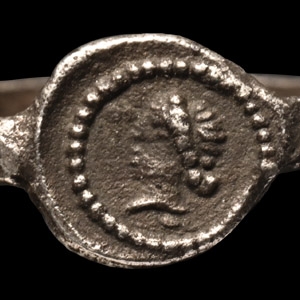
Greek Silver Ring with Portrait of Apollo
5th-3rd century B.C.Sold for (Inc. bp): £143
Comprising a slender square-section hoop and discoid bezel with low-relief image of diademed bust within pelletted border. 0.96 grams, 17.84 mm overall, 14.34 mm internal diameter (approximate size British G, USA 3 1/4, Europe 4.92, Japan 4)
Ex German art market, 2000s. Acquired from an EU collector living in London. From the collection of a Surrey, UK, gentleman. This lot is accompanied by an illustrated lot declaration signed by the Head of the Antiquities Department, Dr Raffaele D'Amato. -
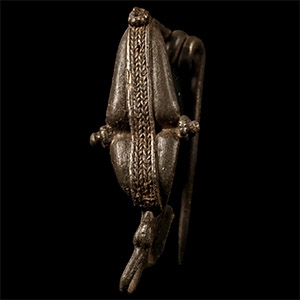
Greek Silver Fibula
5th-4th century B.C.Sold for (Inc. bp): £182
Comprising an ellipsoid bow with lateral knops (one absent) and applied collars, longitudinal band of applied filigree braid, knop finial with collar, perpendicular two-coil spring and long pin; footplate with incised saltire with reversed-loop finial, square catchplate with pointillé gammadion and frame. 6.86 grams, 42 mm
Private European collection, 1994, thence by descent. This lot is accompanied by an illustrated lot declaration signed by the Head of the Antiquities Department, Dr Raffaele D'Amato. -
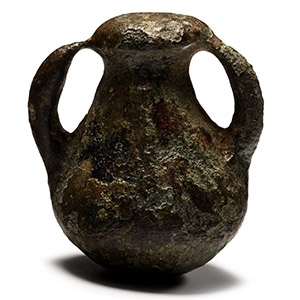
Graeco-Roman Bronze Weight
Circa 2nd century B.C-2nd century A.D.Sold for (Inc. bp): £33
Bulbous vessel with short neck and lateral handles; possibly used as a weight. 43.41 grams, 28 mm
Ex German art market, 2000s. Acquired from an EU collector living in London. From the collection of a Surrey, UK, gentleman. This lot is accompanied by an illustrated lot declaration signed by the Head of the Antiquities Department, Dr Raffaele D'Amato.
