
Loading, please wait...
_900x900.jpg "Etruscan Bronze Figure of a Man")
_200x200.jpg "Etruscan Bronze Figure of a Man")
.jpg "Etruscan Bronze Figure of a Man")
LOT 0060
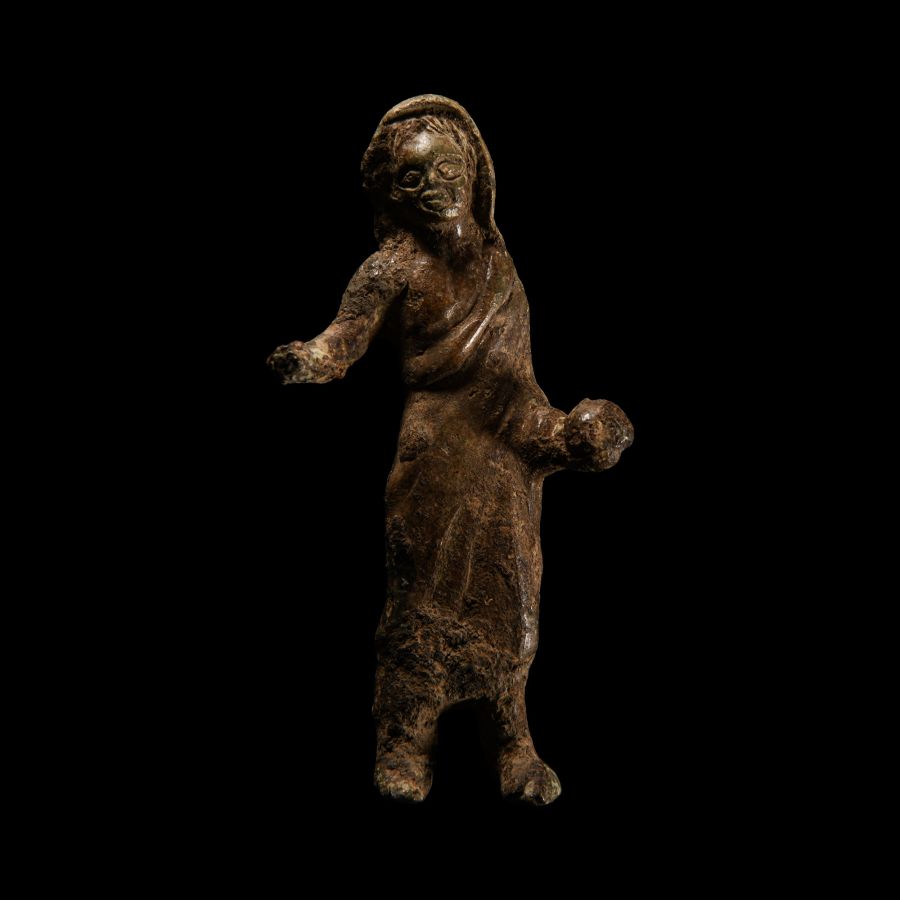
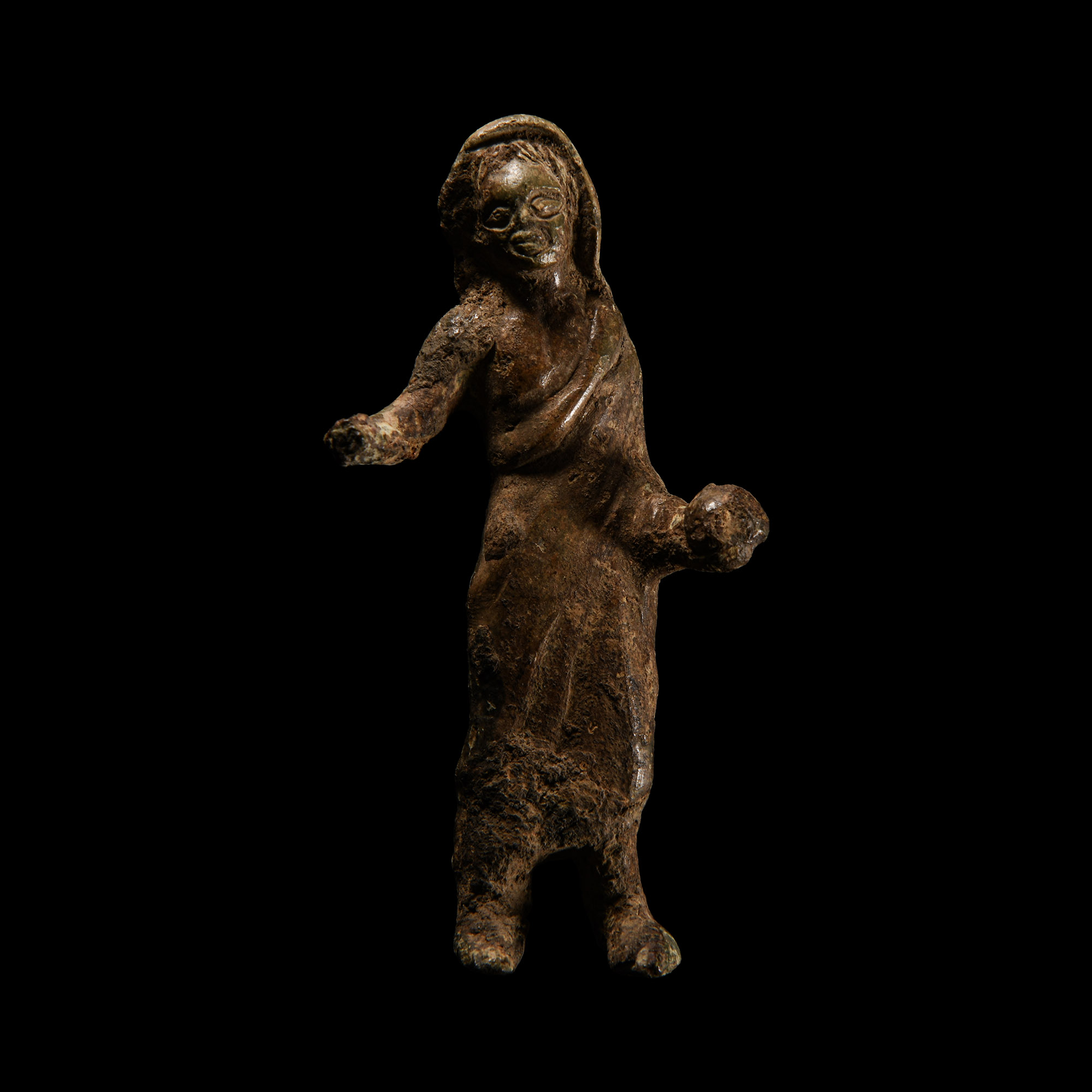
Etruscan Bronze Figure of a Man
4TH-3RD CENTURY B.C.
3 1/4 in. (87 grams, 83 mm).
Standing with right hand extended, left hand supporting a spherical object, the body draped in a textile garment worn over the head like a cowl.
ProvenancePrivate collection of Mr S.A., Switzerland, 1990s, thence by descent.
CONDITIONTimeLine Auctions follows a vetting process to ensure the authenticity and legality of all items, reinforcing our commitment to integrity and responsible trading. Each antiquity, antique, and coin lot undergoes thorough examination by a vetting committee of at least ten external specialists, professional trade association members, scientists, and archaeologists: Our Vetting Process
AUCTIONS:
TimeLine is a leading auction house specialising in antiquities, ancient art, collectables, natural history, coins, medals, and books. Our auctions offer museums, collectors, historians, and enthusiasts the opportunity to acquire unique and historically significant pieces.
-
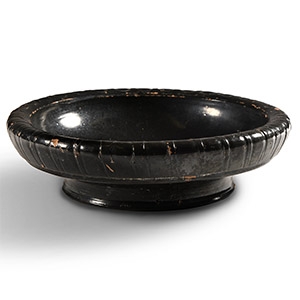
Greek Black-Glazed Plate
5th-4th century B.C.Estimate: £300 - 400 (‡+bp*)
Opening Bid: £150
Shallow-bodied with broad foot; incised fluting around the exterior body and rim. 192 grams, 12.7 cm wide
Acquired in the 1960s-1970s. Ex European private collection. -
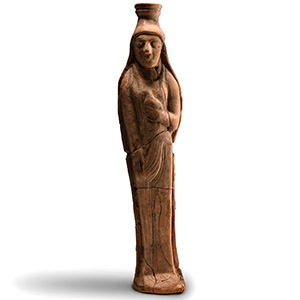
Archaic Greek Figural Alabastron
6th century B.C.Estimate: £800 - 1,000 (‡+bp*)
Opening Bid: £400
The free-standing perfume vase modelled as a standing and draped female figure, the neck and mouth of the vessel possibly formed as a modius worn on her head, holding what is possibly a dove to her chest; moulded and painted detailing to her face and garments; heavily repaired. 269 grams, 22 cm high
Acquired in Europe before 2001. -
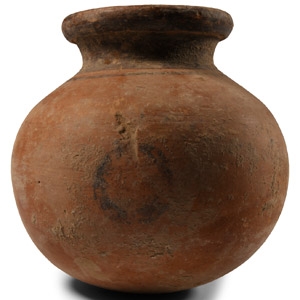
Greek Geometric Terracotta Jar
9th-8th century B.C.Estimate: £100 - 140 (+bp*)
Opening Bid: £50
Globular in form with trumpet-shaped mouth, painted band to neck. 490 grams, 14 cm high
Acquired 1980-2015. Ex Abelita family collection.
