
Loading, please wait...
LOT 0593
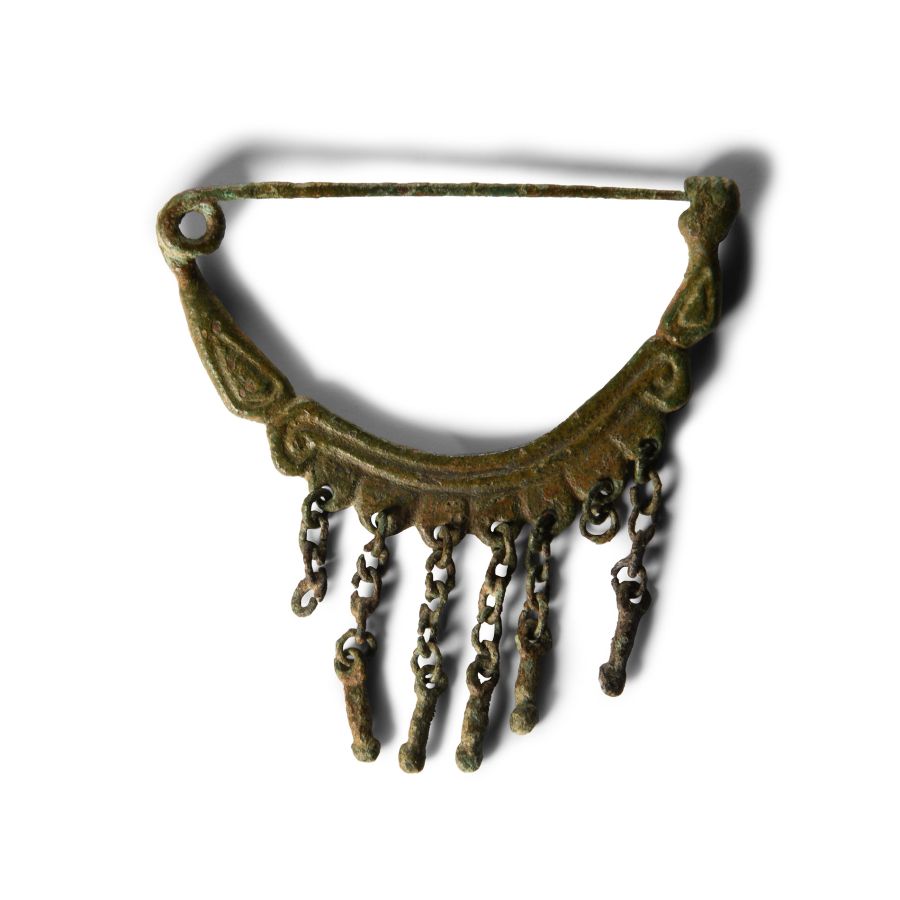
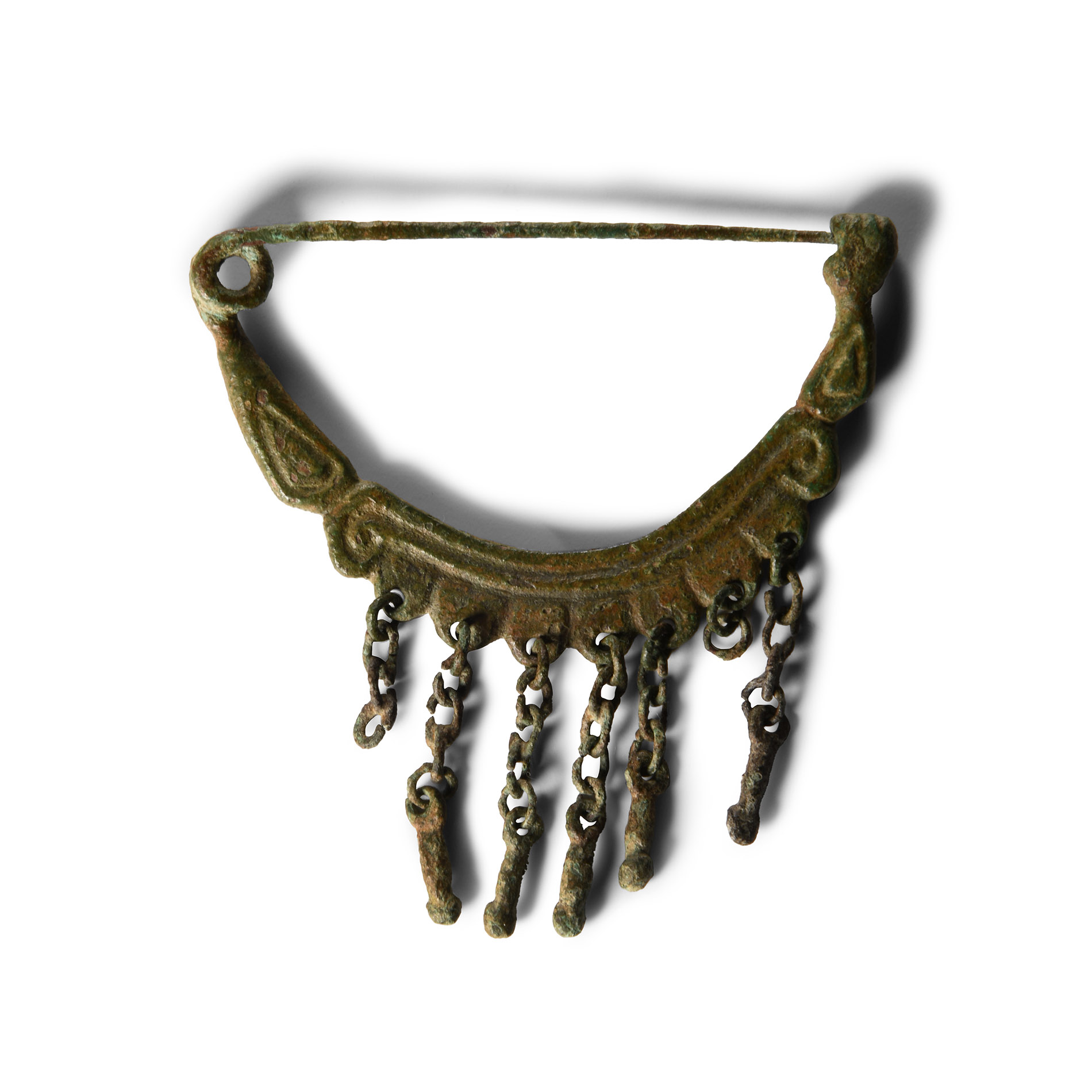
Etruscan Bronze Bow Brooch with Phallic Pendants
CIRCA 7TH CENTURY B.C.
2 3/4 in. (21 grams, 71 mm).
With integral spring and pin, catched formed as a hand, segmented bow with low-relief detailing, five (of seven) short chains with phallic dangles. [No Reserve]
ProvenanceFrom a collection acquired on the UK art market from various auction houses and collections mostly before 2000.
From an important Cambridgeshire estate; thence by descent.
Cf. Hattatt, R., Ancient Brooches and Other Artefacts, Oxford, 1989, item 1728, for type.
CONDITIONTimeLine Auctions follows a vetting process to ensure the authenticity and legality of all items, reinforcing our commitment to integrity and responsible trading. Each antiquity, antique, and coin lot undergoes thorough examination by a vetting committee of at least ten external specialists, professional trade association members, scientists, and archaeologists: Our Vetting Process
AUCTIONS:
TimeLine is a leading auction house specialising in antiquities, ancient art, collectables, natural history, coins, medals, and books. Our auctions offer museums, collectors, historians, and enthusiasts the opportunity to acquire unique and historically significant pieces.
-
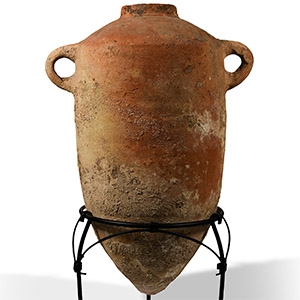
Phoenician Shipwreck Pottery Amphora
Iron Age, 1050-850 B.C.Sold for (Inc. bp): £1,560
With small looped side handles, short sloping shoulder and ring neck, slender body tapering to a pointed base. 7.35 kg total, 61 cm high including stand
Ex old Lebanese collection imported into Germany in the middle of the 1970s. Acquired Bonhams, London, 20 October 2005, no.413 (part). Property of a North London collector, acquired from a Cambridgeshire gentleman in 2007. Accompanied by a copy of the relevant Bonhams catalogue pages. Accompanied by a previous owner's certificate of authenticity. -
.jpg)
Cypriot Limestone Head of a Deer
Iron Age, circa late 6th-early 5th century B.C.Sold for (Inc. bp): £1,430
Carved in the round with stub antlers to the brow; mounted on a custom-made display stand. 982 grams total, 19.7 cm including stand
Acquired before 1947. Ex Wood family collection, UK; thence by descent 1970.
The deer head probably came from a larger votive terracotta sculpture, which depicted a standing doe, perhaps being led to be sacrificed. The presence of the deer could connect the original terracotta to a sanctuary of Diana, whose sacred animal was the deer. -
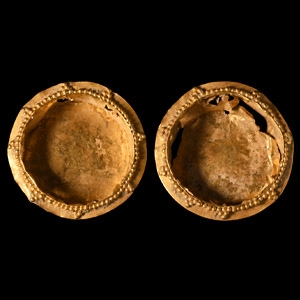
Hellenistic Gold Mount Pair
2nd-1st century B.C.Estimate: £180 - 240 (+bp*)
Opening Bid: £90
Comprising discoid cells each with shallow sidewall and flange rim, granule collar with radiating clusters. 1.62 grams total, 19 mm each
From a late Japanese specialist collector, 1970-2000s.
