
Loading, please wait...
LOT 0579
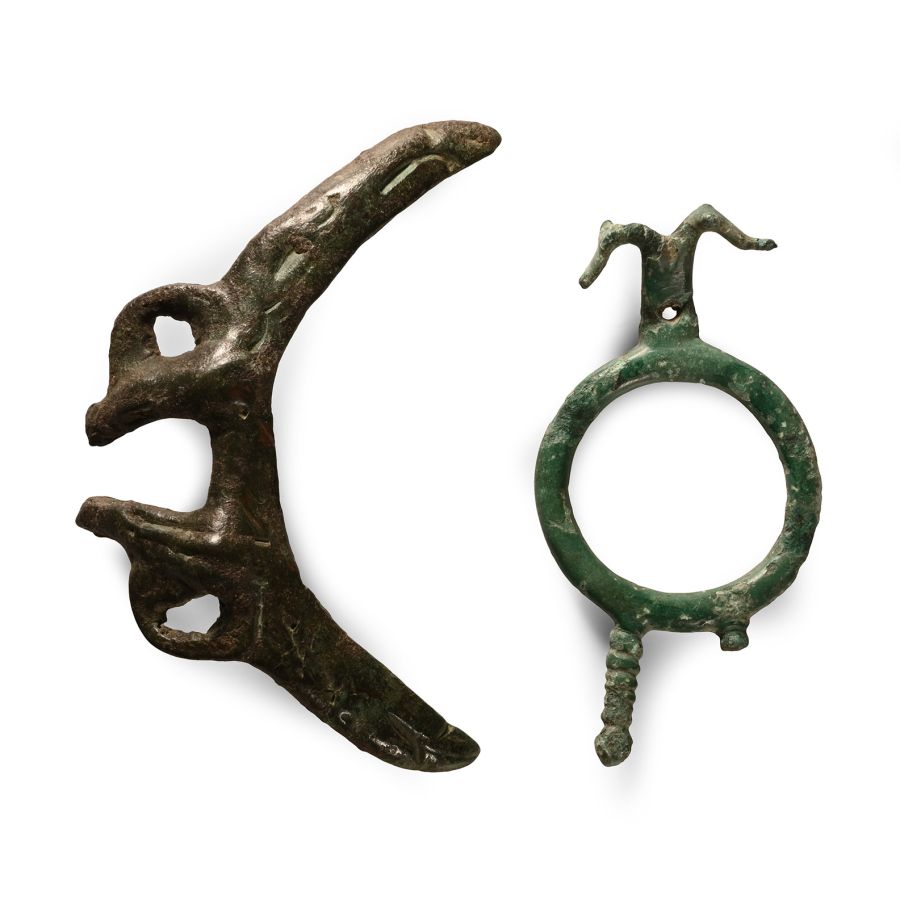
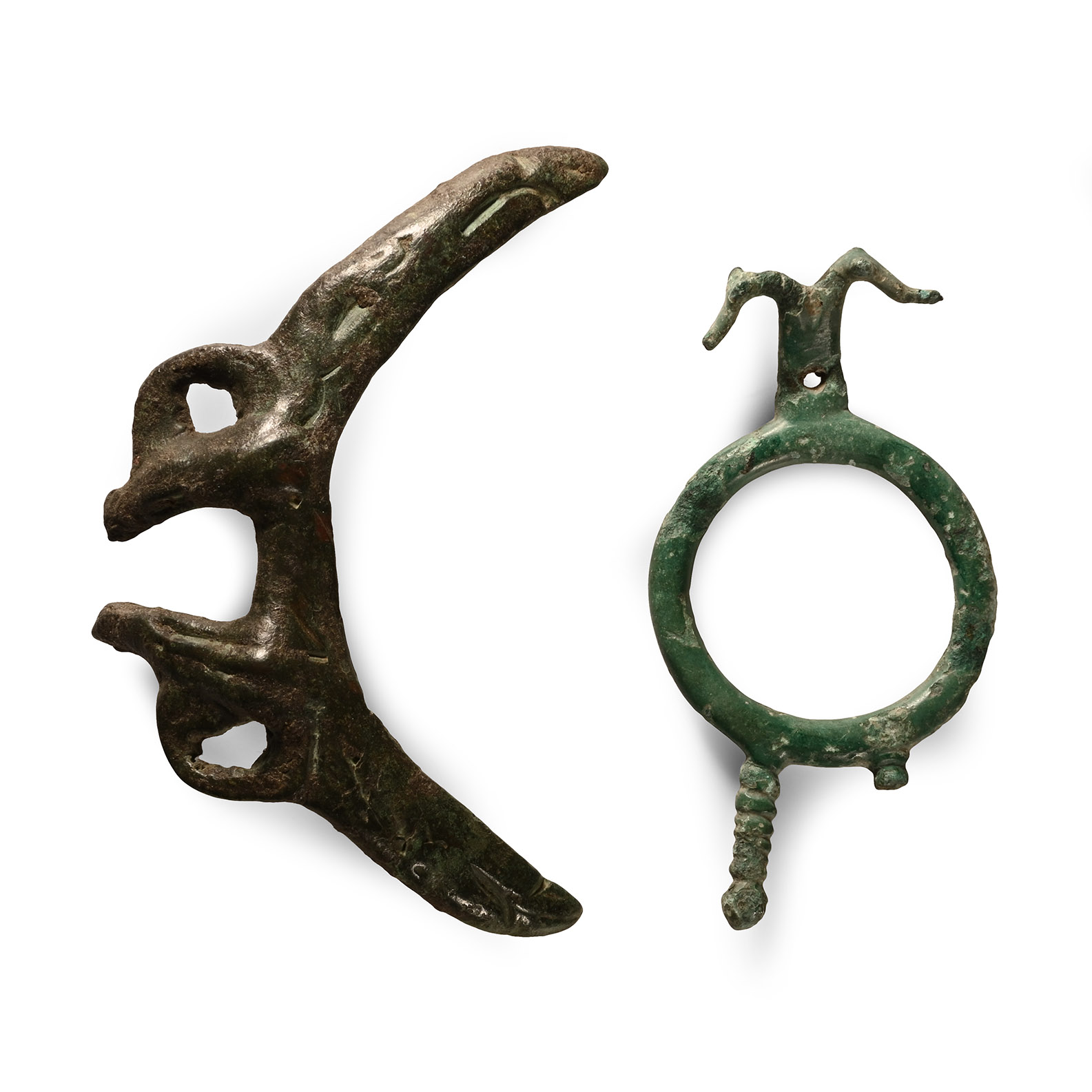
Etruscan Bronze Artefact Group
CIRCA 8TH-7TH CENTURY B.C.
2 7/8 - 3 3/8 in. (82 grams total, 74-84 mm).
Comprising: a ring brooch with addorsed horse-heads; crescent mount fragment with eagles' claws. [2, No Reserve]
ProvenanceFrom a collection acquired on the UK art market from various auction houses and collections mostly before 2000.
From an important Cambridgeshire estate; thence by descent.
TimeLine Auctions follows a vetting process to ensure the authenticity and legality of all items, reinforcing our commitment to integrity and responsible trading. Each antiquity, antique, and coin lot undergoes thorough examination by a vetting committee of at least ten external specialists, professional trade association members, scientists, and archaeologists: Our Vetting Process
AUCTIONS:
TimeLine is a leading auction house specialising in antiquities, ancient art, collectables, natural history, coins, medals, and books. Our auctions offer museums, collectors, historians, and enthusiasts the opportunity to acquire unique and historically significant pieces.
-
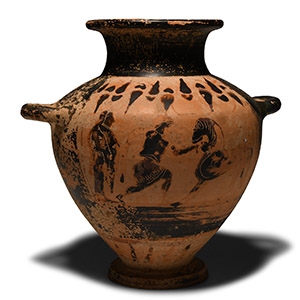
Greek Black Glazed Terracotta Hydria with Figures
6th-5th century B.C.Estimate: £1,500 - 2,000 (‡+bp*)
Opening Bid: £833
Tall vessel with narrow base and loop handles to the shoulder, strap handle to the rear; reserved figural scene of a horse in profile with handler and rider behind. 515 grams, 18.6 cm
Private collection of Mr S.A., Switzerland, 1990, thence by descent. This lot has been checked against the Interpol Database of stolen works of art and is accompanied by search certificate no.12047-211885. -
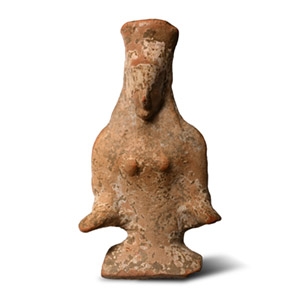
Greek Terracotta Antefix
Archaic, 6th-5th century B.C.Estimate: £1,000 - 1,400 (‡+bp*)
Opening Bid: £500
Mould-made figure of a female upper body with tall headdress and arms spread, hands palm-upwards; beneath, a C-section channel for attachment to a roof. 78 grams, 13.1 cm
Acquired in the mid 1980s-1990s. Private collection, Switzerland, thence by descent. Private collection, since the late 1990s. -
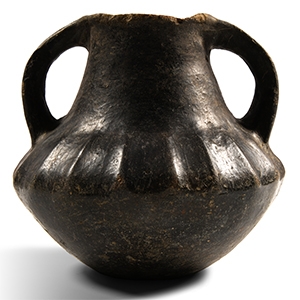
Etruscan Blackware Impasto Vase
8th-7th century B.C.Sold for (Inc. bp): £715
Biconical with a tapering cylindrical neck and two handles, raised ribbing around the shoulder. 550 grams, 15 cm wide
Ex private Mister X. (1931-2017) collection. Sold in the benefit of the 'Croix-Rouge of Monaco'.
