
Loading, please wait...
LOT 0047
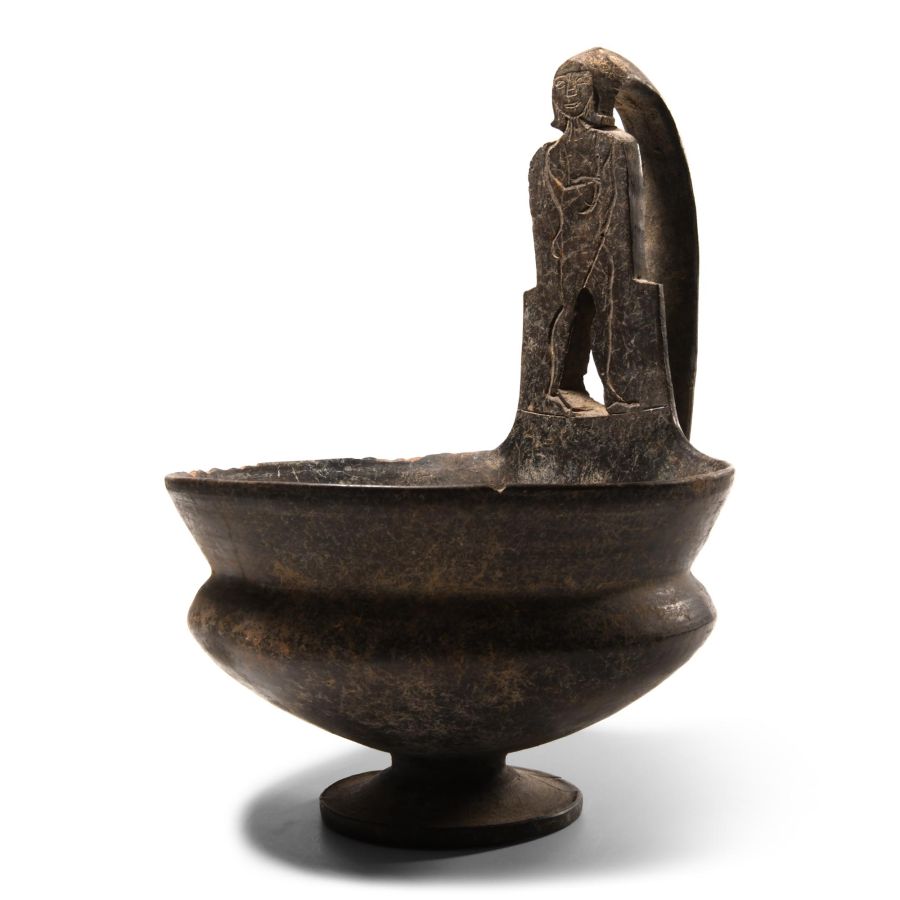
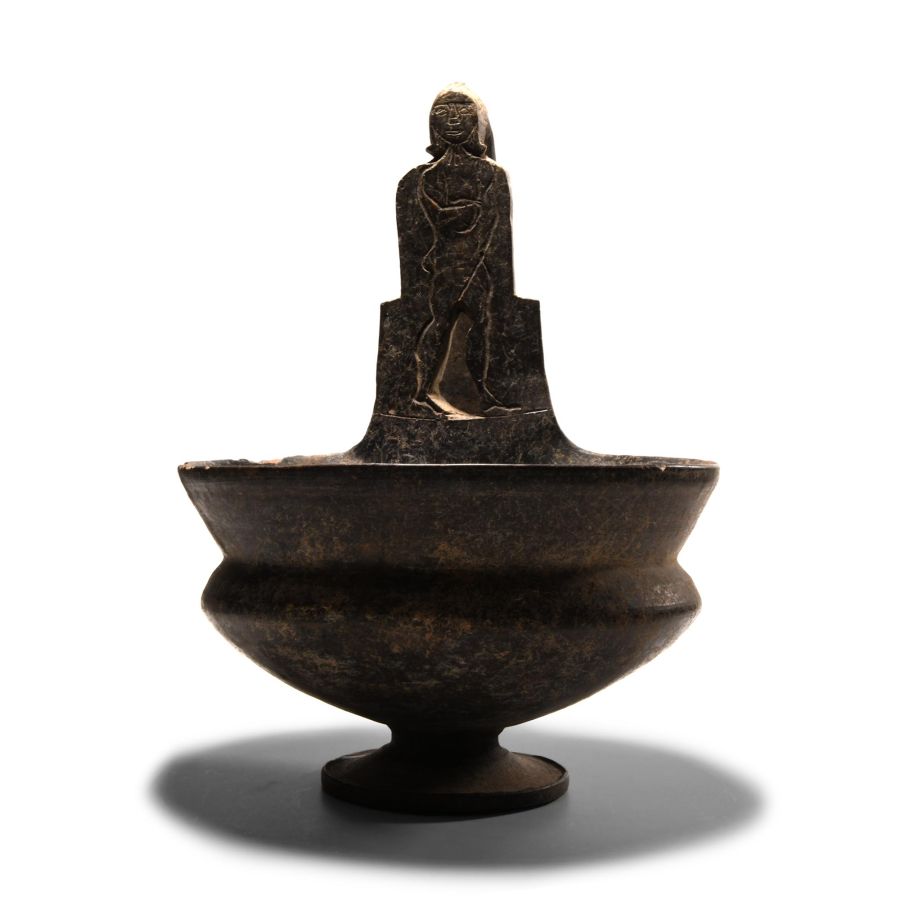
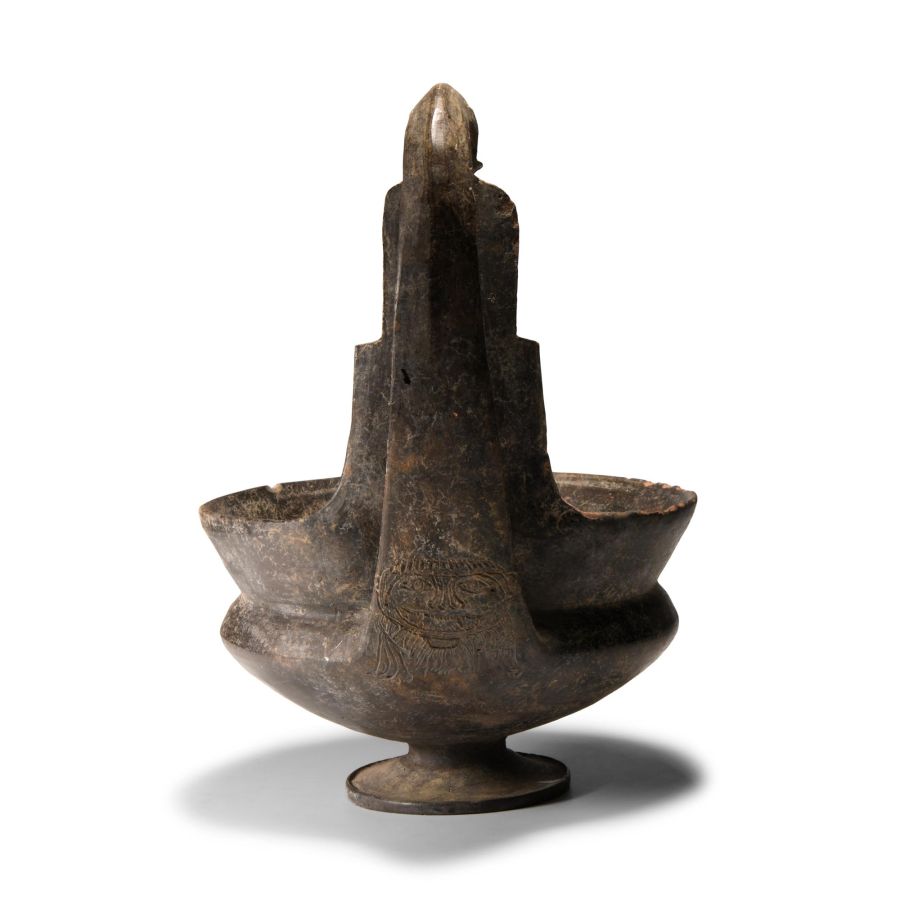
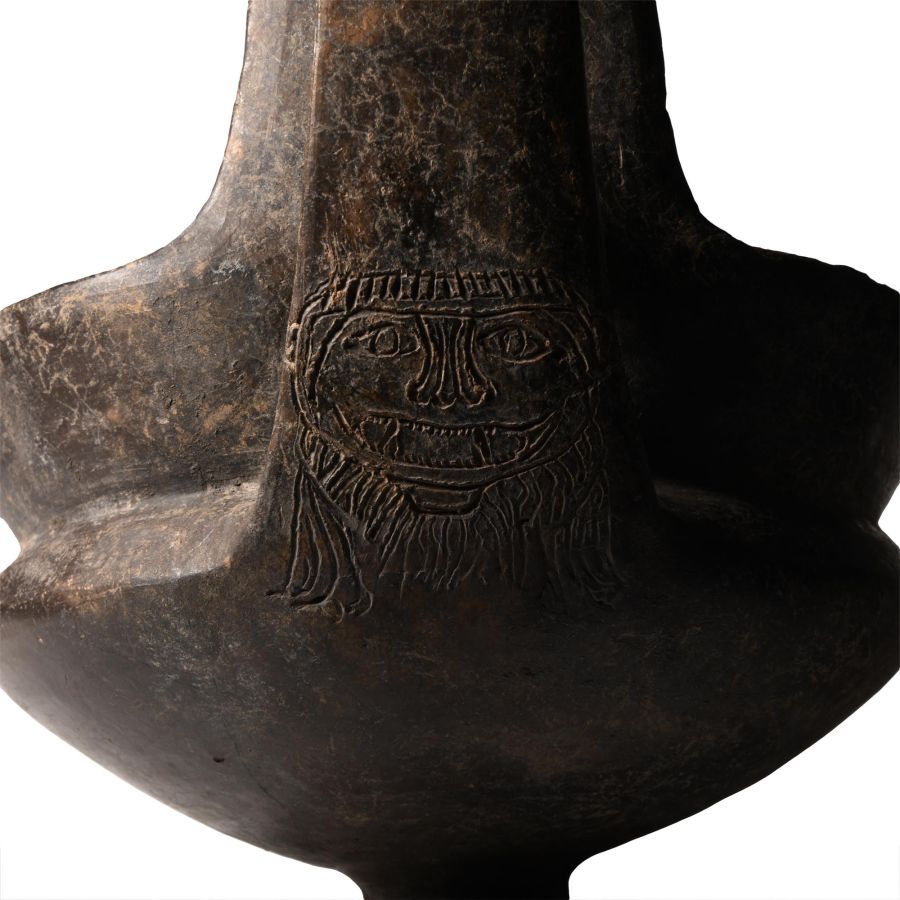
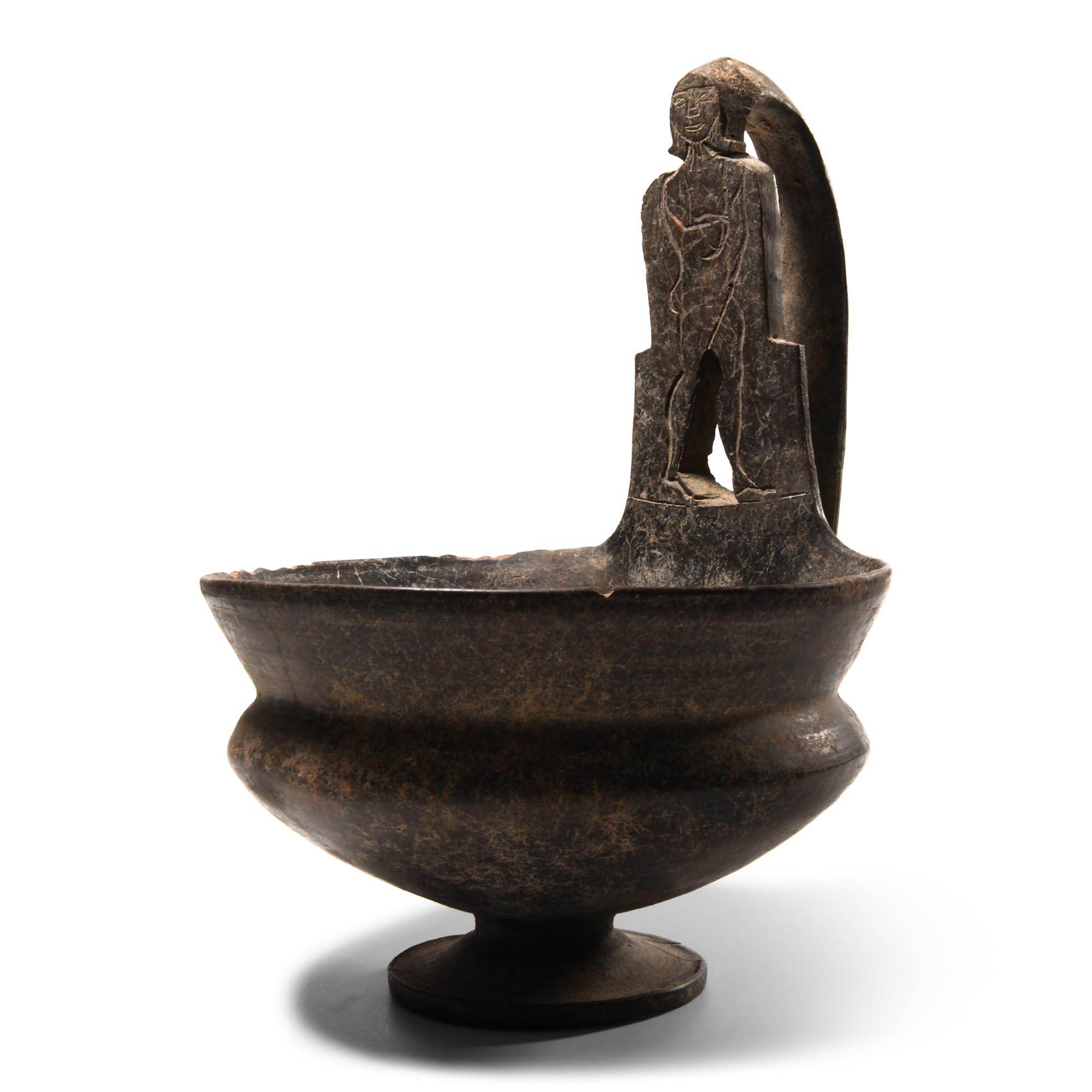
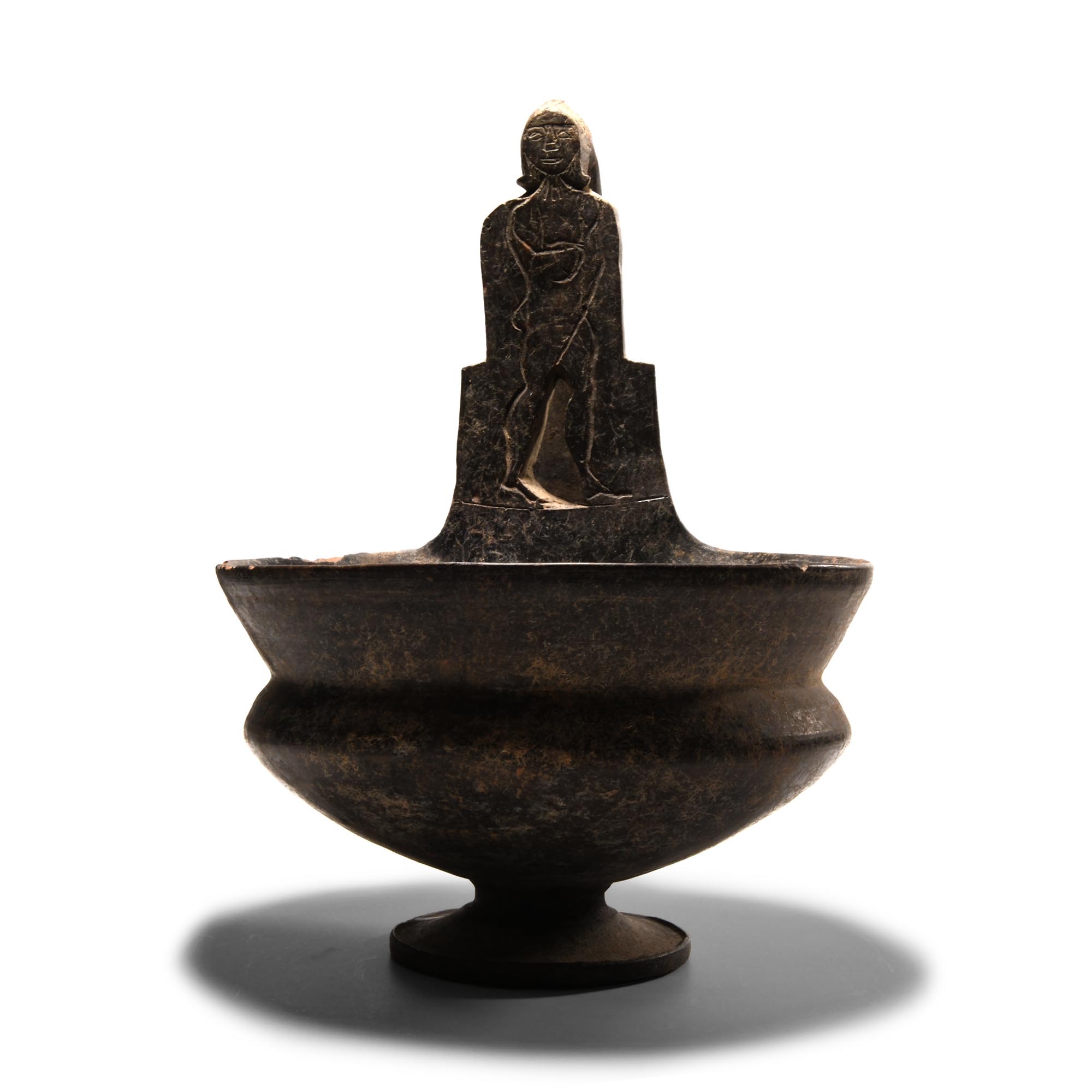
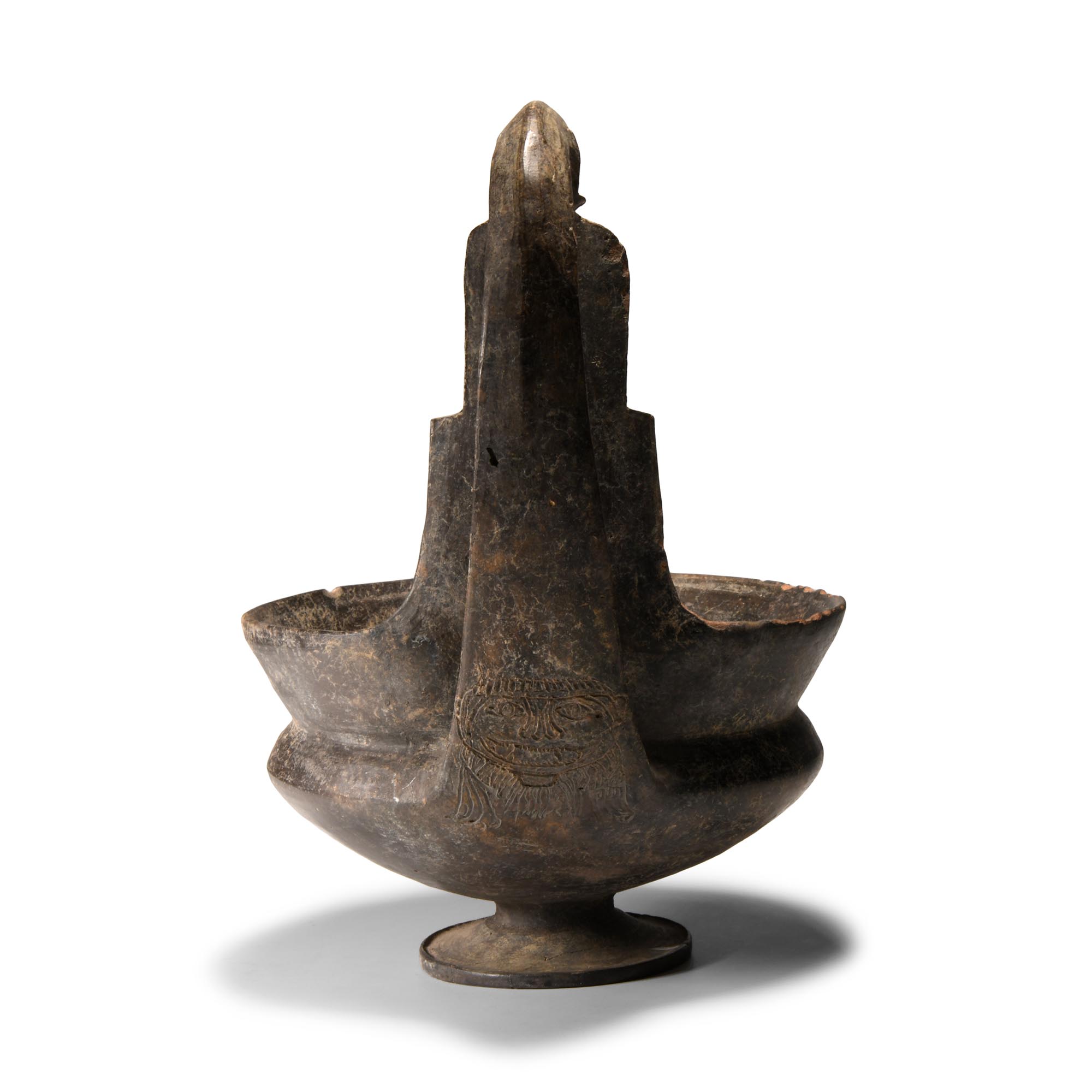
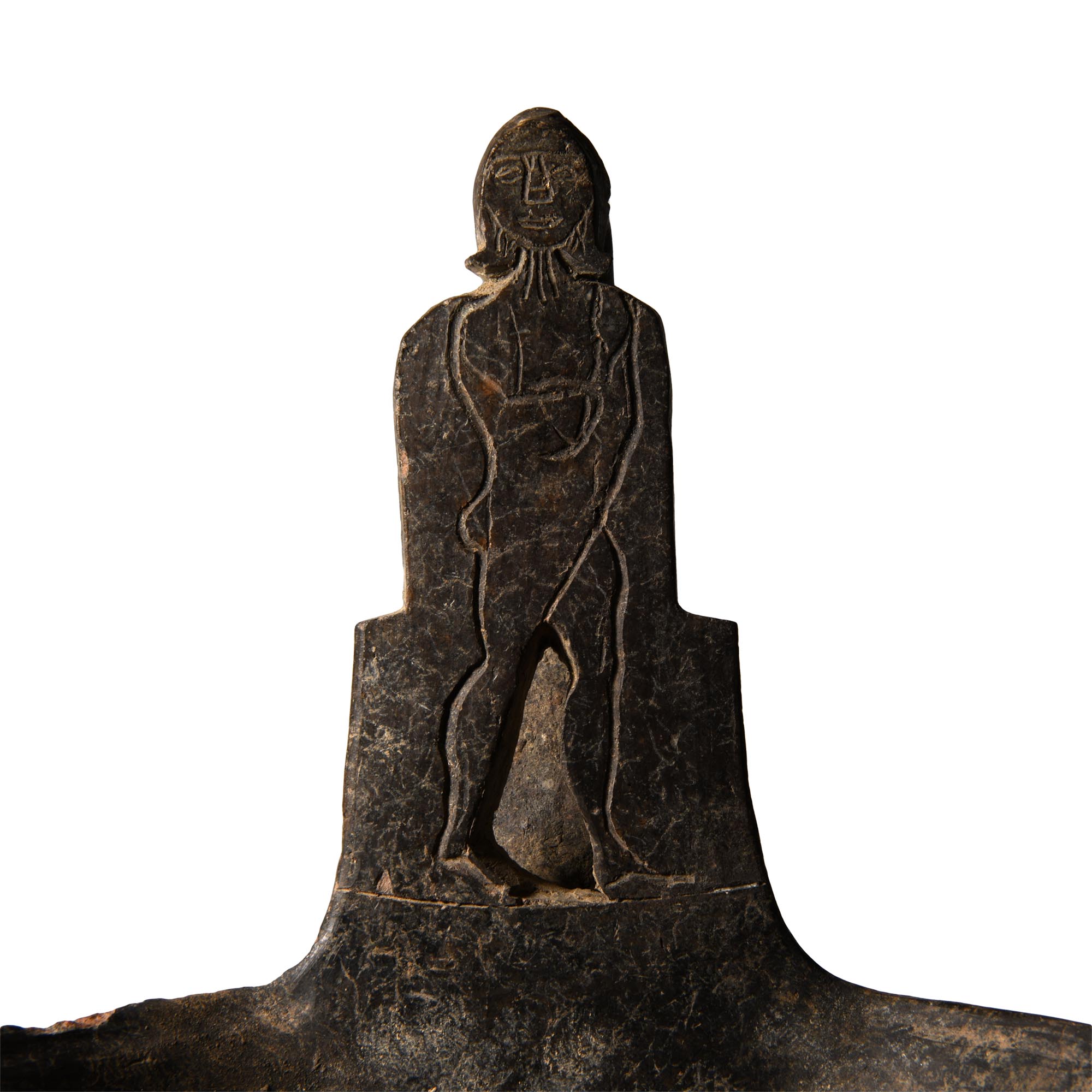
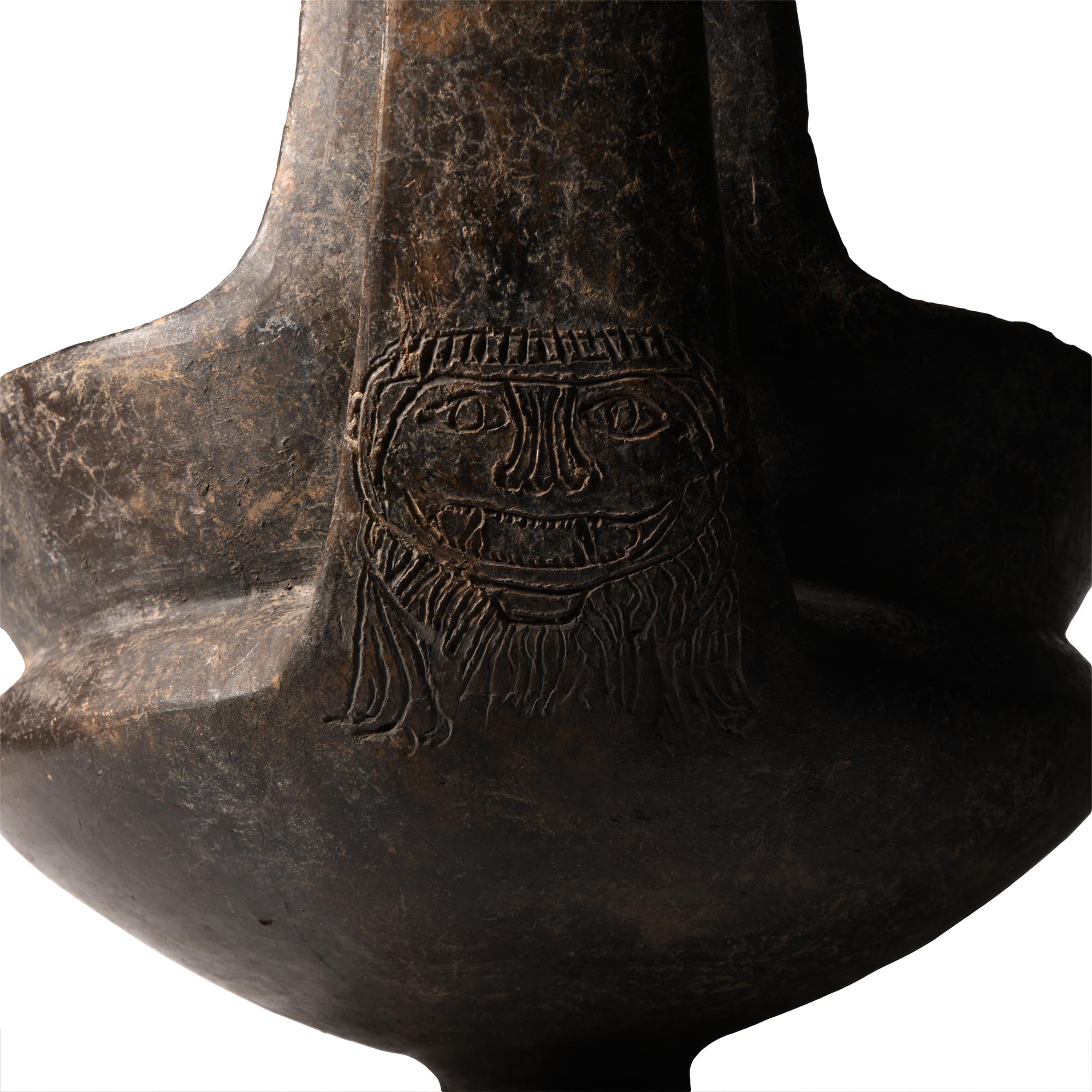
Etruscan Blackware Terracotta Kyathos
6TH CENTURY B.C.
10 3/4 in. (1.15 kg, 27 cm).
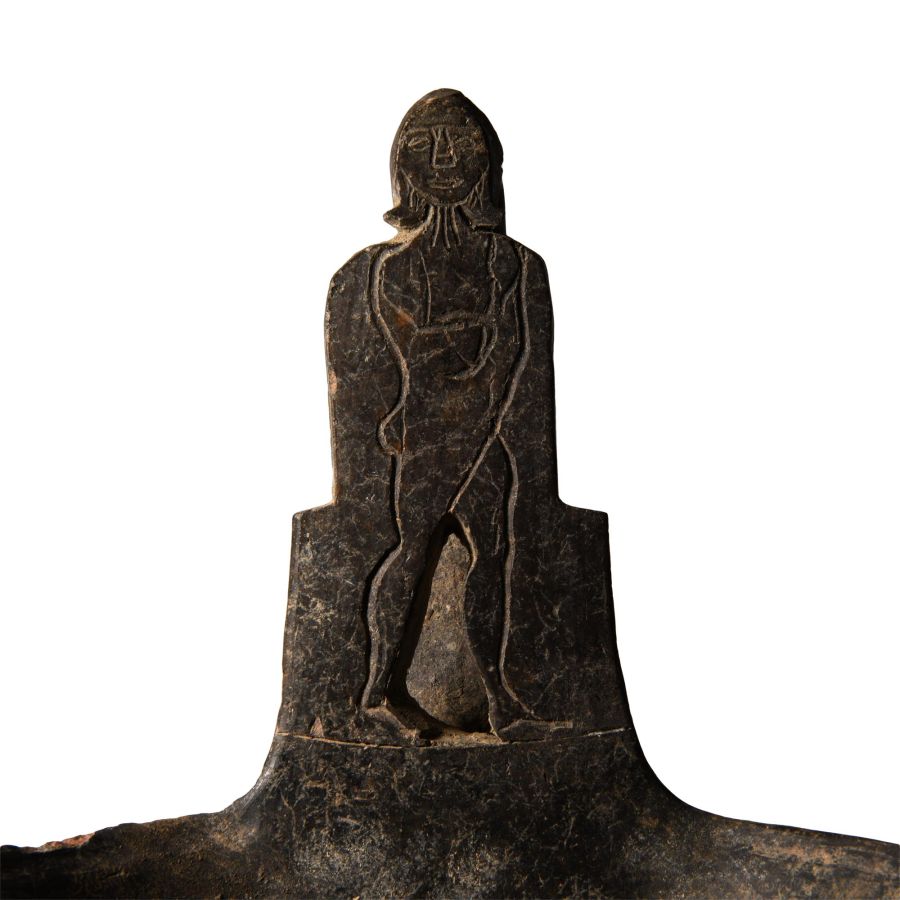
Squat bowl with pedestal foot and carinated profile, broad flared rim; tall loop handle with flat frontal panel with advancing nude kouros, the head turned and one arm bent, voided below respecting the inner outline of the legs; to the reverse, an incised gorgoneion with broad gaping mouth.
ProvenanceEnglish private collection.
CONDITIONTimeLine Auctions follows a vetting process to ensure the authenticity and legality of all items, reinforcing our commitment to integrity and responsible trading. Each antiquity, antique, and coin lot undergoes thorough examination by a vetting committee of at least ten external specialists, professional trade association members, scientists, and archaeologists: Our Vetting Process
AUCTIONS:
TimeLine is a leading auction house specialising in antiquities, ancient art, collectables, natural history, coins, medals, and books. Our auctions offer museums, collectors, historians, and enthusiasts the opportunity to acquire unique and historically significant pieces.
LOT 0047
Etruscan Blackware Terracotta Kyathos
Estimate £1,200 - 1,700€1,390 - 1,970 (for guidance only)$1,620 - 2,300 (for guidance only)
-
Daunian Terracotta Askos Bird-Shaped Flask
Circa 400-350 B.C.Sold for (Inc. bp): £520
With squat bdy on a small disc foot, broad filler hole with flange rim and small stub spout, flat-section loop above; painted with bands of radiating hatching, segments and other designs. 193 grams, 11 cm
From an old German collection. Acquired in Brussels from Alara Gallery, 1994. Private collection, London, UK. -
.jpg)
Archaic Cypriot Head of a Male Votary
6th century B.C.Sold for (Inc. bp): £468
Fragmentary head from a votive limestone figure of a male with long hair arranged inside a plain diadem above his forehead; the face with almond-shaped eyes sculpted in relief, arched eyebrows, and exhibiting the ‘archaic smile’; mounted on a display block. 381 grams total, 15 cm high including stand
Ex Professor Hans Dahn (1919-2019), Lausanne, Switzerland. -
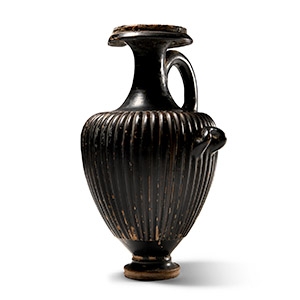
South Italian Black-Glazed Miniature Hydria
4th century B.C.Sold for (Inc. bp): £975
Decorated with ribbed fluting around the body and broad shoulder, slender neck with stepped and everted rim and mouth, two handles to the equator, a carry handle between neck and shoulder to the rear, discoid foot; repaired. 232 grams, 16.5 cm high
Private collection. Anonymous sale, Eve Auctions, Paris, December 11, 2013, no.11.
