
Loading, please wait...
LOT 0374
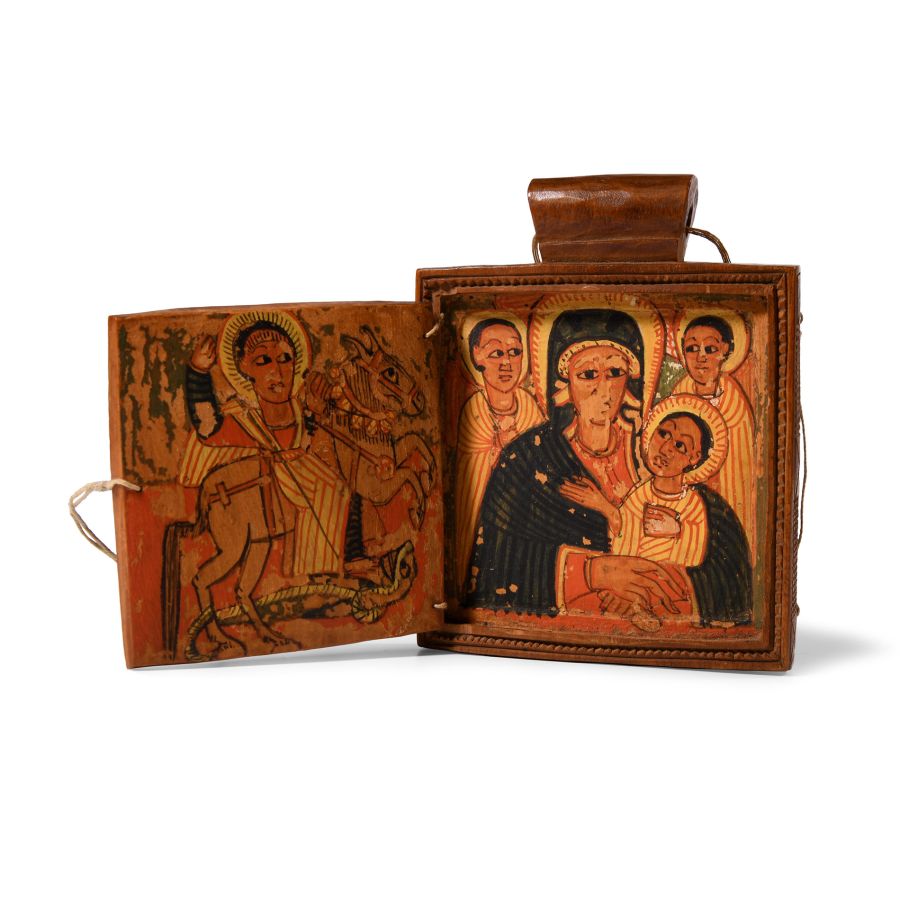
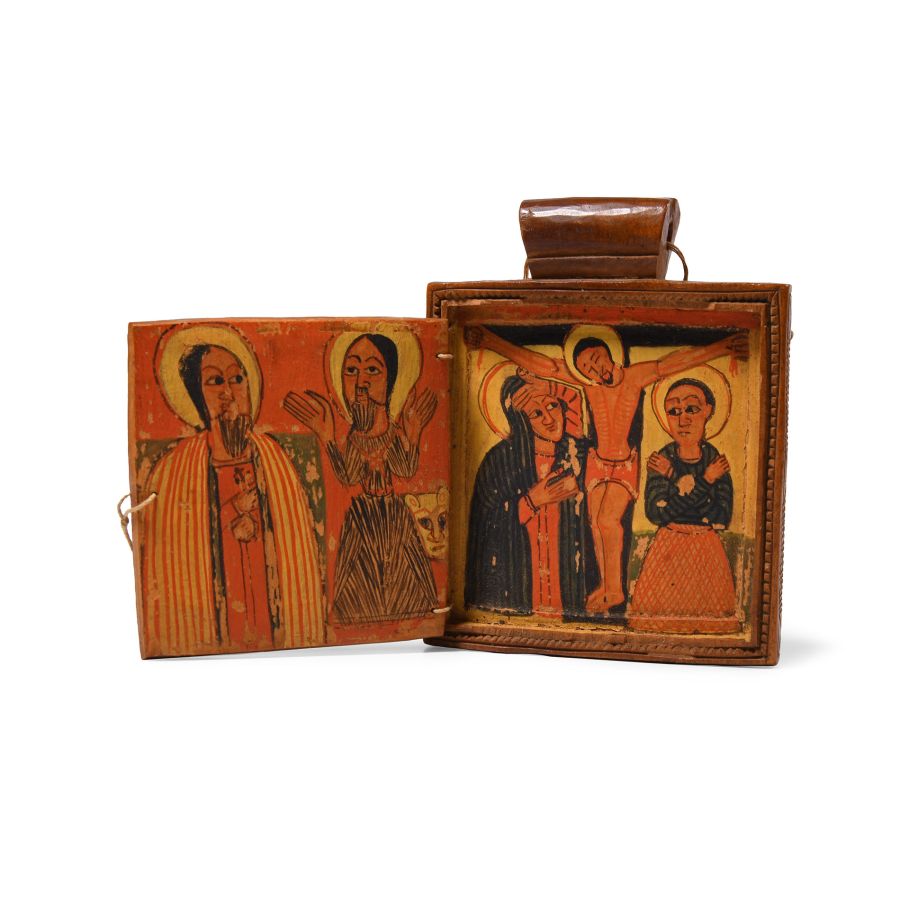
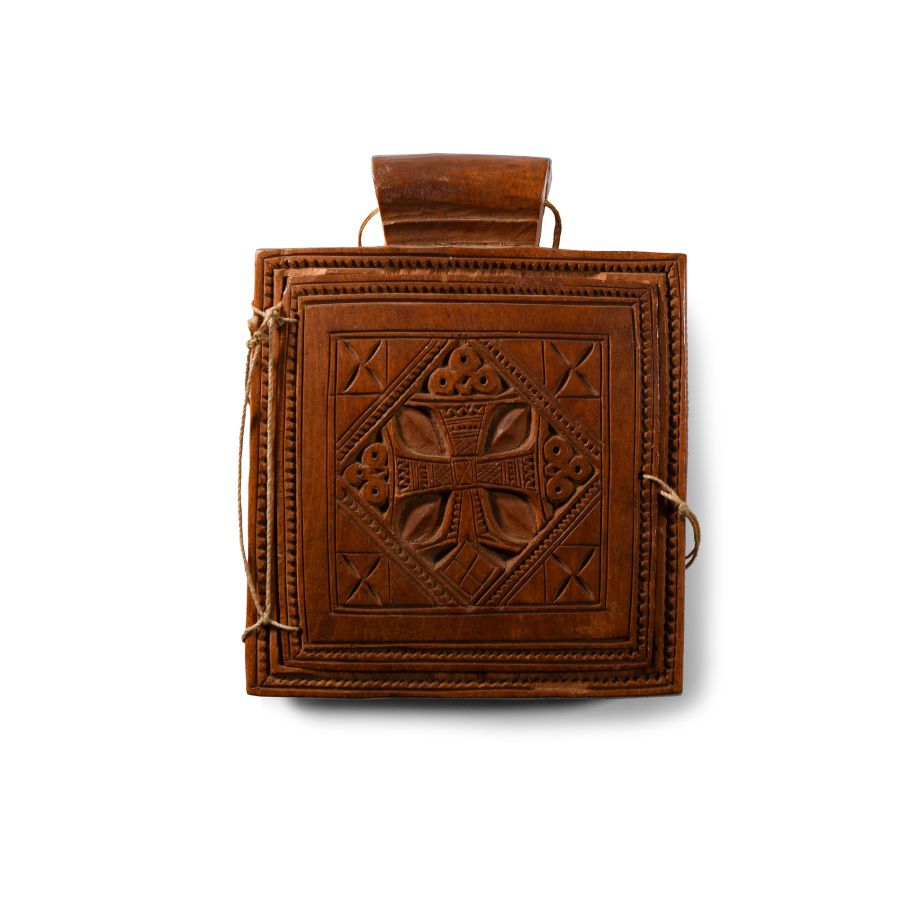
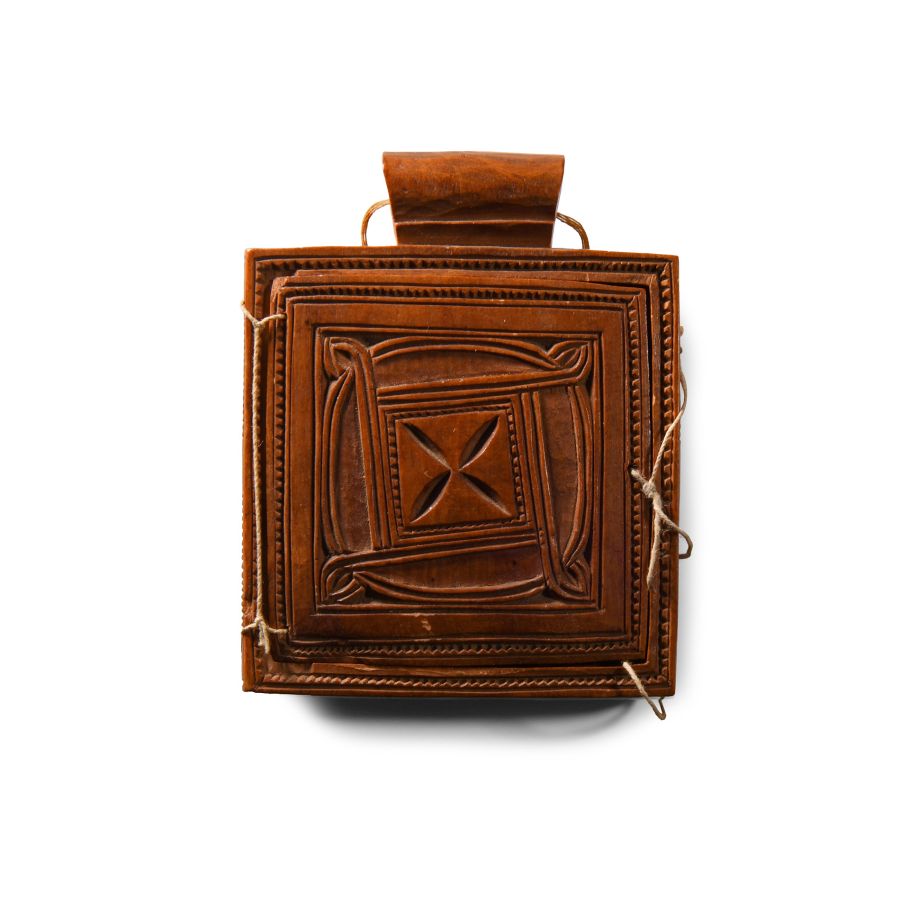
Ethiopian Wooden Icon with Paintings of Saints
MID 17TH CENTURY A.D.
4 in. (91 grams, 10 cm high).
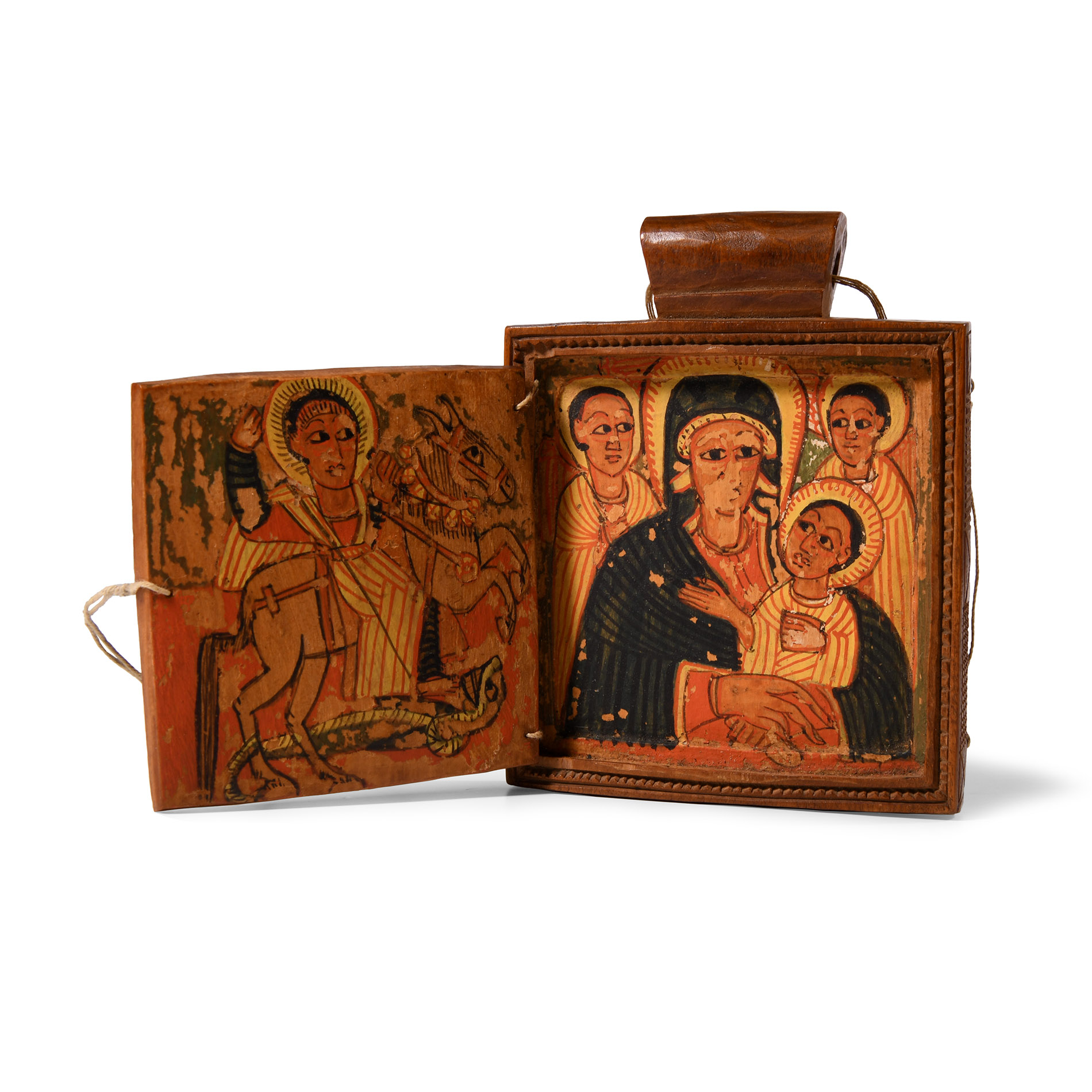
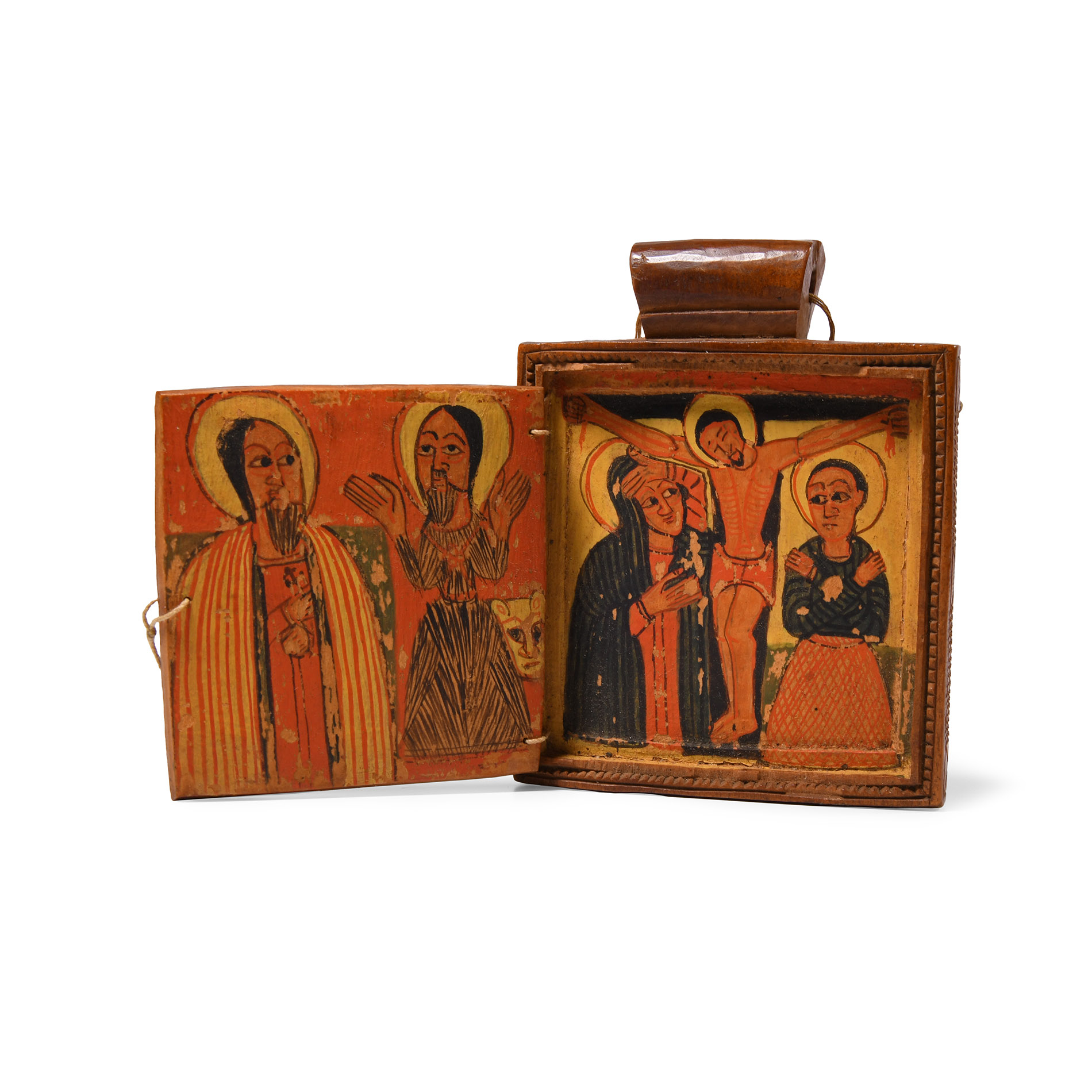
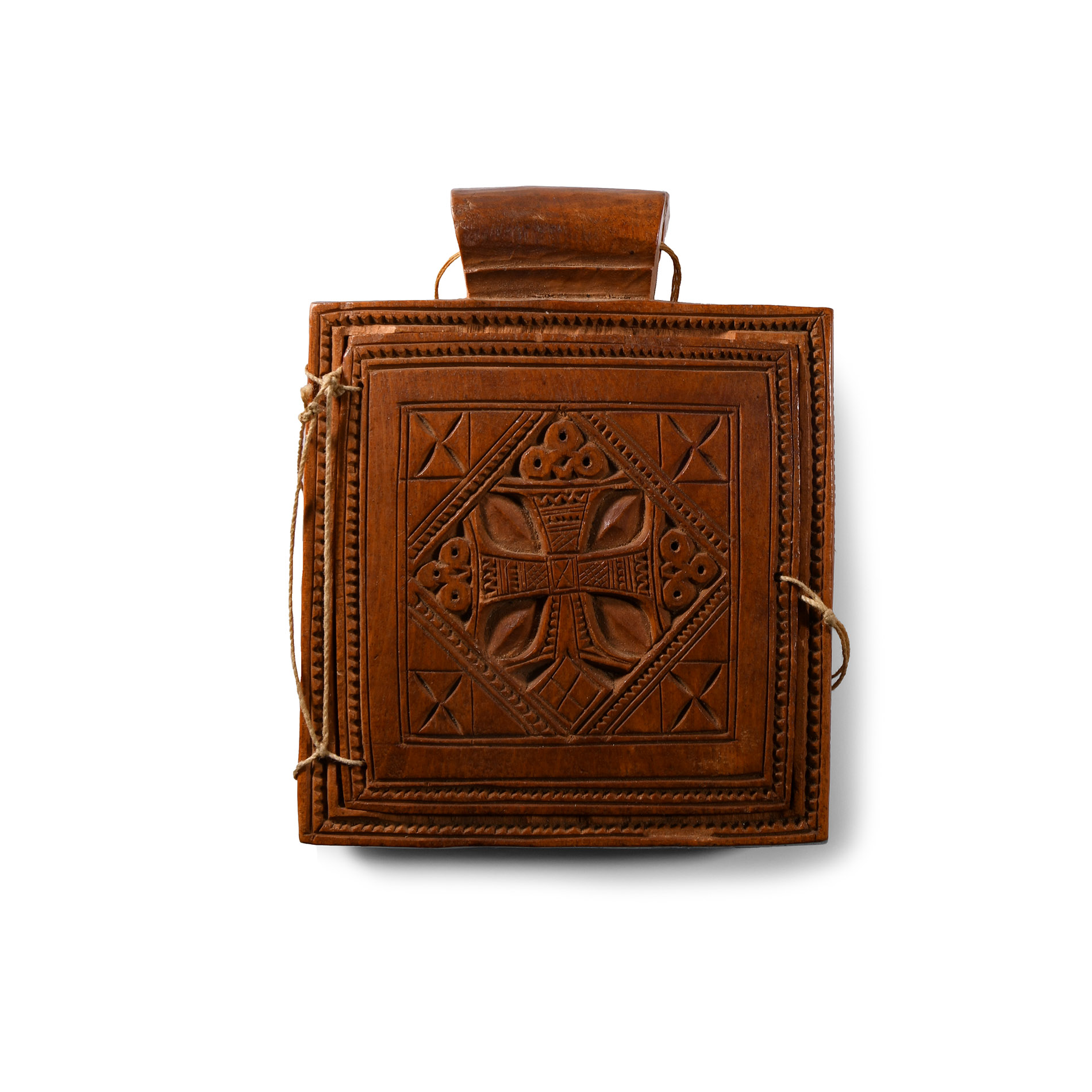
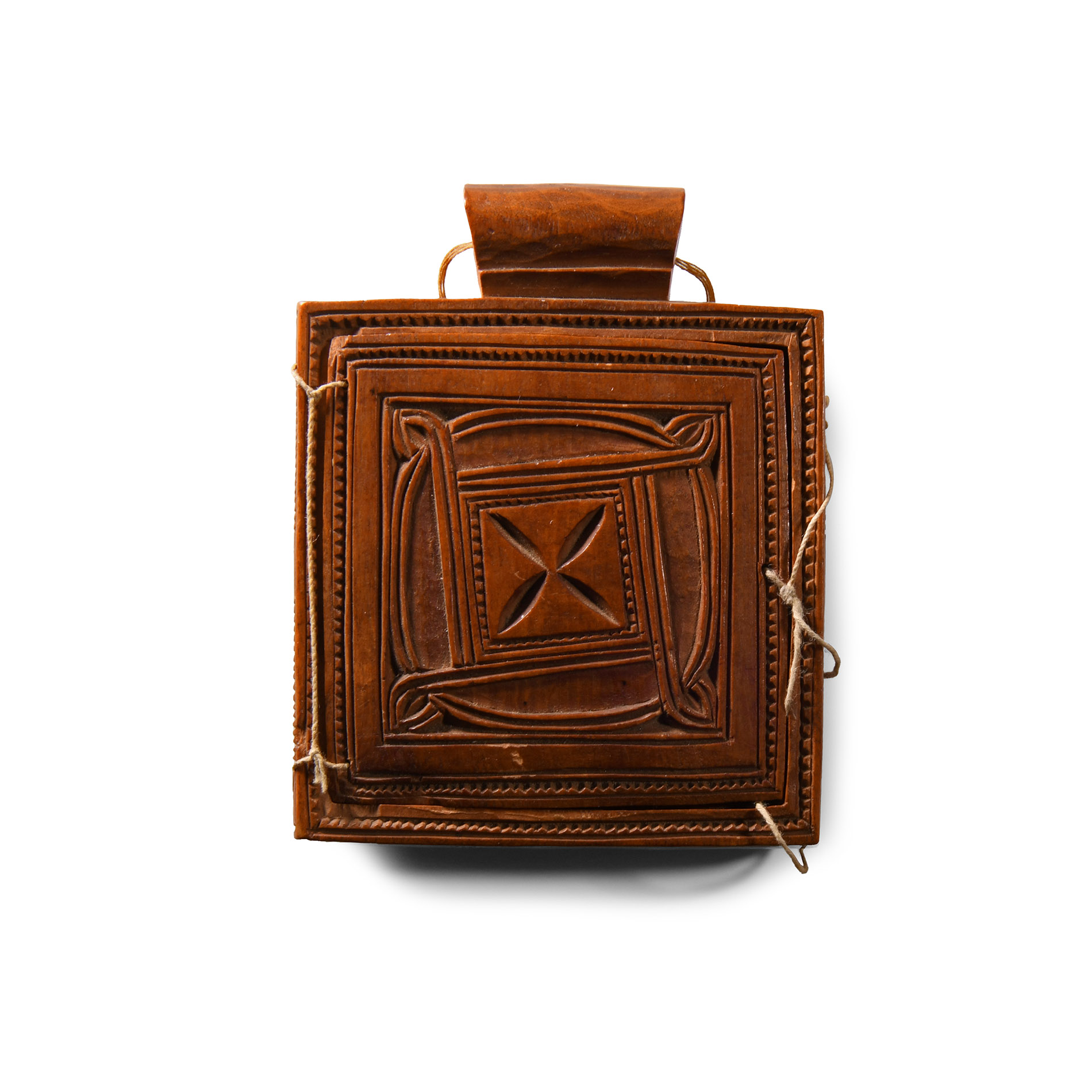
Carved portable icon with integral loop, frontal and rear recesses each with a door hinged with thread; painted scenes within of the Crucifixion and the meeting of Saint Abune Tekle Haimanot and Gabra Manfas Keddus (?), St. George attacking a dragon, Mary and Infant Jesus with angels Gabriel and Michael. [No Reserve]
ProvenanceReece Gallery, c. 2010.
Ex central London gallery.
See Chojnacki, S., 'Notes on Art in Ethiopia in the 16th Century: an Enquiry into the Unknown Author(s)' in Journal of Ethiopian Studies, Vol. 9, July 1971, No. 2 pp. 21-97, figs.14,28, for similar scenes in similar style; cf. also Heldman, M., Munro-Hay Stuart, C., African Zion, The sacred art of Ethiopia, Yale University Press, 1993, cat.11, for an icon in similar style, and p.7.
FootnotesA series of icons representing the Virgin of Santa Maria Maggiore were produced in Ethiopia in the 16th and 17th centuries; the icon offered here is one such example. Sitting on the left arm of his mother, Christ gives a blessing with his right hand and holds a book in his left hand, both details showing a close relationship with the Santa Maria Maggiore version.
CONDITIONTimeLine Auctions follows a vetting process to ensure the authenticity and legality of all items, reinforcing our commitment to integrity and responsible trading. Each antiquity, antique, and coin lot undergoes thorough examination by a vetting committee of at least ten external specialists, professional trade association members, scientists, and archaeologists: Our Vetting Process
AUCTIONS:
TimeLine is a leading auction house specialising in antiquities, ancient art, collectables, natural history, coins, medals, and books. Our auctions offer museums, collectors, historians, and enthusiasts the opportunity to acquire unique and historically significant pieces.
-
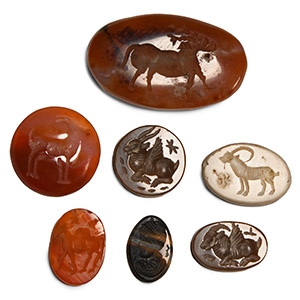
Western Asiatic Style Gemstone Group
20th century A.D.Sold for (Inc. bp): £52
Including discoid and tabular types with mainly zoomorphic motifs; after the antique. 29.6 grams total, 17-43 mm
Acquired on the London, UK, art market in the 1990s. From a gentleman's private collection. -
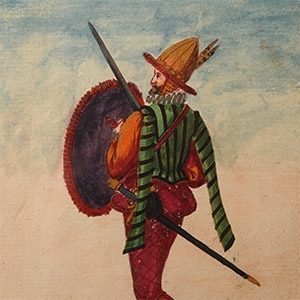
Watercolour Painting of a Soldier
Germany, 18th century A.D.Sold for (Inc. bp): £39
Hand-tinted figure of a 16th century soldier advancing on a green base with raised shield and drawn sword, basket-hilted sword at his left hip, slashed doublet and knee-length hose, cabaset with plume; all within a red rectangular frame with (blank) title panel below; mounted in a dark green reveal. 146 grams total, 35.5 x 28 cm including frame
Private collection, USA, formed in the 1980s. -
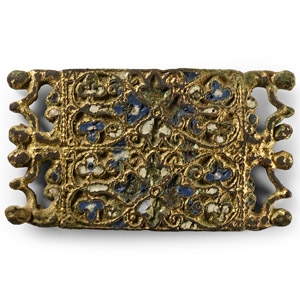
Stuart Period Gilt Enamelled Mount with Cherubs
Early 17th century A.D.Sold for (Inc. bp): £143
Rectangular with openwork mouldings to each short edge depicting opposed seated putti, low-relief heart-shaped motifs with blue and white enamel detailing; mounting lugs to reverse. 14.2 grams, 53 mm
Found whilst searching with a metal detector in Selby, North Yorkshire, UK, on Sunday 10th April 2016. Accompanied by a copy of the British Museum's Portable Antiquities Scheme (PAS) report no.SWYOR-A7A9DB. Accompanied by the original British Museum's Portable Antiquities Scheme (PAS) receipt copy no.002875 dated 11 April 2016.
