
Loading, please wait...
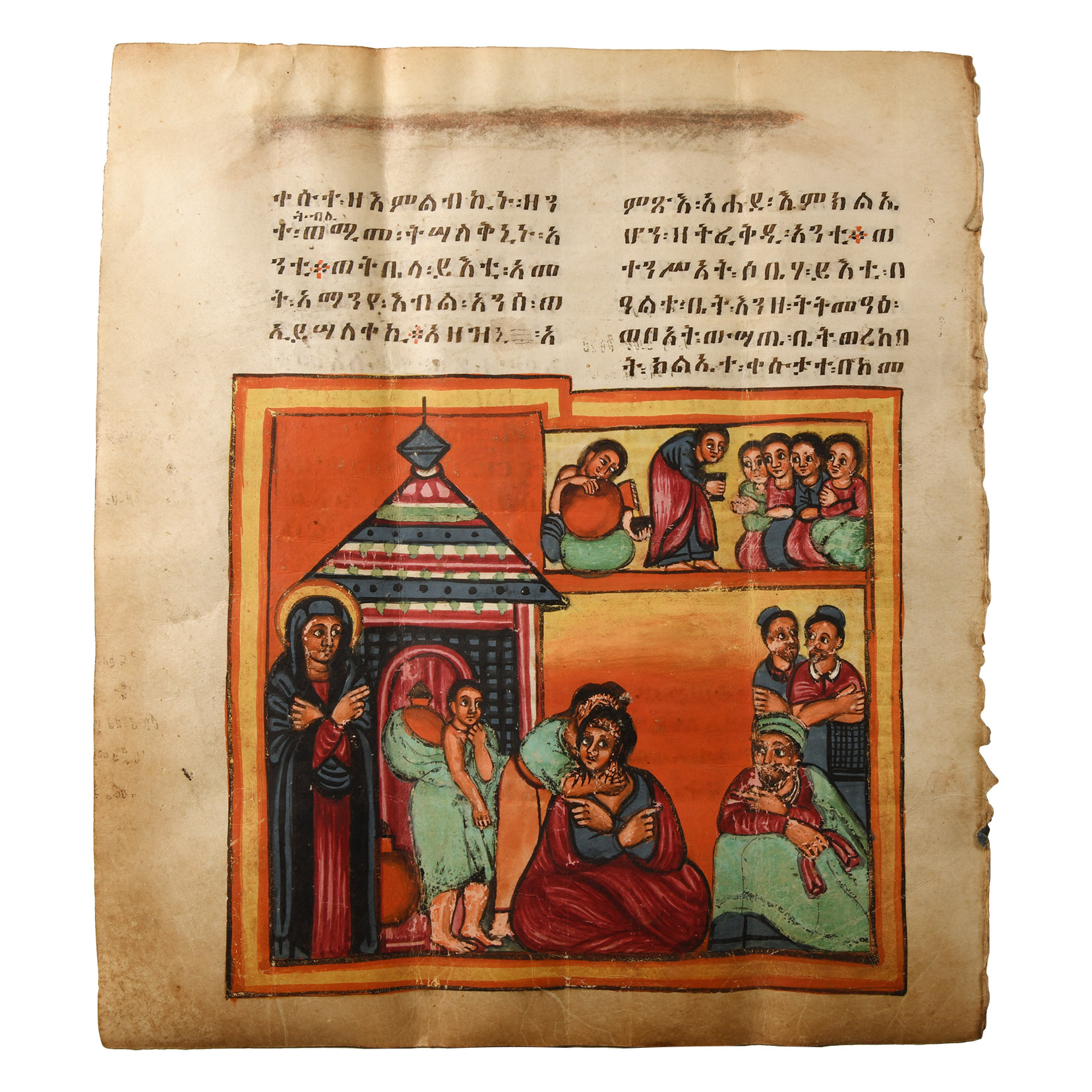
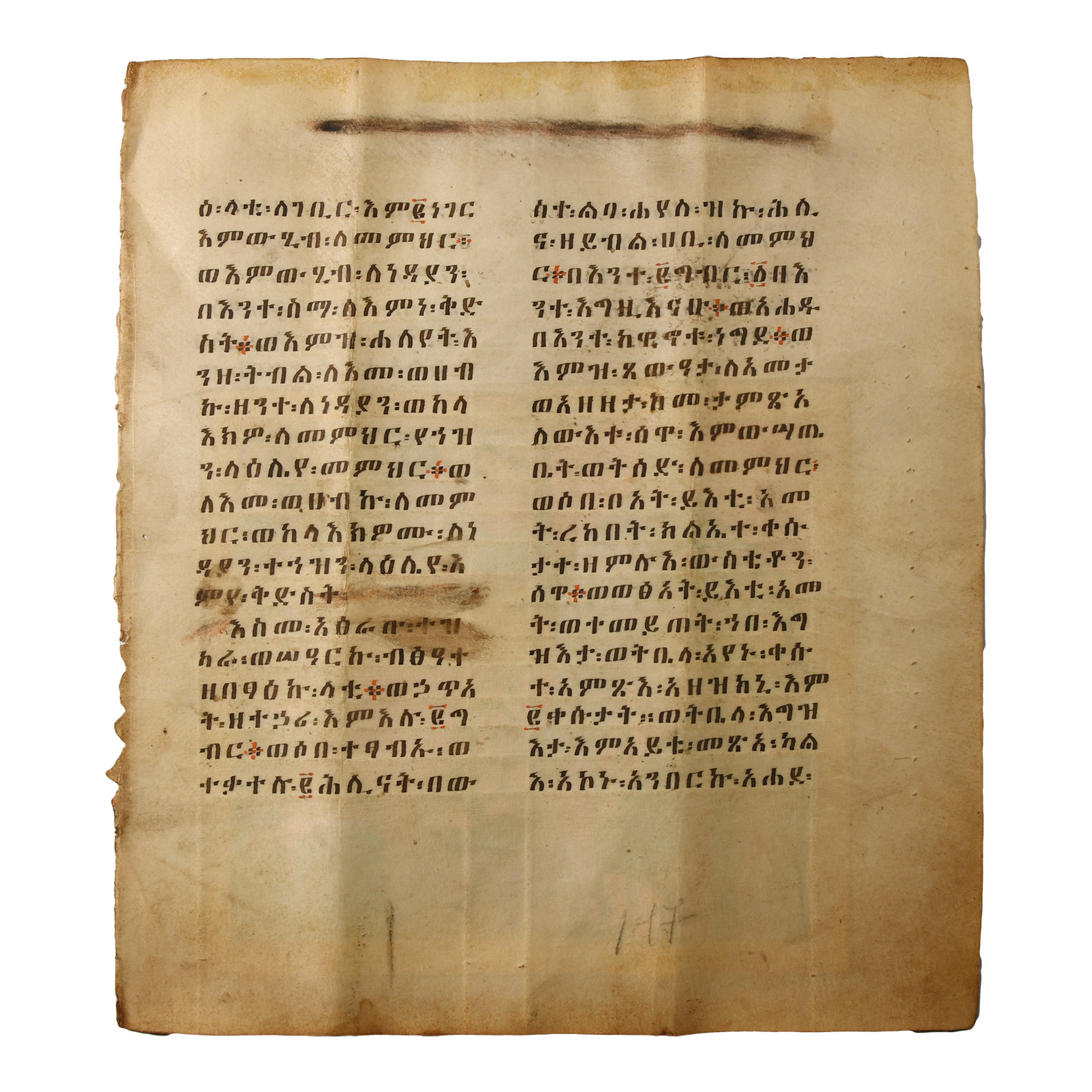
LOT 1784
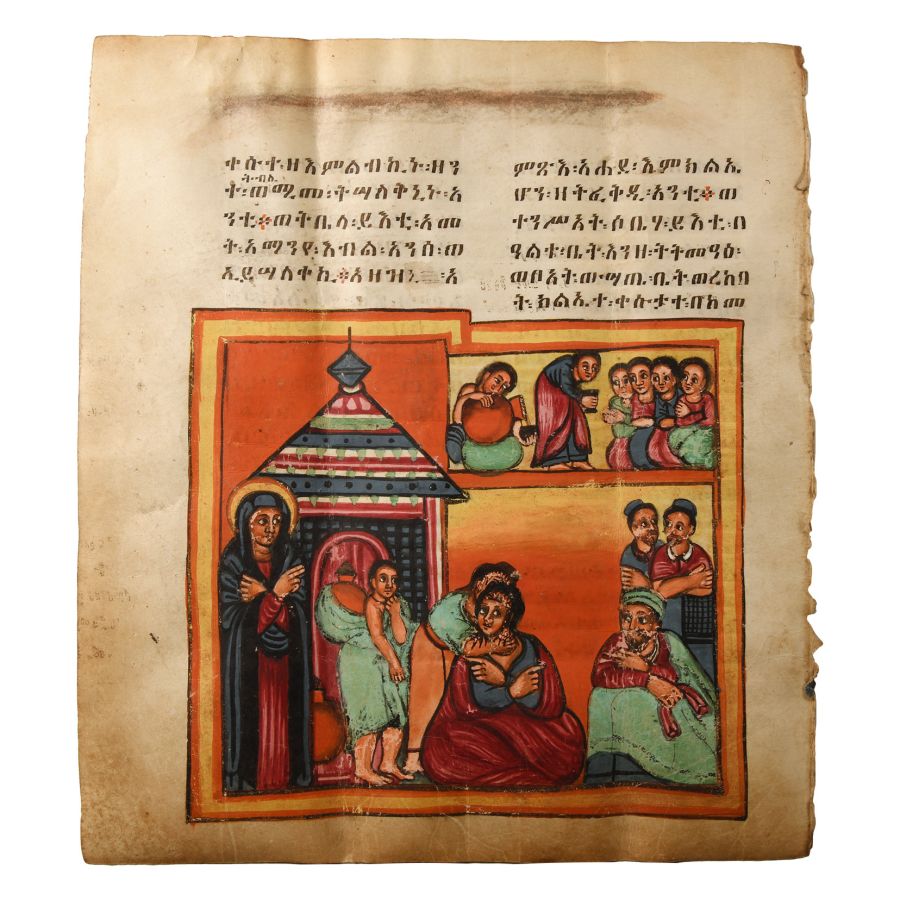
Ethiopian 'Miracle of Mary' Manuscript Leaf
CIRCA 1500 A.D.
10 1/2 x 9 1/4 in. (13 grams, 26.5 x 23.5 cm).
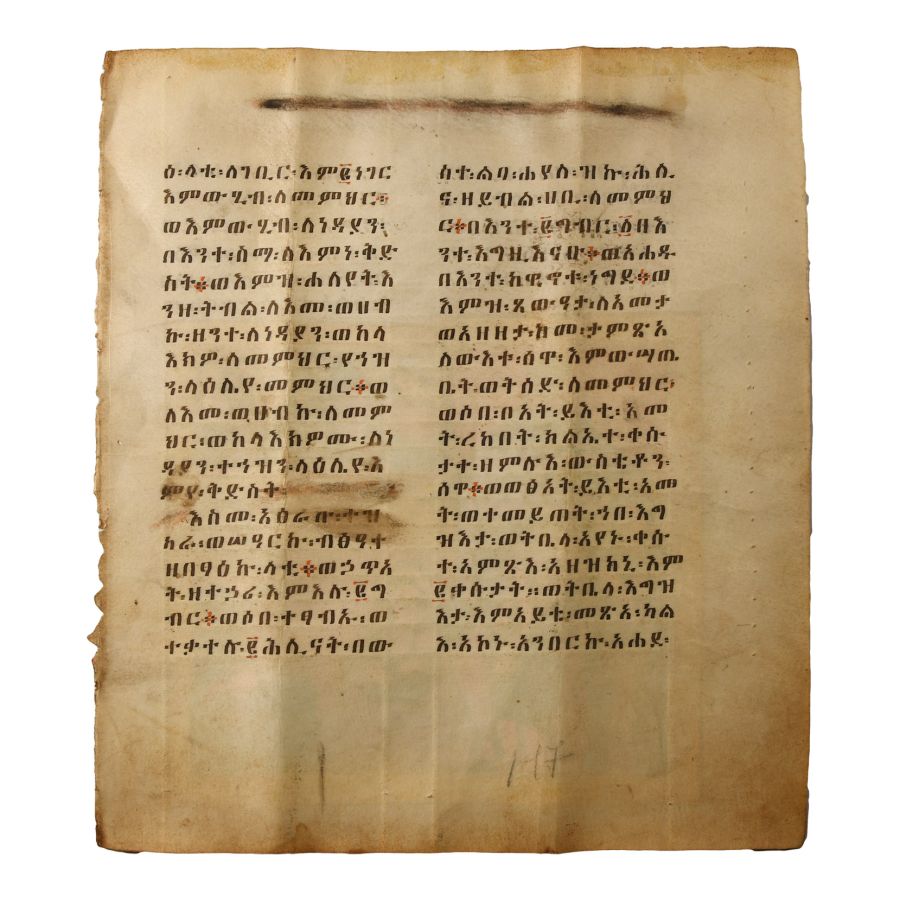
Vellum leaf with pricked guidelines for placement of two columns of black-ink text in Ge'ez script with red detailing; recto with nineteen lines of text; verso with text and polychrome painted scene of figures beside a house and distribution of drink. [No Reserve]
ProvenanceAcquired on the New York art market, circa 2000.
Ex central London gallery.
Cf. Wallis, Budge, E.A.W., The miracles of the Blessed Virgin Mary, and The life of Hannâ (Saint Anne), and The magical prayers of ʻAhĕta
Mîkâêl, London, 1900.
With the royal patronage for her cult given by the Gondar’s Kings, Virgin Mary's role as a maker of miracles became predominant and apocalyptic metaphors and narrative gained importance in pictorial representations, such as those in the manuscripts. Her eschatological role continued to evolve until the eighteenth century, when she was portrayed in an icon as a celestial empress.
CONDITIONTimeLine Auctions follows a vetting process to ensure the authenticity and legality of all items, reinforcing our commitment to integrity and responsible trading. Each antiquity, antique, and coin lot undergoes thorough examination by a vetting committee of at least ten external specialists, professional trade association members, scientists, and archaeologists: Our Vetting Process
AUCTIONS:
TimeLine is a leading auction house specialising in antiquities, ancient art, collectables, natural history, coins, medals, and books. Our auctions offer museums, collectors, historians, and enthusiasts the opportunity to acquire unique and historically significant pieces.
-
Post Medieval Bronze Ring with Gemstones
18th century A.D.Sold for (Inc. bp): £286
Slender hoop with three roundels to each shoulder, each set with a blue glass cabochon; tiered round bezel with inset blue glass intaglio profile portrait female bust; supplied with a museum-quality impression. 3.33 grams, 23.32 mm overall, 18.36 mm internal diameter (approximate size British Q, USA 8, Europe 17.49, Japan 16)
Acquired on the London art market in the late 1980s-1990s. From the family collection of an East London, UK, gentleman. -
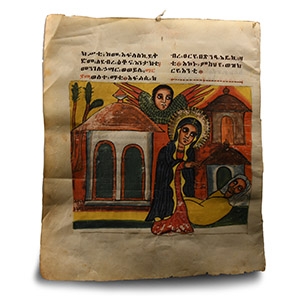
Ethiopian Manuscript Page for Miracle of the Virgin Mary
Circa 1680 A.D.Sold for (Inc. bp): £845
Vellum leaf with pricked guidelines for placement of two columns of red-ink and black-ink text in Ge'ez script with red detailing; recto with two columns of text above a polychrome painted miniature showing a nimbate Mary beside a recumbent bearded figure among buildings with a winged angel above; verso with twenty-two lines of text in two columns. 89 grams, 35.5 x 30 cm
Previously in the David Buxton collection (1910-2003), until the late 1990s.
The scene should represent the miracle of the Virgin Mary to Damianus the scribe: Damianus wrote the name of the Virgin Mary with gold and silver instead of with common black ink. The Virgin Mary appeared to Damianus on his death bed and promises to write his name upon a pillar of gold in the Kingdom of Heaven. -
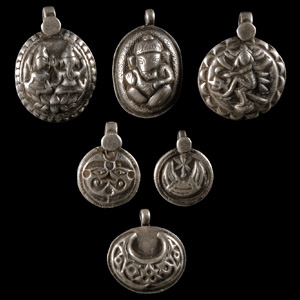
Mixed Pendant Group
20th century A.D.Sold for (Inc. bp): £13
Mixed group of silver-coloured metal pendants including star-and-crescent, dancing Kali, Ganesha and other types. 25 grams total, 20-31 mm
Property of a South West London gentleman.
