
Loading, please wait...
LOT 0394
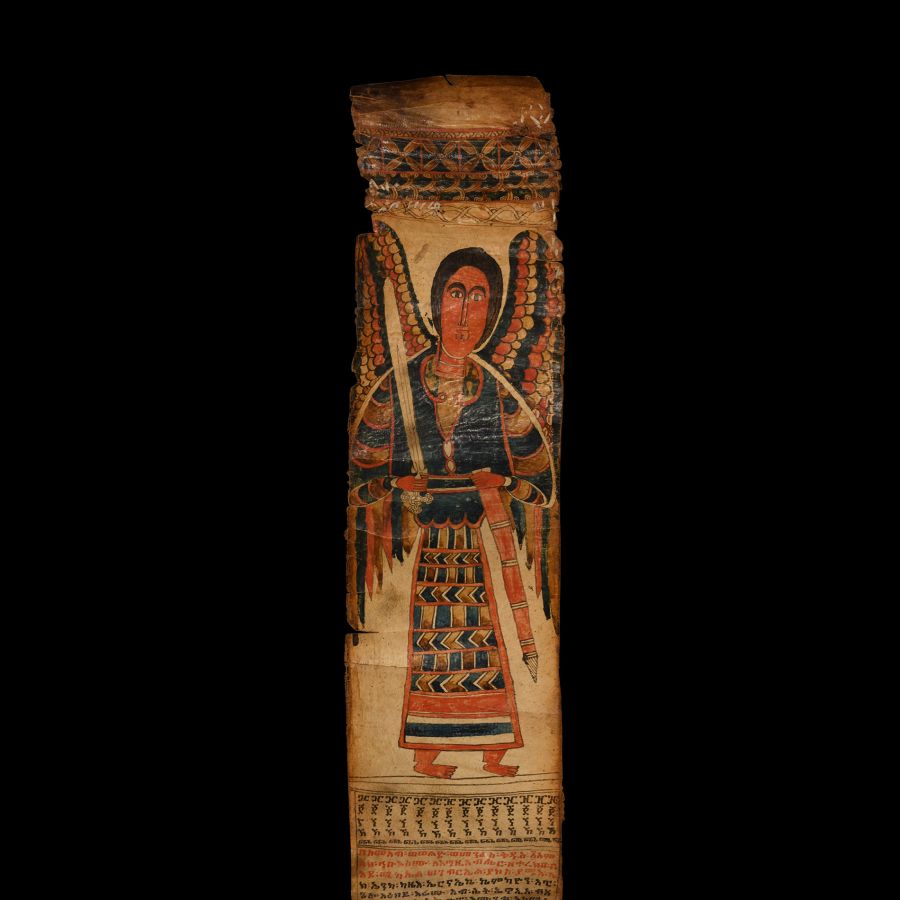
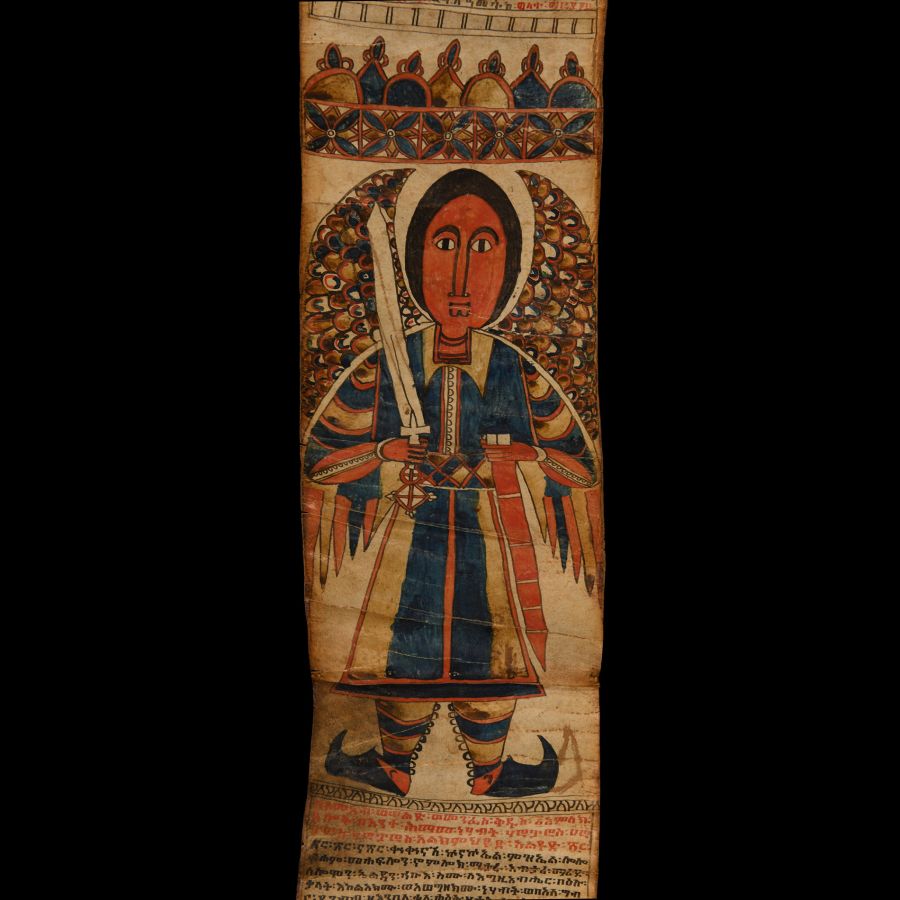
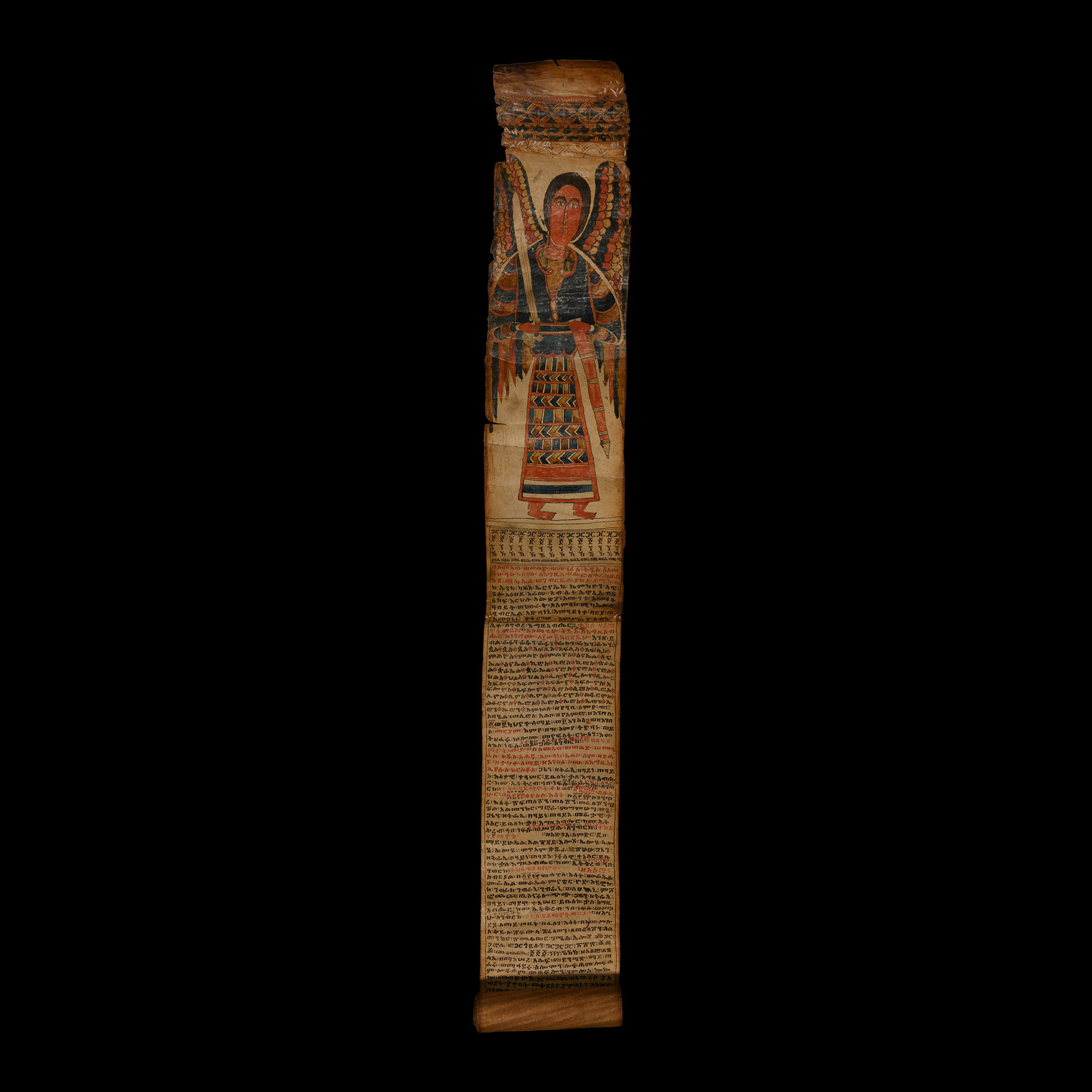
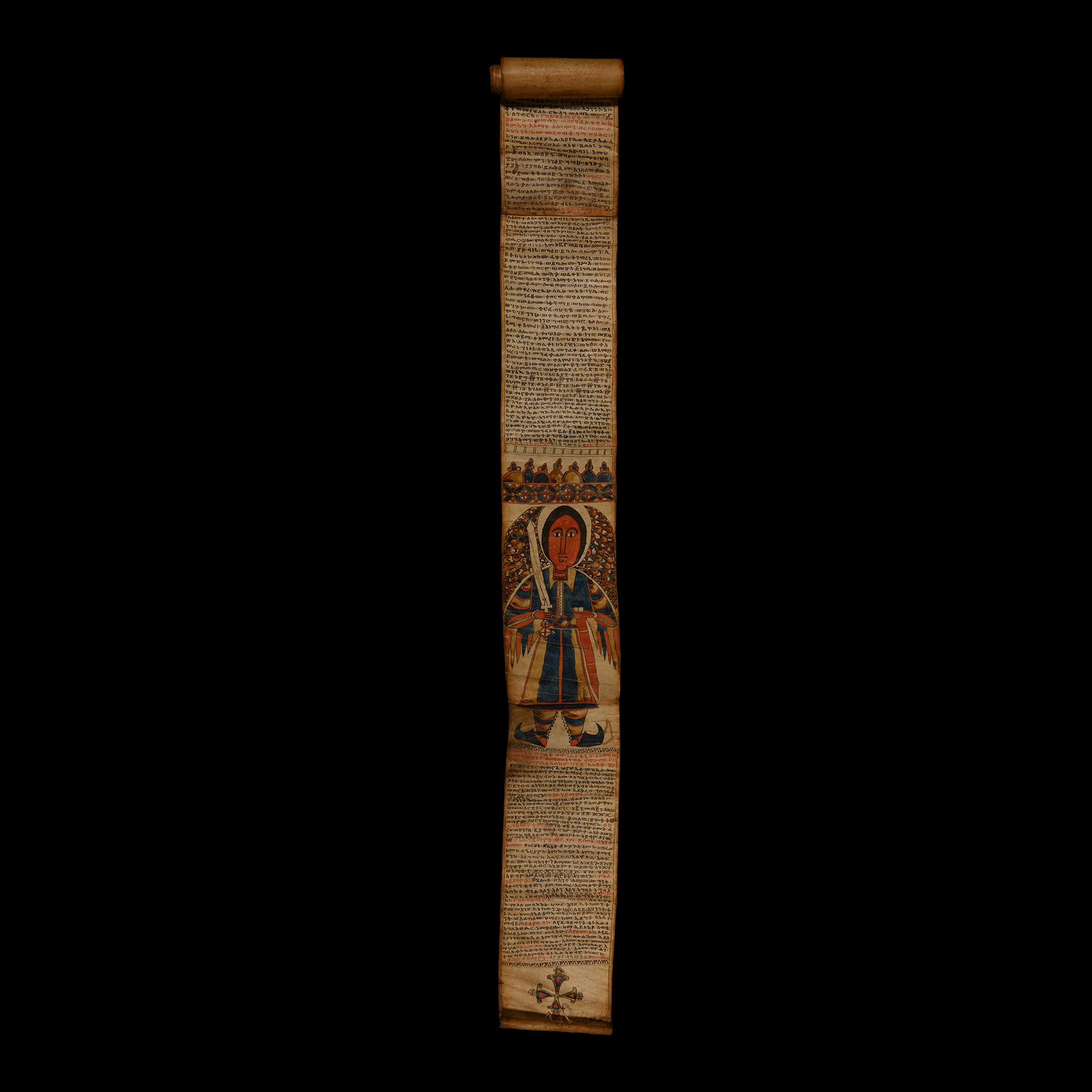
Ethiopian Magic Vellum Scroll of Walatta Maryam
LATE 19TH CENTURY A.D.
77 1/2 in. (56 grams, 1.97 m).
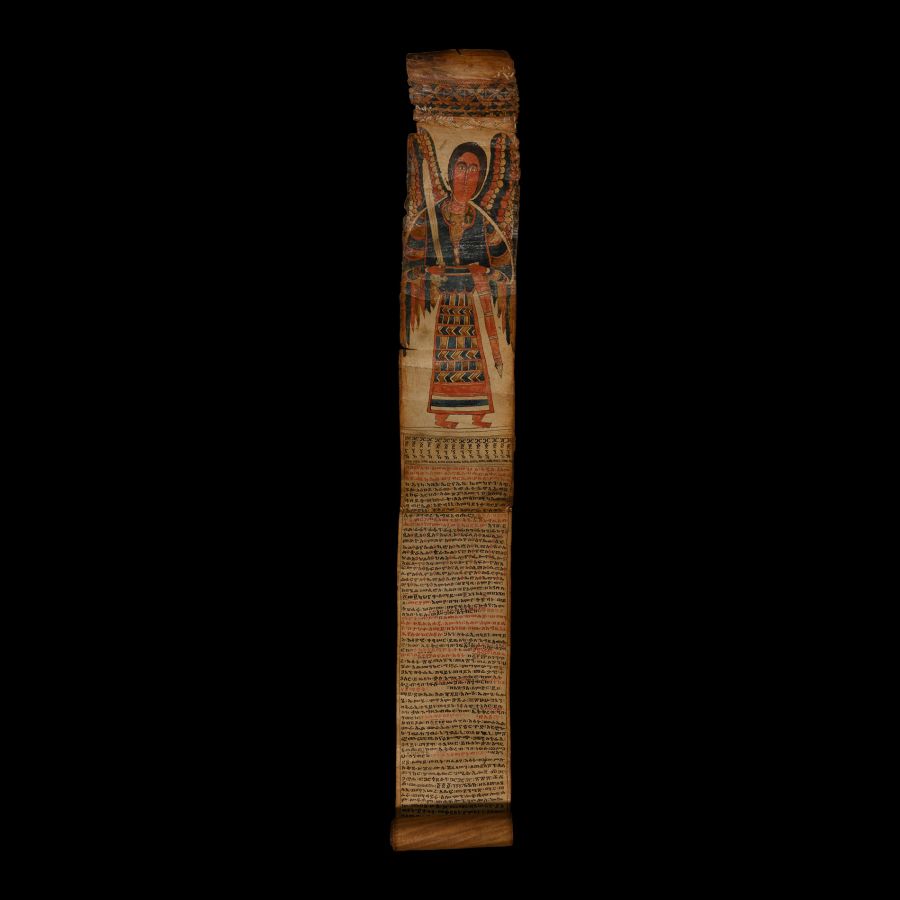
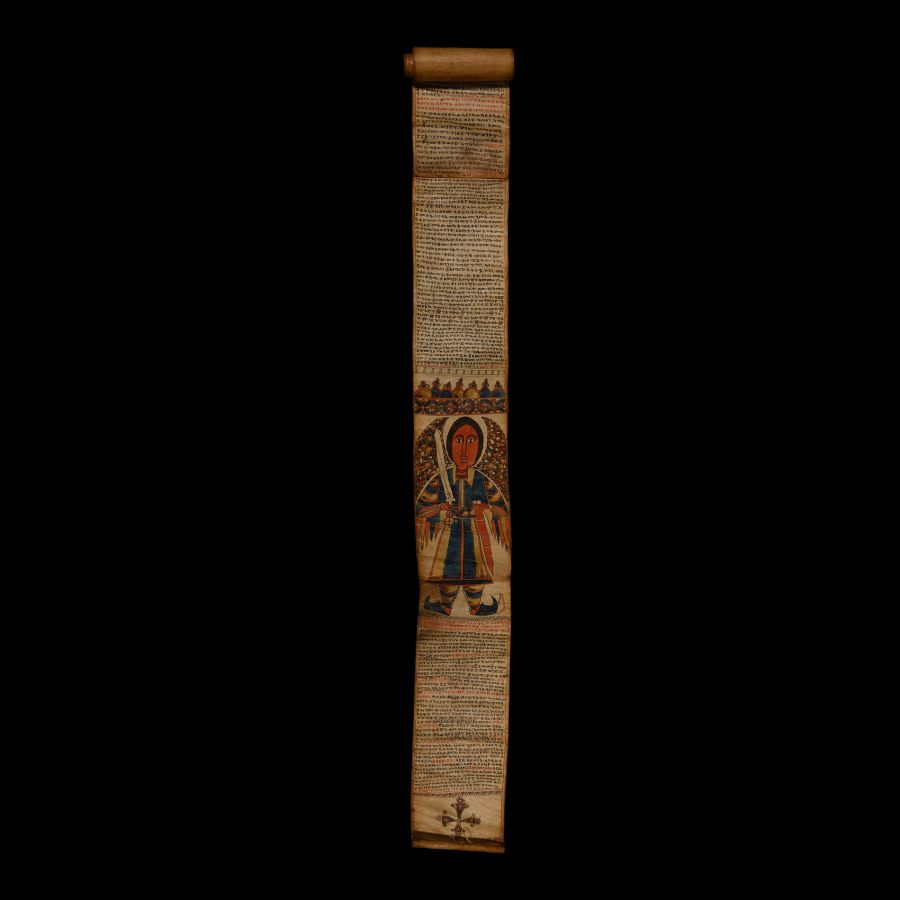
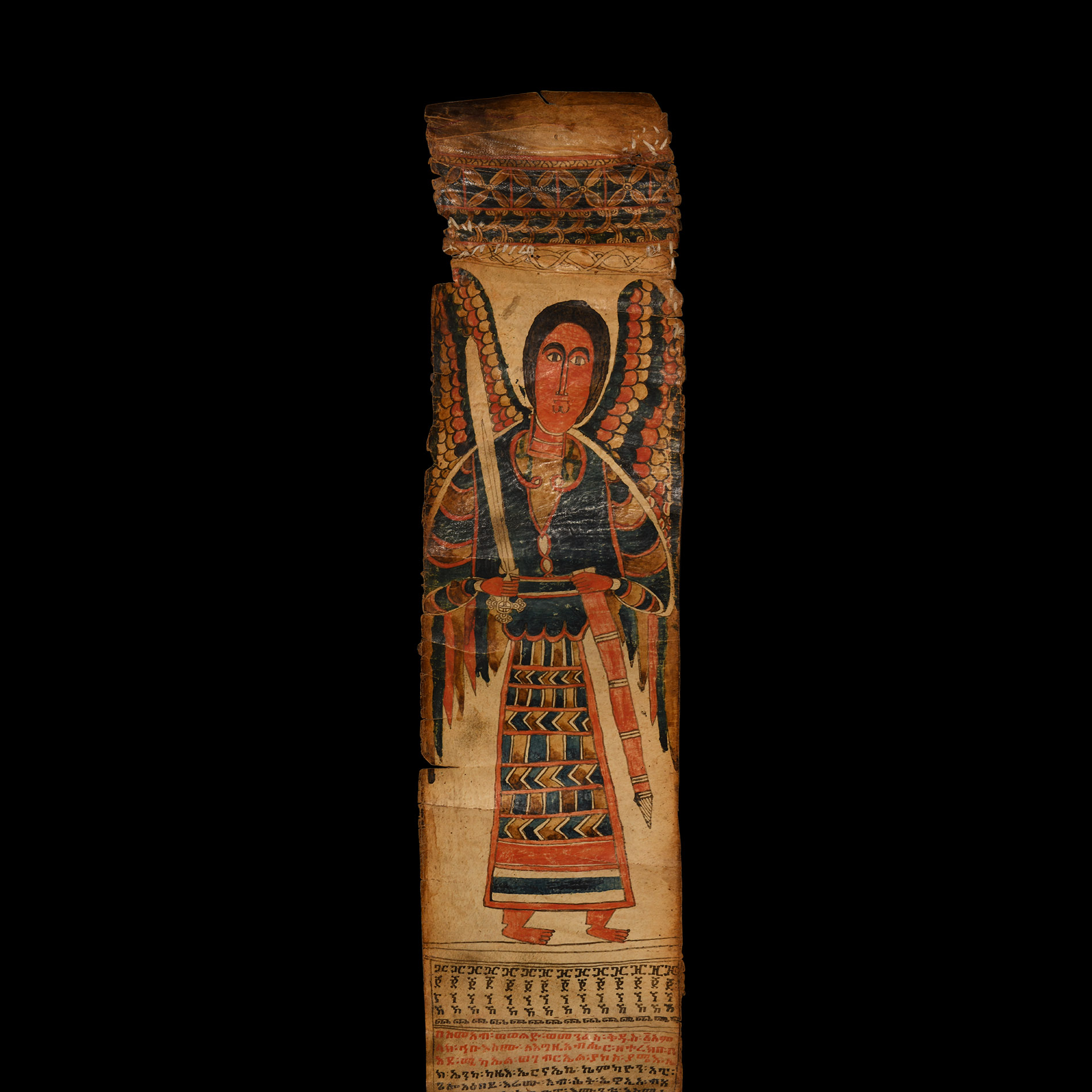
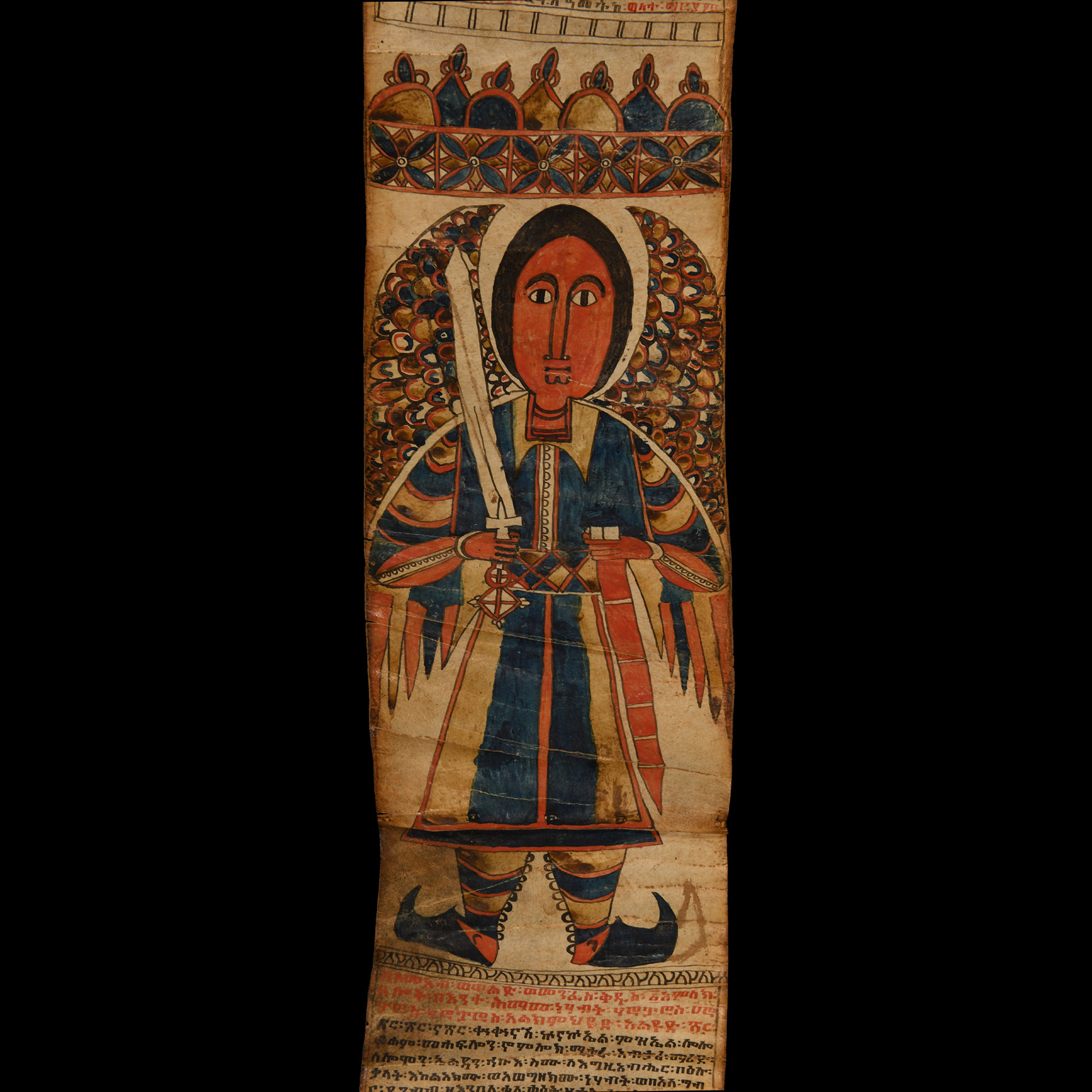
Comprising three sheets joined together, bearing neat and regular lines of red and black inked script, together with associated images; the text including prayers for barya and evil eye, for Shotäläy and magical machination; the images representing two guardian angels at the top and bottom, Archangels Michael and Gabriel, within a geometric frame; at the bottom a picture of a jewelled cross with red triangles inserted within the arms; the owner's name given as Wällättä Maryam Beré. [No Reserve]
ProvenanceEx Adalberto Frezza, 2006.
Ex central London gallery.
See Heldman, M., Munro-Hay Stuart, C., African Zion, The sacred art of Ethiopia, Yale University Press, 1993, pp.44, 65.
FootnotesThe sick looked upon such scrolls as it was believed that the images contained in them had healing powers. The scrolls were prepared by unordained clerics, or debatras, employed by Christian families, a practice which continued into the 20th century. Debatras were skilled at diagnosing the causes of illness, and treated them through scrolls such as that offered here, together with herbal and plant-based remedies; the images and prayers were believed to act on the spiritual source of the ailment, whilst the botanical remedies acted upon the physical symptoms. The scrolls covered the length of the afflicted person's body, providing preventative as well as curative protection and were often passed down through generations of the same family. The patients were often illiterate peasants, and the scrolls written in archaic Ge'ez, a liturgical language comprehended only by clerics; the debatras explained the prayers and the images to the sick. The images are designed to be mesmeric, the penetrating gaze of eyes from within the design giving them a sense of power.
CONDITIONTimeLine Auctions follows a vetting process to ensure the authenticity and legality of all items, reinforcing our commitment to integrity and responsible trading. Each antiquity, antique, and coin lot undergoes thorough examination by a vetting committee of at least ten external specialists, professional trade association members, scientists, and archaeologists: Our Vetting Process
AUCTIONS:
TimeLine is a leading auction house specialising in antiquities, ancient art, collectables, natural history, coins, medals, and books. Our auctions offer museums, collectors, historians, and enthusiasts the opportunity to acquire unique and historically significant pieces.
-
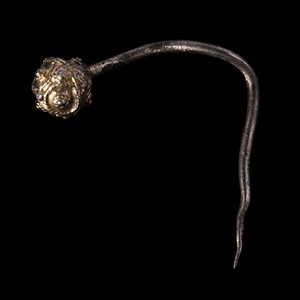
Tudor Period Silver-Gilt Dress Pin
16th-17th century A.D.Sold for (Inc. bp): £46
Comprising a tapering shaft and spherical head decorated with granule clusters and filigree hoops. 1.69 grams, 29 mm
From an Essex collection; acquired as part of an old jewellery collection. From the collection of a North American gentleman. Accompanied by a copy of the British Museum's Portable Antiquities Scheme (PAS) record no.SWYOR-FF9E65; disclaimed as Treasure. -
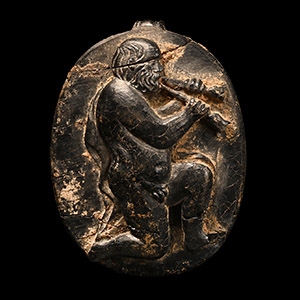
Roman Style Bone Cameo of Silenus
20th century A.D.Estimate: £300 - 400 (+bp*)
Opening Bid: £150
Of oval form, a mature Silenus shown nude in high-relief kneeling right on one leg, cloak thrown over one shoulder, playing two pipes, suspension loop to top edge. 19.8 grams, 56 mm high
London art market, 1990. -
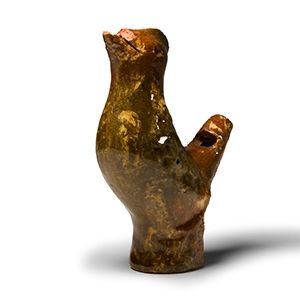
Post Medieval Glazed Ceramic Bird Whistle
18th century A.D.Sold for (Inc. bp): £26
Possibly in the form of a hen or other bird with crest, with feather detailing; chip to beak. 80 grams, 95 mm
Acquired 1960s-1990s. Late Alison Barker collection, a retired London barrister.
