
Loading, please wait...
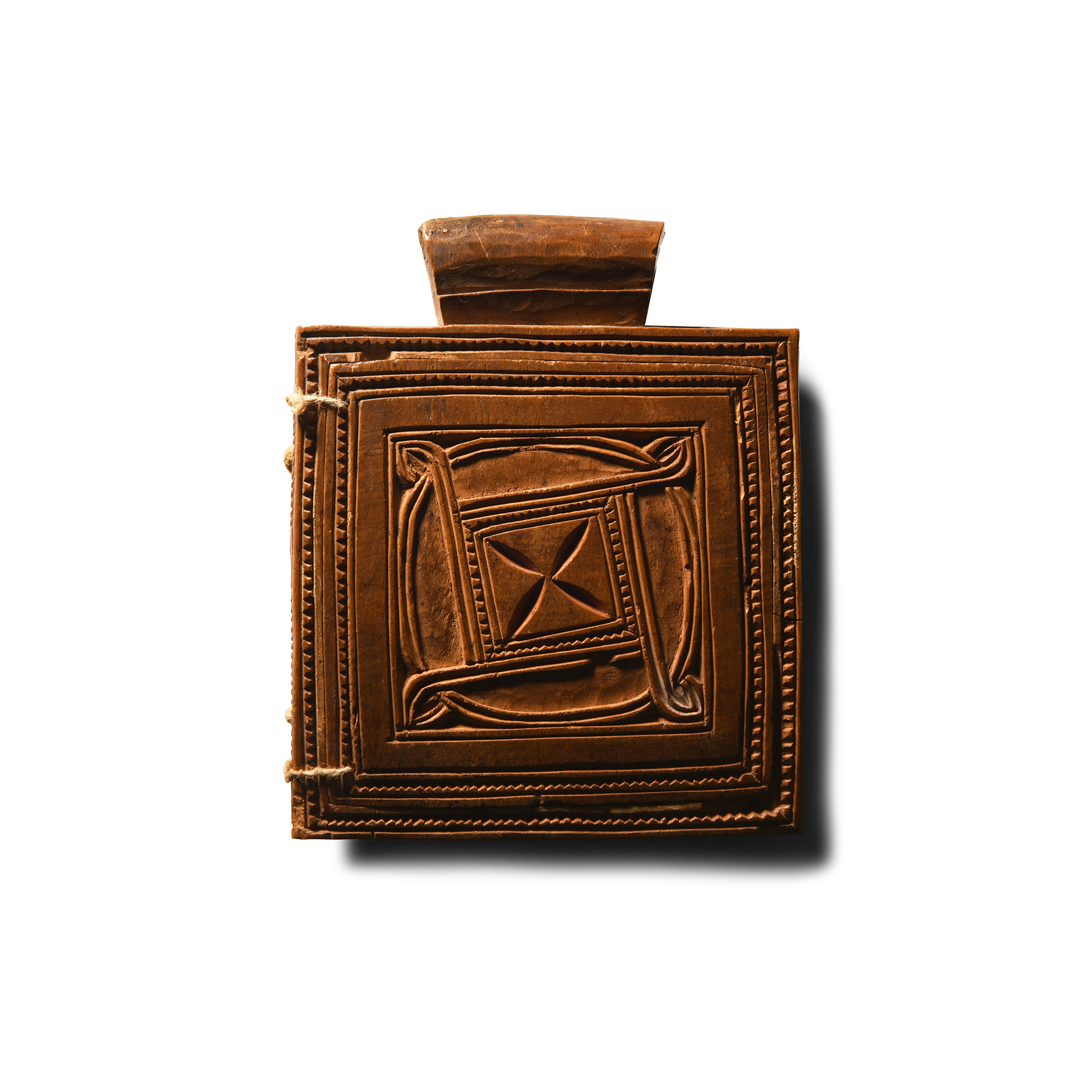
LOT 0436
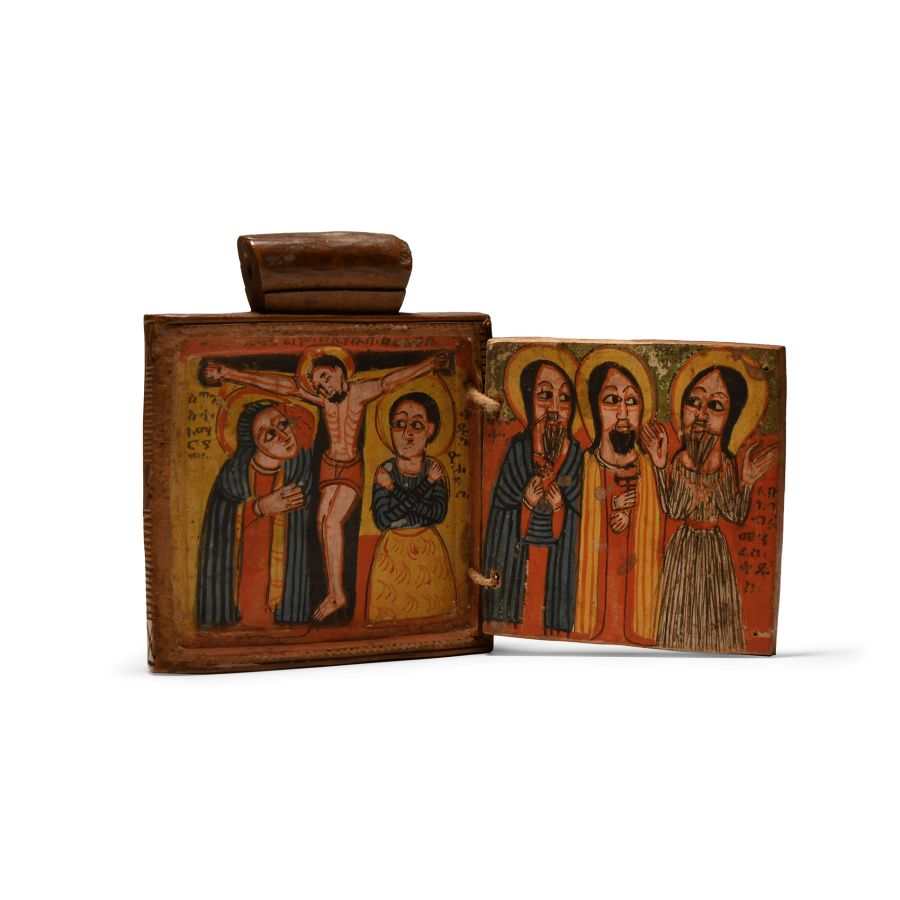
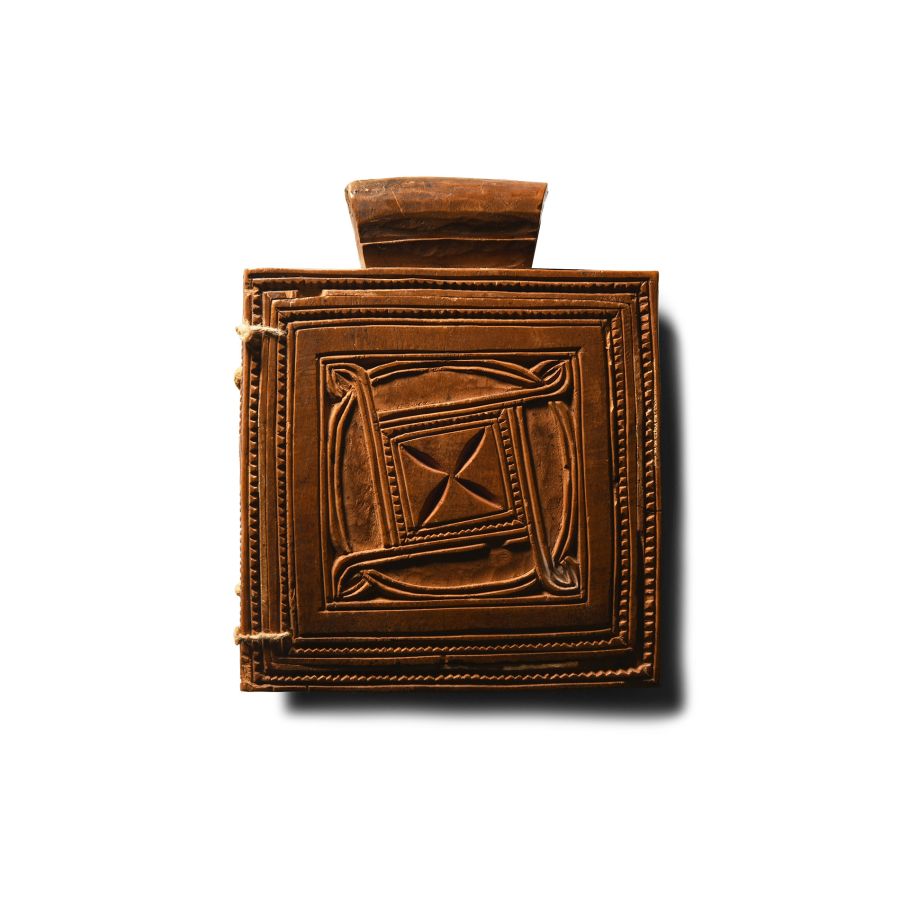
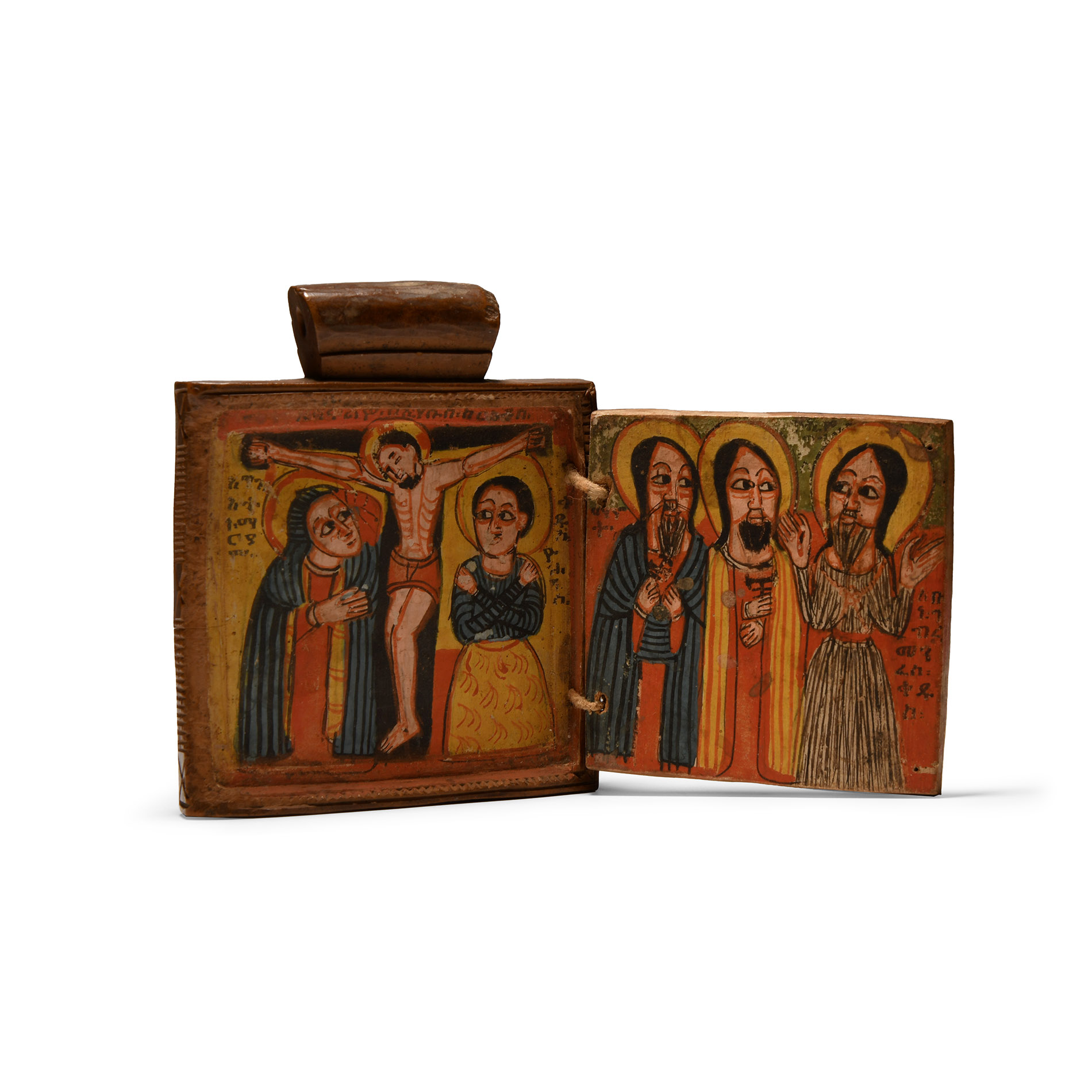
Ethiopian Diptych Icon of the Crucifixion and Saints
CIRCA 1680 A.D.
3 1/4 x 4 in. (98 grams, 8.4 x 10.2 cm).
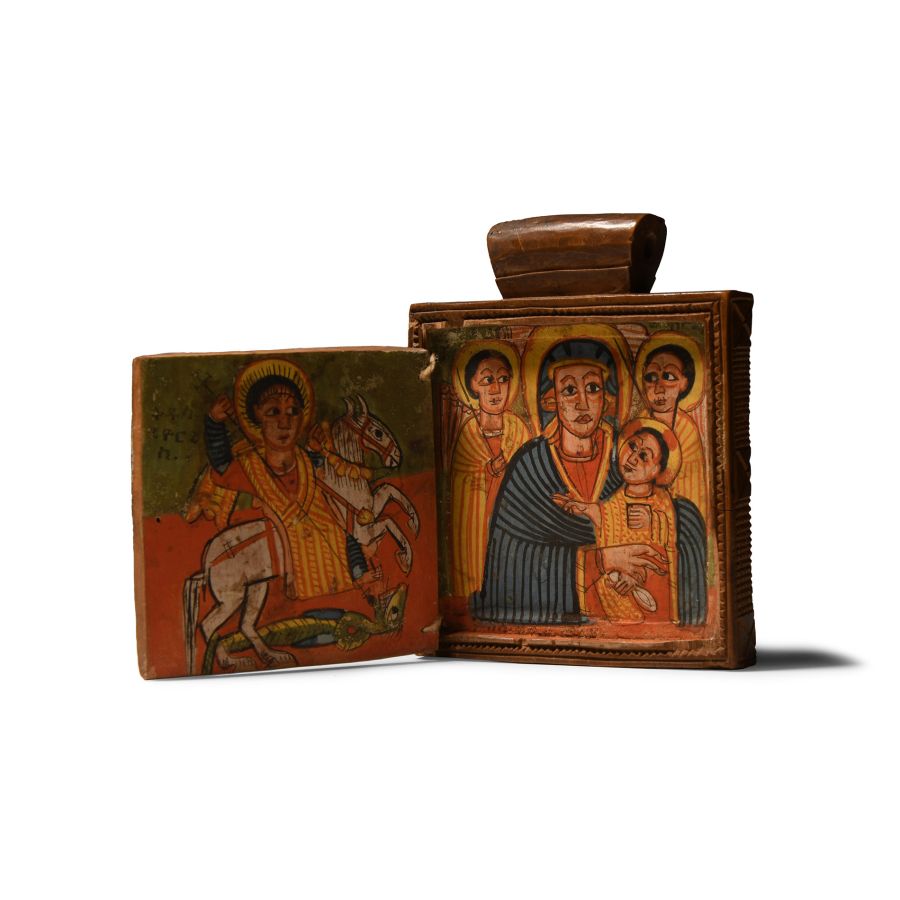
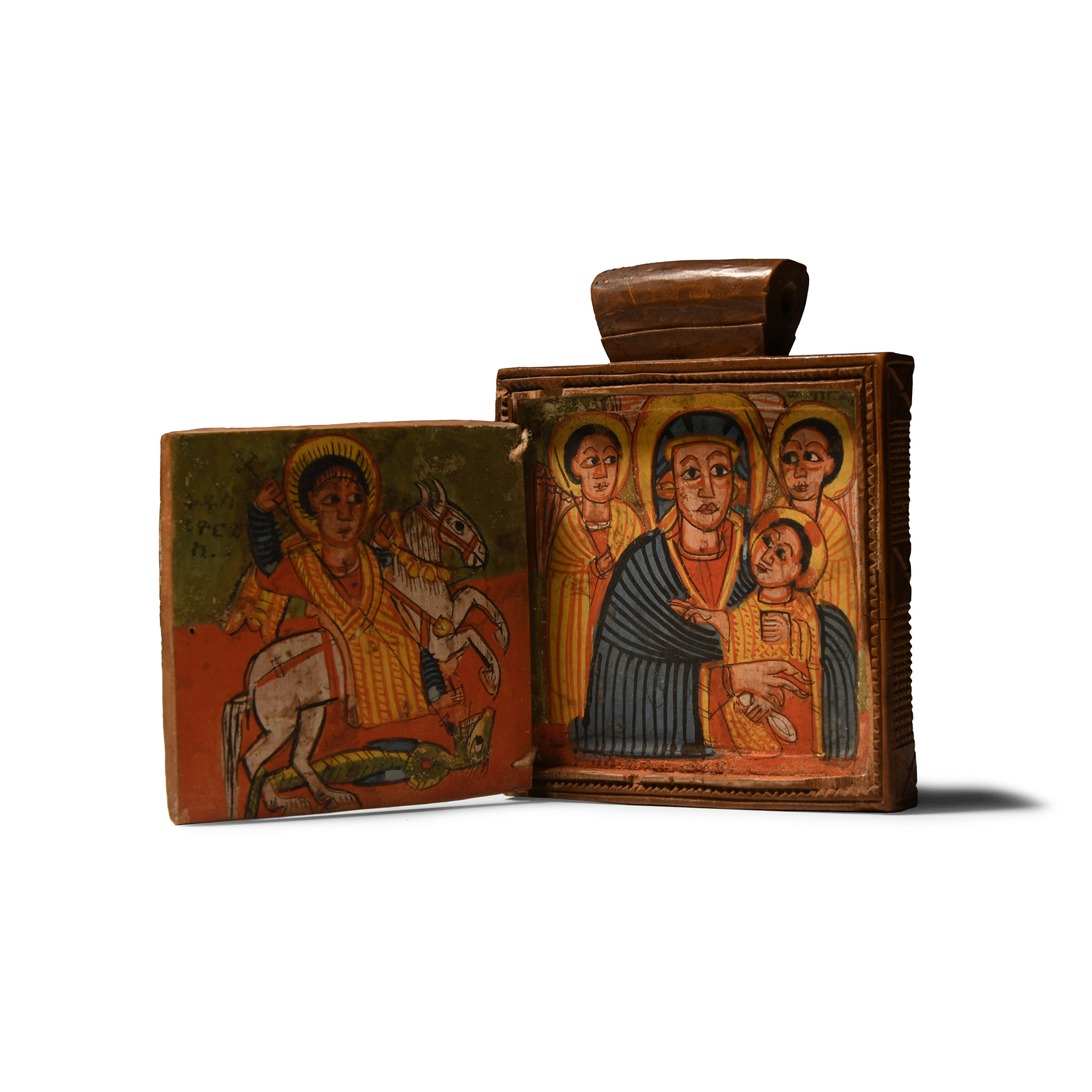
Carved rectangular diptych with pierced suspension bar above and braided thread hinges; obverse with ornate reserved cross on a field with concentric chip-carved borders; reverse with off-set quatrefoil in a square frame with concentric bands surrounding; hatched panels and saltires to the lateral edges; left inner panel a painted scene of the Crucifixion with Ge'ez script text surrounding; right panel with three nimbate figures. [No Reserve]
ProvenanceEx Henry Brownrigg, 1999.
CONDITIONTimeLine Auctions follows a vetting process to ensure the authenticity and legality of all items, reinforcing our commitment to integrity and responsible trading. Each antiquity, antique, and coin lot undergoes thorough examination by a vetting committee of at least ten external specialists, professional trade association members, scientists, and archaeologists: Our Vetting Process
AUCTIONS:
TimeLine is a leading auction house specialising in antiquities, ancient art, collectables, natural history, coins, medals, and books. Our auctions offer museums, collectors, historians, and enthusiasts the opportunity to acquire unique and historically significant pieces.
-
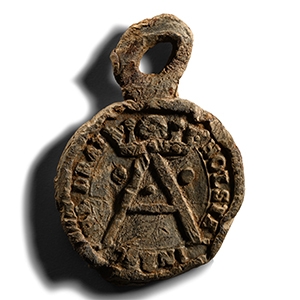
Lead Seal Pendant with Crown A
Circa 17th century A.D.Sold for (Inc. bp): £20
Discoid with loop, obverse with capital 'A' and legend to the border 'Holstein In [...]Hedrat[..]'; reverse with 'PAID' monogram. 31 grams, 53 mm
Ex Simmons gallery, London, UK, 1990s. -
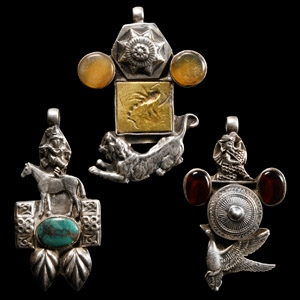
Mixed Pendant Group
20th century A.D.Sold for (Inc. bp): £52
Group of three silver-coloured metal pendants including Ganesha crouching with a drum between two glass cabochons, above a lotiform disc and a goose in flight, and other types. 91 grams total, 75-79 mm
Property of a South West London gentleman. -
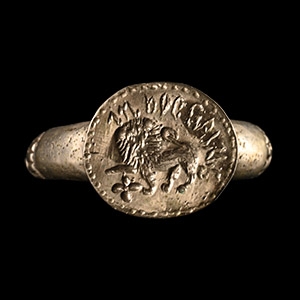
Post Medieval Silver Ring with 'In this Sign is Health' and Lion
Circa 16th-17th century A.D.Sold for (Inc. bp): £572
With hatched bands dividing the D-section hoop into quarters, ellipsoid cup-shaped bezel with impressed design of a lion gardant beside a rosette with legend above 'in hoc salus' (in this [sign is] health). 10.31 grams, 28. 09 mm overall, 18.70 mm internal diameter (approximate size British R, USA 8 1/2, Europe 18 3/4, Japan 18)
Private collection, Arundel, West Sussex, UK, 1975-late 1990s.
