
Loading, please wait...
LOT 1990
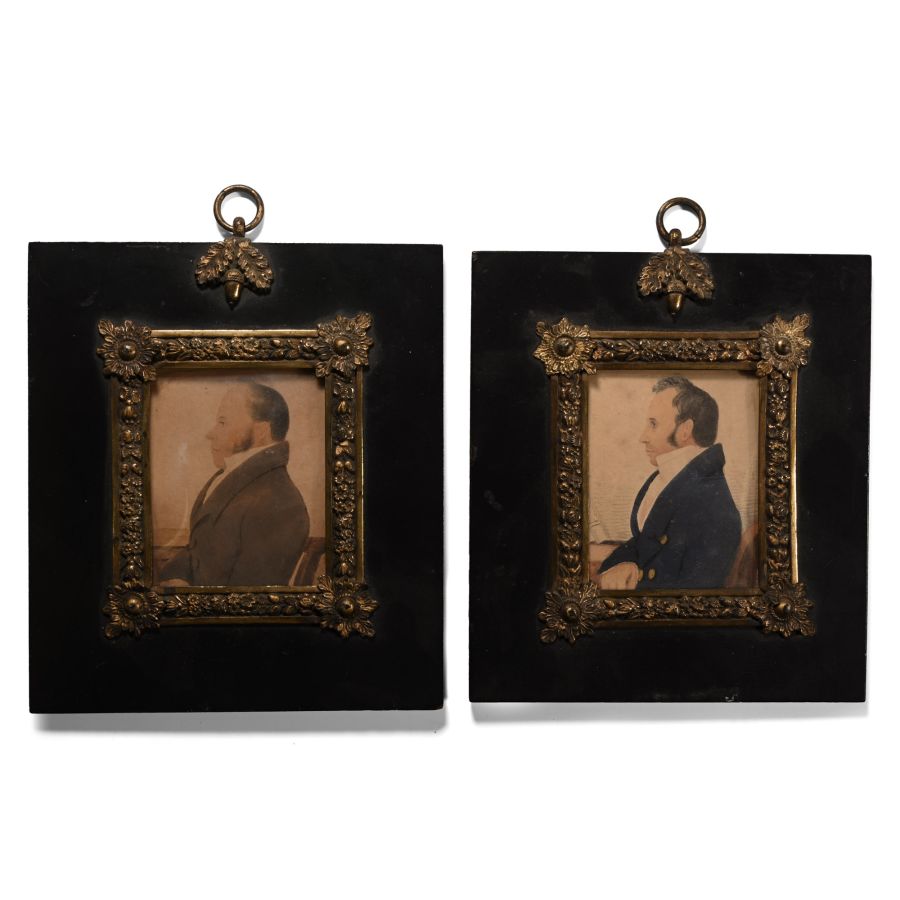
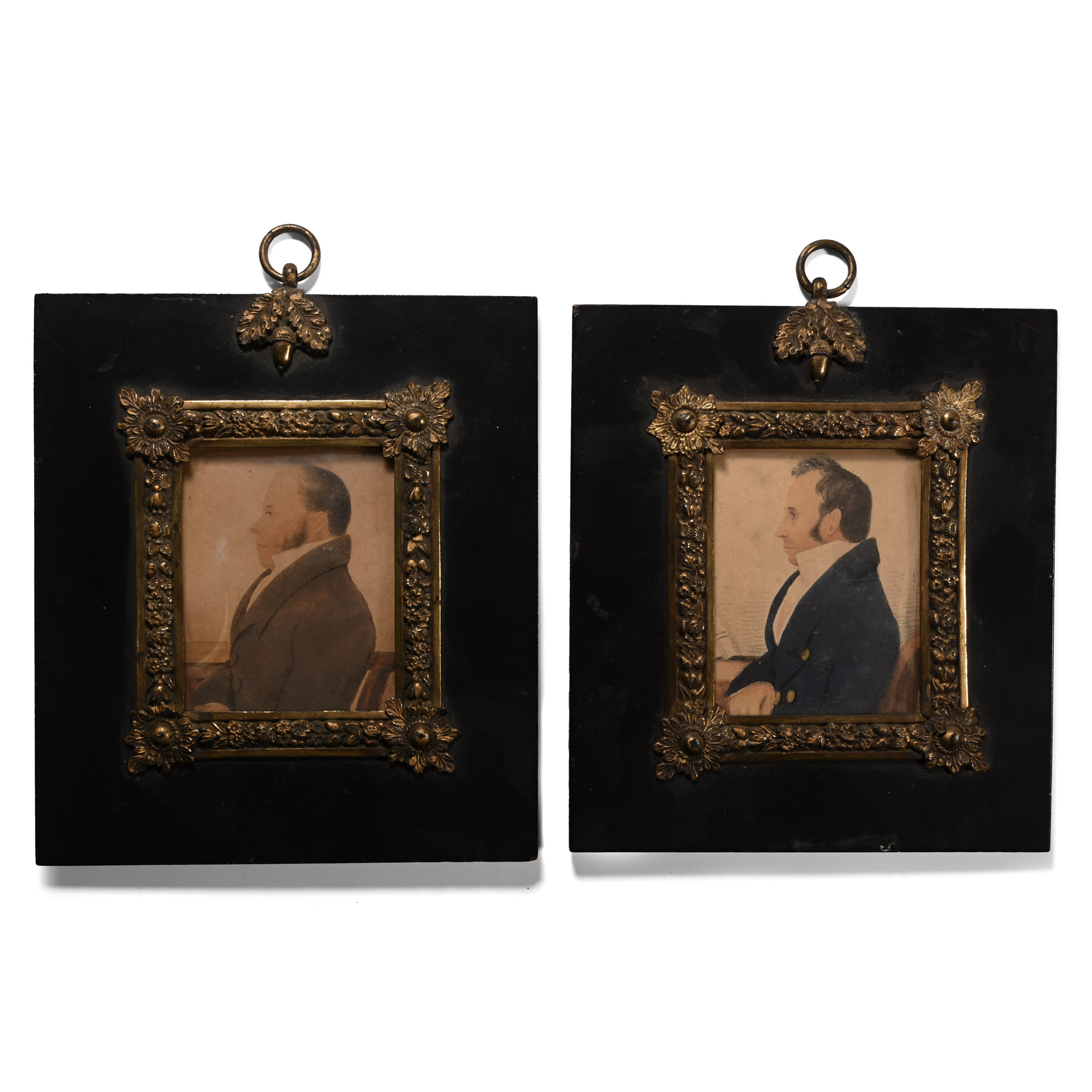
English Miniature Portrait Pair
19TH CENTURY A.D.
6 1/4 - 6 1/2 in. (280 grams total, 16 -16.5 cm).
Comprising two male profile portraits on card, set within wooden frame with metal embellishments, both men in period costumes and seated on high-backed chairs. [2]
ProvenanceFrom a Cambridgeshire, UK, collection.
This lot is accompanied by an illustrated lot declaration signed by the Head of the Antiquities Department, Dr Raffaele D'Amato.
TimeLine Auctions follows a vetting process to ensure the authenticity and legality of all items, reinforcing our commitment to integrity and responsible trading. Each antiquity, antique, and coin lot undergoes thorough examination by a vetting committee of at least ten external specialists, professional trade association members, scientists, and archaeologists: Our Vetting Process
AUCTIONS:
TimeLine is a leading auction house specialising in antiquities, ancient art, collectables, natural history, coins, medals, and books. Our auctions offer museums, collectors, historians, and enthusiasts the opportunity to acquire unique and historically significant pieces.
-
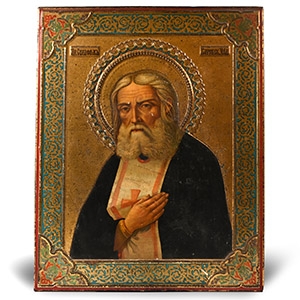
Russian Orthodox Gilt Icon with Saint Seraphim
20th century A.D.Sold for (Inc. bp): £169
Showing Saint Seraphim of Sarov printed on embossed metal-sheet with fabric backing, Cyrillic inscription flanking the elaborate halo. 178 grams, 22.4 x 18 cm
Ian Wilkinson collection, Nottinghamshire, UK, formed since 1985. This lot is accompanied by an illustrated lot declaration signed by the Head of the Antiquities Department, Dr Raffaele D'Amato.
Saint Seraphim of Sarov (1759-1833) was a renowned Russian monk and mystic whose ascetic practice and counselling in cases of conscience awarded him the title Starets (spiritual teacher). -
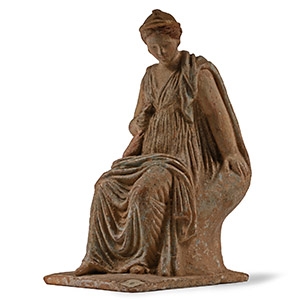
Hellenistic Style Terracotta Figurine
19th century A.D.Estimate: £800 - 1,000 (‡+bp*)
Opening Bid: £400
Modelled in the round on a rectangular base, seated female wearing a crested cap, peplos dress and palla holding a coin-purse to her midriff, collector's reference 'ABLT' to underside. 157 grams, 11.6 cm
Ex Louis-Gabriel Bellon (c.1819-1899), France. Private collection, Europe. Accompanied by a copy of French passport no.111342 dated 6 July 2009. This lot is accompanied by an illustrated lot declaration signed by the Head of the Antiquities Department, Dr Raffaele D'Amato. -
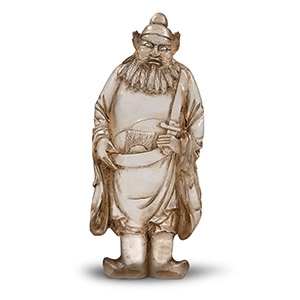
Large Chinese Style Glass Statue of a Warrior
20th century A.D. or earlierSold for (Inc. bp): £91
Moulded in the round figure with drawn sword held at his left shoulder, brimmed helmet, copious beard, right hand holding his road belt. 2.29 kg, 32 cm
From the family collection of a Hampstead gentleman; formerly acquired in the 1980s. This lot is accompanied by an illustrated lot declaration signed by the Head of the Antiquities Department, Dr Raffaele D'Amato.
