Loading, please wait...

Use mousewheel to zoom in and out, click to enlarge

Details

LOT 1992

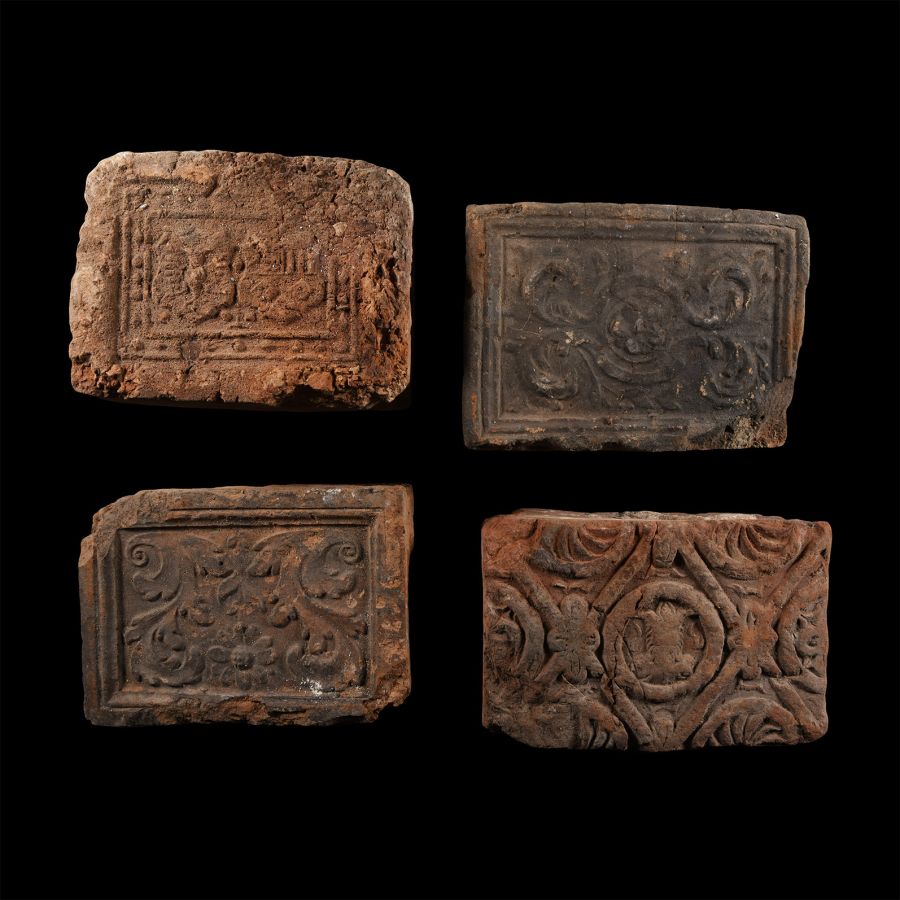
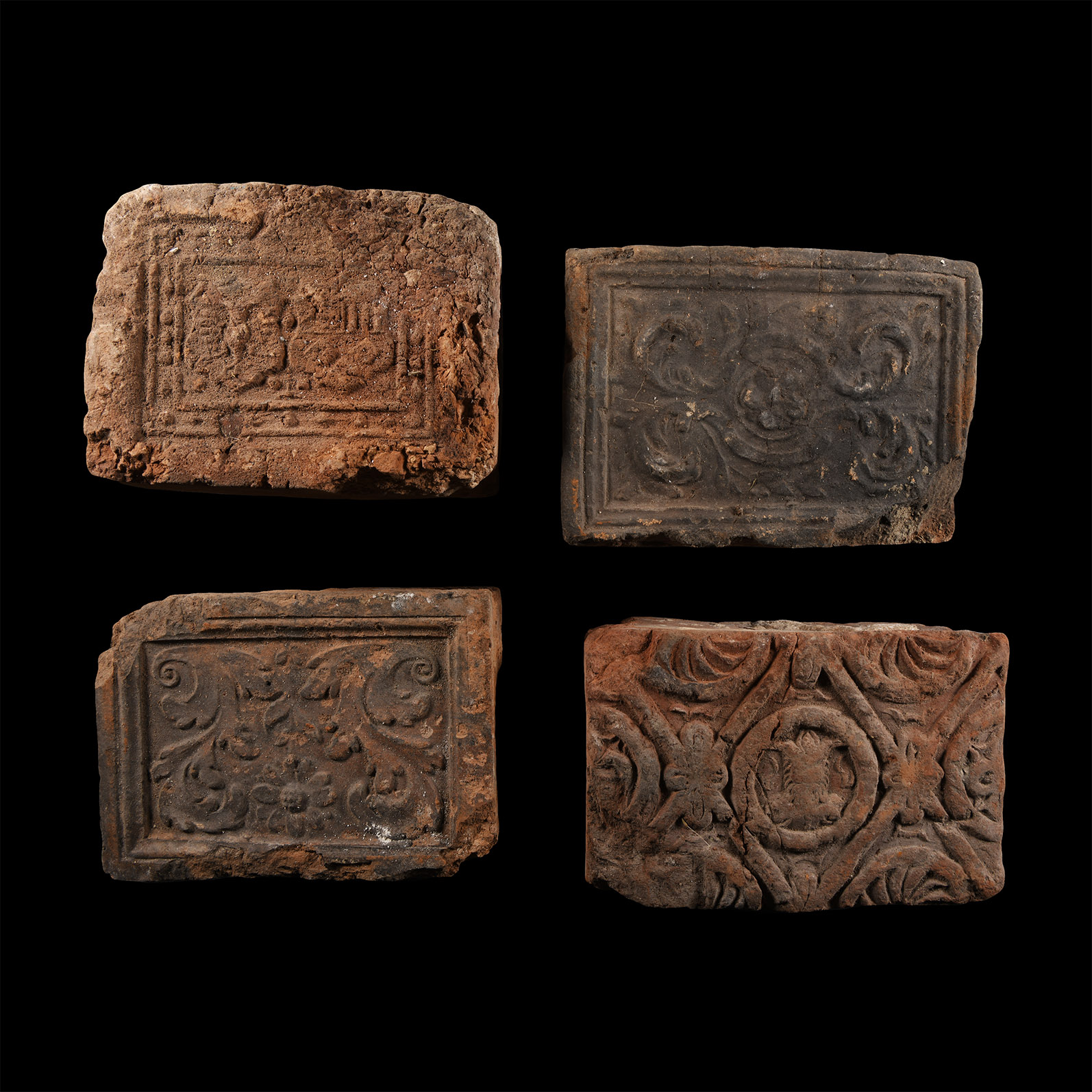
Elizabethan Period Ceramic Fire Brick Group

CIRCA 16TH CENTURY A.D.

4 7/8 - 5 3/4 in. (5.58 kg total, 12.5-14.5 cm).

Each differently sized and displaying a design in relief, including scrolling foliage, an apparent bust within roundel and lozenge surrounded by floral bosses and Catherine wheels; heraldic style shields within a rectangular pelletted border. [4]

Provenance

Acquired 1990s-early 2000s.
East Anglian private collection.

CONDITION

VETTING:

TimeLine Auctions follows a vetting process to ensure the authenticity and legality of all items, reinforcing our commitment to integrity and responsible trading. Each antiquity, antique, and coin lot undergoes thorough examination by a vetting committee of at least ten external specialists, professional trade association members, scientists, and archaeologists: Our Vetting Process


AUCTIONS:

TimeLine is a leading auction house specialising in antiquities, ancient art, collectables, natural history, coins, medals, and books. Our auctions offer museums, collectors, historians, and enthusiasts the opportunity to acquire unique and historically significant pieces.

LOT 1992

Elizabethan Period Ceramic Fire Brick Group

Estimate £120 - 170€140 - 200 (for guidance only)$160 - 230 (for guidance only)

Print page

RELATED LOTS

  • Painted Wooden Icon of Virgin and Child
    Painted Wooden Icon of Virgin and Child
    19th-20th century A.D.

    Estimate: £200 - 300 (+bp*)

    Opening Bid: £65

    Mary cradling the infant Christ, Greek text in the field with inscription 'ΜΡ ΘΥ' for 'Mother of God' flanking the Virgin's halo, 'IC XC' for 'Jesus Christ' over the Child's head; to the right a Greek inscription 'ΟΔΙΓΗΤΡΙΑ' (Odighitria); some restoration; a handwritten inscription and a cross to the reverse in Greek, reading 'Eufemia Papadimitriou - born on March, 30, 1932, on Thursday, at the 5.00 p.m.; Vasilios Papadimitriou - born on March, 15, 1934, on Thursday, at the 3.00 p.m.' 614 grams, 29 cm

    The timber shows some old insect flight holes and we are advised that this piece has been recently treated with Permthrin, as a precaution.

    Ex French gallery, Paris.

    The icon belongs to the category of Virgin 'Galaktotrophousa' (Γαλακτοτροφουσα, meaning “the Milk-Giver”) celebrated on third July, and showing Mary breast-feeding Jesus. The ancient typology dates from the 6th century A.D. and resided in St. Sabbas’ lavra (a type of monastic community).

    Lot Details

  • Heavy Post Medieval Gold Love Is The Bond Of Pease Posy Ring
    Heavy Post Medieval Gold 'Love Is The Bond Of Pease' Posy Ring
    1650-1725 A.D.

    Sold for (Inc. bp): £2,860

    Composed of a gently carinated hoop, the interior inscribed in cursive script 'Love is the bond of pease'. 7.81 grams, 22.97 mm overall, 18.75 mm internal diameter (approximate size British R, USA 8 1/2, Europe 18 3/4, Japan 18)


    Found whilst searching with a metal detector on 28th March 2022 Mr Graham Higgins, near Hatford, Oxfordshire, UK. Accompanied by a copy of the report for HM Coroner by the Finds Liason Officer (FLO) for the British Museum's Portable Antiquities Scheme (PAS) for Oxfordshire under Treasure reference number OXON-FC03F7. Accompanied by a copy of the letter from HM Senior Coroner for Oxfordshire disclaiming the Crown's interest in the find.

    In the medieval period many rings bore posy inscriptions in Latin or French, the languages frequently spoken by the affluent elites. Later, inscriptions in English became more usual, although the lack of standardisation in spelling might surprise the modern reader. The inscription is generally found on the interior of the ring, hidden to everyone except the wearer and most of the sentimental mottoes were taken from the popular literature of the time. In fact, love inscriptions often repeat each other, which suggests that goldsmiths used stock phrases. In the later 16th century, ‘posy’ specifically meant a short inscription. A posy is described in contemporary literature as a short ‘epigram’ of less than one verse. George Puttenham (1589) explained that these phrases were not only inscribed on finger rings, but also applied to arms and trenchers. The practice of giving rings engraved with mottoes at betrothals or weddings was common in England from the 16th century onwards, and continued until the late 18th century. Sources suggest that rings could be acquired ready- engraved, or alternatively engraved sometime after their initial production, by a hand other than the goldsmith’s. Joan Evans assumed that posy rings were principally used by/between lovers and distinguished four contexts for the giving of posy rings by one lover to another: betrothals, weddings, St Valentine’s Day and occasions of mourning. Samuel Pepys’ diary makes clear that posy rings might also mark the marriage of a family member, when bearers could even commission their own rings and chose their own mottoes from books. The rings could also function as tokens of friendship or loyalty.

    Lot Details

  • Post Medieval Iron Folding Knife Group
    Post Medieval Iron Folding Knife Group
    16th-18th century A.D.

    Sold for (Inc. bp): £7

    Comprising blades and handles of various dates and styles, including examples with decorative elements. 860 grams total, 9.5-18 cm


    Acquired 1990s-early 2000s. East Anglian private collection.

    Lot Details

Stay up-to-date with the latest from TimeLine Auctions by joining our mailing list