
Loading, please wait...
LOT 0246
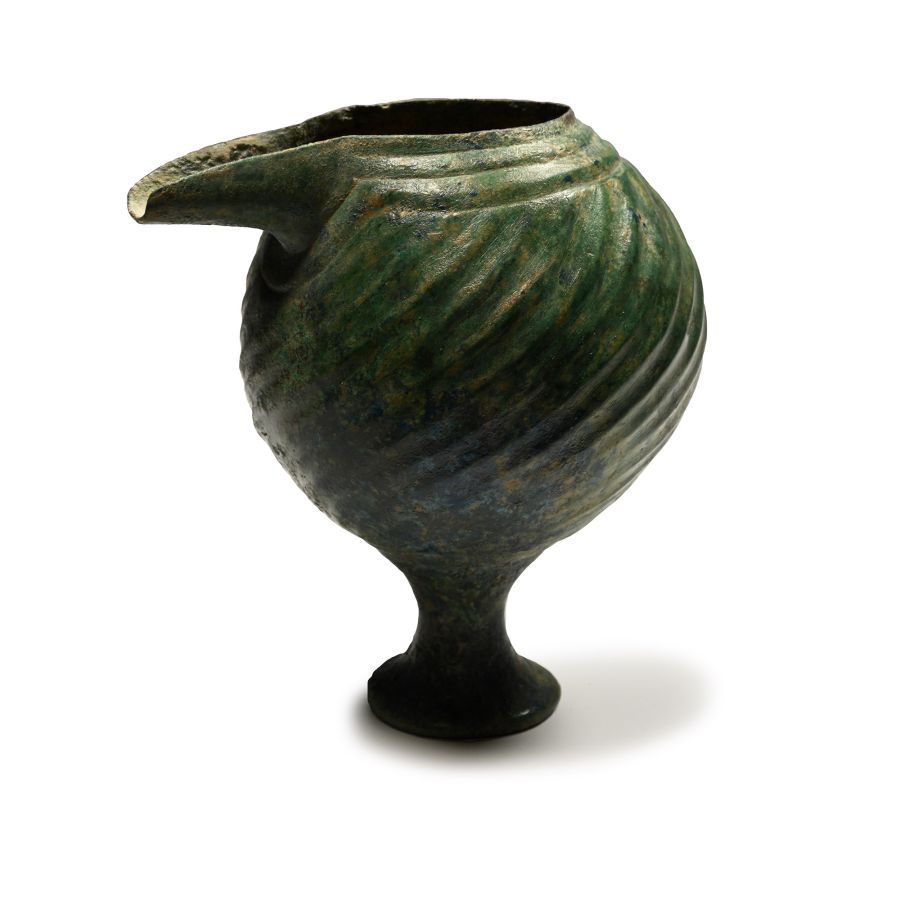
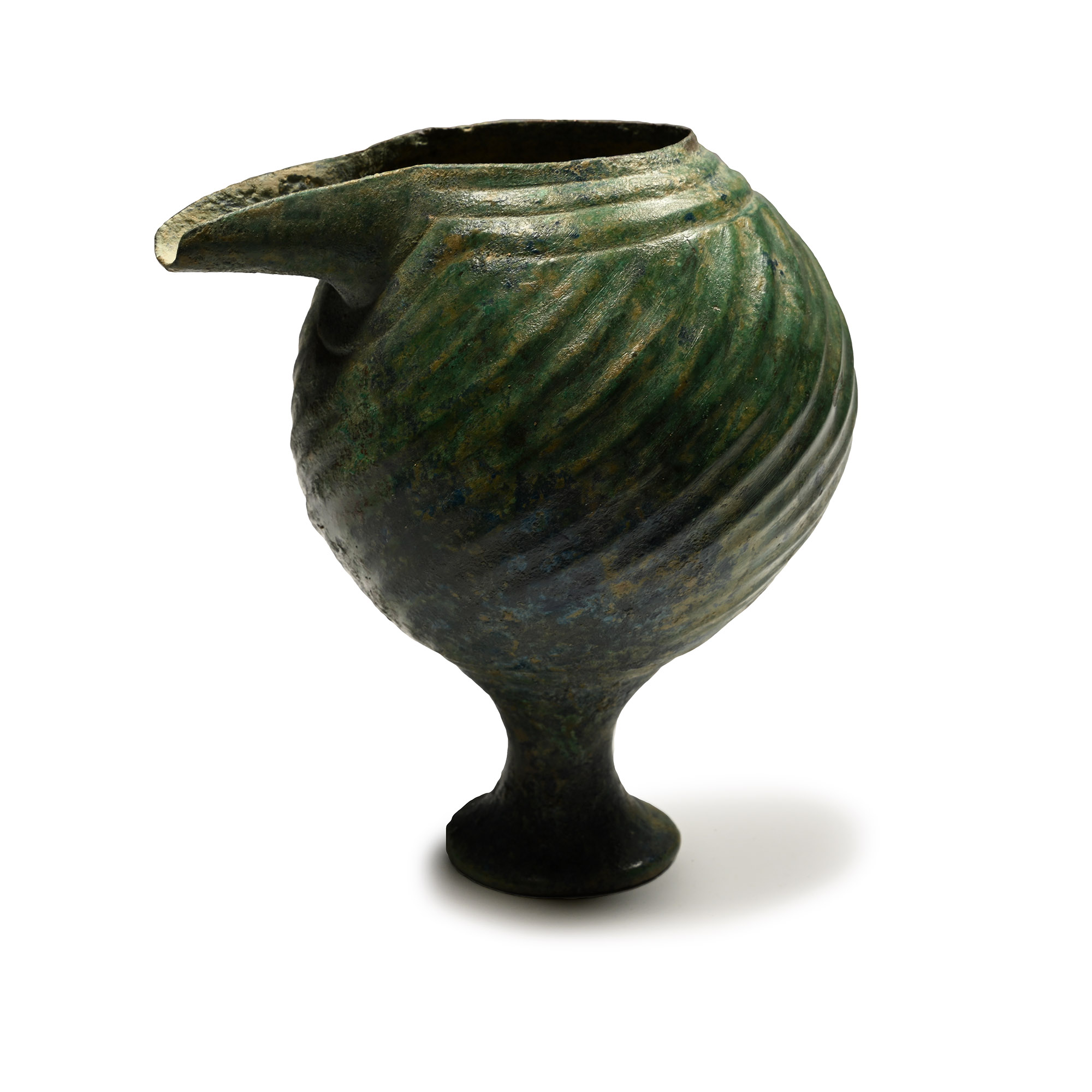
Elamite Spouted Bronze Vessel with Twisted Design
LATE 2ND-EARLY 1ST MILLENNIUM B.C.
5 1/8 in. (281 grams, 13.1 cm high).
Comprising a bulbous body with short stem and flared foot, radiating twisted ribs to the sidewall, stepped shoulder and short tapering spout.
ProvenanceAcquired before 1983.
Ex London gallery, 1990s.
This lot has been checked against the Interpol Database of stolen works of art and is accompanied by a search certificate number no.12533-231944.
This lot has been cleared against the Art Loss Register database, and is accompanied by an illustrated lot declaration signed by the Head of the Antiquities Department, Dr Raffaele D'Amato.
TimeLine Auctions follows a vetting process to ensure the authenticity and legality of all items, reinforcing our commitment to integrity and responsible trading. Each antiquity, antique, and coin lot undergoes thorough examination by a vetting committee of at least ten external specialists, professional trade association members, scientists, and archaeologists: Our Vetting Process
AUCTIONS:
TimeLine is a leading auction house specialising in antiquities, ancient art, collectables, natural history, coins, medals, and books. Our auctions offer museums, collectors, historians, and enthusiasts the opportunity to acquire unique and historically significant pieces.
LOT 0246
Elamite Spouted Bronze Vessel with Twisted Design
Estimate £1,500 - 2,000€1,740 - 2,320 (for guidance only)$2,030 - 2,700 (for guidance only)
-
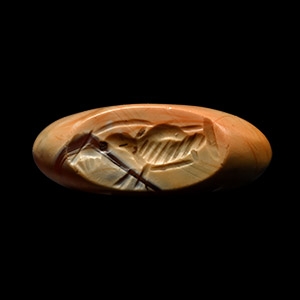
Sasanian Brown Agate Ring
3rd-4th century A.D.Sold for (Inc. bp): £442
With scaphoid plaque, intaglio standing profile figure in a draped robe. 4.90 grams, 26.53 mm overall, 15.11 mm internal diameter (approximate size British I, USA 4 1/4, Europe 7.44, Japan 7)
Mr S.A. collection, Switzerland, acquired in the 1980s. Thence by descent, private collection, since 1998. This lot has been cleared against the Art Loss Register database, and is accompanied by an illustrated lot declaration signed by the Head of the Antiquities Department, Dr Raffaele D'Amato. -
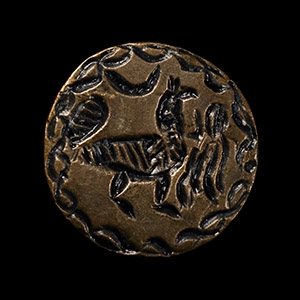
Central Asian Bronze Stamp Seal Matrix with Standing Bird
Circa 500-100 B.C.Estimate: £100 - 140 (+bp*)
Opening Bid: £50
Discoid with a standing bird to the centre and loop to the rear; accompanied by typed and signed note by the late W.G. Lambert, Professor of Assyriology at the University of Birmingham, 1970-1993, which states: 'Stamp Seal of Bronze 24 x 24 x 13 mm. This is a flat disc cut from sheet metal with a pierced handle from the same material fixed on the back. It is round. The design shows a standing bird in the centre, something not yet identified in front of it and above it a crescent and to the side a hatched shape. The whole design is put within a circle of intertwining band. This is a rare seal from wets central Asia, c. 500-100 B.C. It is in excellent condition.' 7.9 grams, 25 mm
Ex collection of a late London gentleman, 1990s. Accompanied by an original typed and signed scholarly note by the late W.G. Lambert, Professor of Assyriology at the University of Birmingham, 1970-1993. This lot has been cleared against the Art Loss Register database, and is accompanied by an illustrated lot declaration signed by the Head of the Antiquities Department, Dr Raffaele D'Amato. -
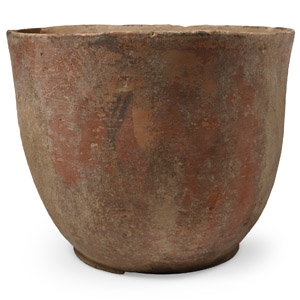
Western Asiatic Bichrome Terracotta Cup
3rd-1st millennium B.C.Sold for (Inc. bp): £26
Drum-shaped with low flared base, gently everted rim; painted vertical frond motifs. 535 grams, 12.5 cm
From a West London, UK, collection, 1990s. This lot has been cleared against the Art Loss Register database, and is accompanied by an illustrated lot declaration signed by the Head of the Antiquities Department, Dr Raffaele D'Amato.
