
Loading, please wait...



LOT 0289
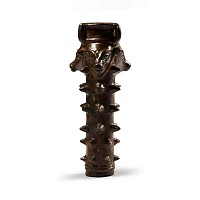
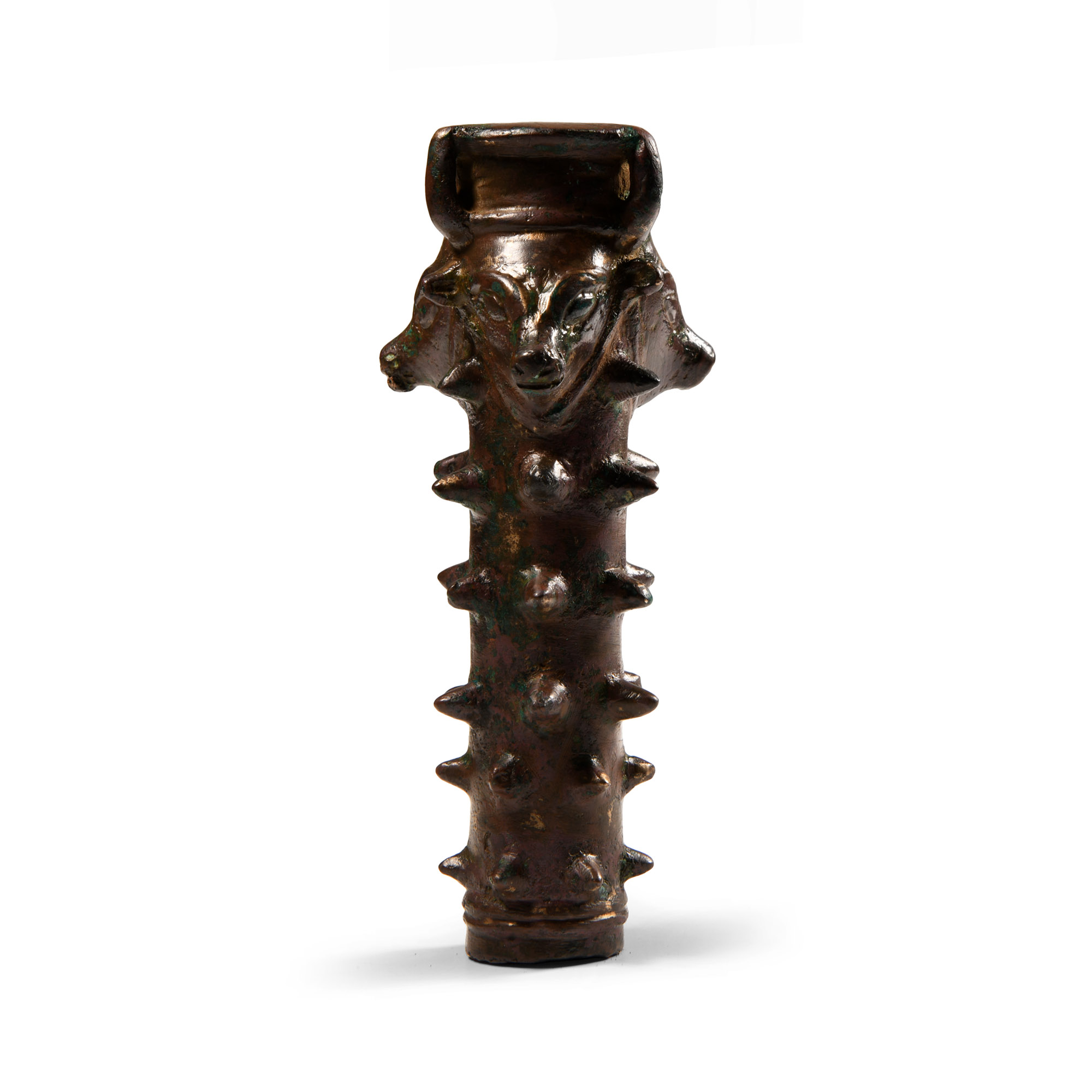
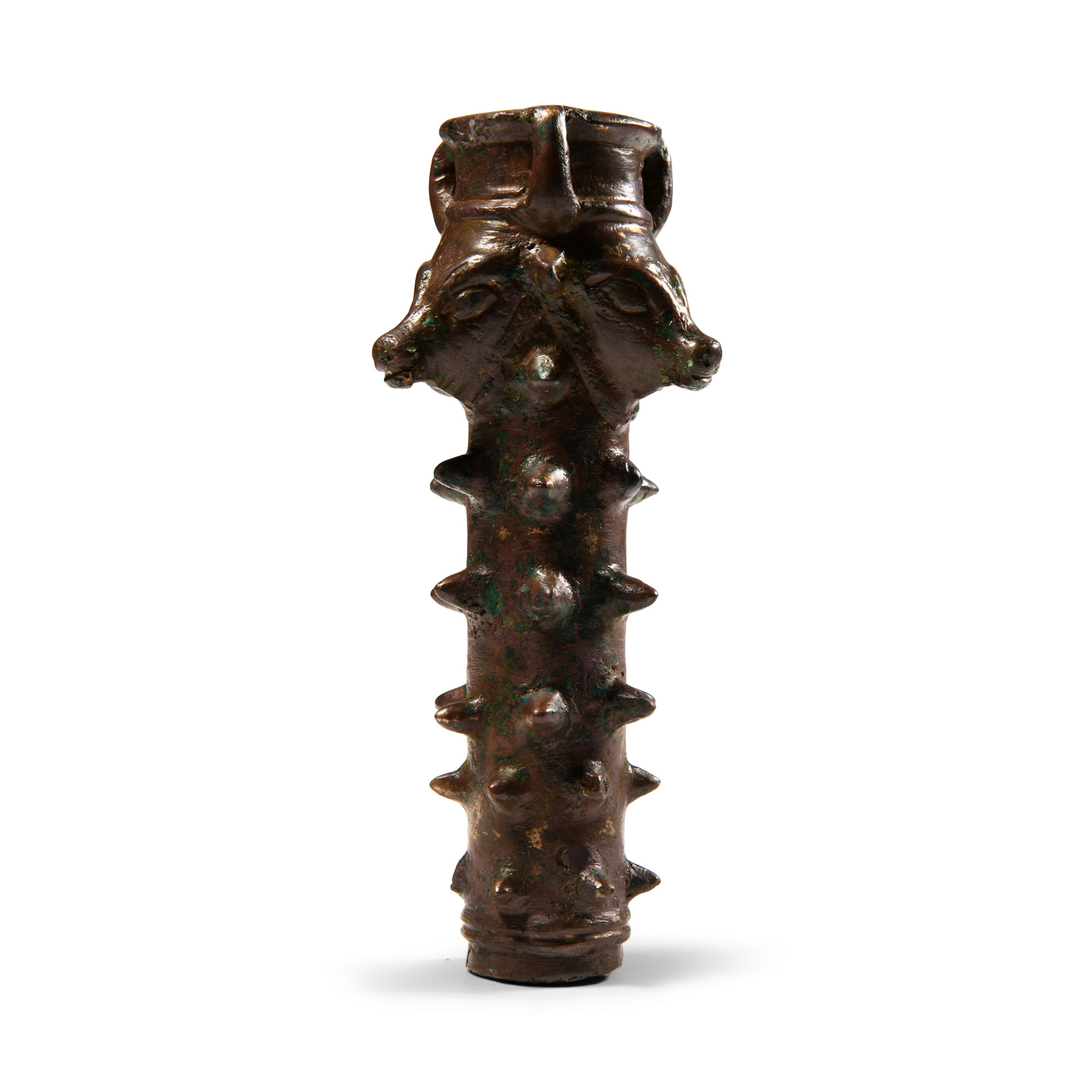
Elamite Spiked Bronze Macehead with Bulls
LATE 2ND-EARLY 1ST MILLENNIUM B.C.
5 3/4 in. (349 grams, 14.5 cm).
With three adjoining bull heads in high relief to the top, with three ears and three horns serving all the three heads; the horns curving towards the rim of the the closed top; the shaft adorned with vertical rows of pointed spikes; hollow socket tube with ring collar at the base.
Provenancewith a London, UK gallery, 1971-early 2000s.
Accompanied by an academic report by Dr Raffaele D'Amato.
This lot has been checked against the Interpol Database of stolen works of art and is accompanied by search certificate number no.11997-22061.
Cf. Mahboubian, H., Art of Ancient Iran, Copper and Bronze, London, 1997, fig.175, p.168, for a very similar type; see also Muscarella, O.W., Bronze and Iron, Ancient Near Eastern Artifacts in the Metropolitan Museum of Art, New York, 1988, no.394, for similar typology; Gorelik, M., Weapons of Ancient East, IV millennium BC-IV century BC, Saint Petersburg, 2003, in Russian, for discussion on maces and for a sceptre with similar head from Elam (plate XXXI, no.85).
CONDITIONTimeLine Auctions follows a vetting process to ensure the authenticity and legality of all items, reinforcing our commitment to integrity and responsible trading. Each antiquity, antique, and coin lot undergoes thorough examination by a vetting committee of at least ten external specialists, professional trade association members, scientists, and archaeologists: Our Vetting Process
AUCTIONS:
TimeLine is a leading auction house specialising in antiquities, ancient art, collectables, natural history, coins, medals, and books. Our auctions offer museums, collectors, historians, and enthusiasts the opportunity to acquire unique and historically significant pieces.
LOT 0289
Elamite Spiked Bronze Macehead with Bulls
Estimate £1,800 - 2,400€2,090 - 2,780 (for guidance only)$2,430 - 3,240 (for guidance only)
-
Amlash Bronze Figural Pendant
Circa 10th century B.C.Sold for (Inc. bp): £98
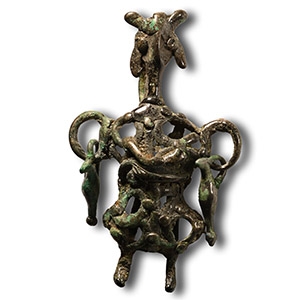
Fertility figure with openwork decoration, loop arms suspending pendants formed as slender figurative horned animals; suspension loop to reverse and cage-style torso. 74 grams, 97 mm
UK private collection before 2000. Acquired on the UK art market. Property of a London gentleman. -
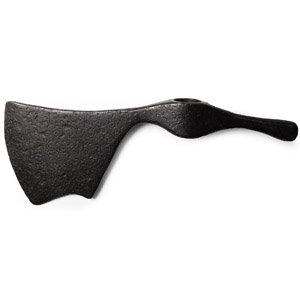
Eastern Viking Period Iron Bearded Axe-Hammer
Circa 11th-12th century A.D.Sold for (Inc. bp): £221
With a narrow straight bearded blade enlarged in the lower side, rounded hammer-section shank to the rear. 427 grams, 23 cm
Ex private North American collection, California, USA, 1970s-1990s.
The more commonly used weapons of the Finno-Ugrian people were axes, commonly found in all Finnic areas, as well as spears. Iron axeheads of this typology show a sub-trapezoidal asymmetrical blade. -
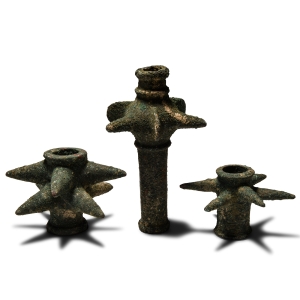
Western Asiatic Spiked Bronze Macehead Group
2nd-1st millennium B.C.Estimate: £2,500 - 3,500 (‡+bp*)
Opening Bid: £1,350
Comprising: one with two unaligned rows, each with four horizontal spikes, topped by a tooth helping to secure the mace to a wooden shaft; the second with a long socket and a row of six spikes, three pointed and three rounded, double tipped edge for securing the shaft; the third with six horizontal spikes; all with solid heads and hollow tubular sockets; of North-West Iranian typology. 1.35 kg total, 10-15 cm
Acquired from Artemis Gallery, Munich in 1995. European private collection. Accompanied by an academic report by Dr Raffaele D’Amato. This lot has been checked against the Interpol Database of stolen works of art and is accompanied by search certificate number no.11997-211853.
A variety of similar bronze mace heads have been recovered in Hasanlu and Marlik, mainly of spiked variety. Excavations at 8th-7th century B.C. War Kabud and Chamzhi-Mumah in Luristan have produced related types, with smaller spikes or knobs and with an elongated socket, like one of our examples. These spiked maces are a specifically Iranian type. In general, they were used from the 9th century B.C. although some scholars support the thesis of their use in the late 2nd-early 1st millennium based on finds from Marlik.
