
Loading, please wait...
LOT 1144
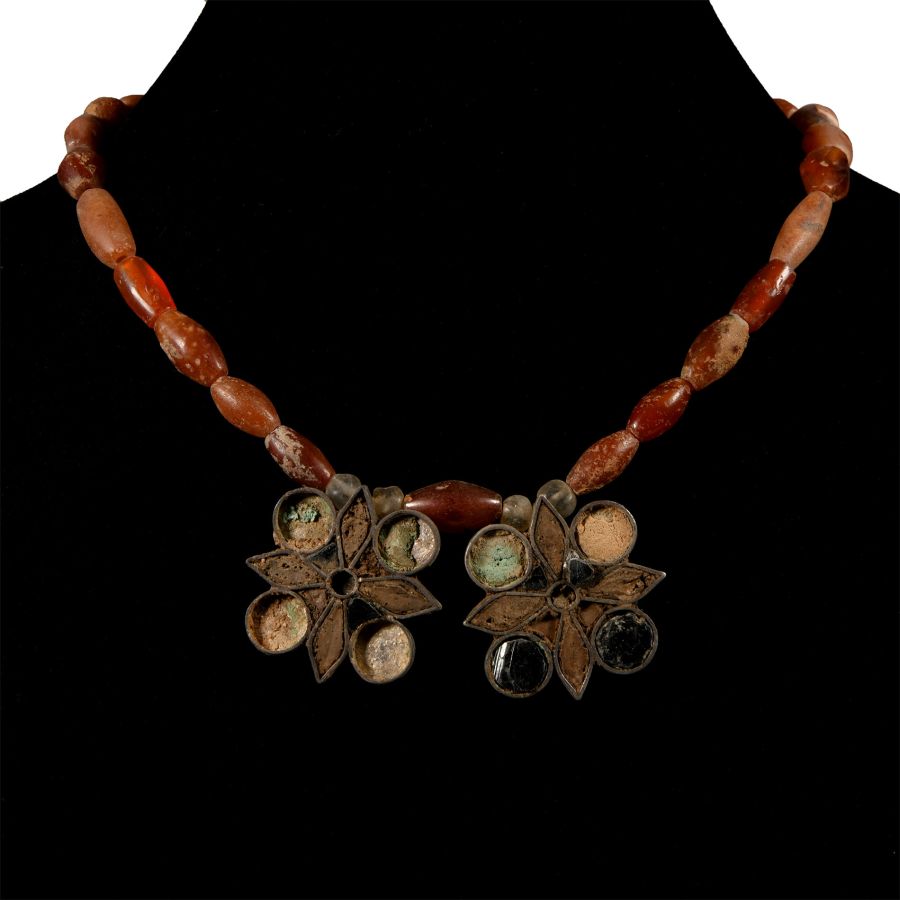
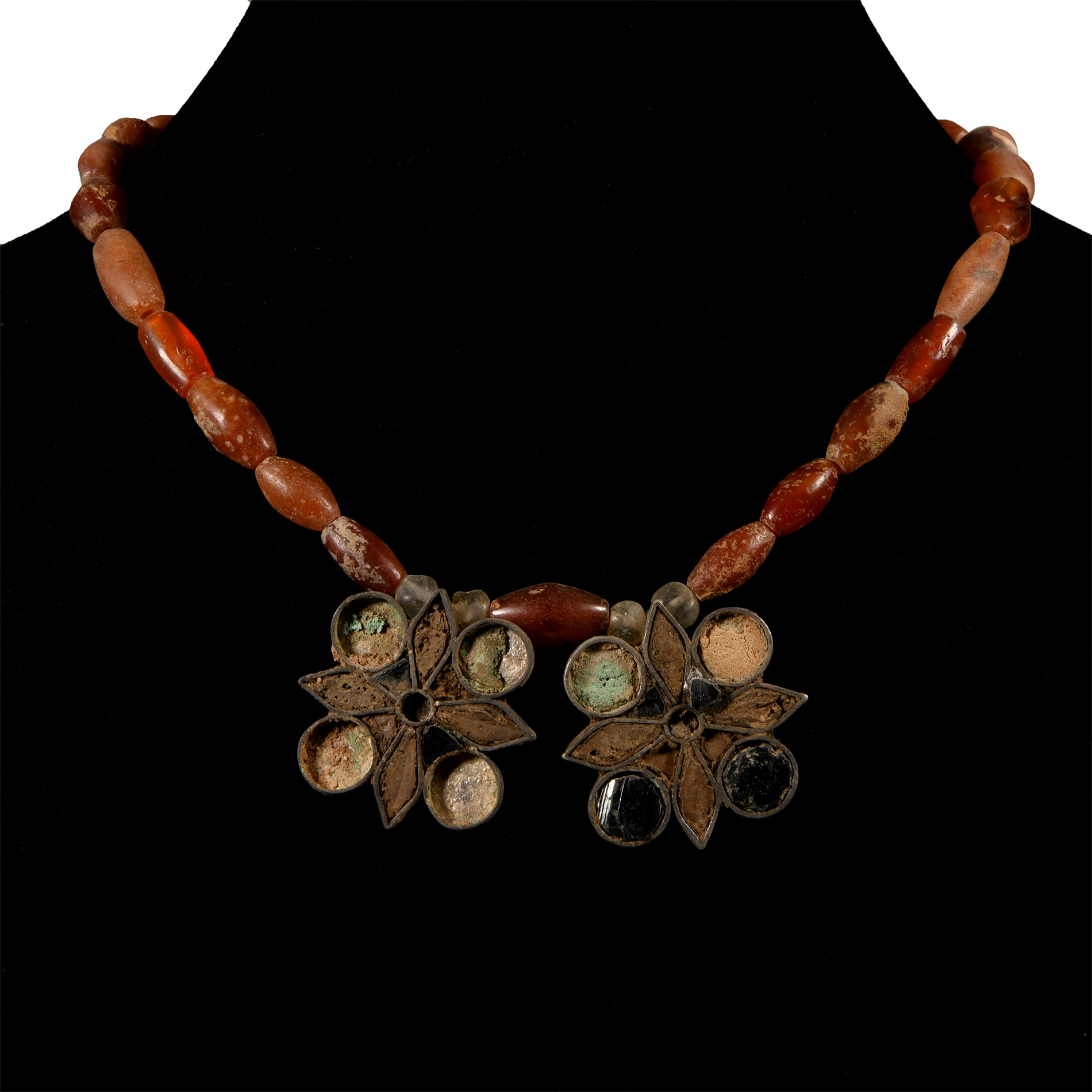
Elamite Silver Flower Pendant
1ST MILLENNIUM B.C.
17 in. (59 grams, 43 cm).
A restrung necklace of fusiform and tubular carnelian beads with two silver cloisonné pendant quatrefoils with haematite discs in the spandrels, inset glass and other panels, oval rock crystal beads flanking.
ProvenanceAcquired 1990s.
With a London gallery.
Property of a London collector; from her family's private collection.
TimeLine Auctions follows a vetting process to ensure the authenticity and legality of all items, reinforcing our commitment to integrity and responsible trading. Each antiquity, antique, and coin lot undergoes thorough examination by a vetting committee of at least ten external specialists, professional trade association members, scientists, and archaeologists: Our Vetting Process
AUCTIONS:
TimeLine is a leading auction house specialising in antiquities, ancient art, collectables, natural history, coins, medals, and books. Our auctions offer museums, collectors, historians, and enthusiasts the opportunity to acquire unique and historically significant pieces.
LOT 1144
Elamite Silver Flower Pendant
Estimate £400 - 600€460 - 700 (for guidance only)$540 - 810 (for guidance only)
-
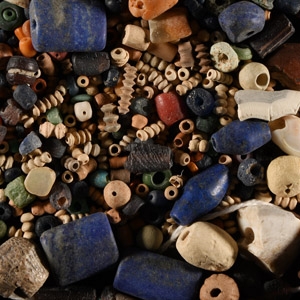
Western Asiatic Mixed Bead Group
1st millennium B.C. and laterSold for (Inc. bp): £65
A mix of Asian, African, faience, terracotta, stone and shell beads. 70 grams total, 2-18 mm
Acquired 1980-2015. Ex Abelita family collection. -
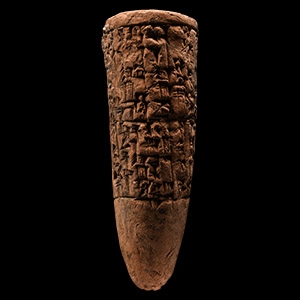
Old Babylonian Clay Cone of Ishme Dagan
Circa 20th-18th century B.C.Sold for (Inc. bp): £2,340
Of conical form with flat base and 18 lines of impressed cuneiform script; Sumerian text denoting a royal name: 'Ishme-Dagan, mighty man, King of Isin, king of the four world regions: when he cancelled the taxes of Nippur, the city beloved of Enlil, and excused its men from military service, he built the city wall of Isin. The name of that wall is Ishme-Dagan.' 350 grams, 14.4 cm
Formerly with an ADA member's gallery, 1980-1990s. From the collection of Dr D Gerrard, Buckinghamshire, UK. Accompanied by a copy of the original catalogue entry. -
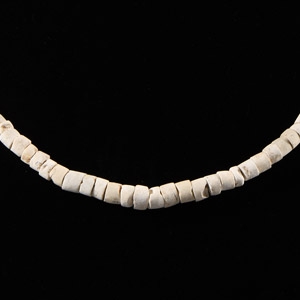
Western Asiatic White Stone Bead Necklace
Circa 1st millennium B.C.Sold for (Inc. bp): £52
Restrung; composed of cylindrical beads of various dimensions 12.5 grams, 48 cm long
UK gallery, early 2000s.
Similar beads were found during the excavations of the royal tombs of Nimrud. Thousands of beads were discovered in the sarcophagi, including those of Nimrud’s Queens; they probably originally formed part of wide collars with multiple strands.
