
Loading, please wait...
LOT 1210
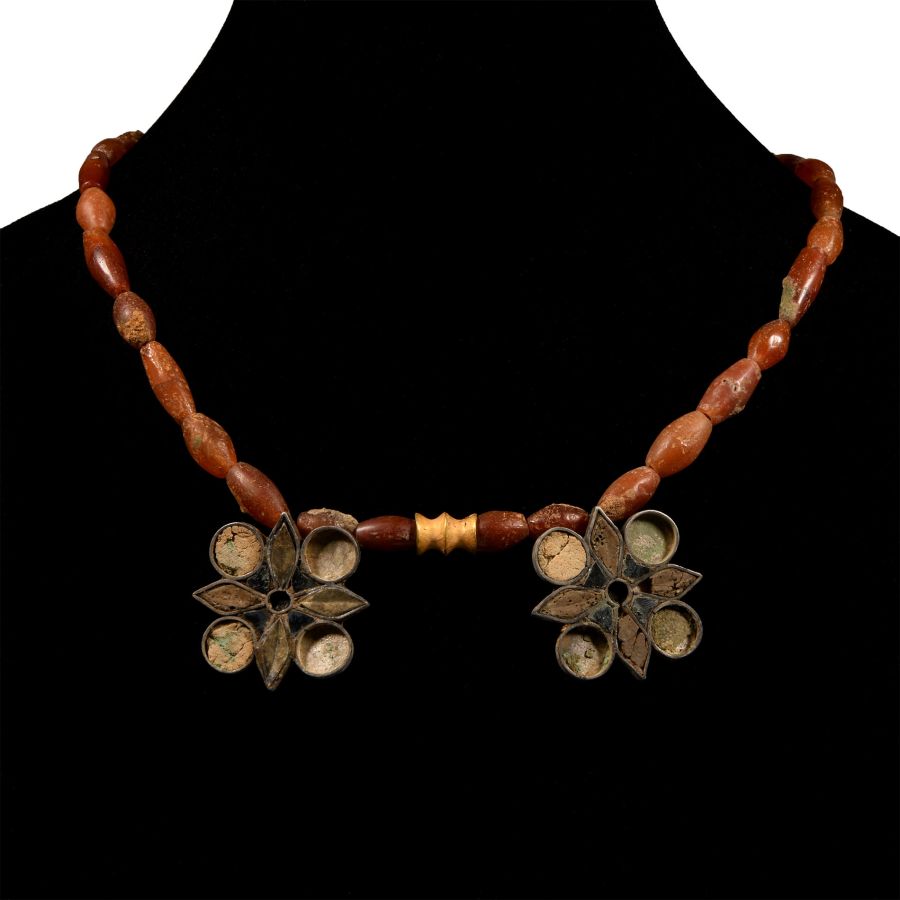
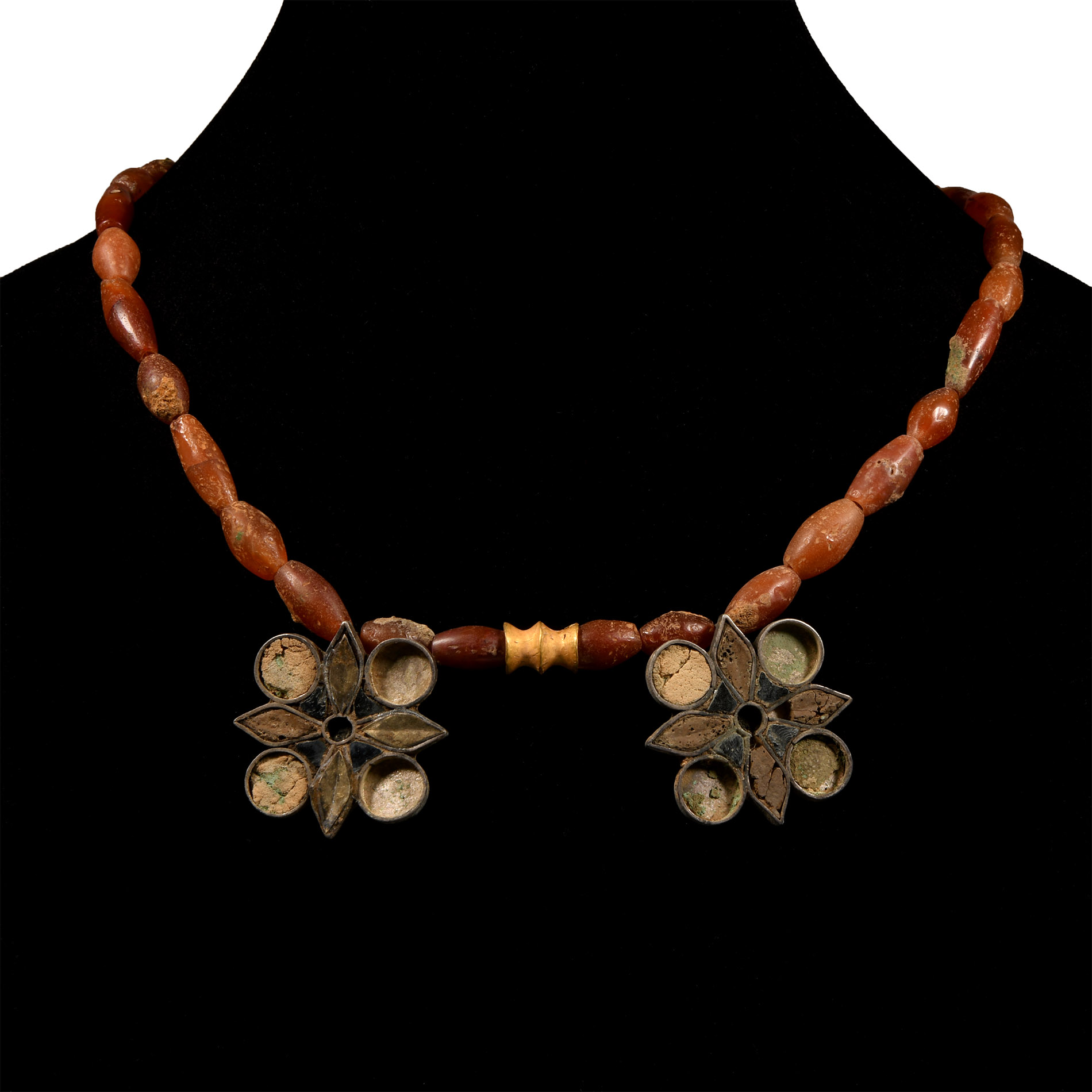
Elamite Silver Flower Pendant Necklace
1ST MILLENNIUM B.C.
17 in. (54 grams, 43 cm).
A restrung necklace of fusiform and oval carnelian beads with centrepiece of waisted gold tubular bead; two silver inlaid pendants each a quatrefoil with discs in the spandrels, inset glass and haematite panels.
ProvenanceAcquired 1990s.
With a London gallery.
Property of a London collector; from her family's private collection.
TimeLine Auctions follows a vetting process to ensure the authenticity and legality of all items, reinforcing our commitment to integrity and responsible trading. Each antiquity, antique, and coin lot undergoes thorough examination by a vetting committee of at least ten external specialists, professional trade association members, scientists, and archaeologists: Our Vetting Process
AUCTIONS:
TimeLine is a leading auction house specialising in antiquities, ancient art, collectables, natural history, coins, medals, and books. Our auctions offer museums, collectors, historians, and enthusiasts the opportunity to acquire unique and historically significant pieces.
LOT 1210
Elamite Silver Flower Pendant Necklace
Estimate £400 - 600€460 - 700 (for guidance only)$540 - 810 (for guidance only)
-
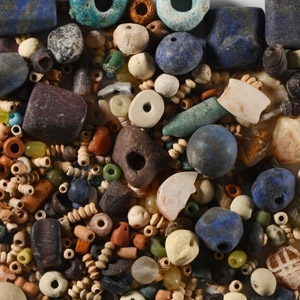
Western Asiatic Mixed Bead Group
1st millennium B.C. and laterSold for (Inc. bp): £130
A mix of Asian, African, faience, terracotta, stone and shell beads. 76 grams total, 3-18 mm
Acquired 1980-2015. Ex Abelita family collection. -
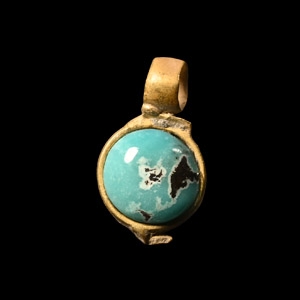
Western Asiatic Gold Pendant with Turquoise
2nd century B.C.-1st century A.D.Sold for (Inc. bp): £85
With turquoise cabochon, suspension loop. 0.15 grams, 8 mm
From a late Japanese specialist collector, 1970-2000s. -
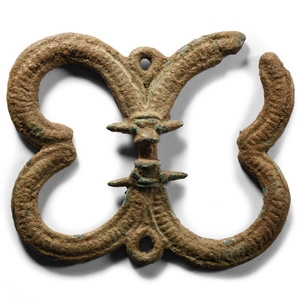
Luristan Bronze Horse Trapping with Animal Decoration
13th-7th century B.C.Sold for (Inc. bp): £65
Formed as two waisted loops with ribbed detailing, central slot framed by facing ibex heads, small loops in the spandrels. 93 grams, 10 cm
Acquired 1980-2015. Ex Abelita family collection. Accompanied by an earlier catalogue identification card.
