
Loading, please wait...
LOT 0256
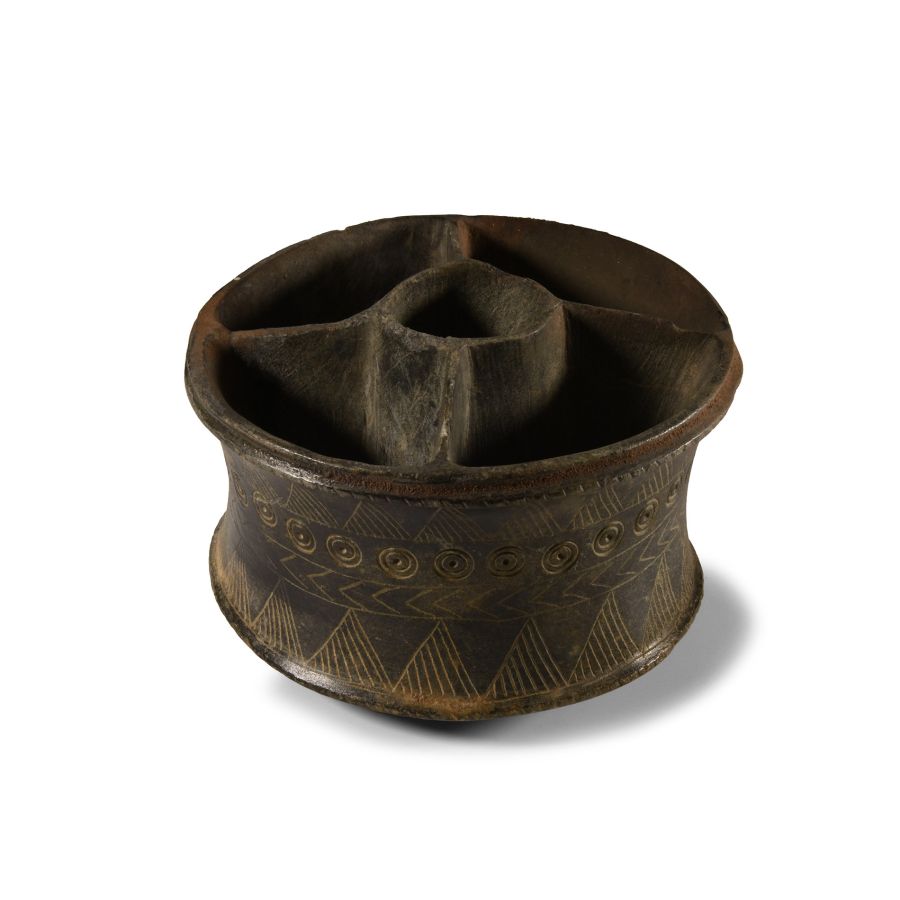
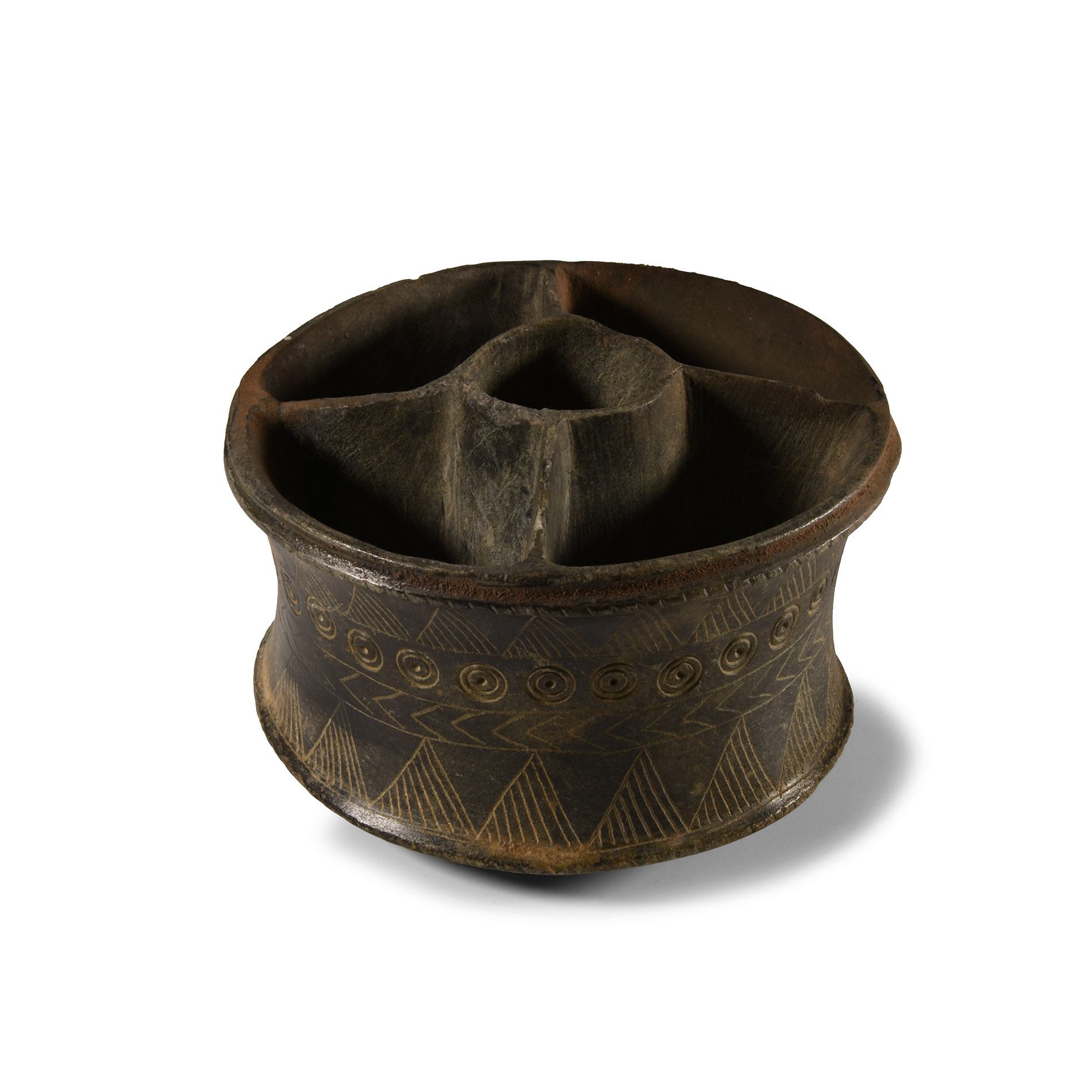
Elamite Segmented and Decorated Schist Vessel
3RD-1ST MILLENNIUM B.C.
4 1/4 in. (753 grams, 11 cm wide).
Cylindrical with waisted profile and rounded underside, inner with central tube and four radiating partitions; band of hatched triangles flanking herringbone and ring-and-dot motifs. [No Reserve]
ProvenanceFrom a collection acquired on the UK art market from various auction houses and collections mostly before 2000.
From an important Cambridgeshire estate; thence by descent.
TimeLine Auctions follows a vetting process to ensure the authenticity and legality of all items, reinforcing our commitment to integrity and responsible trading. Each antiquity, antique, and coin lot undergoes thorough examination by a vetting committee of at least ten external specialists, professional trade association members, scientists, and archaeologists: Our Vetting Process
AUCTIONS:
TimeLine is a leading auction house specialising in antiquities, ancient art, collectables, natural history, coins, medals, and books. Our auctions offer museums, collectors, historians, and enthusiasts the opportunity to acquire unique and historically significant pieces.
-
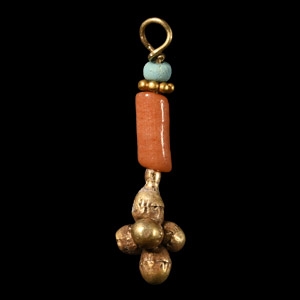
Western Asiatic Gold Pendant with Beads
1st millennium B.C.Sold for (Inc. bp): £156
Comprising a three-dimensional flower composed of gold spheres, supported by a slender stem with a turquoise and coral bead. 0.85 grams, 28 mm
From a late Japanese specialist collector, 1970-2000s. -
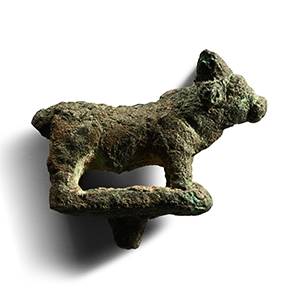
Anatolian Bronze Bull Statue
3rd-2nd millennium B.C.Estimate: £200 - 300 (‡+bp*)
Opening Bid: £100
Modelled standing on a rectangular base, stylised horn, face and coat detailing; tapering lug to underside. 76 grams, 54 mm
Acquired in Europe before 1998. -
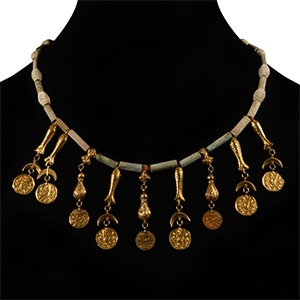
Qajar Necklace with Gold Pendants
18th-early 20th century A.D. and earlierSold for (Inc. bp): £650
A restrung necklace composed of ancient faience beads of tubular and biconical types, with later gold dangles comprising fishes, crescent moons, pierced bracteates bearing a male bust in military dress, pear-shaped and pelletted pendants; hook-and-eye closure. 26.37 grams, 48 cm long
Fine condition.
Acquired before 1983. Ex London gallery, 1990s.
