
Loading, please wait...
LOT 0264
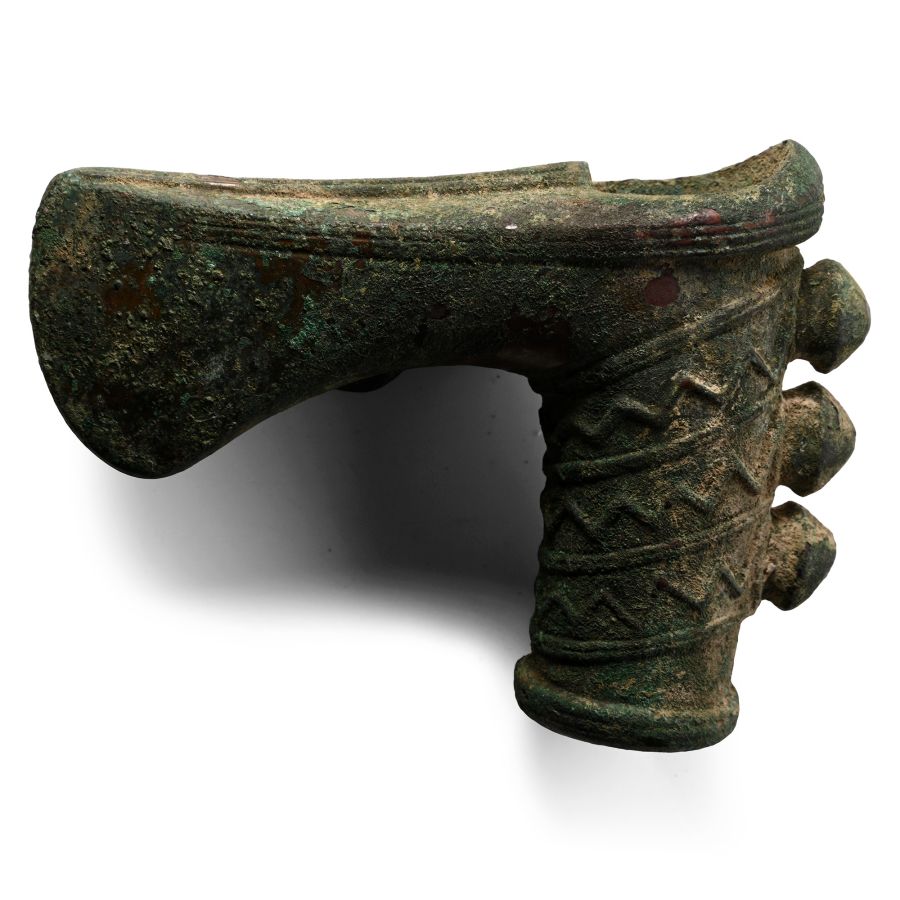
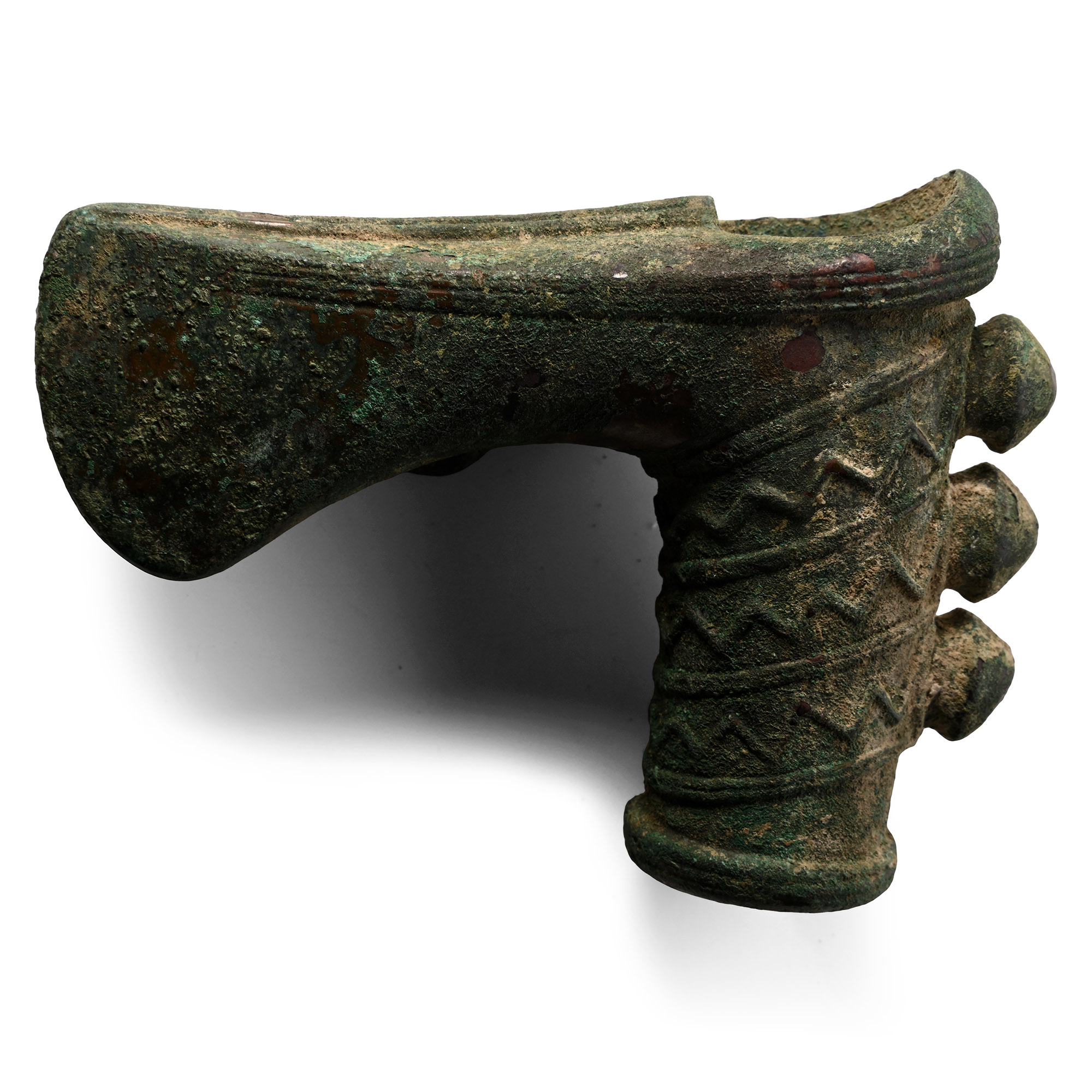
Elamite Decorated Bronze Axehead
2ND-1ST MILLENNIUM B.C.
4 1/8 in. (360 grams, 10.4 cm).
With a slender, scooped blade, a round socket with a ribbed outer flange, and three lobed extensions to the rear of the socket with low-relief decorative bands.
ProvenanceFrench collection, 1980s.
Acquired on the London art market.
Private collection, London, UK.
See Engel, N. & Overlaet, B. et al., Bronzes de Luristan, enigmes de l'Iran Ancien, IIIe-Ier millenaire av.J.C., Paris, 2008, cat.8-12, pp.73ff for type.
CONDITIONTimeLine Auctions follows a vetting process to ensure the authenticity and legality of all items, reinforcing our commitment to integrity and responsible trading. Each antiquity, antique, and coin lot undergoes thorough examination by a vetting committee of at least ten external specialists, professional trade association members, scientists, and archaeologists: Our Vetting Process
AUCTIONS:
TimeLine is a leading auction house specialising in antiquities, ancient art, collectables, natural history, coins, medals, and books. Our auctions offer museums, collectors, historians, and enthusiasts the opportunity to acquire unique and historically significant pieces.
LOT 0264
Elamite Decorated Bronze Axehead
Estimate £500 - 700€580 - 810 (for guidance only)$680 - 950 (for guidance only)
-
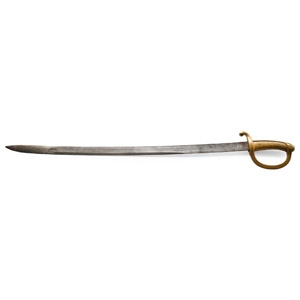
Spanish Military Briquet Sabre
Dated 1902 A.D.Sold for (Inc. bp): £156
Comprising: slightly swept single-edge blade with scooped point and ricasso; brass hilt with finger-guard, lobed quillon, ribbed grip; blade stamped 'Arta. Faba. de Toldo 1902'. 1.04 kg, 83.5 cm
From a private Tyneside collection, formed since the early 2000s. -
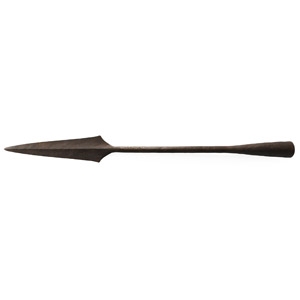
Germanic Iron Socketted Javelin Head
Circa 5th-6th century A.D.Sold for (Inc. bp): £247
Long shaft tapering towards a triangular blade with strong mid-rib and squared shoulders; professionally cleaned, conserved, and restored. 210 grams, 40.7 cm
Cleaned, conserved and restored.
From the family collection of a South East London collector; formerly acquired in the late 1950s.
The total length of these javelins, including iron heads, shanks and wooden shafts, was probably about 210cm. The design was, obviously, intended to kill or cripple efficiently. The length of the shaft suggest that these javelins, including the infamous angon, were used also in hand to hand combat, where there was a danger of the head being lopped off. -
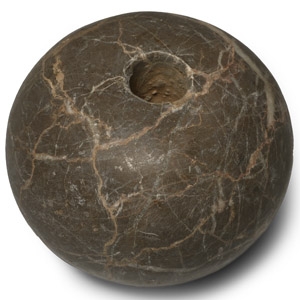
Western Asiatic Stone Macehead
3rd-2nd millennium B.C.Sold for (Inc. bp): £104
Toroid and drilled vertically to accommodate a wooden shaft. 453 grams, 74 mm
From the collection of a London, UK, gentleman, 1990s. This lot is accompanied by an illustrated lot declaration signed by the Head of the Antiquities Department, Dr Raffaele D’Amato. This lot is accompanied by an illustrated lot declaration signed by the Head of the Antiquities Department, Dr Raffaele D'Amato.
