
Loading, please wait...


LOT 0291
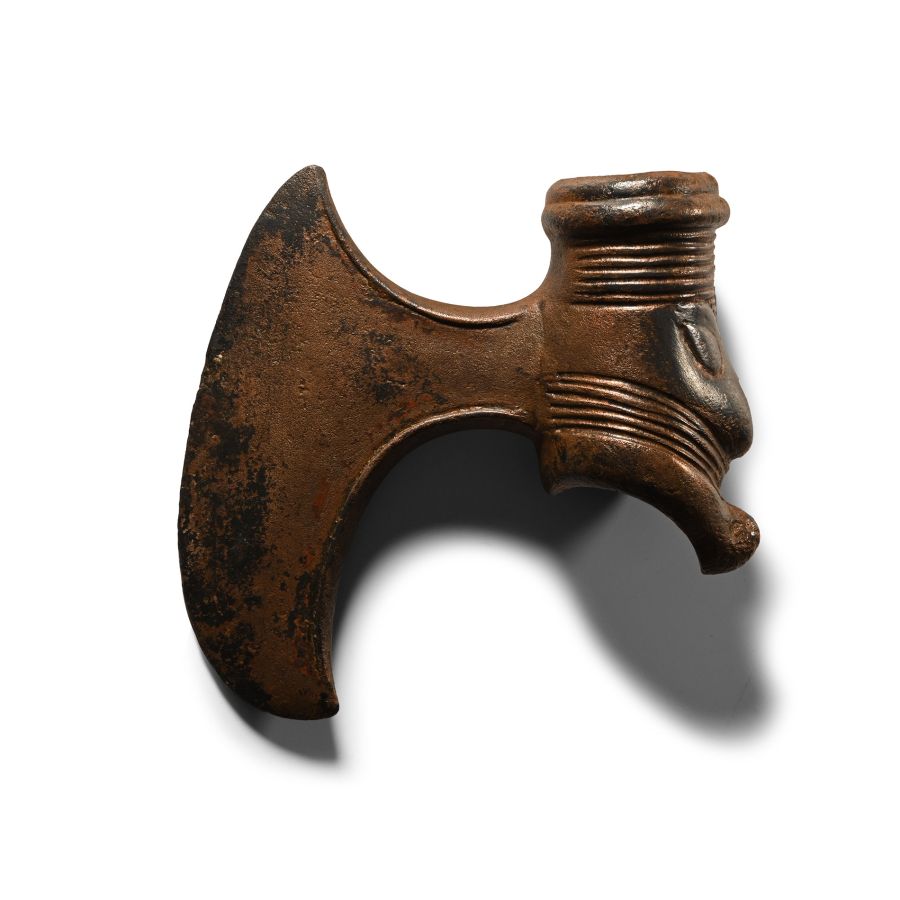
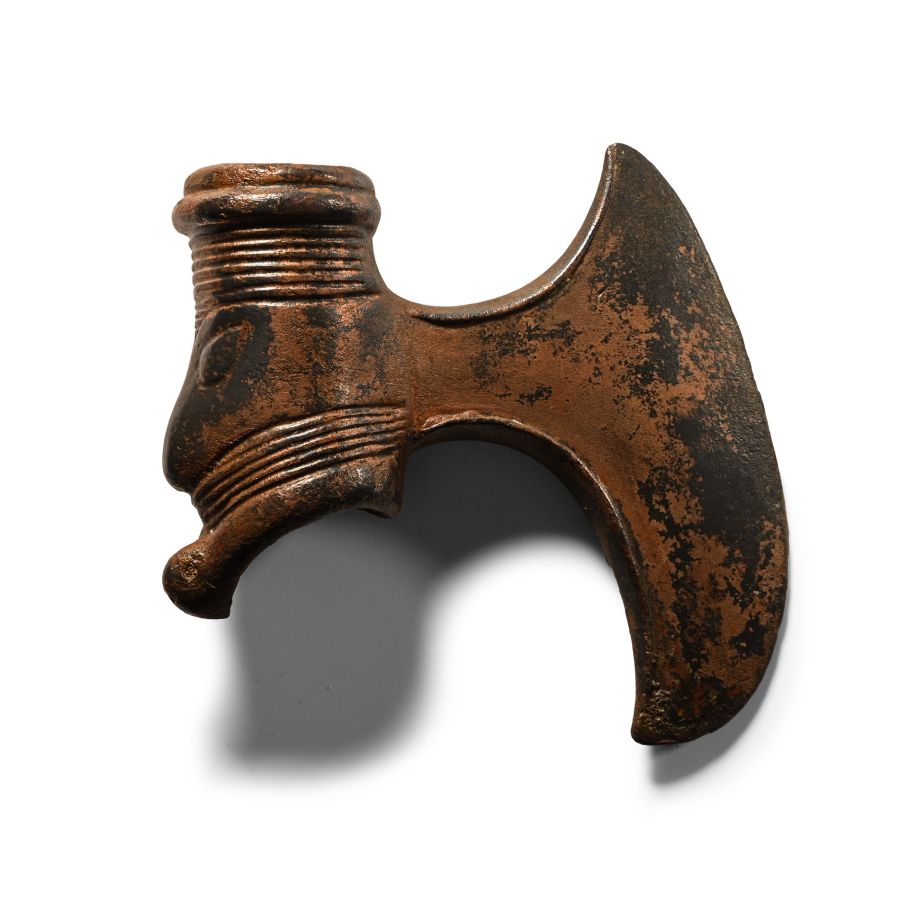
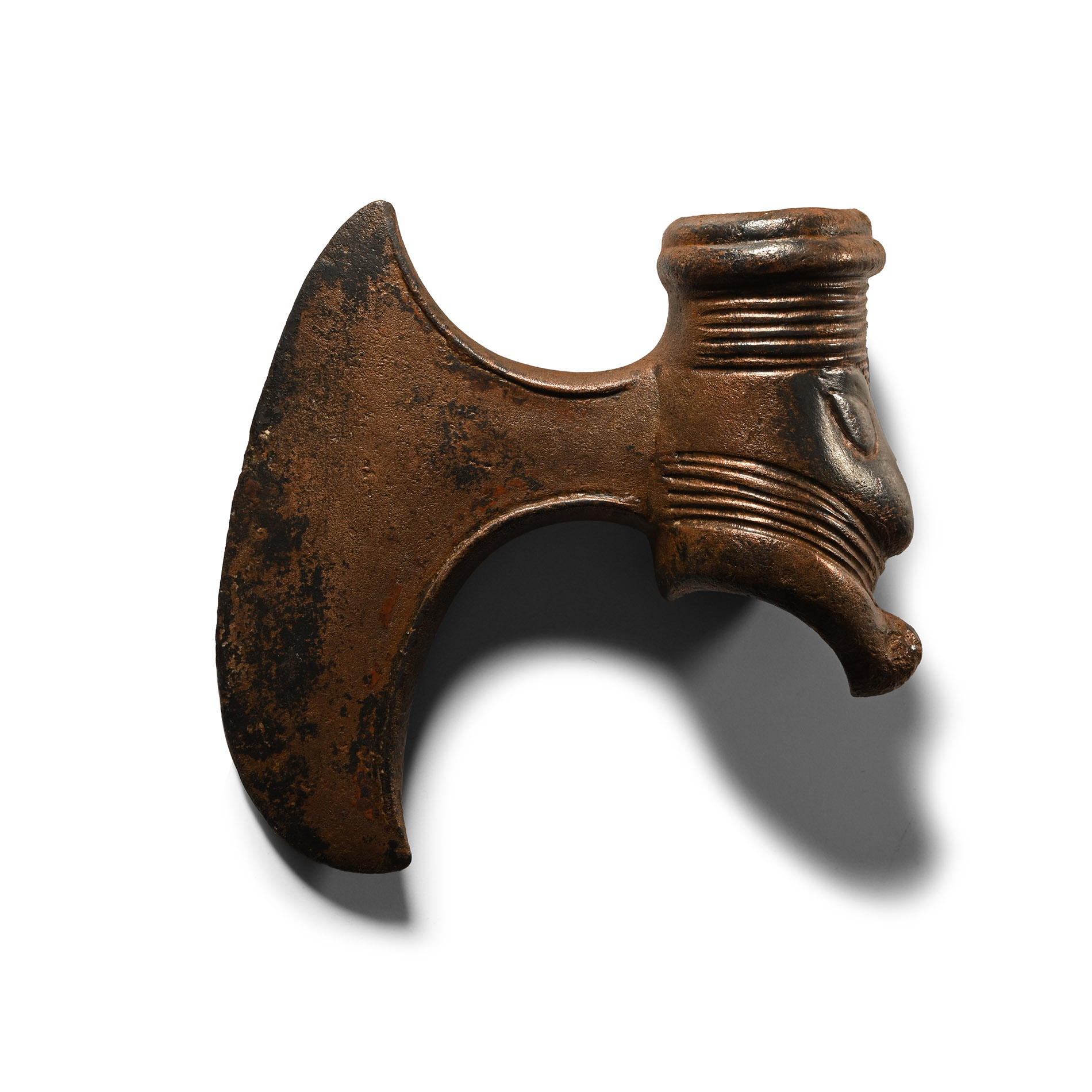
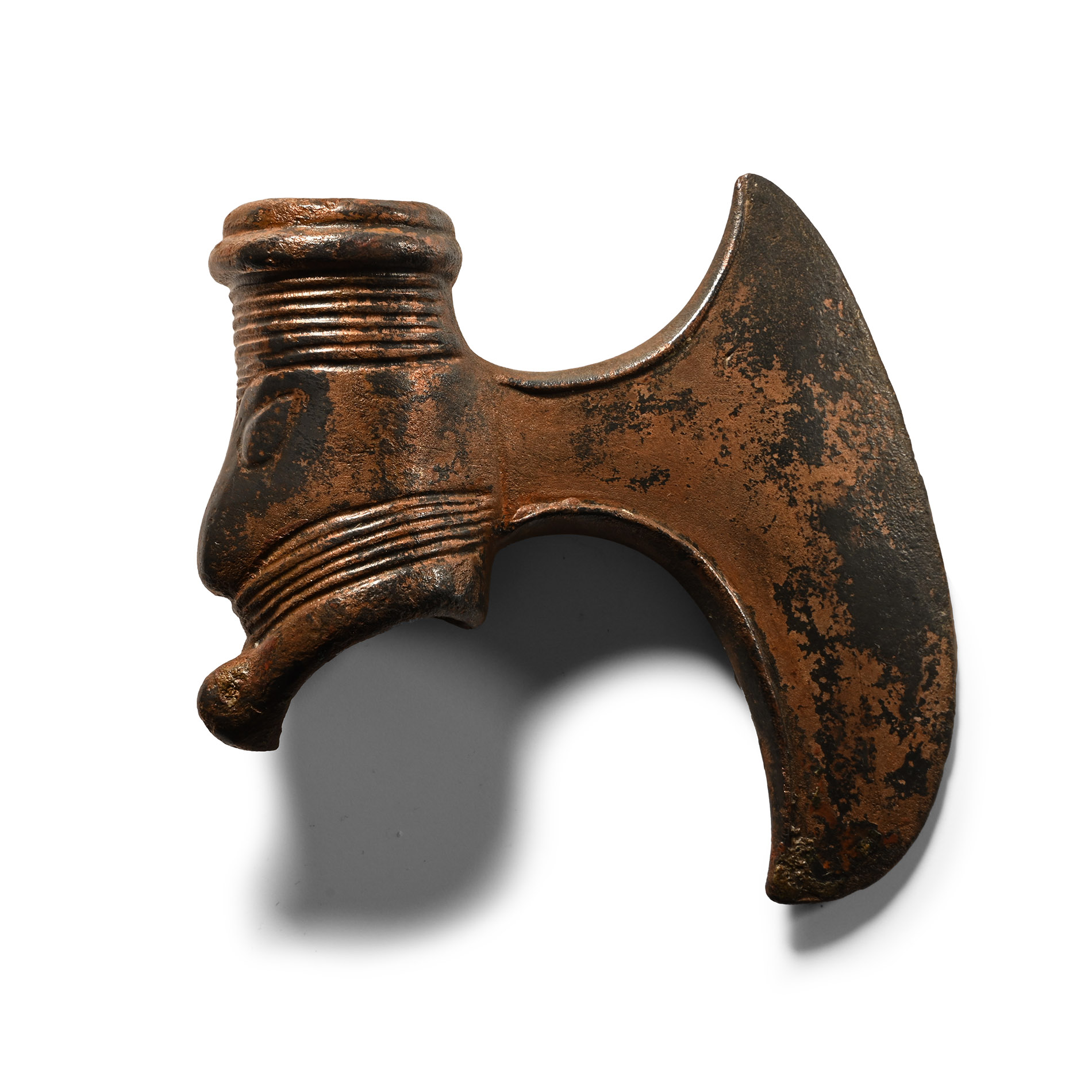
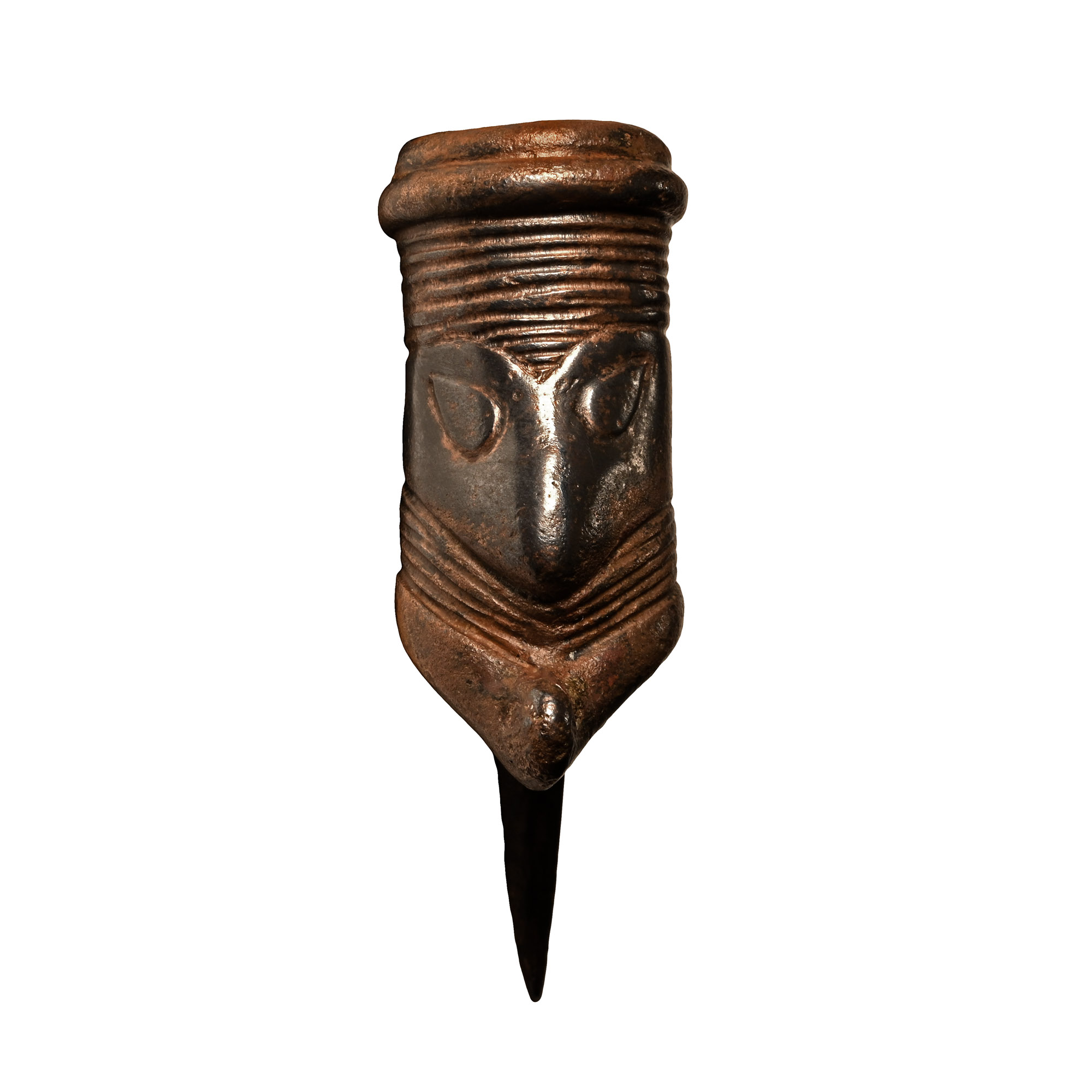
Elamite Copper Axehead with 'Human' Face
2ND MILLENNIUM B.C.
3 3/4 in. (246 grams, 94 mm).
With crescentic blade and rounded knot at the butt, ornamental curved edging to the upper shaft hole, a cord edge on the upper and lower shaft hole, incised band around the edge of the blade; the butt inversed, forming a bearded human face.
Provenancewith a London, UK gallery, 1971-early 2000s.
LiteratureCf. Mahboubian, H., Art of Ancient Iran, copper and bronze, London, 1997, p.166, fig.172b, for identical type; Gernez, G., L’armament en métal au Proche et Moyen-Orient: des origines a 1750 av. J.C., Paris, 2007, p.146, fig.2.14, subtype H2.H.a.
FootnotesThe type corresponds to Gernez type H.2.H.a, axes with collar and short sleeve lined with mouldings, fan-shaped blade and rear knot. It was a variant only known in Elam and Luristan. In Luristan one identical specimen was found at Chigha Sabz (grave M7). In Elam, the majority of these axes were found in the Middle-Bronze Age (Age of Isin-Larsa or Early Babylonian Age) tombs of Sarcophagi, at Susa.
CONDITIONTimeLine Auctions follows a vetting process to ensure the authenticity and legality of all items, reinforcing our commitment to integrity and responsible trading. Each antiquity, antique, and coin lot undergoes thorough examination by a vetting committee of at least ten external specialists, professional trade association members, scientists, and archaeologists: Our Vetting Process
AUCTIONS:
TimeLine is a leading auction house specialising in antiquities, ancient art, collectables, natural history, coins, medals, and books. Our auctions offer museums, collectors, historians, and enthusiasts the opportunity to acquire unique and historically significant pieces.
-
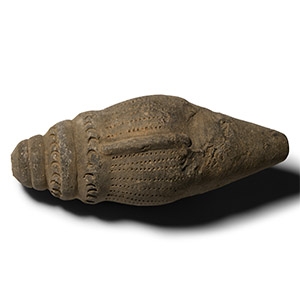
Turco-Mongol 'Greek Fire' Ceramic Fire Bomb or Hand Grenade
13th-15th century A.D.Sold for (Inc. bp): £156
A hollow vessel with cylindrical body, short neck and domed mouth, four raised lugs to the body, bands of impressed dots in-between, raised neck with impressed crescents; intended to be filled with explosive liquid and a wick, and used as a hand grenade. 357 grams, 14.7 cm
From a specialist collection of militaria, London, UK, collected 1990s onwards.
This was a type of ceramic fire grenade, similar to the ones used by the Eastern Romans but of Turco-Mongol type. Apart from the use of manual flame-throwers, special corps of soldiers employed terracotta grenades, in the form of small jars, abundantly evidenced in archaeological excavations. -
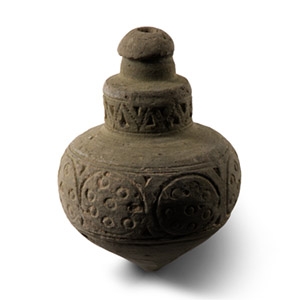
Arab 'Greek Fire' Ceramic Fire Bomb or Hand Grenade
13th century A.D.Sold for (Inc. bp): £598
Piriform body decorated with concentric circles inside a horizontal band, raised ornamental neck, with domed filler-hole, intended to be filled with explosive liquid and wick, used as a hand grenade. 430 grams, 12 cm
From a military inspired collection formed from the 1990s.
The Arabs made good use of these weapons. Their efficiency was described in the account of the siege of Akka in 1189, given by the contemporary historian Ibn al-Athir. He tells how the Christians exercised their engineering skills and built mighty siege towers. The situation was hopeless for the defending Arabs until a man from Damascus showed up, because he knew how to produce Greek Fire: ‘To trick the Christians he first threw some vessels with naphtha and other things, which were not set on fire, upon one of the siege towers, and it was without power. The Christians...climbed the top of the siege tower...the man from Damascus waited until the contents of the vessels were spread all over. When the moment came, he threw a new pot, which was set on fire. In a few moments the fire was spread all over, and the siege tower was eaten up by the flames. The fire was spread in such a hurry that the Christians could not manage to climb down from the siege tower. Men, weapons, everything was eaten up by the flames.’ -
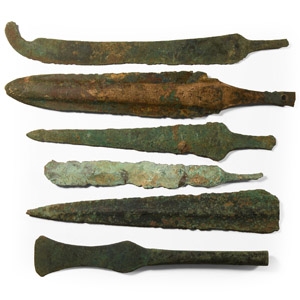
Western Asiatic Bronze Blade Collection
2nd-1st millennium B.C.Sold for (Inc. bp): £117
Including double-edged leaf-shaped type, chisel-type and others. 410 grams total, 15.5-21 cm
Ex London collection, formed 1990-2000.
