
Loading, please wait...


LOT 0290
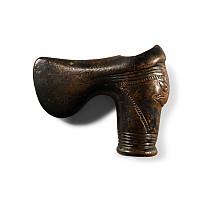
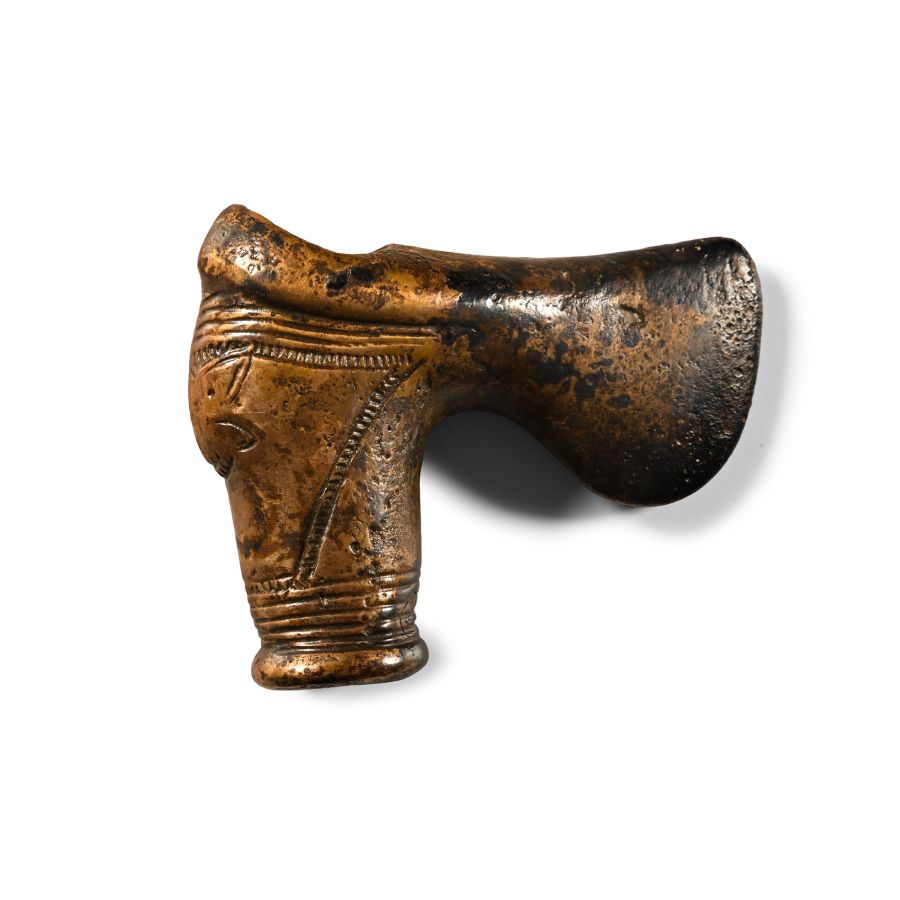
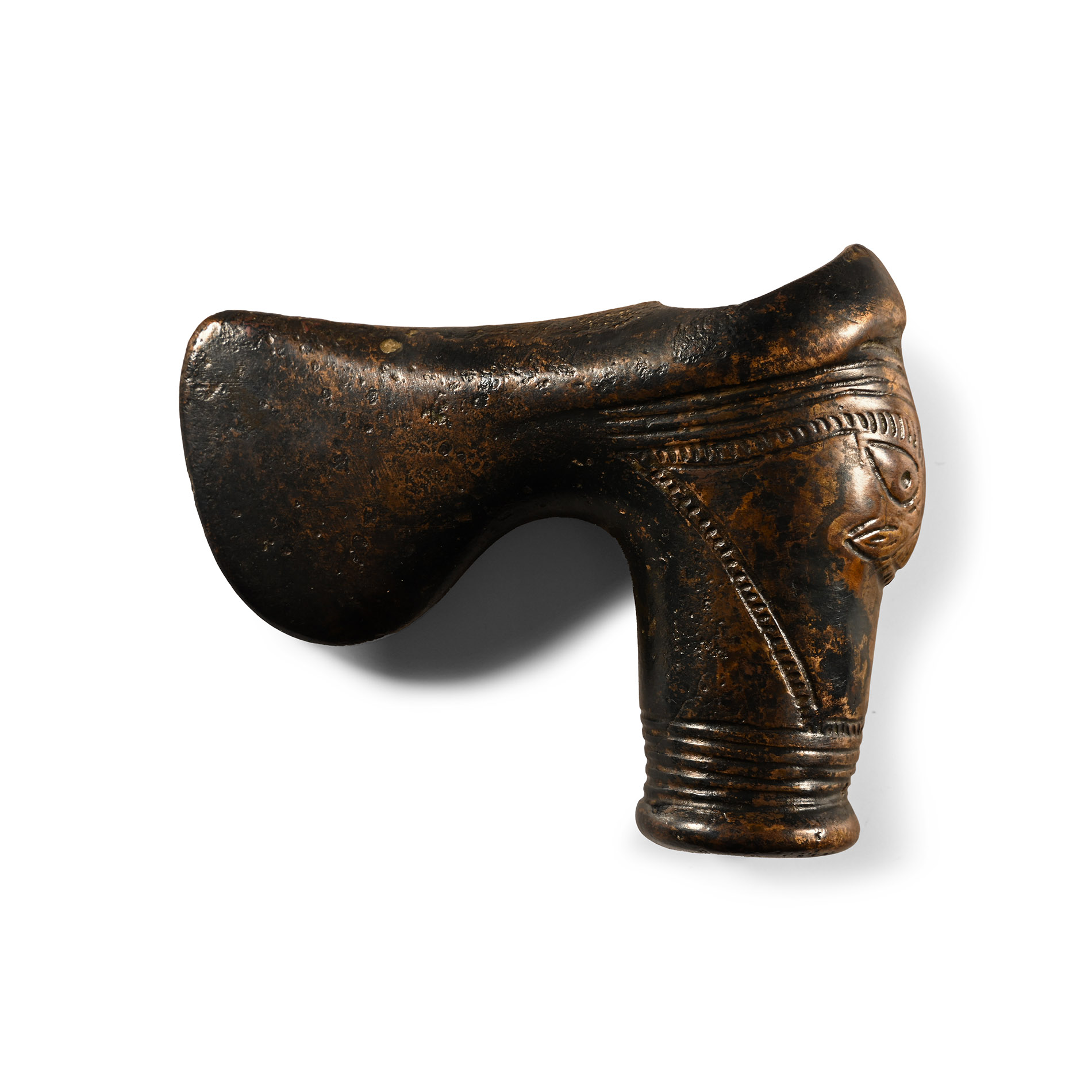
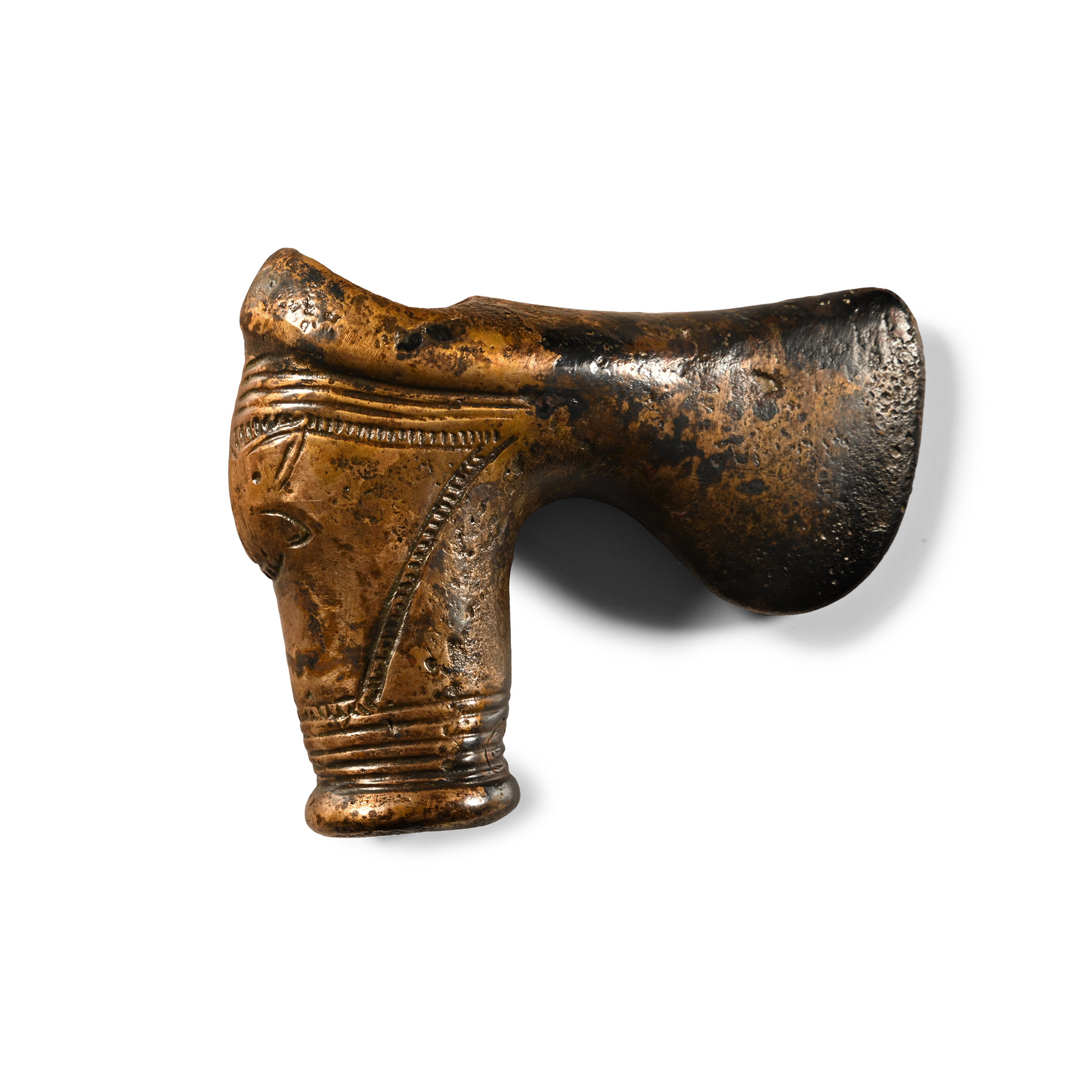
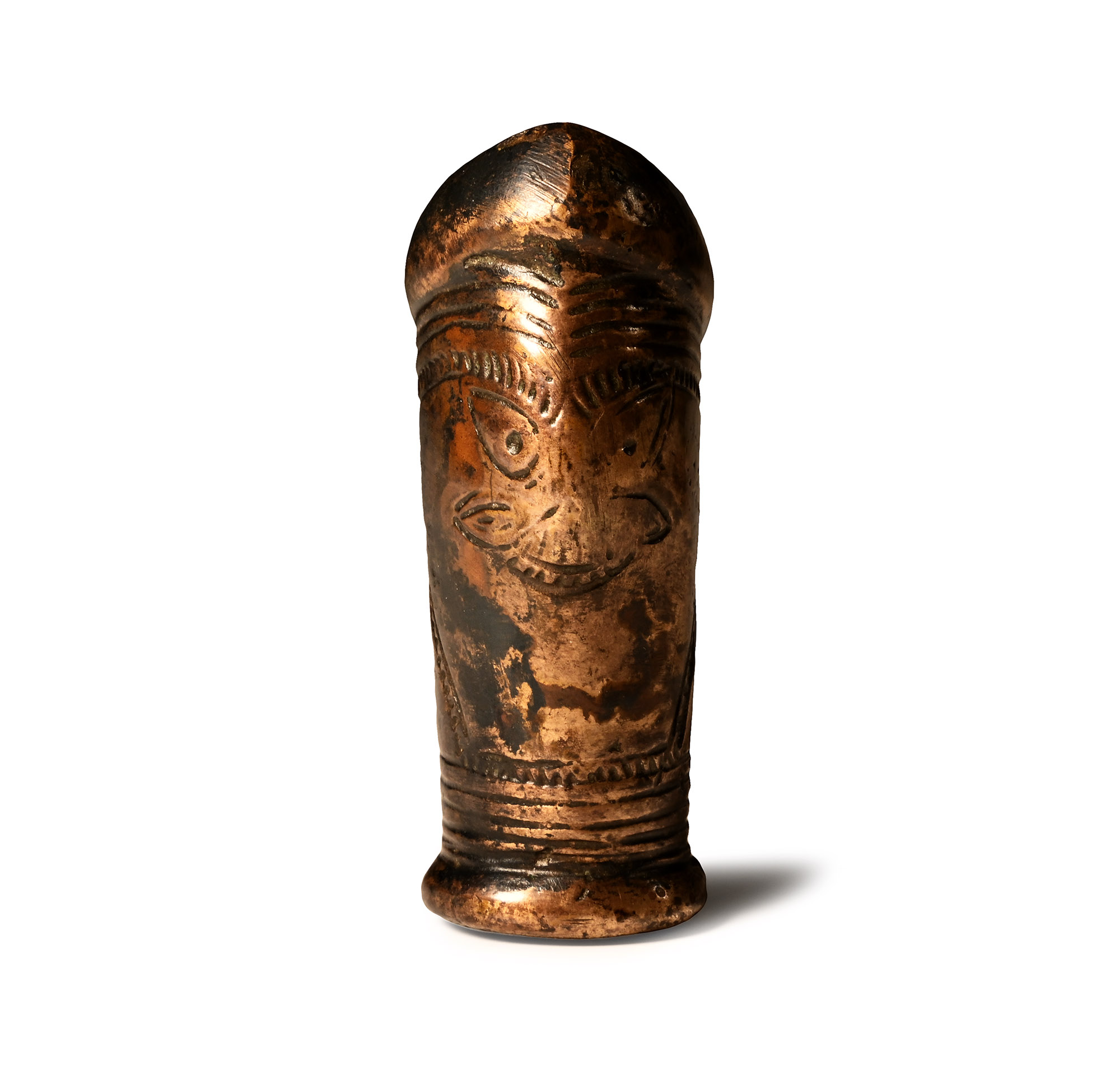
Elamite Copper Axehead with 'Animal' Face
LATE 3RD MILLENNIUM B.C.
3 in. (206 grams, 78 mm).
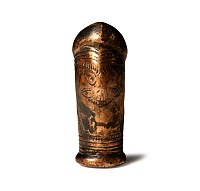
Plain cylindrical shaft, bulbous towards the top with an incised animal face to the rear of the shaft, the blade with a convex cutting edge.
Provenancewith a London, UK gallery, 1971-early 2000s.
LiteratureCf. Mahboubian, H., Art of Ancient Iran, copper and bronze, London, 1997, p.170, fig.178b, for similar type; Gernez, G., L’armament en métal au Proche et Moyen-Orient: des origines a 1750 av. J.C., Paris, 2007, p.124, fig.2.6, subtype H2.B.b.
FootnotesThe type belongs to the Gernez classification of collared axes, with trapezoidal blade and cylindrical sleeve. This set of fairly standardised axes is characterised by a trapezoidal blade, a cylindrical collar with a clear moulding at its base and a marked angular moulding at its top, extending onto the top of the blade. This basic model is exclusively from Susa.
CONDITIONTimeLine Auctions follows a vetting process to ensure the authenticity and legality of all items, reinforcing our commitment to integrity and responsible trading. Each antiquity, antique, and coin lot undergoes thorough examination by a vetting committee of at least ten external specialists, professional trade association members, scientists, and archaeologists: Our Vetting Process
AUCTIONS:
TimeLine is a leading auction house specialising in antiquities, ancient art, collectables, natural history, coins, medals, and books. Our auctions offer museums, collectors, historians, and enthusiasts the opportunity to acquire unique and historically significant pieces.
-
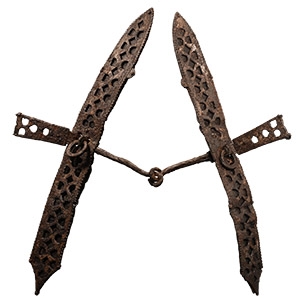
Large Medieval Eurasian Iron Knight's Military Horse Bit
12th-13th century A.D.Sold for (Inc. bp): £1,105
The snaffle bit with two rectangular openwork cheekpieces decorated with an openwork plaque, the surface ornamented with scales and lozenge elements. 624 grams, 37.5 cm
From the private collection of a London gentleman, from his grandfather's collection formed before the early 1970s.
The snaffle bits consisted of two parts: a bit, which was placed in the horse's mouth, and cheekpieces, which were connected to the reins and head strap. -
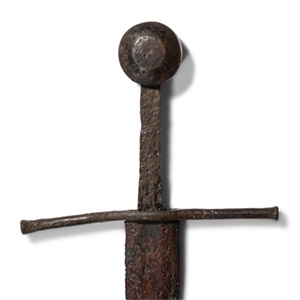
Medieval Iron Single-Handed Sword
Late 11th-13th century A.D.Sold for (Inc. bp): £1,950
Double-edged tapering blade with rounded point, shallow fuller and a parallel-sided lower guard (cross style 2), the grip gently tapering, discoid pommel of type I with chamfered sides. 1.2 kg, 1.01 m
From the private collection of a London gentleman, from his grandfather's collection formed before the early 1970s. Accompanied by an academic report by Dr Raffaele D'Amato. This lot has been checked against the Interpol Database of stolen works of art and is accompanied by search certificate number no.12177-221435.
The sword belongs to the type of ‘war swords’, although it is challenging to establish if it belongs to the type XI or type XII of Oakeshott's classification. It corresponds well with an English sword of type XI kept in the Tower Armoury (Dufty, 1974, plate 2, letter a), found in a peat bog near Newbury; but it also presents many characteristics of swords of type XII: it presents similarity to two swords excavated by Dr Jorma Leppaaho in 1950, from late Viking graves, one having a cross guard identical to our specimen and the other an identical pommel (Oakeshott, 1991, p.69, lett. V and VI); and another similar specimen is (a water find from Denmark) preserved in the Nationalmuseet of Copenhagen. In general the taper of the blade points more to the nature of the XII typology. -
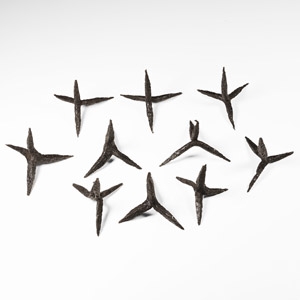
Medieval Iron Caltrop Anti-Cavalry Group
13th-15th century A.D.Sold for (Inc. bp): £338
A group of ten iron anti-cavalry caltrops, hand-forged with square-section spikes. 599 grams total, 77-96 mm
From the private collection of a London gentleman, from his grandfather's collection formed before the early 1970s.
P. Žákovský has been able to classify medieval caltrops, mainly from the 13th to 15th century A.D., on the basis of their morphology, into four main typologies, each with different variants. Caltrops with single-pointed spikes, whose interpretation, however, is often ambiguous belong to type I. The other three types represent classic four-pointed caltrops, and individual types in this group differ from one another just in their cross-section.
