
Loading, please wait...
LOT 1399
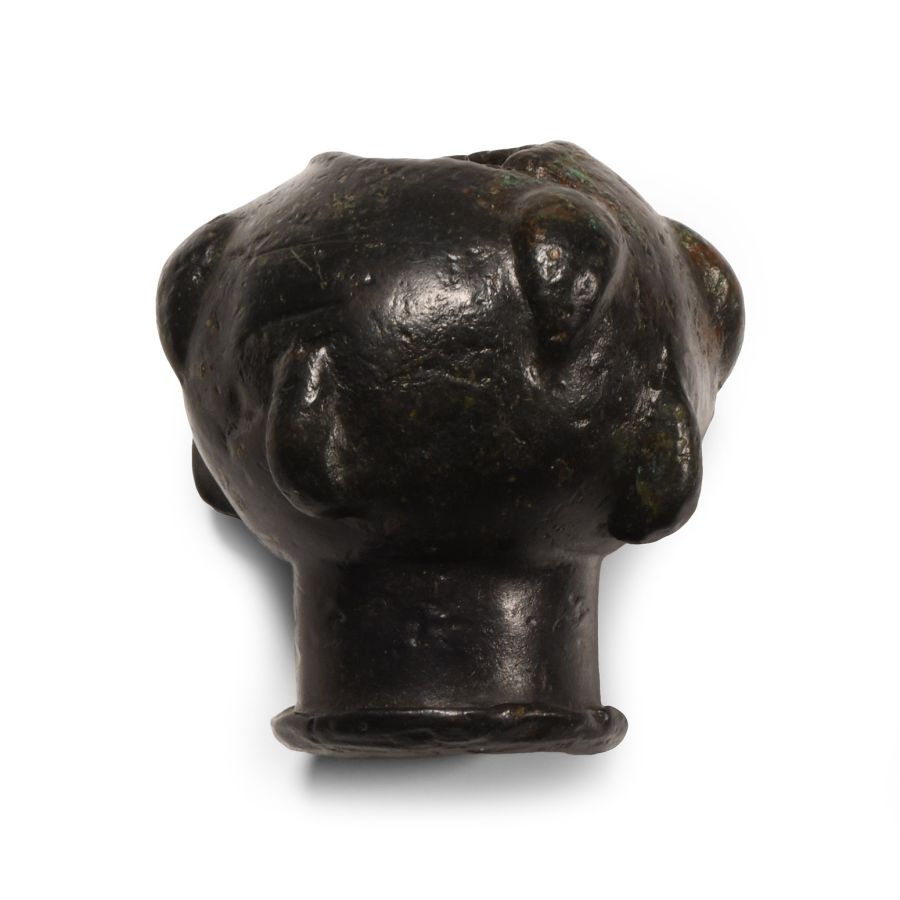
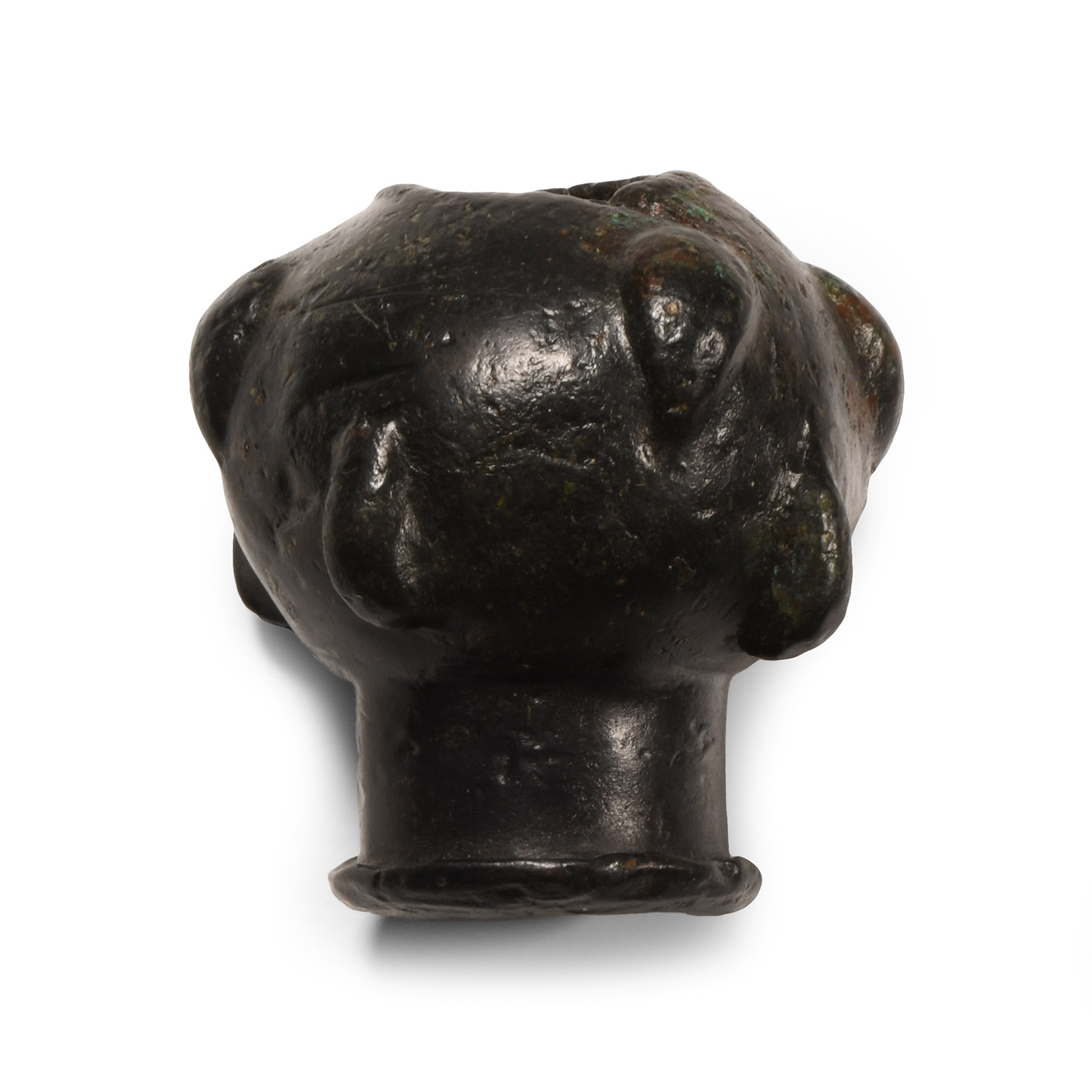
Elamite Bronze Macehead
2ND-1ST MILLENNIUM B.C.
2 3/8 in. (205 grams, 61 mm).
Hollow-formed with a collared socket; two rows of tear-shaped bosses to the bulbous body. [No Reserve]
ProvenanceAcquired 1980-2015.
Ex Abelita family collection.
TimeLine Auctions follows a vetting process to ensure the authenticity and legality of all items, reinforcing our commitment to integrity and responsible trading. Each antiquity, antique, and coin lot undergoes thorough examination by a vetting committee of at least ten external specialists, professional trade association members, scientists, and archaeologists: Our Vetting Process
AUCTIONS:
TimeLine is a leading auction house specialising in antiquities, ancient art, collectables, natural history, coins, medals, and books. Our auctions offer museums, collectors, historians, and enthusiasts the opportunity to acquire unique and historically significant pieces.
-
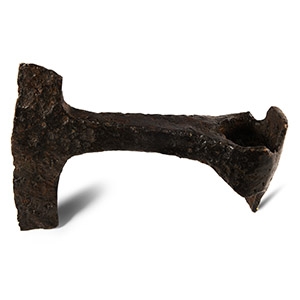
Viking Age Iron T-Shaped Axehead
10th-12th century A.D.Estimate: £300 - 400 (+bp*)
Opening Bid: £80
Narrow T-shaped blade with curved edge, large D-shaped socket with lateral triangular flanges and rectangular extension to the rear. 588 grams, 17 cm
From the private collection of a London gentleman, from his grandfather's collection formed before the early 1970s.
Slavic battle-axes also came into use in Scandinavia, especially in the Eastern part of Gotland, Denmark and Sweden. One of the types was a T-shaped axe with a broad blade. There were narrow-bladed types too, described as being very light. Another characteristic of some of the Eastern axes was an extra long hammer or more rarely a secondary blade protruding from the back of axehead. -
.jpg)
Migration Period Iron Sword with Rock Crystal, Gold and Garnet Sword Bead
5th-6th century A.D.Estimate: £2,000 - 3,000 (+bp*)
Opening Bid: £600
Comprising a double-edged blade with pointed tip, battle nicks to both cutting edges; short bronze guard and a long tang; accompanied by a facetted rock crystal hilt pendant with a granulated gold mount above, set with a garnet cabochon; Eastern Roman or Alano-Gothic. 750 grams, 4-91.5 cm
From the private collection of a London gentleman, from his grandfather's collection formed before the early 1970s. Accompanied by an academic report by Dr Raffaele D’Amato. This lot has been checked against the Interpol Database of stolen works of art and is accompanied by a search certificate number no.12041-216428.
A characteristic type of the Migration period, originally used by nomadic people such as the Alans and Sarmatians. An important element of these swords was the presence (in tombs) of amber or rock crystal fittings, which some authors have identified being part of the pommel (Zasetskaya), and others as pendants hanging from the hilt of the sword. Interestingly the sword of grave 9 from the Necropolis of Novohryhorivka is decorated with a similar pendant, made of amber and fitted with a silver mount decorated with a filigree border. -
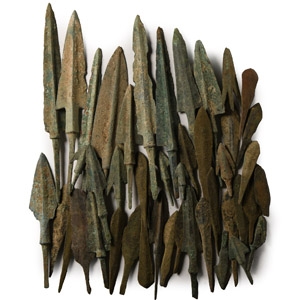
Luristan Arrowhead Collection
13th-7th century B.C.Sold for (Inc. bp): £390
Comprising forty-five arrowheads of various types, including triangular, lanceolate and leaf-shaped; mainly tanged. 550 grams total, 2.9-16.1 cm
Acquired 1980-2015. Ex Abelita family collection.
