
Loading, please wait...
LOT 1034
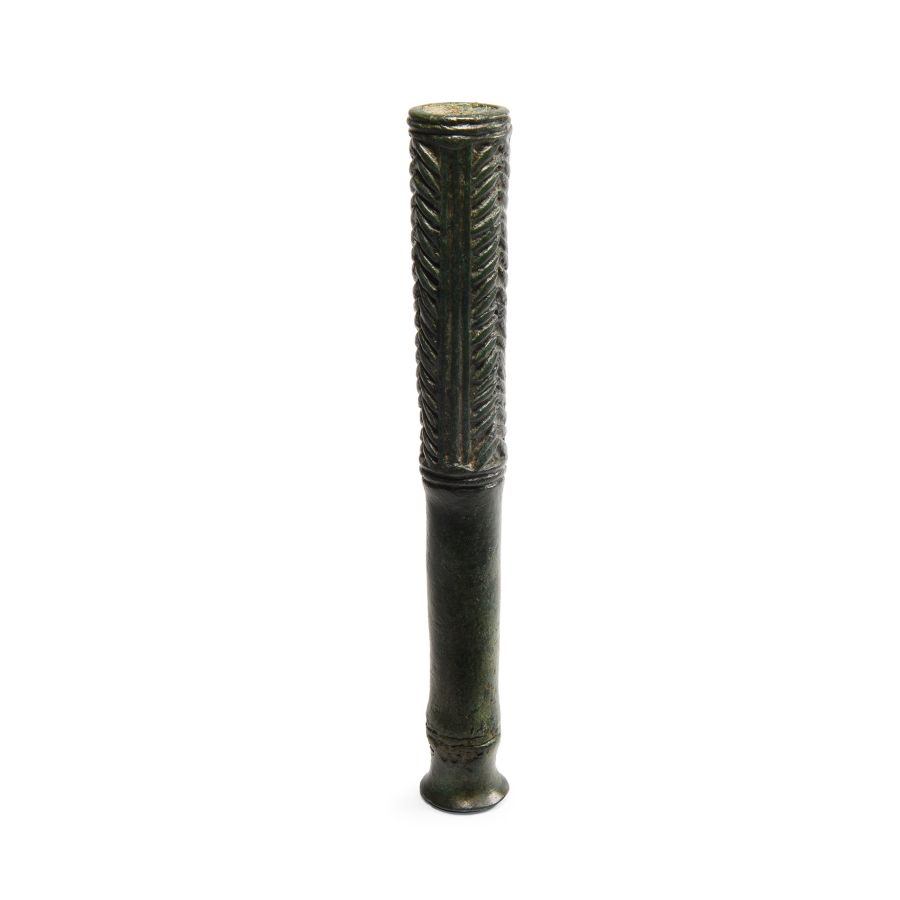
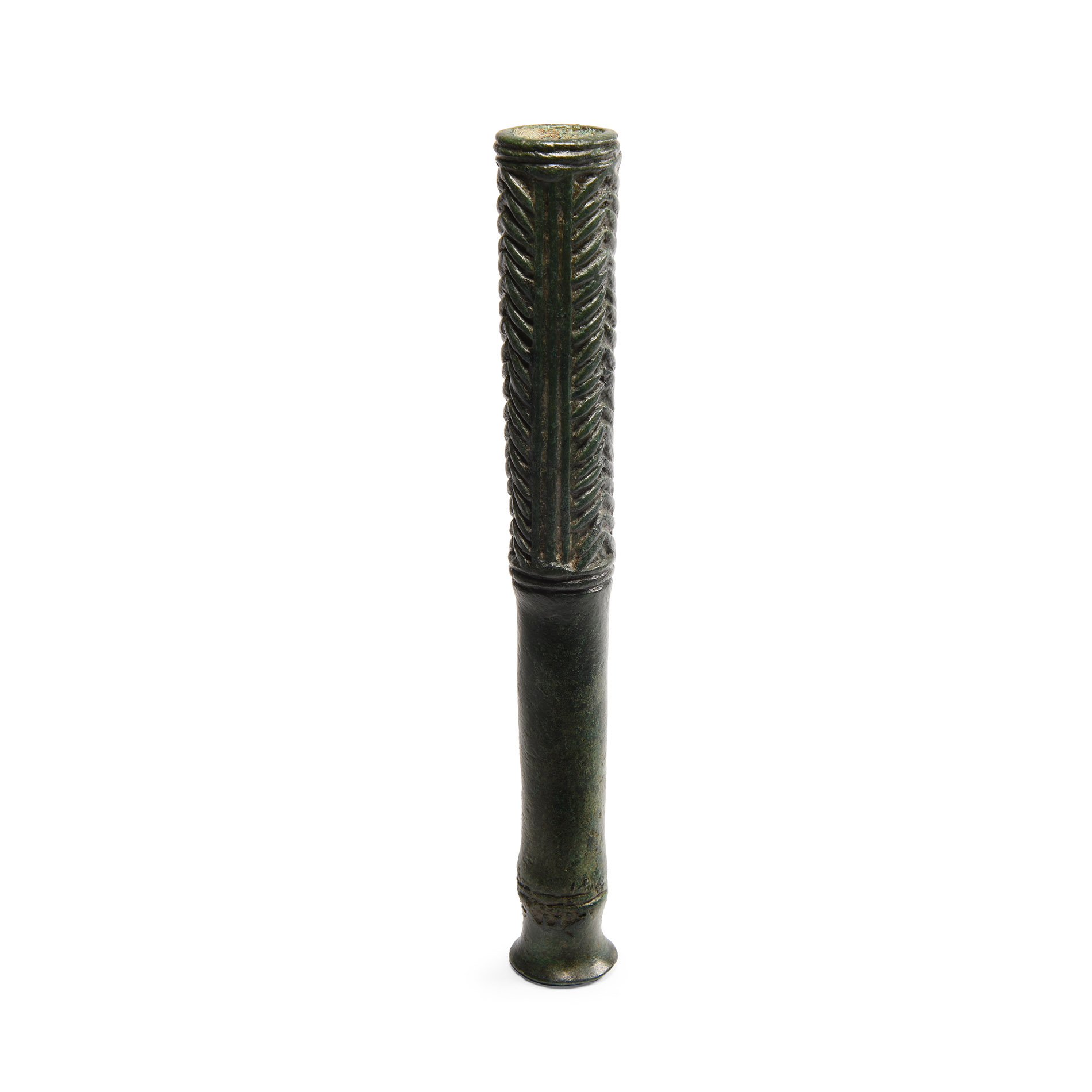
Elamite Bronze Macehead
EARLY 2ND MILLENNIUM B.C.
9 in. (449 grams, 23 cm).
Of tapering cylindrical form with flange to socket, the upper body displaying vertical columns of chevrons between plain bands.
ProvenanceAcquired 1980-2015.
Ex Abelita family collection.
Cf. The Metropolitan Museum, New York, accession number 56.102.1, for very similar; see Godard, A., Les Bronzes du Luristan, Paris, 1931, pl.XIX, no.58, for a similar mace; see also Christie's, The Axel Guttmann Collection of Ancient Arms and Armour, part 1, London, 2002, p.24, nos.18-19; Khorasani, M. M., 'Bronze and iron weapons from Luristan' in Antiguo Oriente: Cuadernos del Centro de Estudios de Historia del Antiguo Oriente, 7, 2009, fig.8.
FootnotesThis gorz mace head belongs to the category of truncheon-shaped mace-heads, a type developed on the Iranian plateau during the Bronze Age, used by Elamite and Luristan warriors since the 3rd millennium B.C. This category of objects was also interpreted as a part of a shaft or cudgel, but most scholars agree on the interpretation of use as a mace.
CONDITIONTimeLine Auctions follows a vetting process to ensure the authenticity and legality of all items, reinforcing our commitment to integrity and responsible trading. Each antiquity, antique, and coin lot undergoes thorough examination by a vetting committee of at least ten external specialists, professional trade association members, scientists, and archaeologists: Our Vetting Process
AUCTIONS:
TimeLine is a leading auction house specialising in antiquities, ancient art, collectables, natural history, coins, medals, and books. Our auctions offer museums, collectors, historians, and enthusiasts the opportunity to acquire unique and historically significant pieces.
-
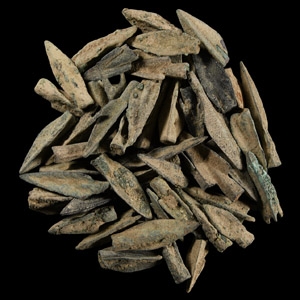
Greek Bronze Arrowhead Group
Circa 5th-3rd century B.C.Sold for (Inc. bp): £98
Primarily composed of socketted types, most triangular in section. 186 grams, 26-45 mm
Ex private collection, 1980s. Acquired on the UK art market in the 1990s. -
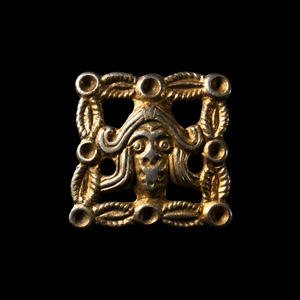
Khazar Silver-Gilt Sword Belt Mount with Warrior
9th-10th century A.D.Sold for (Inc. bp): £374
Square in plan with a slightly convex openwork panel composed of alternating circular cells and leaf-like ovals, central male head with long hair and stylised facial features, possibly wearing a helmet; attachment loop to each corner on the reverse. 8.27 grams, 22 mm
Fine condition.
Acquired in the 1980s-1990s. Ex an important central London gallery, London W1. -
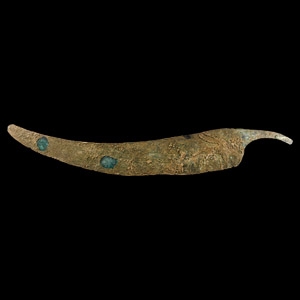
Western Asiatic Bronze Dagger
2nd-1st millennium B.C.Estimate: £100 - 140 (+bp*)
Opening Bid: £50
Single-edged, curved with scooped shoulder and flat tang. 78 grams, 31 cm
Ex German collection, Cologne, 1980-1990s.
In the middle of the 2nd millennium B.C., combat knives were widely used in Palestine and Syria. Some of them reproduced in local forms and constructions of the beginning of the 2nd millennium B.C., others had a concave blade with a humpbacked back or S-shaped blades which, apparently, should be associated with influences from Asia Minor influence.
