
LOT 3412
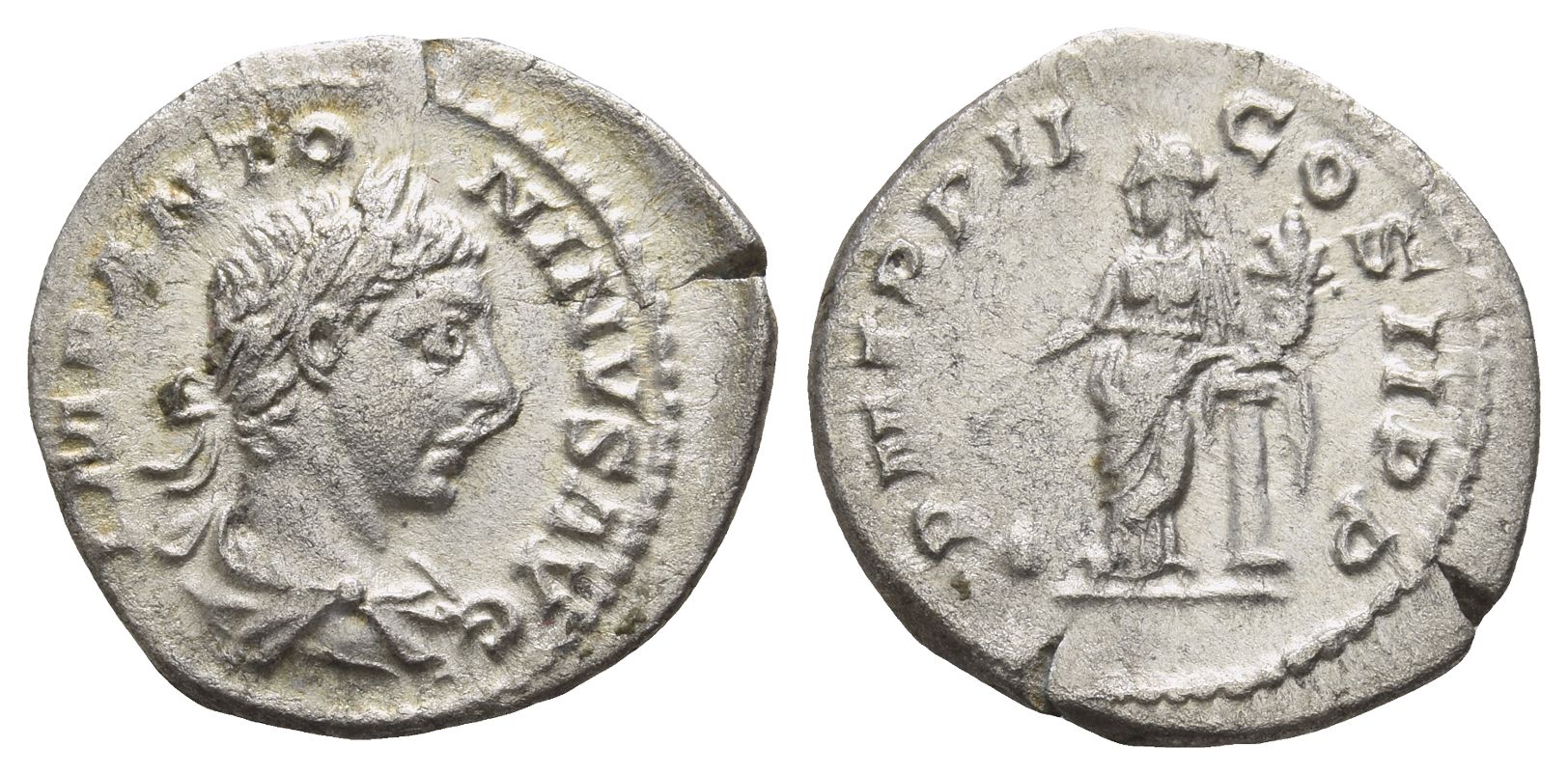
Elagabalus AR Denarius. AD 219. Rome mint.
IMP ANTONINVS AVG, laureate and draped bust to right / P M TR P II COS II P P, Providentia standing to left, legs crossed, holding rod and cornucopia, and leaning on column; globe at feet. RIC IV 23; BMCRE 102; RSC 144. Very Fine.(2.81gr, 20mm, 6h.).
ProvenanceAcquired on the UK art market since the early 2000s.
Property of a Lincolnshire gentleman, thence by descent.
TimeLine Auctions follows a vetting process to ensure the authenticity and legality of all items, reinforcing our commitment to integrity and responsible trading. Each antiquity, antique, and coin lot undergoes thorough examination by a vetting committee of at least ten external specialists, professional trade association members, scientists, and archaeologists: Our Vetting Process
AUCTIONS:
TimeLine is a leading auction house specialising in antiquities, ancient art, collectables, natural history, coins, medals, and books. Our auctions offer museums, collectors, historians, and enthusiasts the opportunity to acquire unique and historically significant pieces.
-
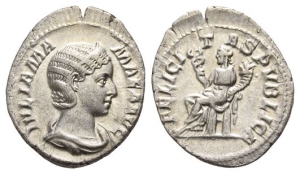
Julia Mamaea, Augusta AR Denarius. AD 230. Rome mint.
Sold for (Inc. bp): £52
IVLIA MAMAEA AVG, draped bust to right, wearing stephane / FELICITAS PVBLICA, Felicitas seated to left, holding caduceus and cornucopia. RIC IV 338 (Sev. Alexander); BMCRE 659 (Sev. Alexander); RSC 24. 2.96gr, 22mm, 12h.
Good Very Fine.
Acquired 1970s-1996. Property of a North American collector. London collection, 2016. -
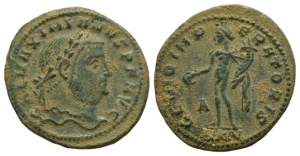
Galerius BI Nummus. AD 308-309. Cyzicus mint.
Sold for (Inc. bp): £7
GAL MAXIMIANVS P F AVG, laureate head to right / GENIO IMPERATORIS, Genius standing to left, modius on head, naked except for chlamys over left shoulder, holding patera and cornucopia; A in left field, MKV in exergue. RIC VI 44. 6.74gr, 28mm, 7h.
Very Fine.
Private collection, acquired 1980–1985. -
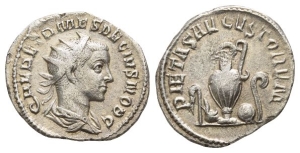
Herennius Etruscus, as Caesar, AR Antoninianus. AD 250-251. Rome mint.
Sold for (Inc. bp): £59
Q HER ETR MES DECIVS NOB C, radiate and draped bust to right / PIETAS AVGVSTORVM, priestly implements: sprinkler, simpulum, jug, patera, and lituus. RIC IV 143 (Decius); RSC 14. 3.00gr, 22m, 1h.
Good Very Fine.
Acquired 1970s-1996. Property of a North American collector. London collection, 2016.
