
Loading, please wait...
LOT 0452
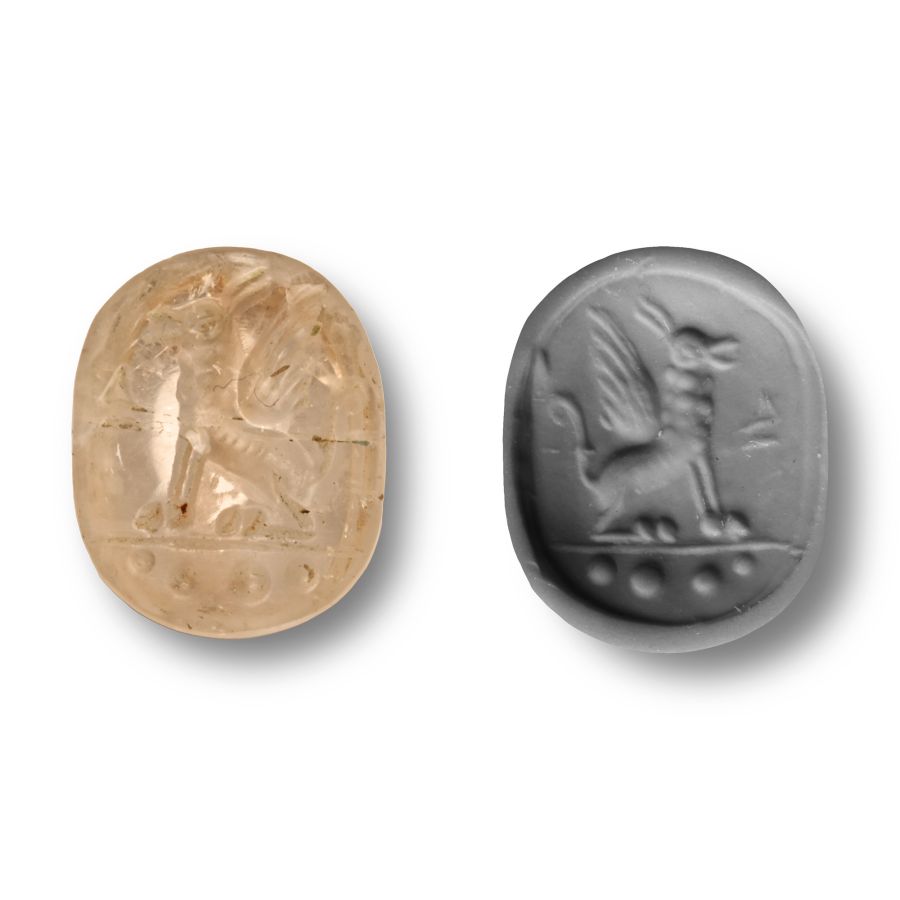
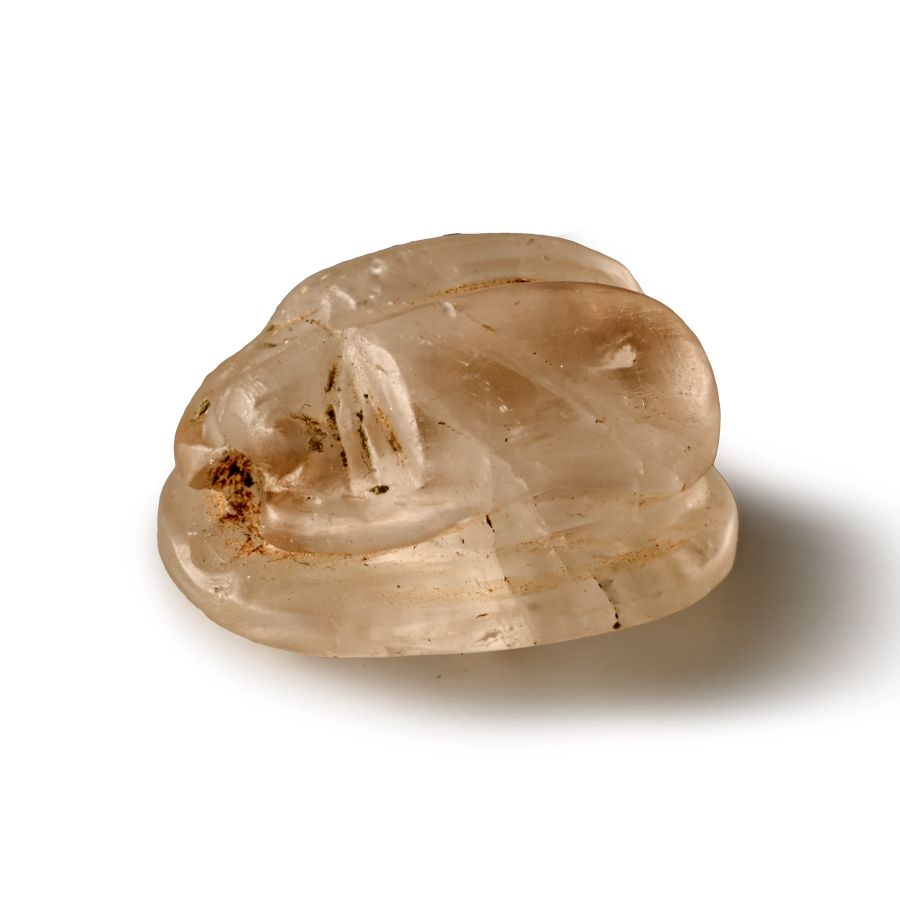
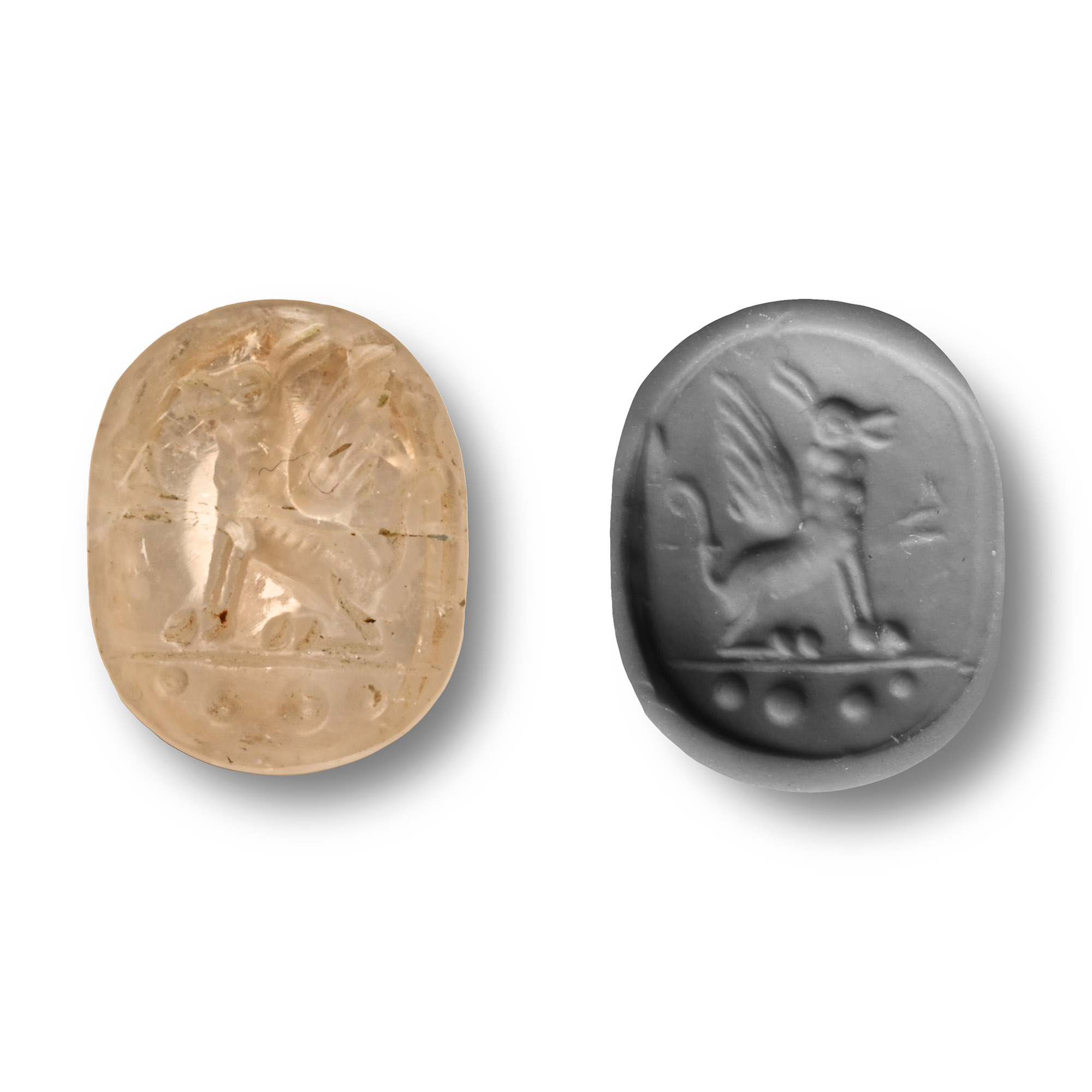
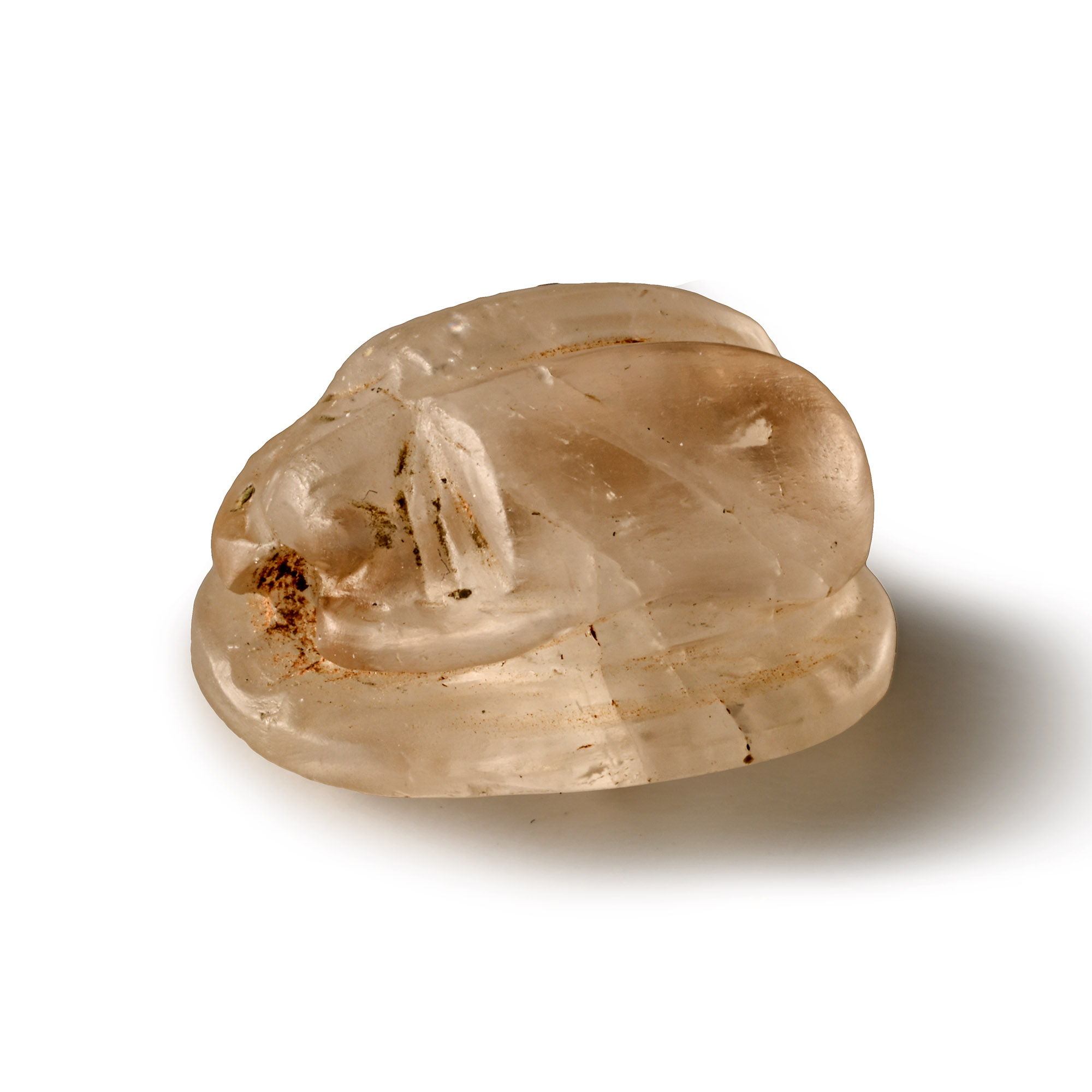
Egypto-Phoenician Rock Crystal Scaraboid with Winged Sphinx
CIRCA 900-700 B.C.
5/8 in. (2.85 grams, 16 mm).
With detailed carapace and mouth parts, underside with intaglio winged sphinx sitting on a baseline with pellets beneath; supplied with a museum-quality impression. [No Reserve]
ProvenanceEx London, UK, gallery, 1971.
LiteratureCf. Ben-Tor, D., The Scarab: A Reflection of Ancient Egypt, Jerusalem, 1993, p.43, for a Phoenician scarab with similar sphinx.
CONDITIONTimeLine Auctions follows a vetting process to ensure the authenticity and legality of all items, reinforcing our commitment to integrity and responsible trading. Each antiquity, antique, and coin lot undergoes thorough examination by a vetting committee of at least ten external specialists, professional trade association members, scientists, and archaeologists: Our Vetting Process
AUCTIONS:
TimeLine is a leading auction house specialising in antiquities, ancient art, collectables, natural history, coins, medals, and books. Our auctions offer museums, collectors, historians, and enthusiasts the opportunity to acquire unique and historically significant pieces.
LOT 0452
Egypto-Phoenician Rock Crystal Scaraboid with Winged Sphinx
Sold for (Inc. bp): £182
-
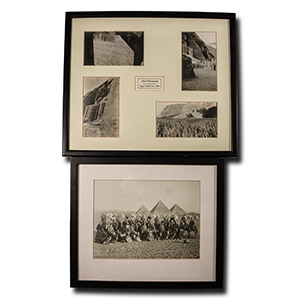
Original Photographs of Abu Simbel and Pyramids
1905 A.D.Sold for (Inc. bp): £111
Montage in a glazed wooden frame comprising four monochrome views of Abu Simbel with caption 'Album Photographs / Silver Gelatin Prints / Egypt Nubia Tour 1905'; plus one other framed photograph by G.M. Georgoulas of a group in front of the Old Kingdom pyramids at Giza dated 29 December 1932. 1.42 kg total, 32 x 27.5 - 37 x 31.5 cm
Property of a North Lincolnshire, UK, gentleman.
The four photographs of Abu Simbel show the original location of the magnificent rock-cut temple complex of Ramesses II before it was dismantled in 1964 and re-assembled on higher ground to rescue it from the rising waters of Lake Nassar. -
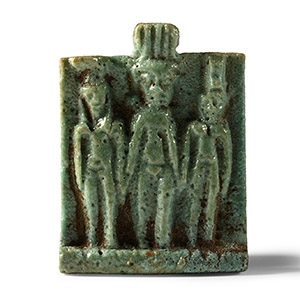
Egyptian Memphis Triad Amulet
Late Period, 664-332 B.C.Estimate: £500 - 700 (+bp*)
Opening Bid: £250
Rectangular plaque with ledge to the lower edge, ribbed loop above, the half-round figures of the goddesses Nephthys and Isis wearing their characteristic headdresses flank the figure of the young Horus wearing the sidelock of youth. 9.1 grams, 37 mm high
From an early Home Counties, UK, collection, 1930-1940. Ex London, UK, collection.
The deities of this triad are the protagonists associated with the myth of Osiris. -
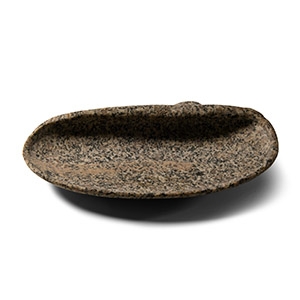
Egyptian Diorite Shell-Shaped Bowl
Early Dynastic-Old Kingdom, circa 3100-2181 B.C.Sold for (Inc. bp): £2,210
Sculpted as one half of a bivalve shell with thin lip to outer edge; repaired; mounted on a custom-made stand. 713 grams total, 19.5 cm wide
Ex Mayfair gallery collection, London, UK, pre 1999.
