
Loading, please wait...
_900x900.jpg "Egyptian Wooden Mummy Mask with Egyptian Blue Inlaid Eyebrows")
_200x200.jpg "Egyptian Wooden Mummy Mask with Egyptian Blue Inlaid Eyebrows")
_900x900.jpg "Egyptian Wooden Mummy Mask with Egyptian Blue Inlaid Eyebrows")
_200x200.jpg "Egyptian Wooden Mummy Mask with Egyptian Blue Inlaid Eyebrows")
.jpg "Egyptian Wooden Mummy Mask with Egyptian Blue Inlaid Eyebrows")
.jpg "Egyptian Wooden Mummy Mask with Egyptian Blue Inlaid Eyebrows")
LOT 0013
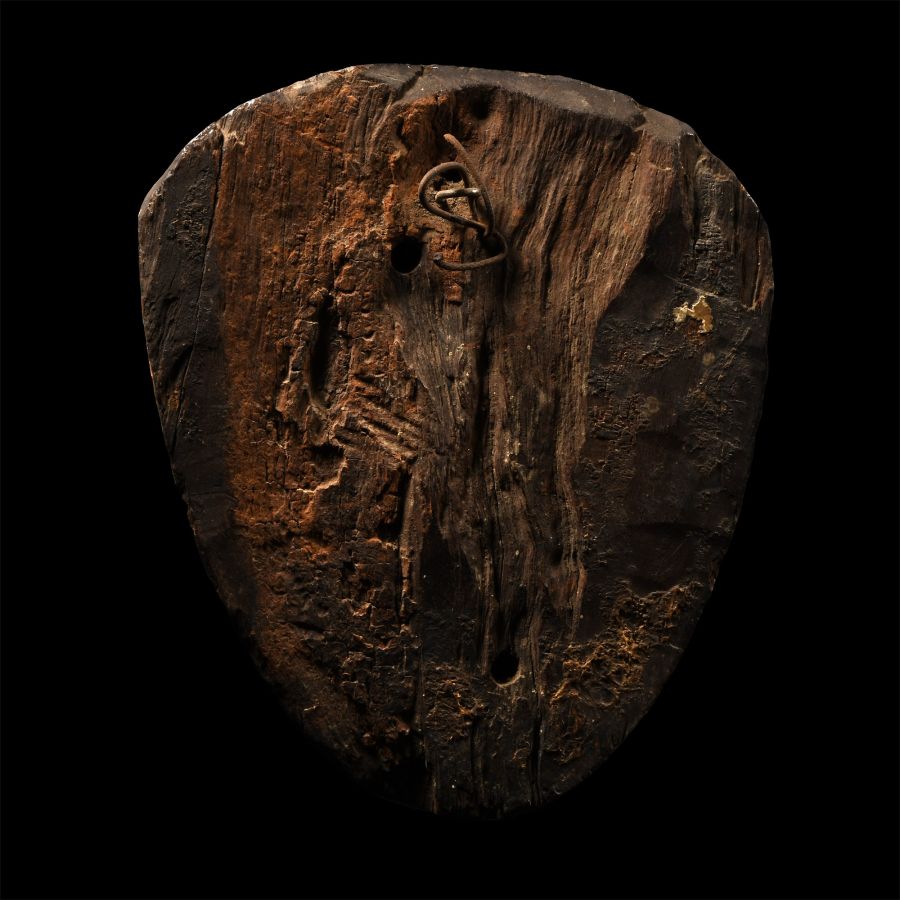
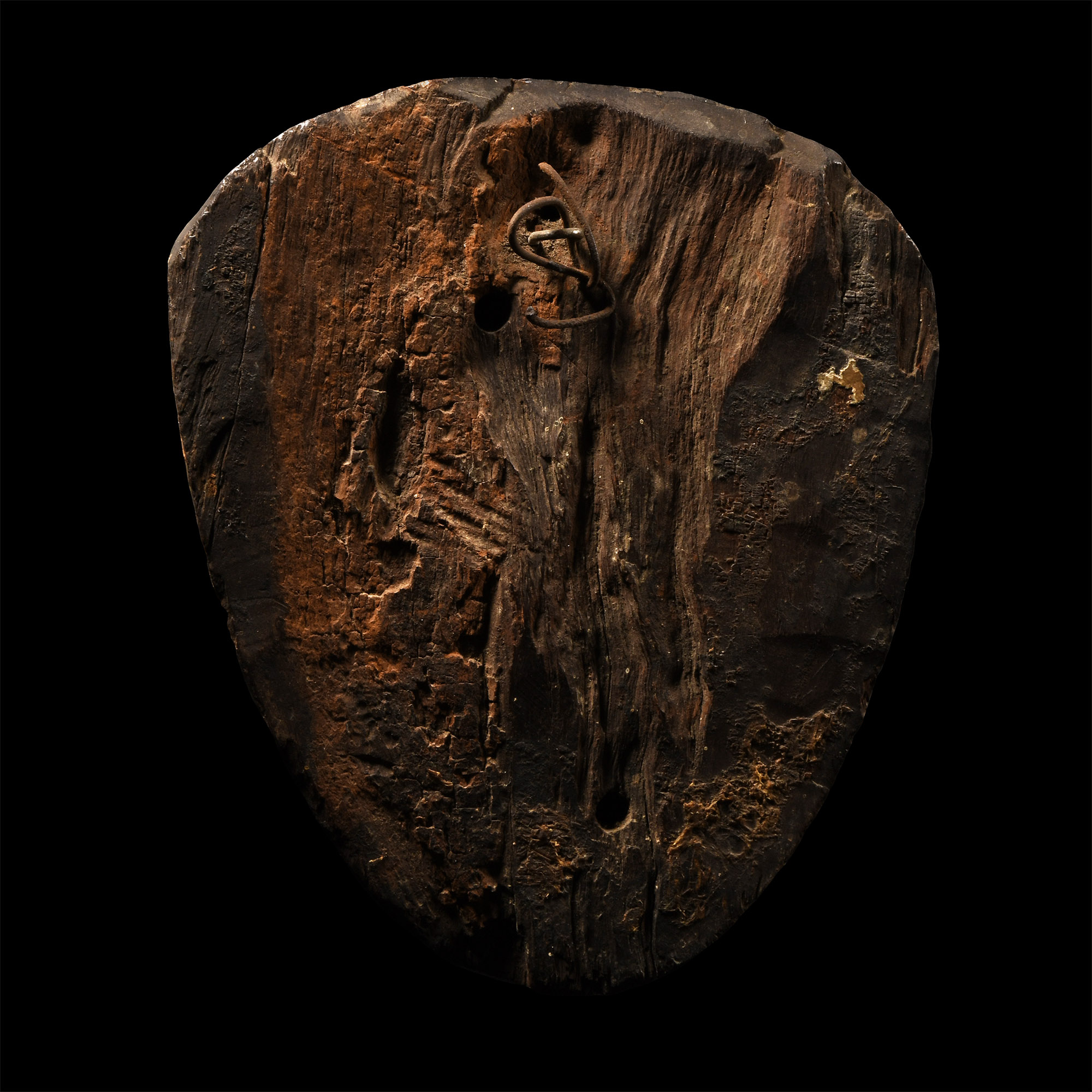
Egyptian Wooden Mummy Mask with Egyptian Blue Inlaid Eyebrows
THIRD INTERMEDIATE PERIOD, 22ND-24TH DYNASTY, 944-716 B.C.
7 7/8 in. (972 grams, 20 cm).
D-shaped in plan with finely carved facial detailing, slender nose and full lips, sockets to the eyes; eyebrows recessed to accept inserts still partly in situ; pierced to reverse for attachment.
ProvenanceOld mounting to the reverse.
From a private estate, Suffolk, UK.
Acquired from a UK antiques fair.
Property of Mr E.D., a UK professional.
This lot has been checked against the Interpol Database of stolen works of art and is accompanied by a search certificate number no.12076-217420.
See Parlasca, K., Sailor, H., Moments, Mummy Portraits and Egyptian Funerary Art from Roman Times, Frankfurt, 1999, for discussion.
CONDITIONTimeLine Auctions follows a vetting process to ensure the authenticity and legality of all items, reinforcing our commitment to integrity and responsible trading. Each antiquity, antique, and coin lot undergoes thorough examination by a vetting committee of at least ten external specialists, professional trade association members, scientists, and archaeologists: Our Vetting Process
AUCTIONS:
TimeLine is a leading auction house specialising in antiquities, ancient art, collectables, natural history, coins, medals, and books. Our auctions offer museums, collectors, historians, and enthusiasts the opportunity to acquire unique and historically significant pieces.
LOT 0013
Egyptian Wooden Mummy Mask with Egyptian Blue Inlaid Eyebrows
Sold for (Inc. bp): £14,950
-
.jpg)
'Egyptian Blue' Counter Weight Menat Amulet
Late Period, 664-525 B.C.Estimate: £800 - 1,000 (+bp*)
Opening Bid: £400
Amuletic pendant with broad bale, keyhole-shaped plaque with gusset to the rim. 14 grams, 67 mm
Acquired on the German art market, 1989-1995. with The Museum Gallery, 19 Bury Place, London, WC1A 2JB, 1998-2003. Property of a London based academic, 2003-present.
The menat necklace was a sacred item of great importance to female Egyptian goddesses, particularly Hathor. Priestesses of Hathor and other powerful goddesses used the necklace as a rattle, holding it in their hand by the counterpoise and evoking protection from the sound of the shaken beads. The amuletic menat counterweight symbolised the whole elaborate necklace. The menat was considered a powerful magical amulet throughout Egyptian history, offering good luck and protection against evil spirits. It was often buried with the dead for protection in the afterlife and was believed to promote fertility and good health for women while signifying virility for men. -
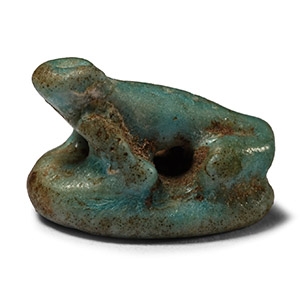
Egyptian Faience Frog Scarab
Ptolemaic Period, circa 300 B.C.Estimate: £500 - 700 (‡+bp*)
Opening Bid: £250
Discoid base with crouching frog pierced longitudinally for threading; underside with a solar disc and unidentified symbol. 0.56 grams, 13 mm
Ex R. Liechti (1934-2010) Geneva, Switzerland, formed between 1950-1990s. Accompanied by a copy of an old collection inventory note. -
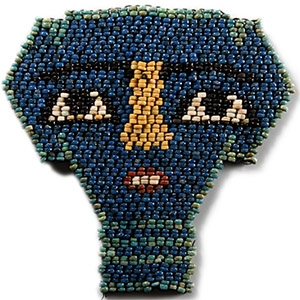
Egyptian Faience Mummy Bead Mask
Ptolemaic Period, 332-30 B.C. and laterSold for (Inc. bp): £169
Restrung beadwork panel of exceptional colour depicting a mummy face mask with false beard; restrung with some later beads. 17.3 grams, 89 mm
Ex Mariaud de Serres, Paris, France, 1980-1990s. From a London, UK, collection.
