
Loading, please wait...
LOT 0005
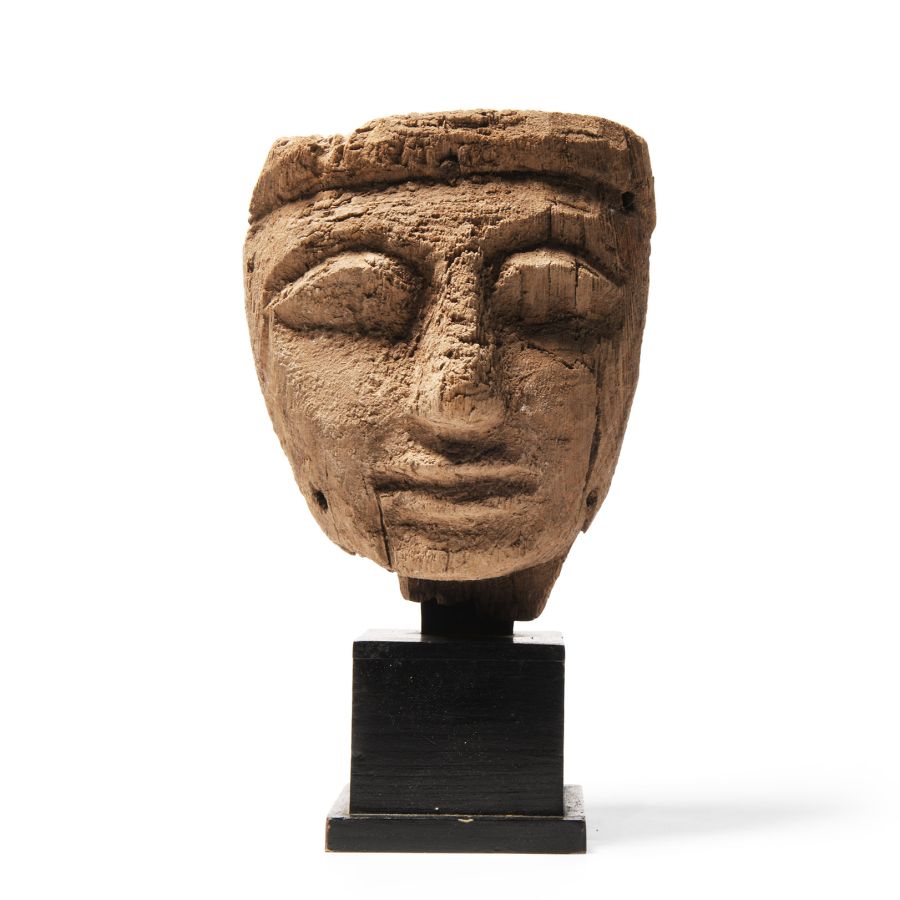
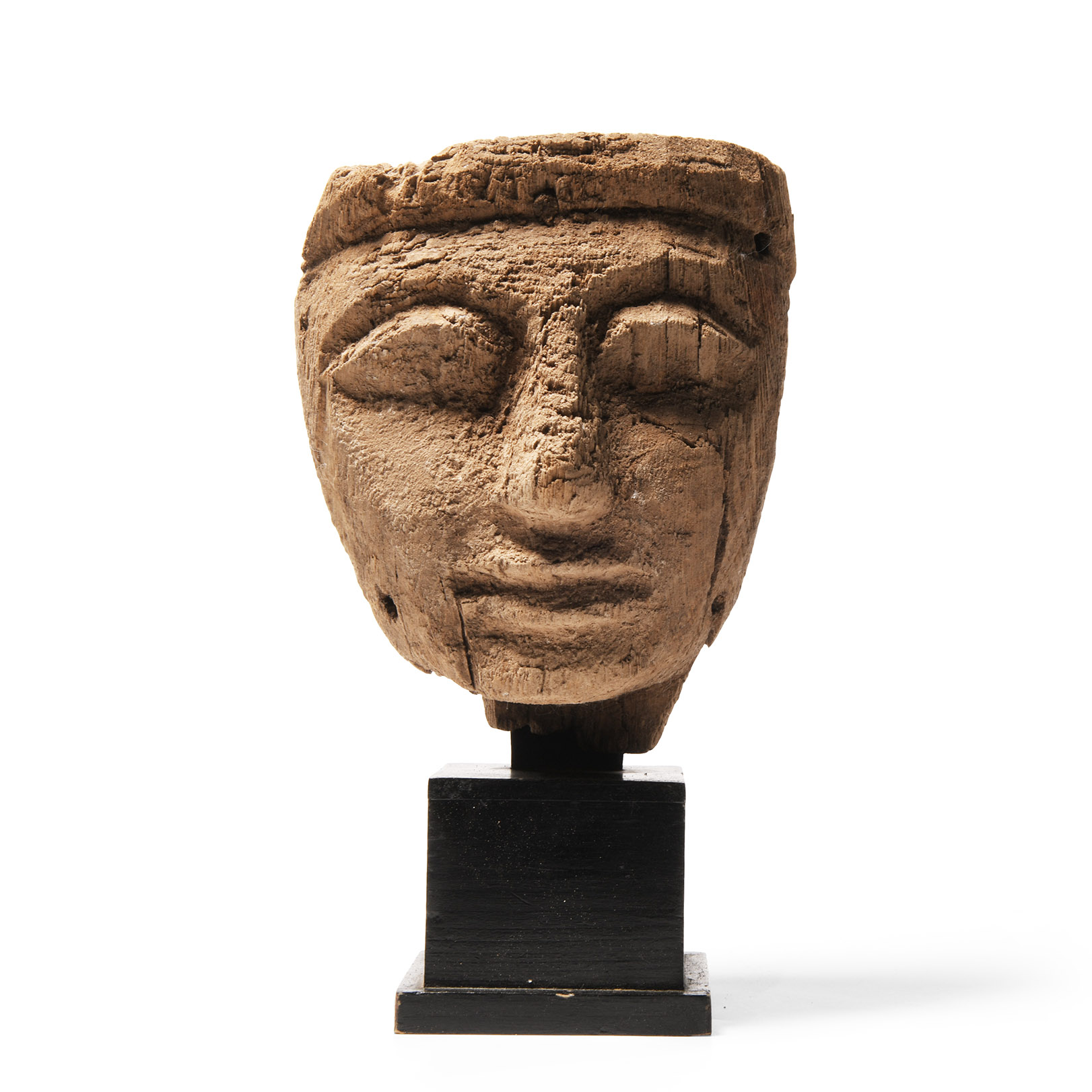
Egyptian Wooden Mask
LATE DYNASTIC PERIOD, AFTER 500 B.C.
8 1/8 in. (357 grams total, 20.8 cm high including stand).
Wooden face from a coffin lid, D-shaped in plan with large almond-shaped eyes, holes for mounting pegs; accompanied by the original dealer's ticket from Phocion J. Tano of Cairo with handwritten description and signature 'Small masque of wood of the end of the Saïtic Period some four hundred years B.C. It is found close to the pyramid of Meïdun and it is genuine guaranteed and nothing ticked. It is as is found. Cairo the 14/4/65.'; mounted on a custom-made stand.
ProvenanceEx Phocion J. Tano, Cairo, Egypt, 1965. Phocion Jean Tano (1898-1972) belonged to a family dynasty who founded and ran one of the oldest antiquities shops in Egypt, located in front of the old Shepheard's Hotel in Cairo.
From a private UK family collection.
Accompanied by an original handwritten and signed card receipt dated 14 April 1965 from Phocion J. Tano Antiquities Gallery, Cairo, Egypt.
TimeLine Auctions follows a vetting process to ensure the authenticity and legality of all items, reinforcing our commitment to integrity and responsible trading. Each antiquity, antique, and coin lot undergoes thorough examination by a vetting committee of at least ten external specialists, professional trade association members, scientists, and archaeologists: Our Vetting Process
AUCTIONS:
TimeLine is a leading auction house specialising in antiquities, ancient art, collectables, natural history, coins, medals, and books. Our auctions offer museums, collectors, historians, and enthusiasts the opportunity to acquire unique and historically significant pieces.
-
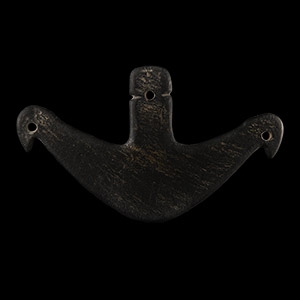
Egyptian Schist Double Bird Palette
Predynastic Period, circa 3500 B.C.Sold for (Inc. bp): £910
The crescentic body with stylised bird head ends; eyes pierced; central stem with single hole. 59 grams, 13.5 cm wide
Acquired prior to 2000 from a UK collection. Canadian private collection of Mr A.K. of Montreal. -
.jpg)
Romano-Egyptian Glass Millefiori Face Bead
Circa 1st century A.D.Estimate: £500 - 700 (+bp*)
Opening Bid: £278
Spherical in form with an opaque yellow body with three face-cane slices and three chequerboard slices. 5.35 grams, 16 mm
Acquired 1969-1999. From the private collection of the late Mr S.M., London, UK, thence by descent. -
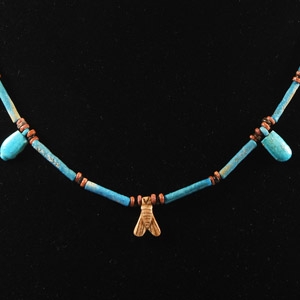
Egyptian Faience Bead and Amulet Necklace
New Kingdom-Late Period, 1550-332 B.C.Sold for (Inc. bp): £234
Composed of polychrome glazed beads of tubular and annular types, together with pendant amulets including fly and fruit; restrung. 5.6 grams, 48 cm long
From the collection of a London gentleman, 1980s-1990s.
