
Loading, please wait...


LOT 0003
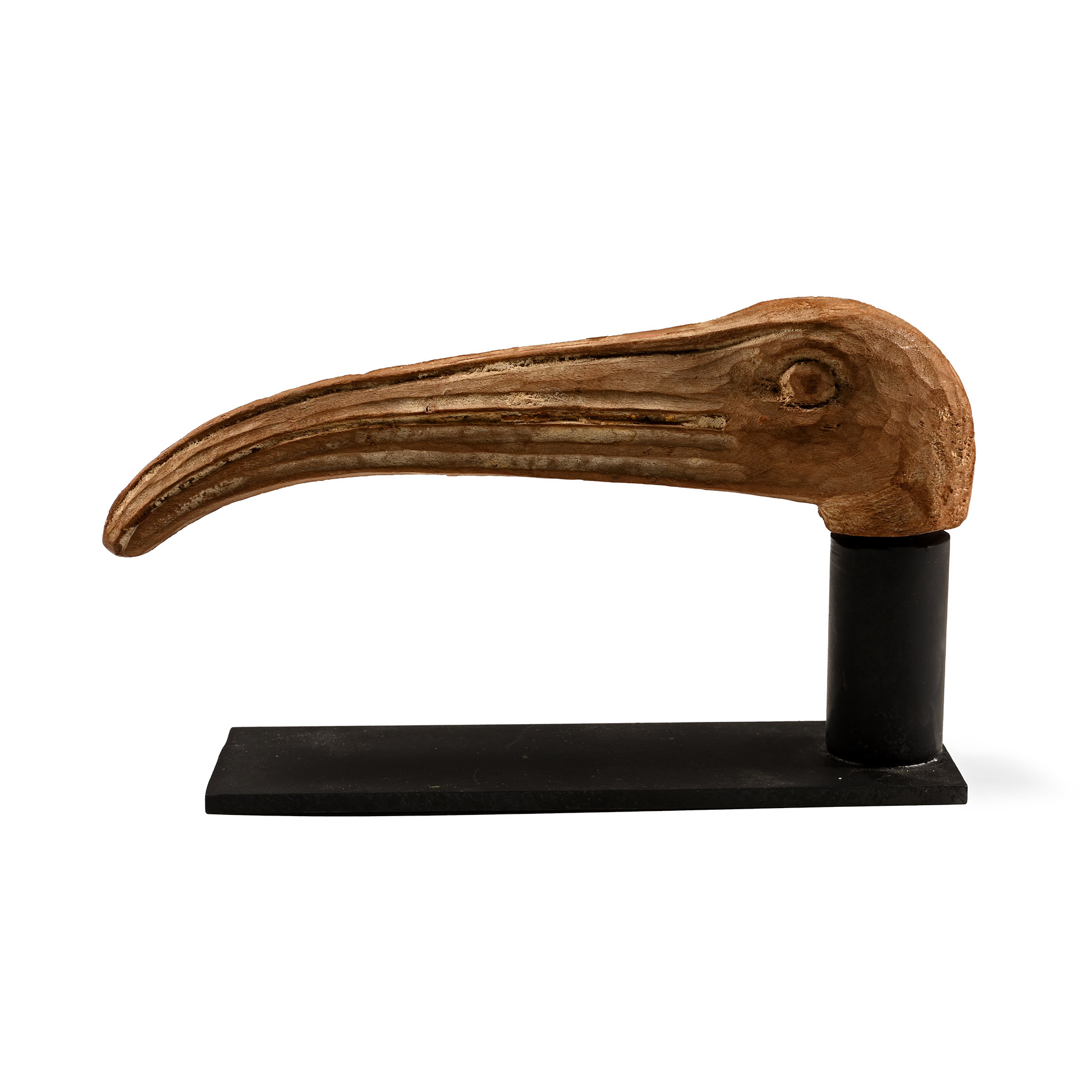
Egyptian Wooden Head of an Ibis
LATE PERIOD-PTOLEMAIC PERIOD, CIRCA 664-30 B.C.
7 1/4 in. (116 grams total, 18.5 cm wide).
Naturalistically carved ibis head from a composite statuette, with carefully detailed beak and eyes; traces of gesso and gilding remain; mounted on a custom-made display stand.
ProvenanceAmerican private collection, New York, acquired in London before 2000.
LiteratureCf. Waziry, M., Vestiges of Ancient Egypt,The Bubasteion Votive Cachette at Saqqara, Houston, 2023, pp.110-11, no. 48, for a complete example showing the wooden rod supporting the back of the head.
FootnotesThe ibis was sacred to the god Thoth, who was revered for his association with knowledge, writing, and healing. The god also acted as the recorder of the final judgment, which determined whether the deceased had lived a life of virtue. Vast numbers of ibises were mummified in religious centres such as Saqqara and Tuna el-Gebel, where they were offerings to the god and interred in extensive catacombs.
CONDITIONTimeLine Auctions follows a vetting process to ensure the authenticity and legality of all items, reinforcing our commitment to integrity and responsible trading. Each antiquity, antique, and coin lot undergoes thorough examination by a vetting committee of at least ten external specialists, professional trade association members, scientists, and archaeologists: Our Vetting Process
AUCTIONS:
TimeLine is a leading auction house specialising in antiquities, ancient art, collectables, natural history, coins, medals, and books. Our auctions offer museums, collectors, historians, and enthusiasts the opportunity to acquire unique and historically significant pieces.
-
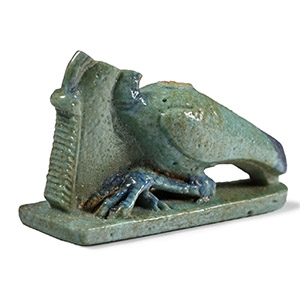
Egyptian Faience Amulet of an Ibis
Late Period, 664-332 B.C.Estimate: £500 - 700 (‡+bp*)
Opening Bid: £250
An exquisitely modelled figure of a seated ibis on a trapezoidal-shaped plinth, with its beak resting on the slender feather of Maat; light turquoise glaze for the body, plinth, and feather; blue glaze for the tail feathers, feet and neck; head missing. 3.54 grams, 31 mm
with Bonhams, Knightsbridge, 3 October 2000, no.413. Private collection, Europe.
The ibis was considered sacred to the god Thoth. It is likely that the popularity of amulets depicting an ibis resting its beak on the feather of Maat in the funerary sphere is connected to Thoth's role as the recorder of the final judgment of the deceased by the divine tribunal. This tribunal determined if the deceased had lived a virtuous life and could enter the Underworld. This was visually represented by the deceased's heart placed on scales with the feather of Maat; if the heart and feather balanced, eternity was assured. -
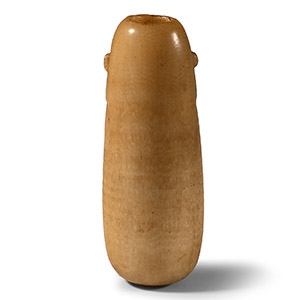
Egyptian Alabaster Alabastron with Vestigial Lug Handles
Late Period, circa 664-332 B.C.Estimate: £1,500 - 2,000 (+bp*)
Opening Bid: £556
The elongated oval body on a flat base, with gently curving shoulder and two elegant duck-head shaped vestigial handles. 440 grams, 15.5 cm high
Mary Stout Shaw (1880-1962); thence by direct descent to the present owner. Accompanied by a copy of a 1976 family photo featuring some of the collection on display.
Mary Kilgour Stone was born in 1880 in Cincinnati, Ohio. On 25 November 1903, she married Percy Wyfold Stout from Gloucester (DSO, OBE, 1875-1937), who had moved to Cairo after an international rugby career. After fighting in the First World War, Percy became the Director of the Egyptian Delta Land Company and the Anglo-American Nile Tourist Company. He and Mary were friends with the famous Major Gayer-Anderson, who worked as a doctor on the company’s cruise boats between 1930 and 1939. Gayer-Anderson tells in his memoir how this allowed him to make frequent trips to Upper Egypt and fulfil his passion for collecting (and dealing in) ancient Egyptian art. In his company, Mary became an enthusiast about all things Egypt and formed an elegant collection of ancient Egyptian alabaster vessels, including the following lots. She was particularly fascinated with the ancient cat goddess Bastet. Therefore, when Gayer-Anderson decided to give his famous ancient bronze cat to the British Museum in 1939, he made sure the donation was in both his name and Mary Stout Shaw’s, as a tribute to their friendship. -
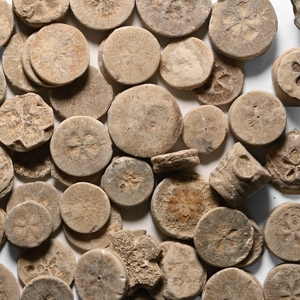
Egyptian Limestone 'Floral' Inlay Group
Roman Period, 30 B.C.-323 A.D. or earlierSold for (Inc. bp): £85
Group of discoid inlay plaques or gaming counters, crinoids with cinquefoil motif. 80 grams total, 12-19 mm
From a central London ADA gallery, 1990s.
Flowers were symbolic of rebirth due to the daily reopening of their petals after nightfall. As a result, they were widely used in domestic settings, religious and funerary contexts, and as adornments. Similar rosette discs, like those recovered from the Ramesside Period palace at Qantir, were used as decorative elements in royal palaces.
