
Loading, please wait...
LOT 0020
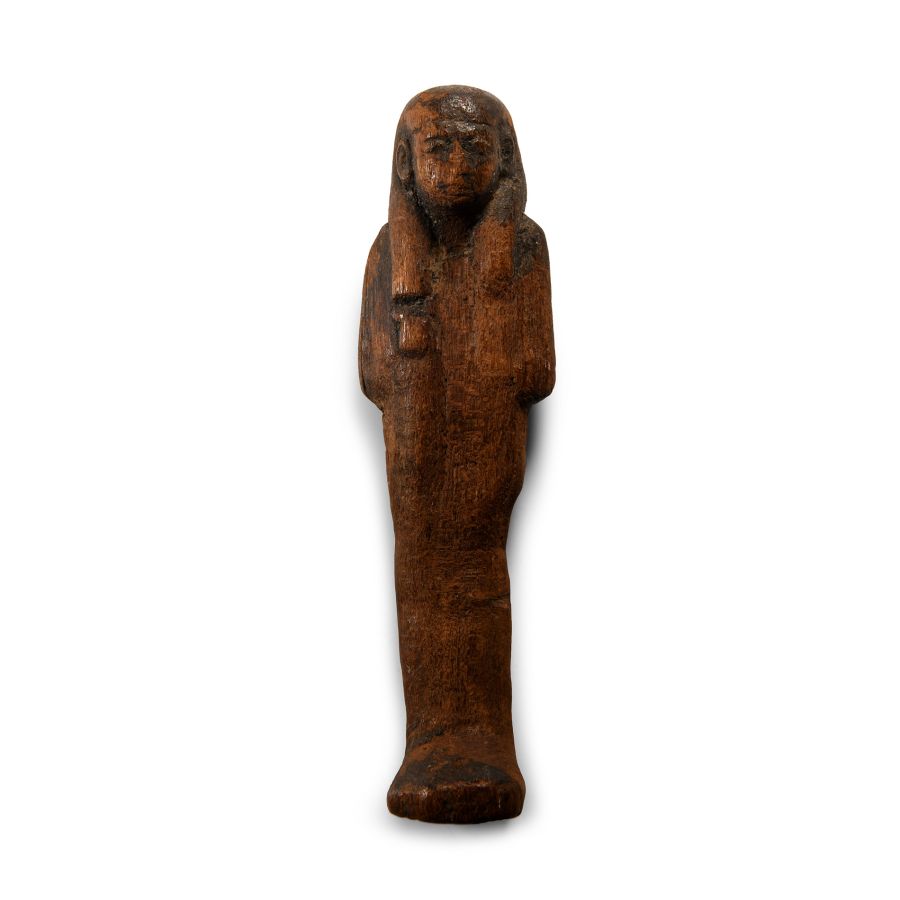
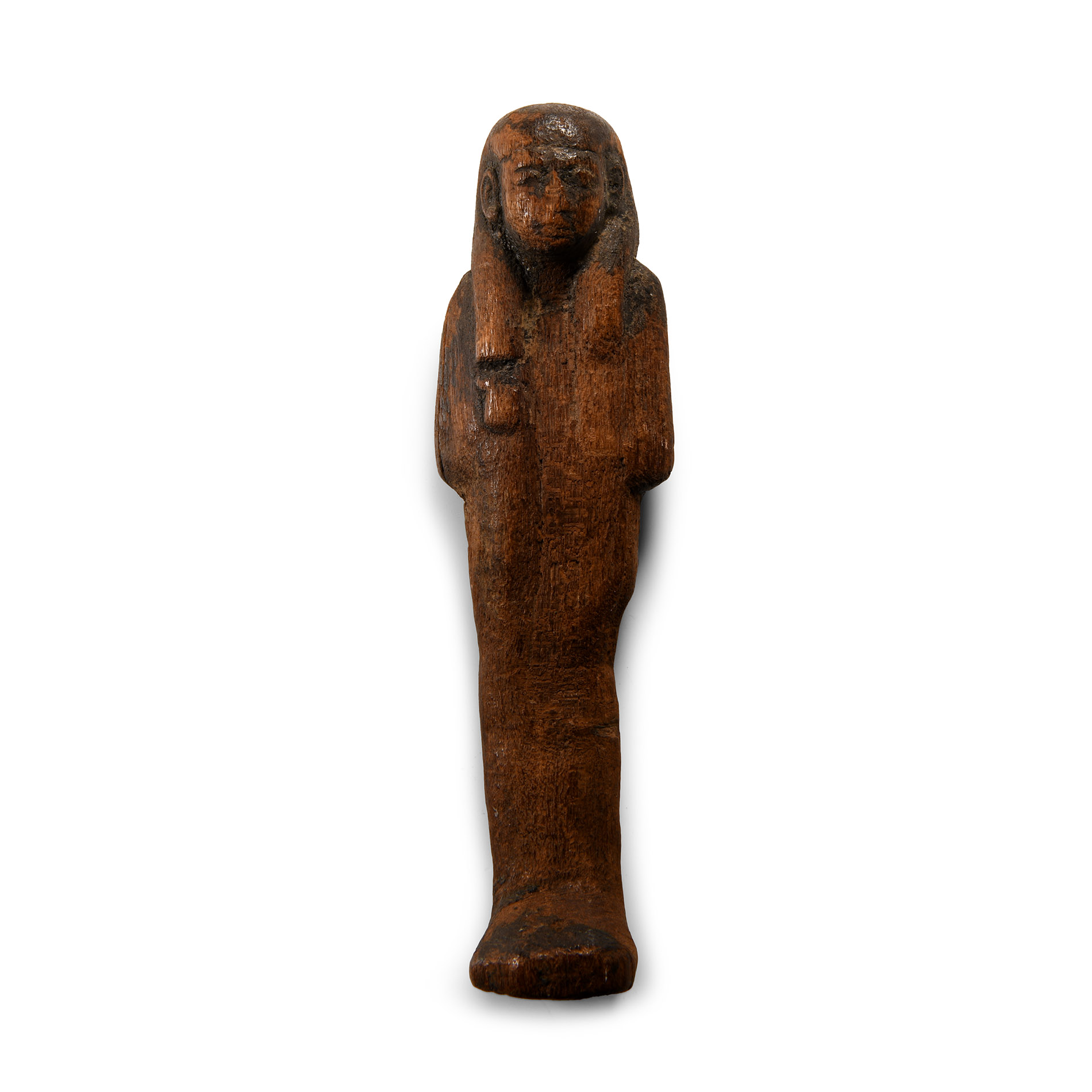
Egyptian Wooden Funerary Shabti Figurine
2ND-1ST MILLENNIUM B.C.
5 3/4 in. (39 grams, 14.5 cm).
Carved in the round with D-shaped base, carefully modelled hair and ears with beard absent, the right hand visible, not holding any work tools, the body has the appearance of a mummy entirely draped in a shroud with rather elongated proportions, the broad and rounded face with a
slightly ‘smiling’ expression, framed by a tripartite hairstyle without stripes, which continues down the back and two lappets on the chest.
Ex R. Liechti (1934-2010) Geneva, Switzerland, formed between 1950-1990s.
This lot has been checked against the Interpol Database of stolen works of art and is accompanied by a search certificate number no.12079-218221.
Cf. wooden shabti in the British Museum under accession no. EA56930 / 1923,0512.5.
CONDITIONTimeLine Auctions follows a vetting process to ensure the authenticity and legality of all items, reinforcing our commitment to integrity and responsible trading. Each antiquity, antique, and coin lot undergoes thorough examination by a vetting committee of at least ten external specialists, professional trade association members, scientists, and archaeologists: Our Vetting Process
AUCTIONS:
TimeLine is a leading auction house specialising in antiquities, ancient art, collectables, natural history, coins, medals, and books. Our auctions offer museums, collectors, historians, and enthusiasts the opportunity to acquire unique and historically significant pieces.
LOT 0020
Egyptian Wooden Funerary Shabti Figurine
Estimate £1,800 - 2,400€2,090 - 2,780 (for guidance only)$2,430 - 3,240 (for guidance only)
-
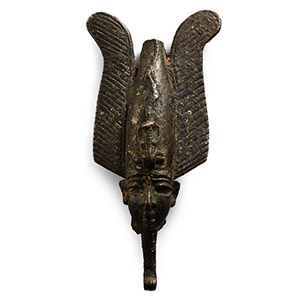
Large Egyptian Gilt Bronze Head of Osiris
Late Period, 664-525 B.C.Sold for (Inc. bp): £650
Modelled in the round wearing the atef crown (hedjet with lateral ostrich feathers) and uraeus to the brow with tail extending up the crown, detailed false beard with coiled finial; eyes recessed to accept inlays; tip of crown missing. 199 grams, 11.4 cm
Acquired on the German art market, 1989-1995. with The Museum Gallery, 19 Bury Place, London, WC1, UK, 1998-2003. Property of a London based academic, 2003-present.
Osiris is a deity who represents death and fertility and is commonly regarded as the quintessential god of rebirth. Though he was once a mortal ruler, as a deceased entity, his domain was the Underworld. Abydos was the primary centre of Osiris’ cult, where a renowned yearly celebration of the god was held. This head comes from a once sizeable statuette of the god. -
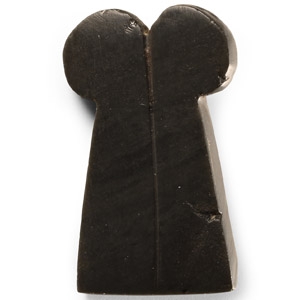
Egyptian Hardstone Double Plume Amulet
Late Period, 664-332 B.C.Estimate: £250 - 350 (+bp*)
Opening Bid: £125
Carved with integral ribbed loop to the reverse; unfinished. 4.4 grams, 31 mm
with Hotel des Ventes, Drouot, Paris, France. From the collection of Mr H. Naudy, Paris, France. Acquired at between 2004-2010. Property of a French collector.
This ancient amulet represents two ostrich feathers or shuty. Interestingly, these feathers were also present on the Atef crown of Osiris, the god of the afterlife and the dead. This suggests the amulet was believed to imbue the wearer with Osiris' divine power and protection. -
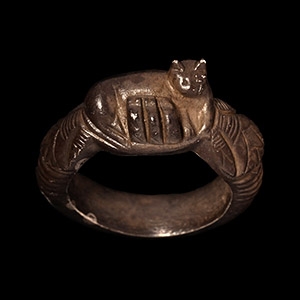
Romano-Egyptian Silver Ring with Bastet and Kittens
Roman Period, 30 B.C.-323 AD.Sold for (Inc. bp): £1,235
D-section hoop with lotus flowers on the shoulders, bezel formed as a reclining cat and three kittens. 15.21 grams, 28.80 mm overall, 17.01 mm internal diameter (approximate size British N, USA 6 1/2, Europe 13.72, Japan 13)
Ex London, UK collection, 1990s.
The cat was sacred to Bastet, a protective mother goddess and the daughter of the sun god Re. When shown with kittens, as here, Bastet's maternal role as a fierce protector of offspring is emphasised.
