
Loading, please wait...
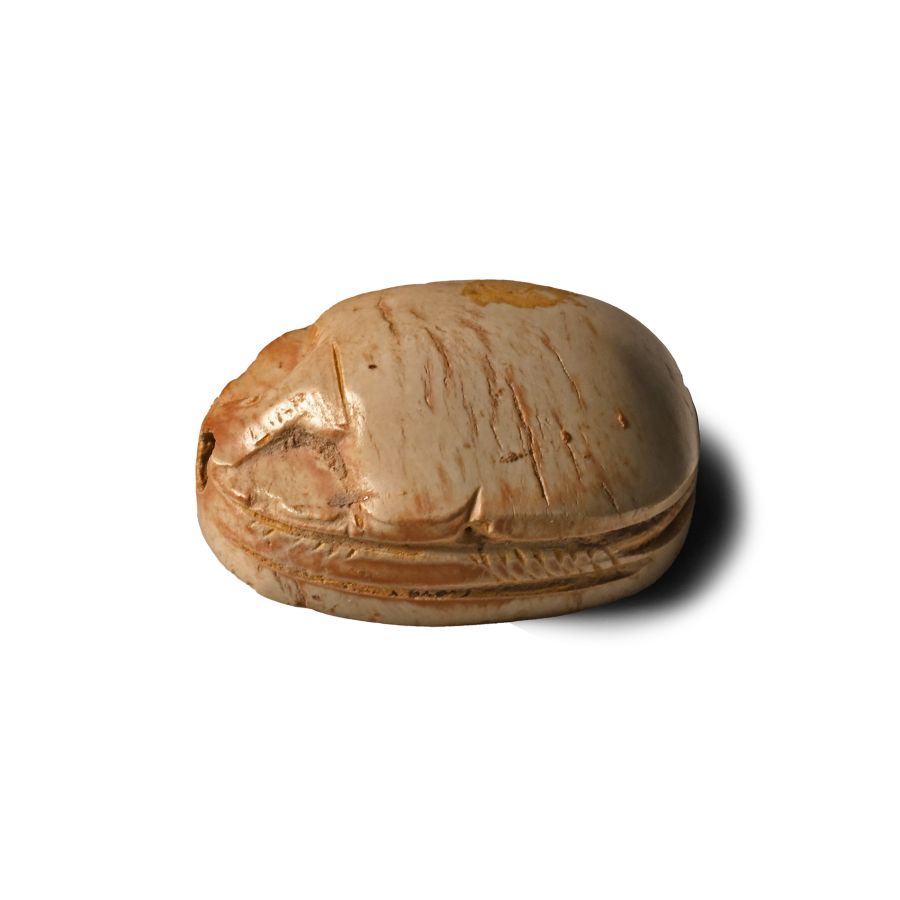
_900x900.jpg "Egyptian White Stone Scarab with Uraei and Falcons")
_200x200.jpg "Egyptian White Stone Scarab with Uraei and Falcons")
.jpg "Egyptian White Stone Scarab with Uraei and Falcons")
LOT 0053
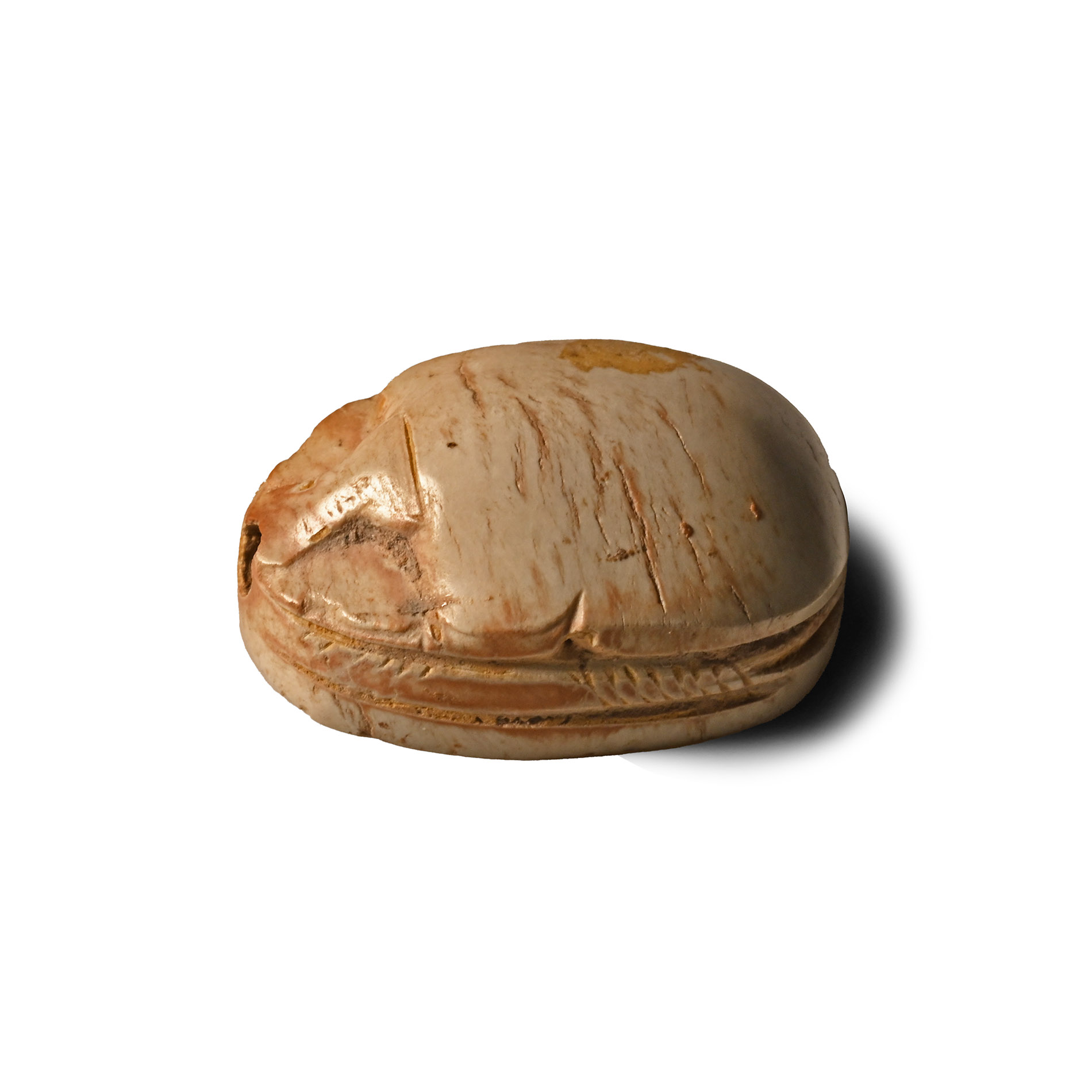
Egyptian White Stone Scarab with Uraei and Falcons
NEW KINGDOM-LATE PERIOD, 1550-332 B.C.
7/8 in. (3.8 grams, 21 mm).
Underside with design including hieroglyphs and falcons and uraei.
ProvenanceEx North London gentleman's collection, 1990s.
Property of a Cambridgeshire, UK, gentleman.
TimeLine Auctions follows a vetting process to ensure the authenticity and legality of all items, reinforcing our commitment to integrity and responsible trading. Each antiquity, antique, and coin lot undergoes thorough examination by a vetting committee of at least ten external specialists, professional trade association members, scientists, and archaeologists: Our Vetting Process
AUCTIONS:
TimeLine is a leading auction house specialising in antiquities, ancient art, collectables, natural history, coins, medals, and books. Our auctions offer museums, collectors, historians, and enthusiasts the opportunity to acquire unique and historically significant pieces.
LOT 0053
Egyptian White Stone Scarab with Uraei and Falcons
Estimate £400 - 600€460 - 700 (for guidance only)$540 - 810 (for guidance only)
-
.jpg)
Egyptian Funerary Cone for Djedher
1st millennium B.C.Sold for (Inc. bp): £2,470
Columnar terracotta cone with flattened base, five horizontal bands of reserved hieroglyphic text giving the dedication: 'Djedher, true of voice, son of Ankhhor who is the son of the hereditary noble, great mayor, great one of the Meshwesh (an ancient Libyan tribe), mayor, overseer of the priests of Banebdju, Djedher, his mother, mistress of the house, Shepensepedet, true of voice.' 895 grams, 16.5 cm
Acquired on the German art market, 1989-1995. with The Museum Gallery, 19 Bury Place, London, WC1, UK, 1998-2003. Property of a London based academic, 2003-present.
Funerary cones were used to decorate the facades of tombs. The 'tail' was pushed into the soft plaster coating so that only the disc was visible. This cone belongs to Djedher, whose tomb is likely to be in the Asasif region of the Theban necropolis, where other examples of his funerary cones have been found. -
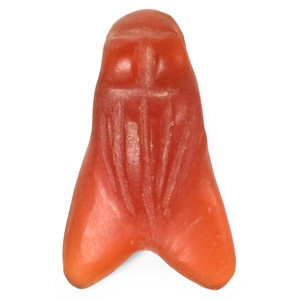
Egyptian Carnelian Fly Amulet
Late Period, 664-332 B.C.Sold for (Inc. bp): £312
Carved with simple body and eye detailing and polished; drilled through the eyes for suspension. 0.44 grams, 13 mm
From an early 20th century collection, Surrey, UK.
Considering Egyptian artists often depicted fly whisks in the hands of pharaohs and high officials, one might assume that flies were simply a nuisance. However, the Egyptians held flies in high regard due to their quick speed, reactions, and persistence. Small fly amulets were made from various materials, including gold, silver, lapis lazuli, carnelian, amethyst, faience, and bone. These amulets were believed to protect against insect bites and ward off flying creatures through apotropaic magic. -
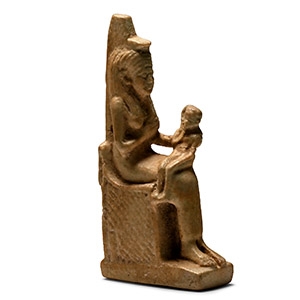
Large Egyptian Faience Amulet of Isis Nursing Baby Horus
Late Period, 664-332 B.C.Estimate: £1,000 - 1,400 (+bp*)
Opening Bid: £500
Amulet of Isis seated on an elaborate throne decorated with a crosshatch pattern, holding the infant Horus to her breast, supporting his head with her left hand; wearing a long close-fitting sheath dress and striated tripartite wig, surmounted by a crown in the form of her hieroglyphic name-sign, the "throne"; Horus wearing the sidelock of youth and holding his finger to his mouth; horizontal piercing just above the throne at the back for suspension. 20.16 grams, 65 mm
Ex Foxwell collection. Acquired from a London gallery. Ex Mr A.S. collection, 1990s.
In ancient Egyptian mythology, Isis was the sister-wife of Osiris and the mother of the sky god Horus. She is associated with aspects of fertility and motherhood and is often depicted in various artworks seated in a nursing pose with her son Horus on her lap.
