
Loading, please wait...
LOT 0450
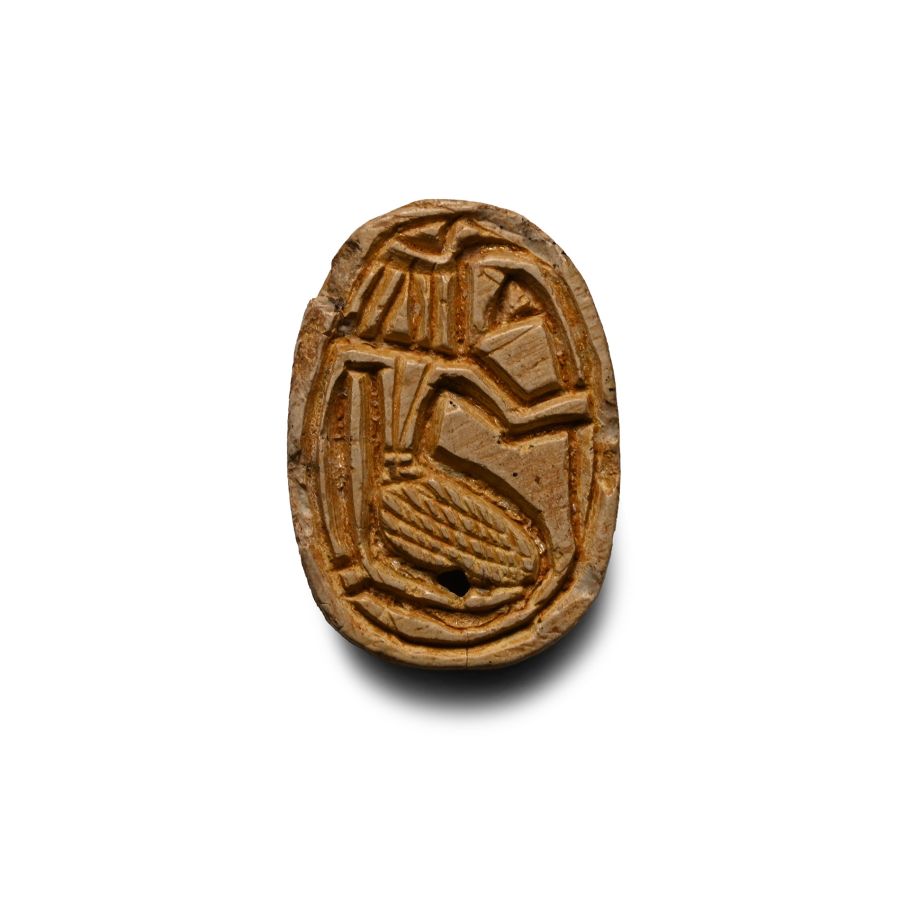
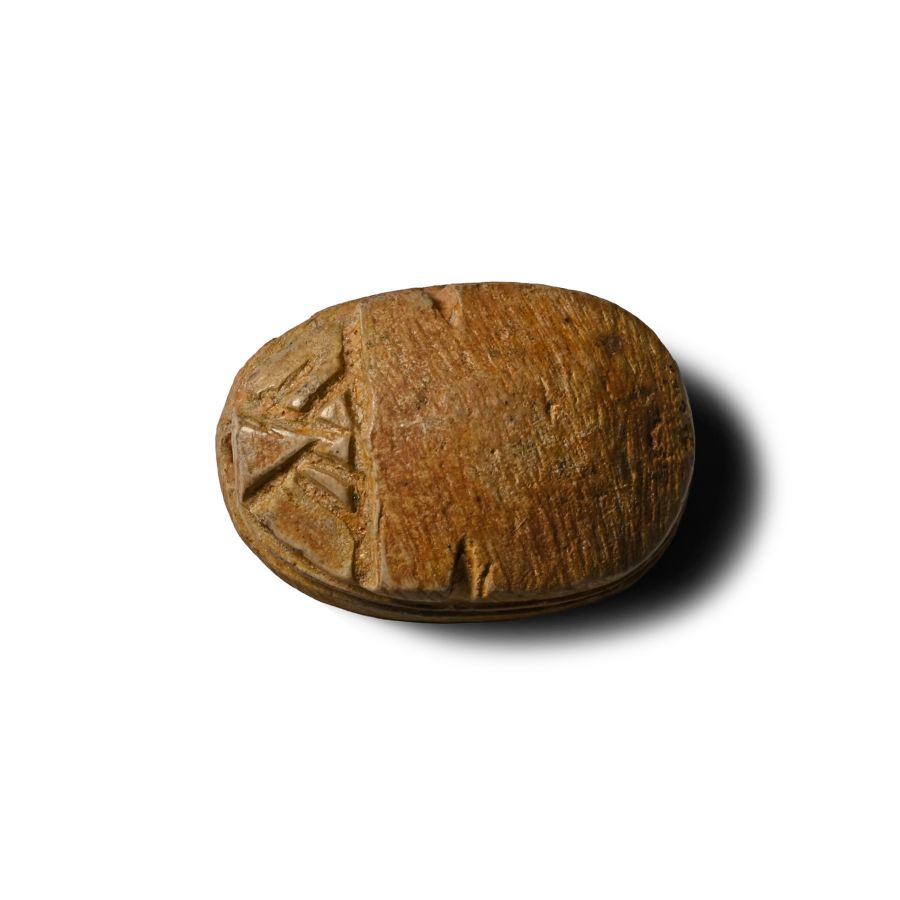
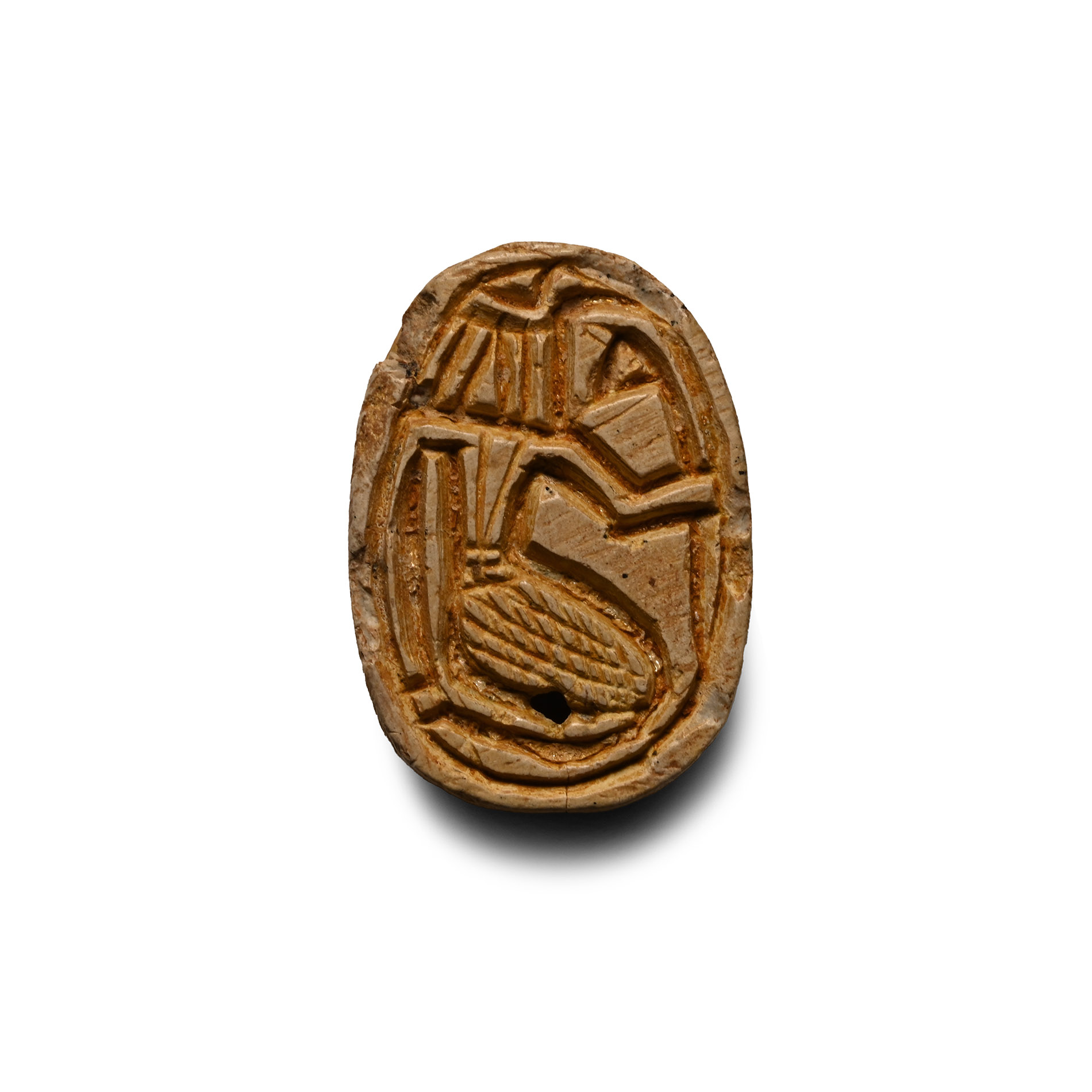
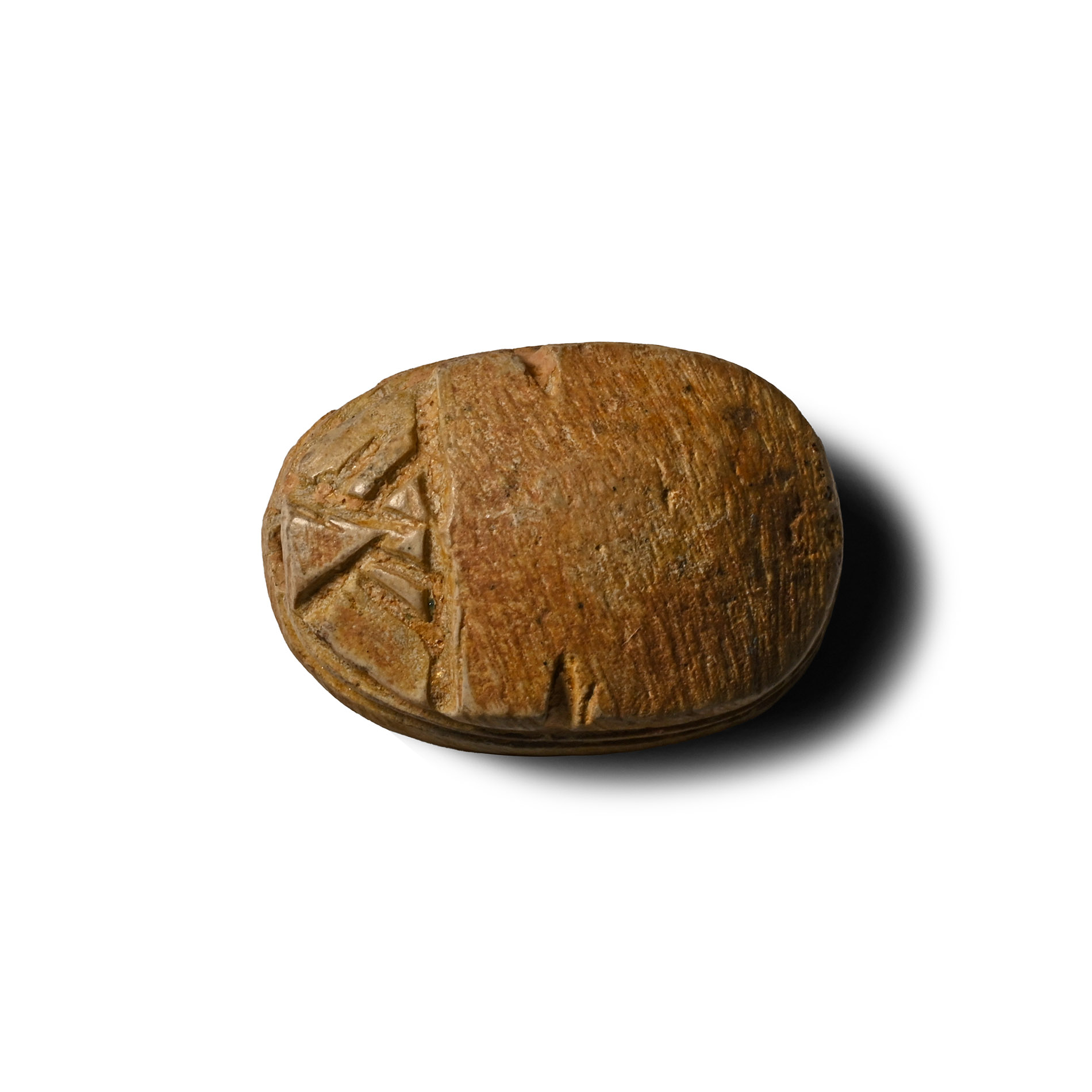
Egyptian White Stone Scarab with Falcon-headed God
NEW KINGDOM-LATE PERIOD, 1550-332 B.C.
3/4 in. (2.36 grams, 18 mm).
Underside with low-relief image of falcon-headed god holding a papyrus stem.
ProvenanceFrom the private collection of P. Champman.
Acquired 1992.
Ex C.J. Martin, London, UK.
Cf. Ben-Tor, D., The Scarab: A Reflection of Ancient Egypt, Tel Aviv, 1993, p.70, for scarabs with a similar theme.
CONDITIONTimeLine Auctions follows a vetting process to ensure the authenticity and legality of all items, reinforcing our commitment to integrity and responsible trading. Each antiquity, antique, and coin lot undergoes thorough examination by a vetting committee of at least ten external specialists, professional trade association members, scientists, and archaeologists: Our Vetting Process
AUCTIONS:
TimeLine is a leading auction house specialising in antiquities, ancient art, collectables, natural history, coins, medals, and books. Our auctions offer museums, collectors, historians, and enthusiasts the opportunity to acquire unique and historically significant pieces.
-
Egyptian Faience Block Bead with Bes and Amun
New Kingdom, 19th-20th Dynasty, 1279-1081 B.C.Sold for (Inc. bp): £286
Rectangular bead with reserved image of Bes to one face, hieroglyphs to the reverse giving the legend 'beautiful praise (of) Amun'. 1.31 grams, 13 mm
Ex Emile Bouillon Bey, c. 1880. From the Gaston Maspero Archaeological Fund. with Hotel des Ventes du Perigord, Bergerac, 24 June 2007. Property of a French collector.
Bes became one of ancient Egypt's most popular apotropaic deities from the New Kingdom onwards. Despite his somewhat fearful appearance, Bes was the patron and protector of pregnant women and children. He was also believed to protect from snakes. -
Egyptian Limestone 'Floral' Inlay Group
Roman Period, 30 B.C.-323 A.D.Sold for (Inc. bp): £52
Group of discoid inlay plaques or gaming counters, crinoids with cinquefoil motif. 36 grams total, 11-18 mm
From a central London ADA dealership, 1980-1990. -
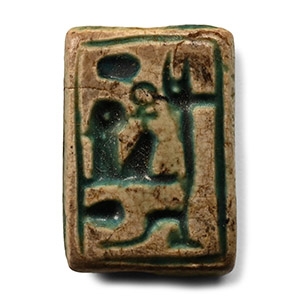
Egyptian Faience Block Bead for Ramesses II
New Kingdom, 19th Dynasty, 1279-1213 B.C.Sold for (Inc. bp): £442
Rectangular bead pierced for suspension, hieroglyphic text to both broad faces, one giving the throne name of Ramesses II, 'User-Maat-Re Setep-en-Re', the other, 'Ramesses, beloved of Amun'. 1.18 grams, 14 mm
Ex Emile Bouillon Bey, c. 1880. From the Gaston Maspero Archaeological Fund. with Hotel des Ventes du Perigord, Bergerac, 24 June 2007. Property of a French collector.
