
Loading, please wait...
LOT 0034
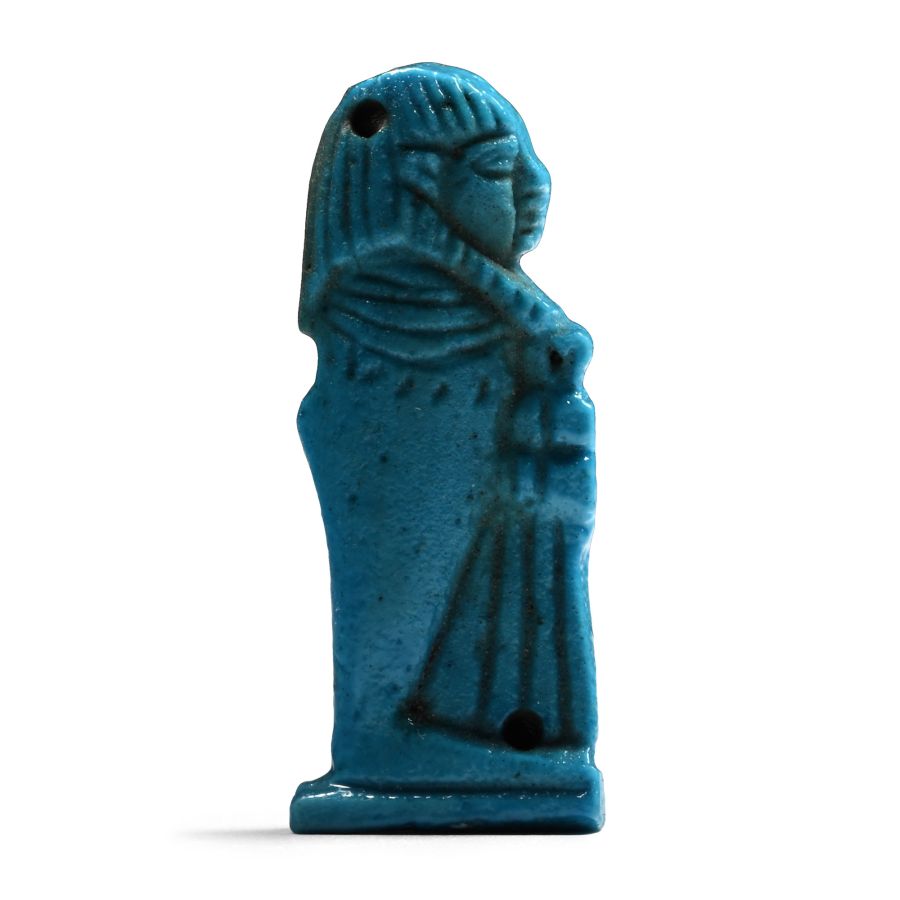
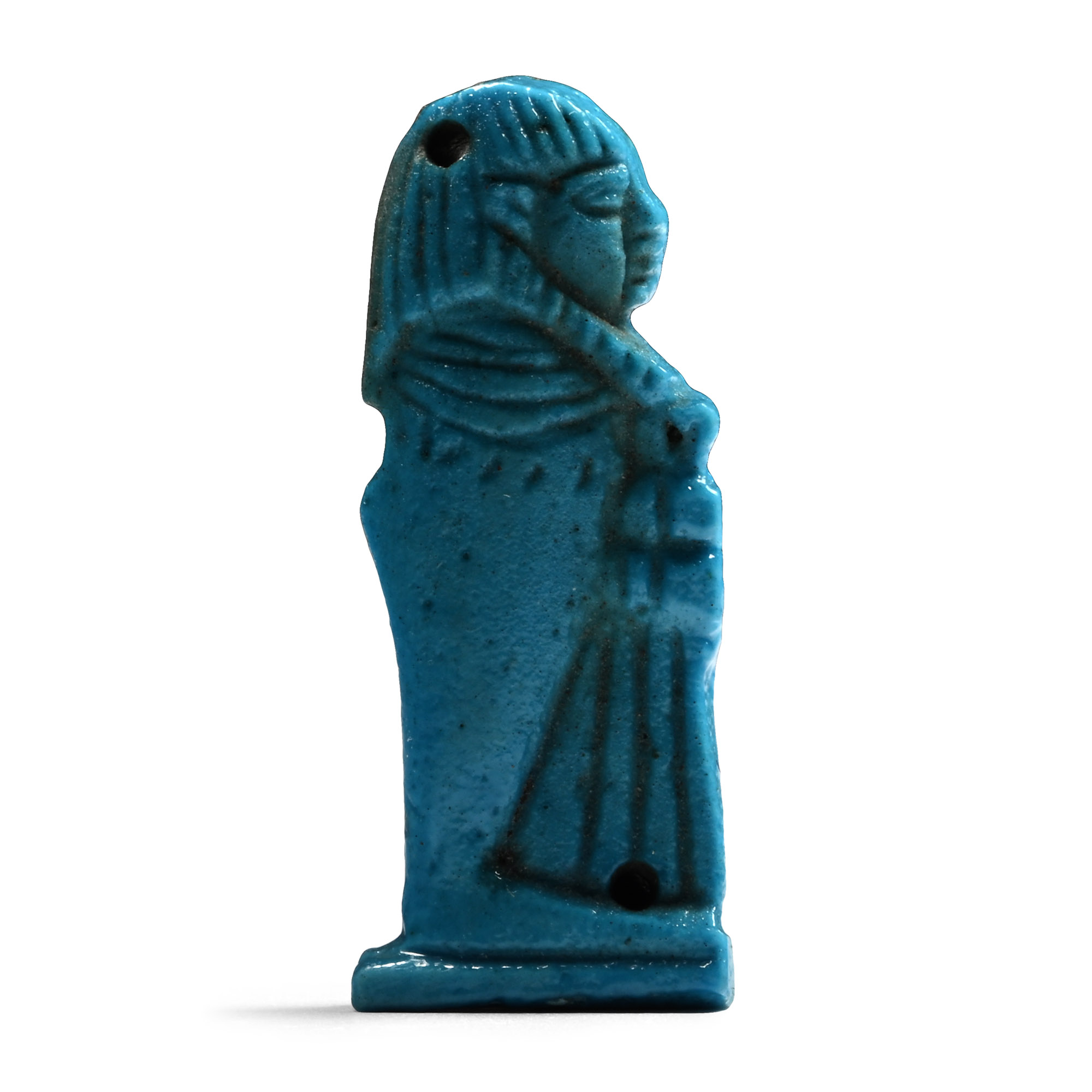
Egyptian Turquoise Glazed Faience Amulet of Imsety
LATE PERIOD, CIRCA 664-332 B.C.
1 3/8 in. (3.66 grams, 36 mm).
Flat-backed depiction of Imsety, one of the four sons of Horus, wearing a finely detailed tripartite wig, a broad collar, and holding a length of folded cloth.
Provenancewith Ancient World Arts, New York, USA.
Private collection, London, UK, acquired from the above in 1994.
This lot is accompanied by an illustrated lot declaration signed by the Head of the Antiquities Department, Dr Raffaele D'Amato.
Cf. Andrews, C., Amulets of Ancient Egypt, London, 1994, fig. 50, for a similarly detailed example.
FootnotesThe Four Sons of Horus were deities responsible for protecting the deceased's internal organs. The human-headed Imsety protected the liver, the baboon-headed Hapy protected the lungs, the jackal-headed Duamutef protected the stomach, and the falcon-headed Qebehsenuef protected the intestines. Amulets depicting these deities were placed within the mummy wrappings.
CONDITIONTimeLine Auctions follows a vetting process to ensure the authenticity and legality of all items, reinforcing our commitment to integrity and responsible trading. Each antiquity, antique, and coin lot undergoes thorough examination by a vetting committee of at least ten external specialists, professional trade association members, scientists, and archaeologists: Our Vetting Process
AUCTIONS:
TimeLine is a leading auction house specialising in antiquities, ancient art, collectables, natural history, coins, medals, and books. Our auctions offer museums, collectors, historians, and enthusiasts the opportunity to acquire unique and historically significant pieces.
-
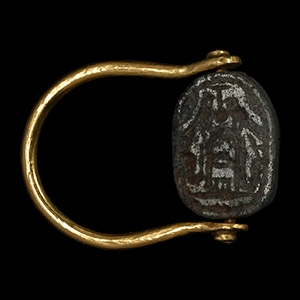
Phoenician Scarab in Gold Swivel Ring
6th-4th century B.C. and laterEstimate: £1,500 - 2,000 (‡+bp*)
Opening Bid: £675
The scarab with lightly incised anatomical detailing, the underside with a central cartouche flanked by two rearing crowned uraei, a pair of falcons standing above the cartouche facing a smꜣ hieroglyph symbolising union (of the two lands, Upper and Lower Egypt); set into a later gold swivel ring. 4.34 grams, 26.44 mm overall, 15.68 mm internal diameter (approximate size British J 1/2, USA 5, Europe 9.32, Japan 9)
with Bonhams, London, UK, 21 October 1999, no.36. Private collection, Europe. This lot has been checked against the Interpol Database of stolen works of art and is accompanied by a search certificate number no.12370-226696. This lot has been cleared against the Art Loss Register database, and is accompanied by an illustrated lot declaration signed by the Head of the Antiquities Department, Dr Raffaele D'Amato. -
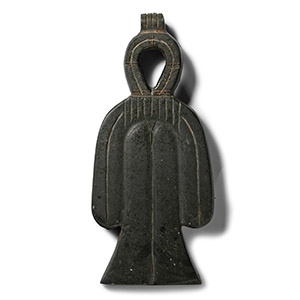
Egyptian Stone Tyet Amulet
Third Intermediate Period-Late Period, circa 743-332 B.C.Sold for (Inc. bp): £1,300
Finely carved tyet amulet with incised internal detailing and ribbed suspension loop at the top. 38.9 grams, 81 mm
Acquired in the mid 1980s-1990s. Private collection, Switzerland, thence by descent. Private collection, since the late 1990s. This lot is accompanied by an illustrated lot declaration signed by the Head of the Antiquities Department, Dr Raffaele D'Amato.
The tyet amulet was associated with the goddess Isis and was often referred to as the 'knot' or 'girdle' of Isis. Some believe that it represents a bandage used to absorb menstrual blood. It was commonly placed within the mummy wrappings on the upper torso of the deceased, with the belief that it would invoke Isis' protection and safeguard the body, thus ensuring their rebirth in the afterlife. -
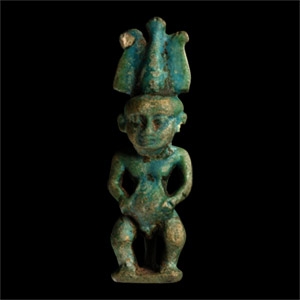
Egyptian Blue Glazed Pataikos Statuette
Third Intermediate Period, 1069-702 B.C.Estimate: £600 - 800 (+bp*)
Opening Bid: £300
Modelled in the round standing nude on a D-shaped base with atef crown, dorsal pillar with loop. 13.68 grams, 73 mm
Acquired on the German art market, 1989-1995. with The Museum Gallery, 19 Bury Place, London, WC1, UK, 1998-2003. Property of a London based academic, 2003 to present. This lot is accompanied by an illustrated lot declaration signed by the Head of the Antiquities Department, Dr Raffaele D'Amato.
Herodotus mentions Pataikos as a dwarf-like representation of Ptah, although the ancient Egyptian name of the god remains unclear. These diminutive amulets symbolise Ptah’s immense magical power, which serves to protect the wearer from dangerous creatures such as snakes and crocodiles. The role of the deity in the funerary sphere is explained in Spell 164 of the Book of the Dead, where Pataikos is used to protect the deceased’s heart from enemy attacks and the putrefaction of the body. The atef crown worn by this example, clearly links the figure to the underworld god, Osiris.
