
Loading, please wait...
LOT 0492
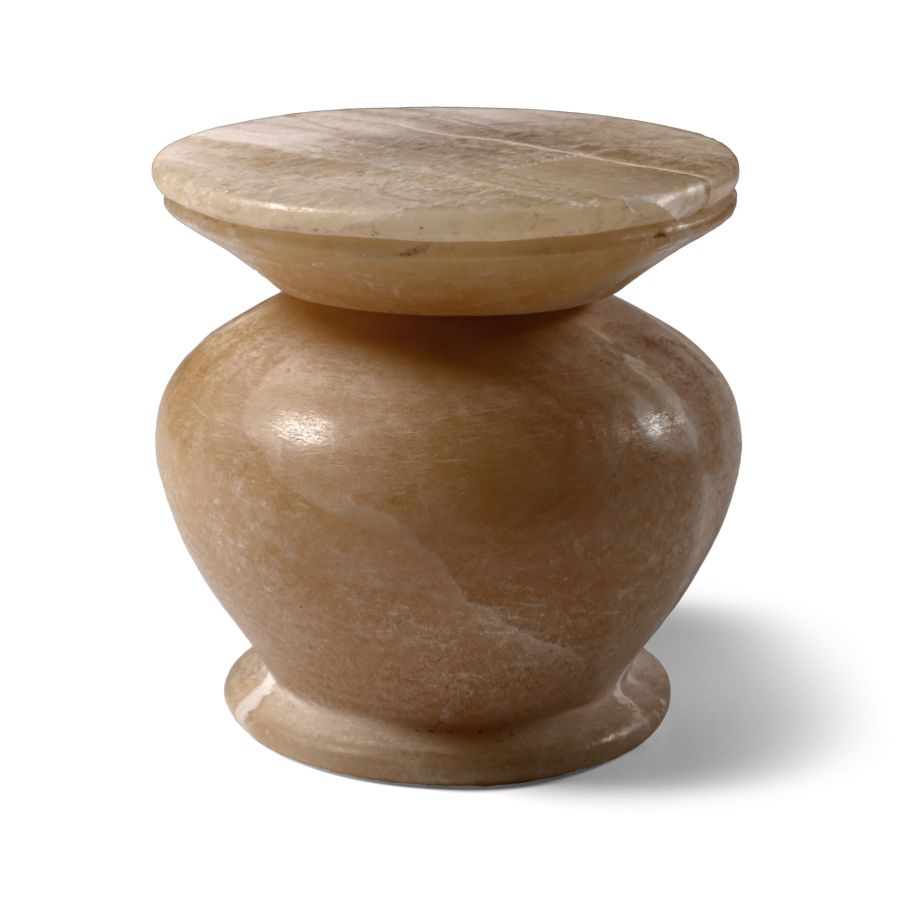
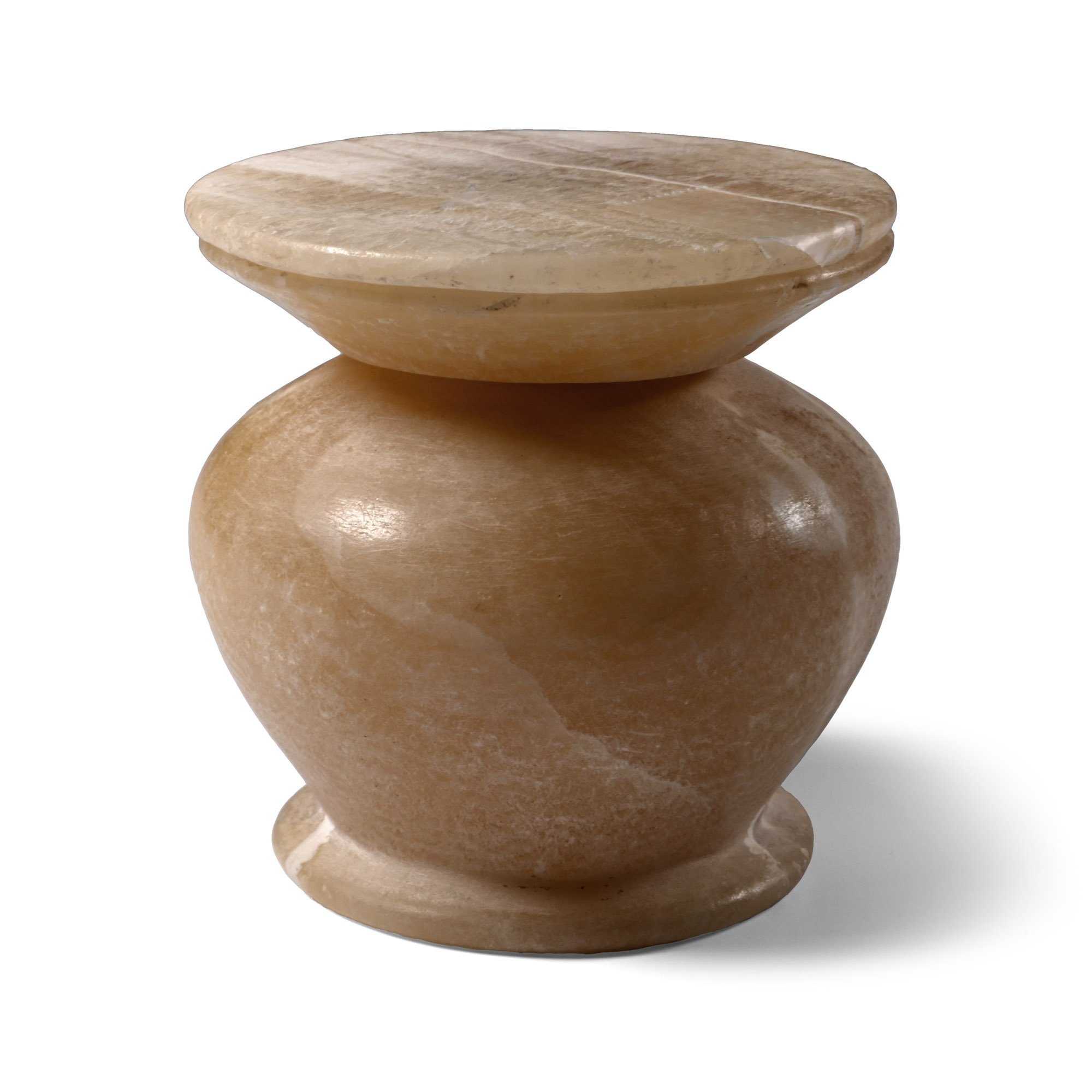
Egyptian Travertine Kohl Jar and Lid
MIDDLE KINGDOM-EARLY NEW KINGDOM, 12TH-EARLY 18TH DYNASTY, CIRCA 1985-1479 B.C.
2 1/2 in. (355 grams, 65 mm).
Piriform vessel with flared foot and wide rim, discoid lid with raised central panel to verso.
ProvenanceEx Galerie Nefer, Zurich, Switzerland.
with Galerie Rhéa, Zurich, Switzerland.
Cf. Museum of Fine Arts Boston: Egypt’s Golden Age, p.218, no.263; Seidel, W., Das Vermächtnis der Pharaonen, Speyer, 1993, p.204, no.120; see also Guidotti, M.C., Vasi dall’epoca protodinastica al Nuovo Regno, Museo Egizio di Firenze, Rome, 1991, pp.120-121, for other examples.
CONDITIONTimeLine Auctions follows a vetting process to ensure the authenticity and legality of all items, reinforcing our commitment to integrity and responsible trading. Each antiquity, antique, and coin lot undergoes thorough examination by a vetting committee of at least ten external specialists, professional trade association members, scientists, and archaeologists: Our Vetting Process
AUCTIONS:
TimeLine is a leading auction house specialising in antiquities, ancient art, collectables, natural history, coins, medals, and books. Our auctions offer museums, collectors, historians, and enthusiasts the opportunity to acquire unique and historically significant pieces.
LOT 0492
Egyptian Travertine Kohl Jar and Lid
Estimate £1,200 - 1,700€1,390 - 1,970 (for guidance only)$1,620 - 2,300 (for guidance only)
-
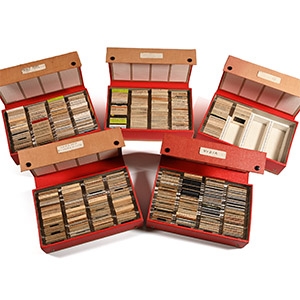
Historic Collection of 801 Slides of Archaeological Sites in Egypt
1960s-1980s A.D.Sold for (Inc. bp): £910
Housed in five linen-covered boxes, covering Saqqara, Mereruka, Nubia, Middle Egypt, Thebes, Gebel, Tuna, Tutankhamun of the Valley of the Kings, Eighteenth Dynasty, and Abydos etc. 4.31 kg total, 26.5 x 16.5 x 6.5 cm each box
Property of archaeologist Stephanie Gee, N.W. London, UK, 1960s-1980s.
Stephanie Gee was a prominent archaeologist who took part in several expeditions in Egypt. She was a trusted assistant to the British-Australian archaeologist Veronica Seton-Williams, who excavated in Egypt, Britain, and the Near East. Stephanie also took part in the Tell El-Farâ'în expeditions of 1965-1968, and assisted Seton-Williams with preparing the 1966 expedition report. Their collaboration continued and Stephanie helped with the manuscript of Seton-Williams’ book ‘The Road to El-Aguzein’, a narrative account of her life that was first published in 1988. -
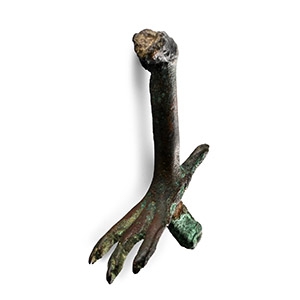
Egyptian Bronze Ibis Statue Foot
Late Period, 664-332 B.C.Sold for (Inc. bp): £78
Modelled in the round with three spreading claws and spur to rear, attachment lug to underside. 35 grams, 62 mm
From the collection of a Buckinghamshire, UK, collector established from the earlier 1960s. -
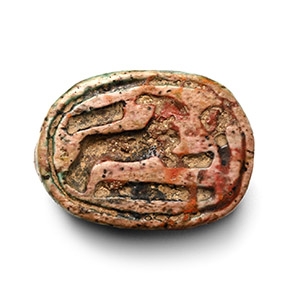
Egyptian Steatite Scarab with Hieroglyphs
Late Period, 664-332 B.C.Sold for (Inc. bp): £130
Detailed carapace and legs, a leaping quadruped with other hieroglyphs on the underside; pierced longitudinally. 2.37 grams, 16 mm
Mrs Allinson to Mrs Foster, 1867 and thence by descent to the current owner, Stanley Crescent, London, UK.
