
Loading, please wait...
LOT 0457
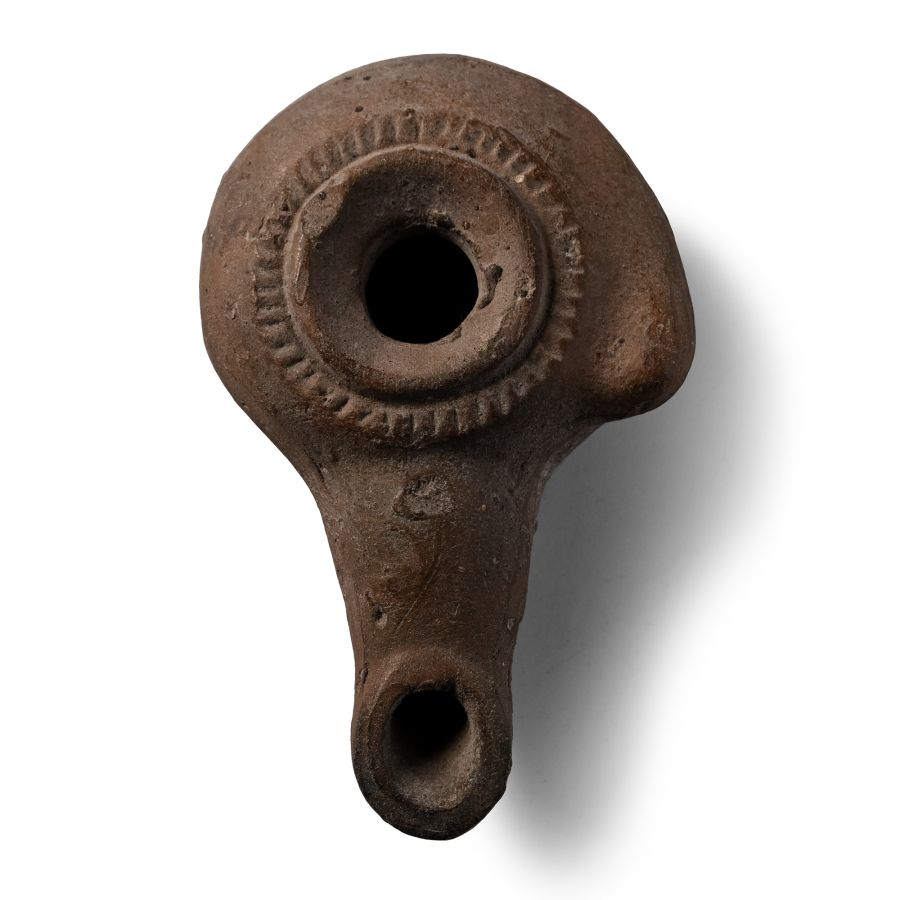
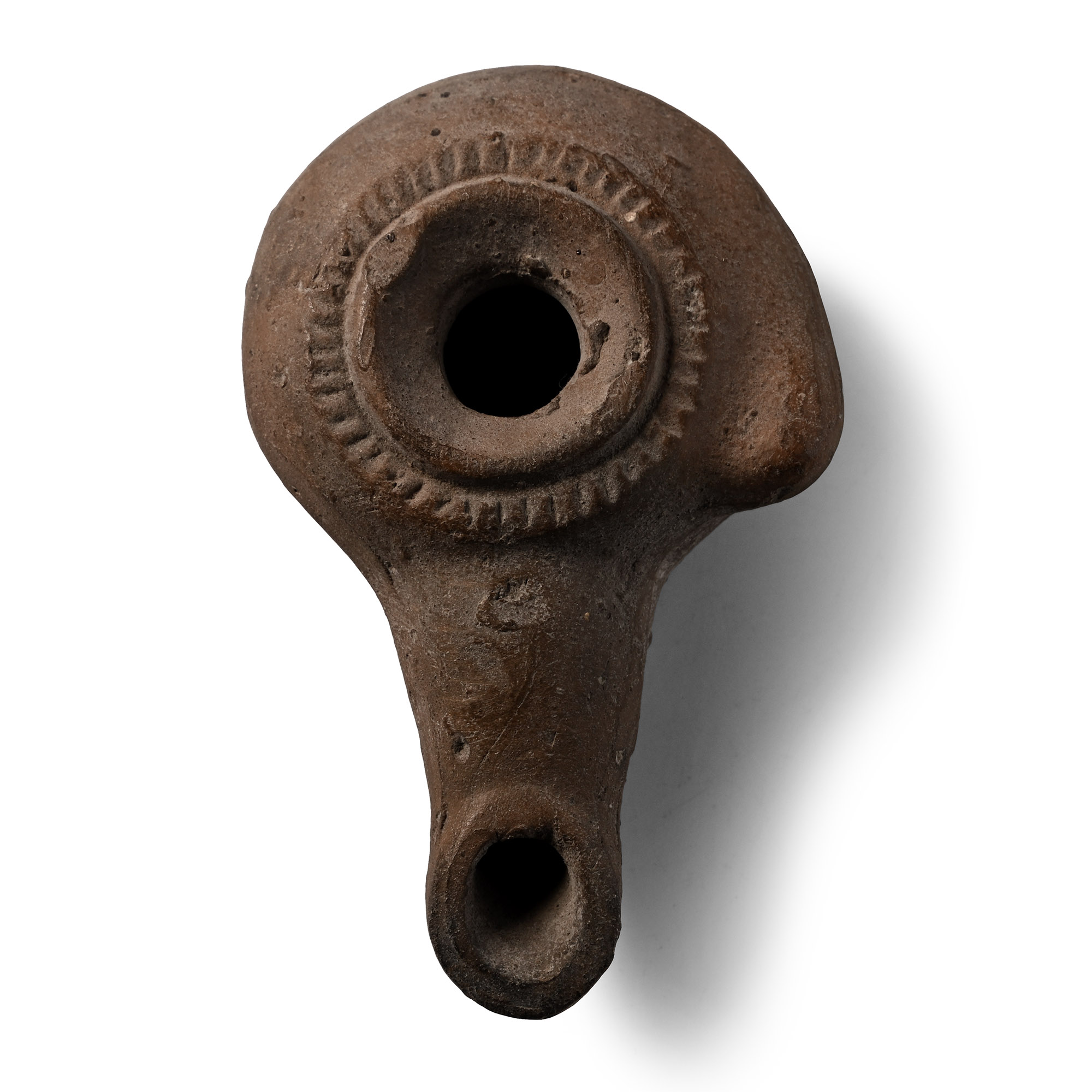
Egyptian Terracotta Oil Lamp
PTOLEMAIC PERIOD, CIRCA 200-50 B.C.
3 1/2 in. (63 grams, 88 mm).
Rounded body with large filler hole and pointed lug on the shoulder, the rim with a low-relief ovolo decoration, elongated nozzle with scooped nozzle; low basal ring. [No Reserve]
ProvenanceFrom a private Wiltshire, UK, collector, acquired before 1980.
LiteratureCf. Młynarczyk, J., Alexandrian and Alexandria-influenced mould-made lamps of the Hellenistic period, Bar International Series 677, Oxford, 1997, pp.54-57, Type G, fig. 67, for the type.
CONDITIONTimeLine Auctions follows a vetting process to ensure the authenticity and legality of all items, reinforcing our commitment to integrity and responsible trading. Each antiquity, antique, and coin lot undergoes thorough examination by a vetting committee of at least ten external specialists, professional trade association members, scientists, and archaeologists: Our Vetting Process
AUCTIONS:
TimeLine is a leading auction house specialising in antiquities, ancient art, collectables, natural history, coins, medals, and books. Our auctions offer museums, collectors, historians, and enthusiasts the opportunity to acquire unique and historically significant pieces.
-
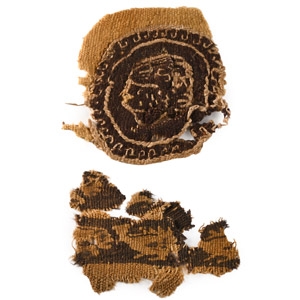
Egyptian Coptic Textile Fragment Group
Circa 4th-5th century A.D.Sold for (Inc. bp): £65
Comprising: an orbiculus in coarse linen and brown wool, S torsion, embroidered with the image of a stylised bird, surrounded by tondos ornamented with geometric embroidery, borders meander decorated; a similar fragment of double segmenta, embroidered with hares alternated to fishes. 9 grams total including package, 60-64 mm
Acquired 1970s-1996. Property of a North American collector. London collection, 2016.
The iconography of this fragment is called "Nilotic," as it depicts plant and human elements linked to life on the Nile River. These images are very recurrent on Coptic textiles. Weavers created patterns that allowed them to reproduce these motifs on any type of fabric (curtains, tassels, clothing). -
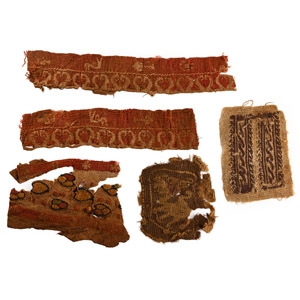
Egyptian Coptic Textile Fragment Group
Circa 4th-6th century A.D.Sold for (Inc. bp): £260
Comprising: fragment of a segmentum in red and coarse linen, S torsion, embroidered with geometric motifs; fragment of another segmentum in red, yellow, blue and green wool, with representations of buds within a red frame; a small tabula in purple wool over linen background, embroidered with a stylised image of Pegasus; a double segmenta, in purple over linen, embroidered with wave motif. 66 grams total including package, 7.8-20.5 cm
Acquired 1970s-1996. Property of a North American collector. London collection, 2016.
These are pieces of extraordinary finesse in both material and design. They all probably were once applied as a decoration of various garments, such as tunics, cloaks, and shawls. -
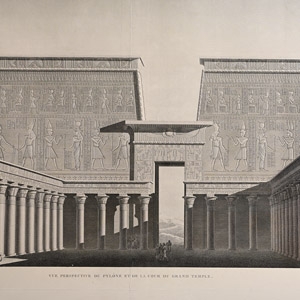
Very Large Egyptian Expedition Lithograph of the Temple of Edfu
Early 19th century A.D.Sold for (Inc. bp): £117
Proof etching on laid paper of plate 61 from Jomard Description de l'Égypte: ou, Recueil des observations et des recherches qui ont été faites en Égypte pendant l'expédition de l'armée française with title Edfou (Apollinopolis Magna). Vue perspective du pylône et de la cour du Grand Temple. 235 grams, 106 x 69.3 cm
From the collection of a North American priest. Acquired between 1981-1996. Property of a North American collector.
Produced between February 1802 and 1830 on the orders of Napoleon Bonaparte; published between 1809 and 1828. Just 1,000 copies were distributed to various institutions, printed on laid paper with an 'Égypte ancienne et moderne' watermark. The book is subtitled Recueil des observations et des recherches qui ont été faites en Égypte pendant l’expédition de l’Armée française, publié par les ordres de Sa Majesté l’Empereur Napoléon le Grand (Gathering of observations and discoveries which were made in Egypt during the expedition of the French army, published on the orders of His Majesty the Emperor Napoleon the Great). It was the world's first encyclopedia devoted exclusively to the remains of ancient Egypt. The plates of this book are the first to present the archaeological sites of Thebes (Luxor). The Temple of Horus at Edfu is among the best-preserved temples in Egypt.
